How to Judge Fabric Quality: Key Evaluation Methods for Density, Handle, and Color Fastness
Knowledge

How to Judge Fabric Quality: Key Evaluation Methods for Density, Handle, and Color Fastness

Fabric quality not only determines the appearance of clothing but also affects durability, comfort, and wearing experience. For consumers, good fabric reduces issues such as pilling, deformation, or fading. For fashion brands and buyers, consistency in fabric quality directly impacts product reviews and return rates. The lifespan of a garment often depends on choosing the right fabric from the very start.
Published: Aug 21, 2025
How to Judge Fabric Quality: Key Evaluation Methods for Density, Handle, and Color Fastness

Three Core Indicators of Fabric Quality

  1. Density
  2. Density refers to the number of warp and weft yarns per unit area, usually expressed as “warp × weft” or threads per inch (TPI), such as 40×40 or 60×60.

    • Characteristics of high-density fabrics:

      tightly woven, wear-resistant, less prone to deformation, and offering some degree of windproofing and opacity.

    • Simple testing methods:

      hold the fabric up to light to observe its transparency (less light passes through higher-density fabrics); use a magnifying glass to count yarns; or measure fabric weight in GSM (grams per square meter).

  3. Handle / Touch
  4. Handle describes the tactile feel of the fabric, including softness, smoothness, elasticity, and drape.

    • Traits of high-quality handle:

      even texture without roughness, quick recovery after light crumpling.

    • Simple testing methods:

      pinch a small piece of fabric to feel elasticity, rub against your cheek to test smoothness, gently stretch to check extensibility and rebound.

  5. Color Fastness
  6. Color fastness refers to a fabric’s ability to retain color during washing, rubbing, or exposure to sunlight.

    • High color-fastness fabrics:

      show minimal fading after washing and do not bleed onto other garments.

    • Simple testing methods:

      rub the fabric with a white cloth or wet tissue to see if color transfers; compare color before and after washing; expose to sunlight for several hours and observe any fading.

Practical Methods for Testing Fabric Quality

  1. Visual Inspection
    • Check yarn uniformity and look for knots, broken threads, color inconsistencies, or surface defects. Place the fabric under light to assess evenness of luster.
  2. Touch Test
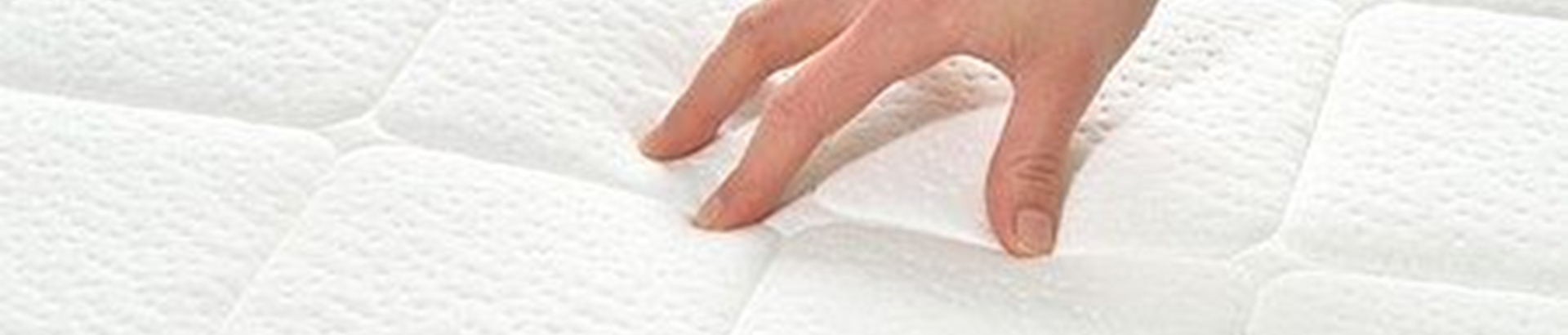
    • Pinch, rub, and stretch the fabric to gauge rebound speed and elasticity. Gently touch with the back of your hand or cheek to check for roughness.
  3. Density Testing
    • Light Test:

      hold the fabric up to light—low-density fabrics transmit more light.

    • Thread Count Test:

      use a magnifying glass to count warp and weft threads.

    • GSM Test:

      measure fabric weight per square meter.

  4. Color Fastness Testing
    • Wet Rub Test:

      rub with a damp white cloth to check for color transfer.

    • Wash Comparison:

      compare color before and after washing.

    • Sunlight Test:

      expose fabric to sunlight for several hours and observe any change.

  5. Abrasion and Wrinkle Resistance Tests
    • Lightly scrape the fabric with a fingernail or hard object to assess abrasion resistance; crumple into a ball and see how well it returns to a flat state.

Quality Assessment Tips for Different Fabric Types

  • Cotton:

    check fiber length and softness, test absorbency and wash durability.

  • Silk:

    look for natural, soft luster and good drape; genuine silk produces a “silk rustle” sound when rubbed.

  • Wool:

    assess elastic recovery; finer fibers (e.g., Merino wool) are softer and more skin-friendly.

  • Synthetic Fibers:

    note wrinkle resistance, static buildup, and breathability.

  • Professional Testing and Certifications

    For more precise quality evaluation, refer to international testing standards and certifications:

  • ISO, AATCC, ASTM:

    standardized international testing protocols

  • OEKO-TEX® Standard 100:

    tests for harmful substances

  • GOTS (Global Organic Textile Standard):

    certification for organic cotton and sustainable production

  • Conclusion: From Sensory Impressions to Data—Mastering Fabric Quality

    Judging fabric quality is not based on a single sense, but rather a combination of “observation + touch + testing.” For consumers, mastering these skills helps in choosing durable and comfortable garments. For industry professionals, it reduces quality risks in procurement and product development. In today’s era of increasing focus on sustainable consumption, high-quality fabrics not only improve wearing experience but also extend garment life and reduce resource waste.

    Published by Aug 21, 2025

    Further reading

    You might also be interested in ...

    Headline
    Knowledge
    How Forging Allowance Shapes the Cost and Accuracy of Final CNC Machining
    Why the extra stock left on a forging can determine machining time, dimensional stability, and total part cost.
    Headline
    Knowledge
    Why Die-Sinking EDM Electrodes Wear Unevenly and How Geometry Changes the Result
    How electrode geometry, discharge behavior, flushing, and process settings influence wear patterns and dimensional accuracy in die-sinking EDM.
    Headline
    Knowledge
    Why Automatic Spray Guns Produce Uneven Coating at Line Starts and Stops
    How spray timing, pressure transients, material viscosity and motion synchronization affect coating consistency
    Headline
    Knowledge
    Horizontal 5-Axis Machining: When Chip Evacuation and Multi-Face Access Justify the Layout
    How chip flow, setup reduction, multi-sided machining, and automation determine whether a horizontal five-axis platform delivers practical value.
    Headline
    Knowledge
    Designing Cable Assemblies for Wearable Medical Devices: Flexibility, Durability, and Patient Comfort
    Remote Patient Monitoring (RPM) and wearable medical devices represent one of the fastest-growing segments in healthcare technology.
    Headline
    Knowledge
    CNC Punching vs. Laser Cutting: Helping Your Customers Select the Right Technology
    When comparing a CNC punching press with a CNC laser cutting machine, the best answer is rarely “one is better than the other.” The real question is which process creates the most value for a specific mix of part geometry, batch size, material flow, and downstream operations.
    Headline
    Knowledge
    Sourcing Drawer Slides for Data Centers: Meeting the High-Density and Low-Tolerance Demands of Server Racks
    As high-tech infrastructure expands, data centers are under growing pressure to support more computing power within tighter physical footprints.
    Headline
    Knowledge
    How to Qualify Custom Worm Gears for Medical and Aerospace Systems: Testing, Traceability, and OEM Quality Controls
    Help procurement teams and equipment manufacturers evaluate OEM worm gear suppliers using practical quality criteria, including inspection methods, test evidence, material controls, and traceability records.
    Headline
    Knowledge
    Why High-Precision Manual Lathes Still Earn Their Place in CNC Machine Shops
    The right machine is not always the most automated one, but the one that delivers the required part with the greatest speed, flexibility, and confidence.
    Headline
    Knowledge
    How to Choose a Large 5 Axis Universal Machining Center: Match Automation Architecture to Your Real Production Bottleneck
    Find the Real Production Bottleneck Before Choosing Automation
    Headline
    Knowledge
    Full Automatic Dipping Machine vs. Automatic Loading and Unloading Machine: How to Choose the Right Automation Architecture
    Choose automation based on where your line actually loses time, labor, and consistency, not simply on which machine has the most automated features.
    Headline
    Knowledge
    Why Push-In Air Fittings Leak After Installation: Tube Preparation, Insertion Depth, and Side Load
    How Tube Preparation, Incomplete Insertion, and Side Loading Affect Pneumatic Sealing Reliability
    Agree