How Can Humans Collaborate with Robots in a Work Environment?
Trend

How Can Humans Collaborate with Robots in a Work Environment?

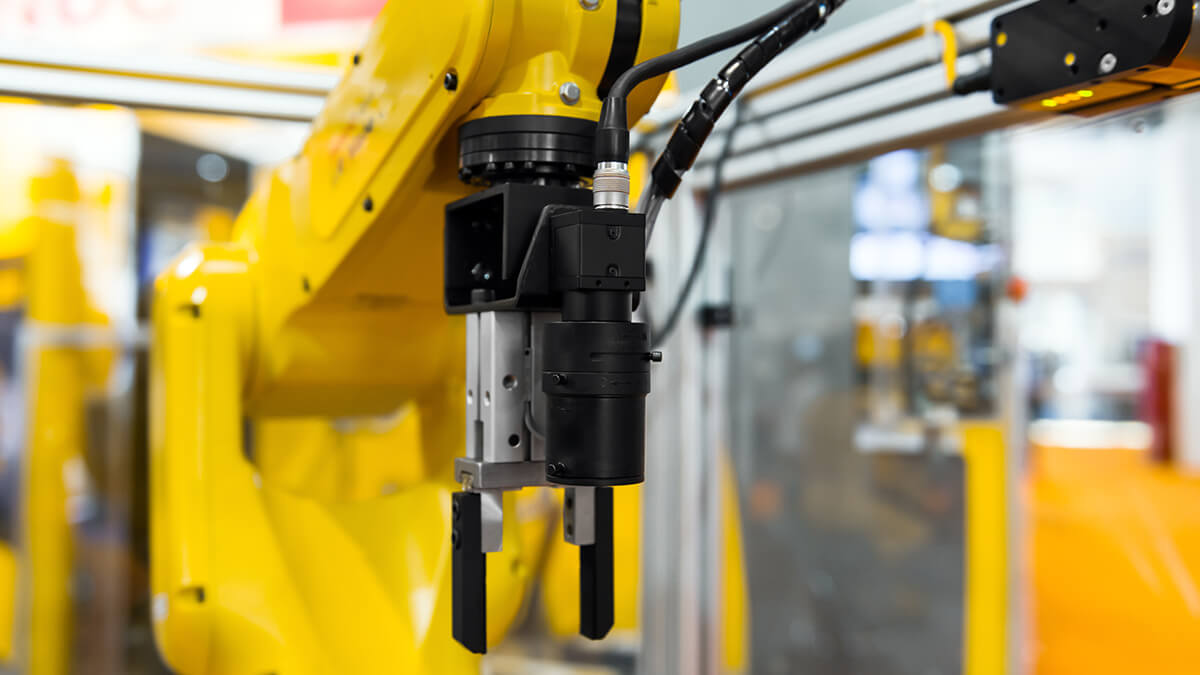
The integration of collaborative robots into production has become a pivotal element in the manufacturing chain, enhancing overall production efficiency. These compact collaborative industrial robots are designed to operate in confined spaces, addressing challenges posed by limited working spaces.
Published: Nov 24, 2023
How Can Humans Collaborate with Robots in a Work Environment?

What is a Collaborative Robot?

A collaborative robot, commonly known as a cobot or co-robot, is a specialized robot designed for close interaction with humans within a confined working space. Unlike traditional industrial robots, which typically operate autonomously or with limited guidance, collaborative robots are specifically engineered to work alongside humans, necessitating careful consideration of safety in their design and functionality. The concept of collaborative robots encompasses devices and methods that enable direct physical interaction between humans and computer-controlled universal robots.

From a conceptual standpoint, a robot is a mechanical device programmed to perform tasks automatically. It can follow human commands, execute pre-arranged programs, and make decisions using artificial intelligence. The primary purpose of a robot is to assist or replace humans in various tasks, ranging from routine to unconventional and even hazardous operations.

Industrial robots, which are multi-joint manipulators or multi-degree-of-freedom robots, are designed for use in industrial applications. These robots, capable of automatic work execution, can accept human commands or run pre-programmed tasks.

Traditional industrial robots typically operate at a distance from humans, often within fenced or protected areas to prevent potential harm to humans. In contrast, the emerging generation of industrial robots, termed "collaborative robots," operates differently. These robots can work in the same space as humans without posing a threat to their safety.

In heavy industries like automotive manufacturing, industrial robots have played a crucial role in performing high-precision tasks such as welding and handling. However, to ensure safety, these robots traditionally require protective measures, including fencing or stopping when humans enter a designated safe area.

The advent of collaborative robots introduces a new approach, aiming for joint cooperation between humans and robots. These robots come equipped with safety features such as monitoring stations, manual teaching capabilities, speed and separation monitoring, and power limitation attributes. These attributes enable collaborative robots to function safely alongside humans in unrestricted environments, assisting workers with routine tasks while humans handle more complex or judgment-based operations.

For collaborative robots to effectively integrate into the production chain, sensor technology is crucial. Sensors assist in determining how robots operate by providing precise feedback, facilitating closer human-machine interaction.

Key Challenges Related to Robotic Are Addressed through Various Sensor-Based Solutions

Robot Vision: Utilizes optical image systems to give robots vision capabilities, allowing them to identify object locations and enabling flexible automation in the Industry 4.0 era.

Safe Robots: Implements safety measures to create a secure working environment in the sensitive areas near robots, ensuring personnel safety during collaborative work.

Arm-End Tools: Incorporates mature sensing technology for gripper and robot tools, providing sharp insights during robotic operations.

Position Feedback: Utilizes position feedback solutions to provide information about speed, position, and drive status, laying the sensory foundation for all robot movements.


Published by Nov 24, 2023 Source: kknews, Source: sick

Further reading

You might also be interested in ...

Headline
Trend
Why RF Filters Matter More in Satellite Systems After 2026
As the global satellite communications industry continues to expand beyond 2026, competition is no longer defined only by the number of satellites in orbit. Buyers, project owners, system integrators, and engineering teams are now paying closer attention to link quality, interference control, spectrum efficiency, and long-term system reliability. In this context, RF filters are evolving from basic supporting components into critical decision points in satellite system design and procurement. Recent industry signals show that several forces are reshaping demand at the same time: the continued growth of LEO constellations, the development of 5G NTN, stronger expectations for resilient communications, and a more crowded spectrum environment. Together, these trends are increasing the strategic importance of RF front-end design, especially RF filters.
Headline
Trend
REACH, RoHS, And ESG: What Buyers Must Verify In Rubber Parts Suppliers
Global sourcing standards for rubber components have changed. Price, lead time, and dimensional accuracy are still important, but they are no longer enough on their own. Buyers now need clear proof that materials meet environmental requirements, production records can be traced, and supporting documents are available when needed. If a supplier cannot provide that visibility, the risk does not disappear—it simply moves downstream into qualification delays, shipment issues, customer complaints, or compliance failures.
Headline
Trend
Self Adhesive Magnetic Sheet: Market Trends, Material Knowledge, and B2B Buying Priorities
How Self Adhesive Magnetic Sheet Is Shaping Flexible Display and Labeling Applications
Headline
Trend
Why Natural Stretch Fabrics Are Emerging as a New Textile Trend
As brands look for lower synthetic content, simpler material composition, and more responsible sourcing options, natural stretch fabrics are gaining attention across apparel development and textile supply chains.
Headline
Trend
Aluminum Forging in 2026: Market Growth, Key Applications and Buyer Considerations
Market Outlook, Key Applications, and Strategic Sourcing Considerations for Global Buyers
Headline
Trend
Sugar Reduction and Plant Based Beverage Reformulation: Why Soy Milk Powder Is Gaining Attention in 2026
How sugar reduction, plant based demand, and private label development are reshaping powdered beverage formulation in 2026
Headline
Trend
Commercial Vehicle Growth Is Lifting DOT Air Fitting Demand
Market Outlook, Procurement Priorities, and Supplier Evaluation for DOT Air Fittings in Commercial Vehicles
Headline
Trend
Robotic Coffee Arms in F&B Retail Why Automated Beverage Service Is Expanding
How robotic coffee arms are entering F&B retail as a practical format for consistency, uptime, and space efficiency
Headline
Trend
Pineapple Leaf Fiber Yarn Specifications: A Practical Guide for Textile Buyers
PALF yarn is a natural textile material made from agricultural by-products. This article explains its key properties, including fiber length, strength, moisture behavior, and blending performance. It also outlines practical considerations for textile manufacturing and sourcing, helping buyers evaluate its suitability for different production needs.
Headline
Trend
Drinking Water Treatment Trends in 2026: Why PFAS, Microplastics, and Smarter Purification Standards Are Reshaping the Market
As PFAS regulation tightens and microplastics concerns grow, the global drinking water treatment market is shifting toward higher purification standards and more performance-focused systems.
Headline
Trend
Why Beverage Powder Brands Are Looking Beyond Price When Choosing Manufacturing Partners
In a more volatile market, beverage powder brands are rethinking how they evaluate suppliers. Price still matters, but more companies are prioritizing stability, development support, and long-term manufacturing alignment.
Headline
Trend
How Rising Material Costs Are Changing Tracheostomy Tube Sourcing Trends
Rising costs are changing more than pricing expectations. They are also reshaping how the market evaluates supply continuity, product breadth, and long-term sourcing stability.
Agree