Information is power. Information can not only adjust decision-making but also help discover market opportunities. Use advanced motion control technology to optimize the performance of automated machines.
In the information age, health-conscious consumers can easily obtain nutrition information, and consumers have an increasing demand for a variety of healthy, fast, and convenient foods. To meet the needs of consumers, machinery manufacturers and manufacturers must invest in technologies that are conducive to the realization of the factory of the future.
It is well known that machinery manufacturers are under tremendous pressure to provide equipment that can meet flexible manufacturing needs. Consumers have many diversified demands for their favorite packaging products in terms of taste, packaging size, and multiple packaging, which poses a challenge to the current order-to-order production.
The challenge faced by manufacturers of consumer-packaged products (CPG) is to come up with designs that can adapt to future developments, adjust the current conversion to the best state, and quickly add unexpected new inventory units.
Until recently, machinery manufacturers had little choice in how to transport equipment to the factory area. Any CPG manufacturing or packaging application is composed of a series of independent machines, and the integration of these machines is a complete packaging line. Many factory areas are still using this old equipment today.
These packaging lines have the following characteristics: use static mechanical parts, friction-type conveying, and are full of different additional equipment. Therefore, although these packaging lines use fixed variables to process the same product to achieve amazing yields, they usually must sacrifice mechanical flexibility. Complicated mechanical adjustments and equipment synchronization processing take a lot of time, but time is very precious to any factory area, especially when the product is released, which requires a lot of production.
Advanced technology
Due to technological advancements, OEMs now have better ways to meet manufacturers' demands for more flexibility. Specifically, three key electromechanical technologies are changing the balance between OEMs and their customers.
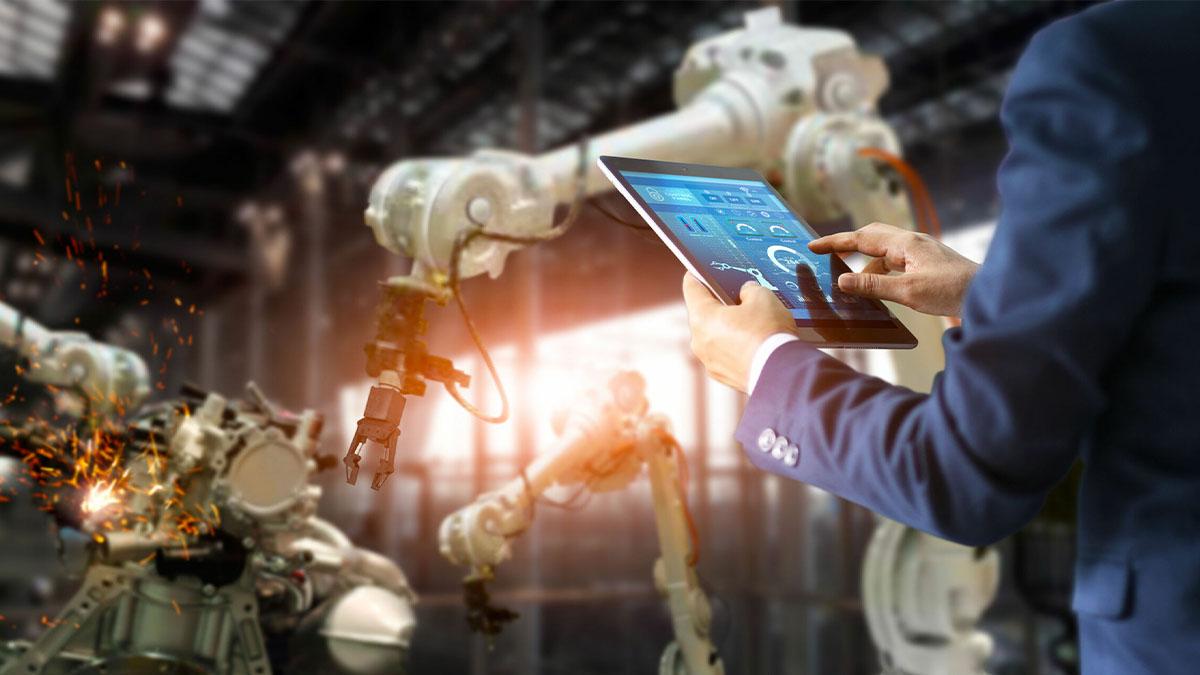
First, the use of robots in CPG applications is far more extensive than in the past. Robots are very flexible, because they can fully operate in three-dimensional space, can determine the appropriate path without re-planning complex mechanical paths, and can ultimately handle a variety of product shapes and sizes.
Second, linear motor technology, especially independent cart technology (ICT), can improve the response of machinery to a diverse product portfolio. Different from traditional transportation, traditional transportation allows products to move at a fixed speed on a pre-set path, while ICT will move the products in a smart way when the job is completed.
Finally, automatic conversion can minimize the need for manual intervention, and improve the mechanical settings of new products or packaging configurations through the human-machine interface. The new servo drive function makes this method more cost-effective. Advances in motor control technology can assist manufacturers to meet consumer demand for more product types and packaging sizes.
Integrated robot
Integrated robots are not just the hottest topic. This term can be defined as a single production line or unit controller that controls the robot, which can reduce the number of dedicated robot controllers and related hardware components such as servo motors, drives, teach pendants, and I/O. Demand. This method can use a single controller to control multiple robots and can simplify integration and improve work efficiency.
With the increasing popularity of smart factory systems, the industrial robot market has encountered huge demands in the past ten years, and robots play a pivotal role in it. Research estimates that the global smart factory market is expected to reach 388.68 billion U.S. dollars by 2024, which can provide insights into the overall end-user industrial automation of industrial robots.
The global smart factory market is expected to reach 388.68 billion U.S. dollars by 2024
To meet the needs of a small and diverse flexible production environment, more and more original equipment manufacturers (OEMs) are abandoning fixed mechanical systems and developing innovative methods to integrate robotics and advanced motion technologies. For OEMs, the key question is not just which technology is most suitable for the application, but also the best practices for integrating these technologies into the machinery and plant architecture.
Not long ago, machinery manufacturers had no choice. Advanced technology from third-party suppliers, usually equipped with a proprietary control system. Therefore, mechanical coordination relies on the challenging integration of multiple different systems. For OEMs, this situation will increase the complexity of each stage of the machinery life cycle.
If employees must specialize in multiple systems, it will be difficult to achieve design efficiency, and customer support will be more challenging. If communication is delayed and synchronization will be an obstacle, performance will be difficult to improve. Fortunately, advances in programmable safety controllers (PACs) overcome these obstacles. The latest PAC can provide faster processor speeds and higher performance, which means that machine manufacturers can adopt general methods for machine control. Advanced technologies such as robotics, ICT, and automatic conversion systems can now be implemented on the standard PAC that implements the rest of the machinery.
Single system solution
General mechanical control allows OEMs to integrate, control, and coordinate advanced technologies more easily. It can also simplify the operation and maintenance of the machine for the end-user. The end-user only needs to understand and support one system.
A machine built with a universal control platform can also provide a universal source of information generated by the machine, and put the OEM in a more advantageous position to provide this information in a meaningful way. General mechanical control can provide an outstanding foundation for visualization, reporting, and analysis solutions, and assist in monitoring important factors that affect performance, efficiency, and quality. It allows OEMs to make smarter equipment, which can be more easily integrated into the facility and provides access to information, so that end users can better respond to the ever-changing market needs.
Robot revolution
Today, robots are an important part of daily life. As the product stock-keeping unit (SKU) of products continues to increase, manufacturing equipment must be more flexible and flexible to adapt to more diversified products, and this speed requires better and higher efficiency.
Machine manufacturers are committed to understanding and improving the advantages of robots and their manufacturing needs, so that machine collaboration technology continues to improve. With the assistance of integrated robots, it seems that it is not so difficult to meet consumers' diversified needs for their favorite packaging products in terms of taste, packaging size, and multi-package products.
Due to the development of the Industrial Internet of Things (IIoT), robots can now provide real-time information that helps make business decisions. Through the cloud connection, the robot can be monitored, managed, and maintained remotely. Therefore, suppliers can support the Robot as a Service (RaaS) model.
Smart machines and equipment provide real-time data access capabilities, better connectivity, and strong security.
End-users continue to develop enterprise networking, bringing together information technology (IT) and operating technology (OT) systems into the single network architecture. Smart machines and equipment provide real-time data access capabilities, better connectivity, and strong security.
Whether it is a machine manufacturer or an end-user, integrated robots can provide unprecedented flexibility and agility, giving customers the key to more success.
Use advanced motion control technology to optimize the performance of automated machines
Automation has always been an indispensable focus in Taiwan’s manufacturing industry. In the production process, many automated actions that replace manual labor must be integrated through the motion control system. How to overcome the various barriers of motion control and develop a customized motion control system to meet the diverse needs of customers will be a challenge for automated machines.
Under the trend of automation, with the advancement of technology, our work will be more intelligent, but at the same time, we must constantly absorb the latest technology and trends in the market, so that we can maintain the best condition at any time, and have the best combat power at any time every wave of trends.

(4059)(20260924)(原).jpg)
(2367)(20260924)(原).jpg)