Customized Noodle Packaging Automation for Delicate Products in Australia
Automating the packaging of fresh noodles and dumpling wrappers presents challenges that conventional packaging equipment may struggle to handle. Soft textures, irregular shapes, and sticky surfaces can make feeding, positioning, and sealing difficult, increasing the risk of product deformation and production interruptions.
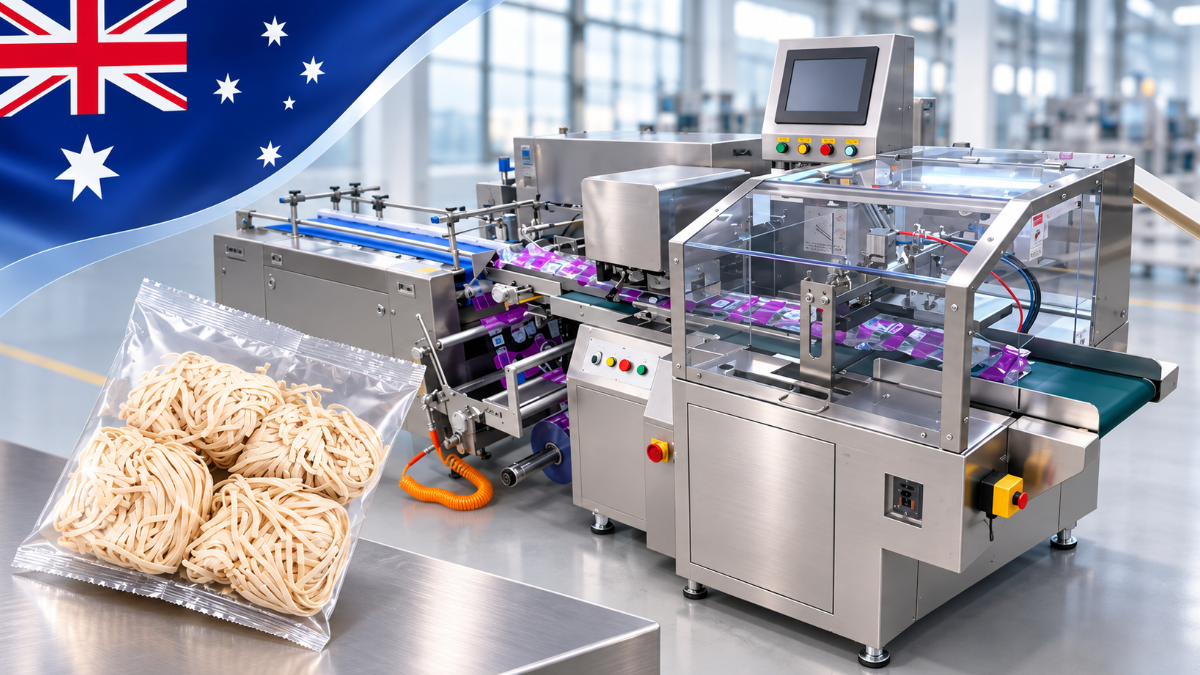
For a noodle manufacturer in Sydney, Australia, these challenges became an important consideration when expanding production capacity. To address them, Taiwan-based Tai Dragon Machinery Co., Ltd. developed a customized automated packaging line designed for gentle product handling, controlled feeding, and more consistent packaging operations.
The project demonstrates how application-specific engineering can help food manufacturers automate delicate products without overlooking product protection. For food processors evaluating a noodle packaging machine, this case highlights why feeding mechanisms, product positioning, and cutting protection should be considered alongside packaging speed.
Why Are Soft Noodles Difficult to Package Automatically?
Unlike rigid food products, fresh noodles and dumpling wrappers can be easily affected by mechanical pressure during the packaging process.
Three product characteristics make automation particularly challenging:
-
Soft and delicate textures: Excessive pressure during feeding may deform or damage the product.
-
Irregular shapes and sticky surfaces: Products may adhere to conveying components or become misaligned during transfer.
-
Inconsistent product spacing: Uneven feeding intervals can interfere with film wrapping and cutting operations.
For manufacturers transitioning from manual packaging to automated production, selecting a machine based solely on packaging speed may not be sufficient. The feeding mechanism, product detection system, and cutting protection features must also suit the characteristics of the food being handled.
A Sydney Noodle Manufacturer Turns to Customized Packaging Automation
The Australian food manufacturer was seeking an automated packaging solution to support its production expansion.
During its supplier search, the company discovered Tai Dragon through online information about Taiwanese packaging machinery manufacturers and their overseas application experience.
After discussing the production requirements, Tai Dragon's engineering team evaluated the characteristics of the noodle products and identified the need for a packaging line with specialized feeding and handling mechanisms.
Rather than relying on a standard configuration, the manufacturer developed a customized solution focused on protecting the product throughout the packaging process.
How Tai Dragon Adapted the Packaging Line for Delicate Noodle Products
The automated packaging system incorporated several engineering features designed to address the handling challenges identified in the Sydney project.
1. Belt-Type Feeding System to Reduce Product Compression
Conventional mechanical pushing methods can exert pressure on soft food products during transfer.
To address this issue, Tai Dragon integrated a synchronized belt-type feeding system that transports the noodles toward the packaging section with gentler handling.
This approach helps reduce compression and deformation during feeding, allowing the product to maintain its original shape before wrapping.
2. Automatic Position Detection for Consistent Feeding Intervals
Irregular feeding intervals can affect packaging consistency and create problems when products enter the wrapping and sealing section.
The customized line uses an automatic detection system to identify product positions and adjust feeding intervals.
By coordinating the feeding process with product detection, the system helps maintain more consistent product spacing and supports smoother packaging operations.
3. Cutting Protection to Prevent Product and Equipment Damage
Soft noodles may become misaligned during packaging. If a product obstructs the cutting area, continued cutting pressure can damage both the product and the cutting mechanism.
Tai Dragon incorporated a protective cutting mechanism designed to release or retract when an obstruction is detected.
This feature helps limit damage caused by abnormal product positioning and provides an additional layer of protection for the packaging equipment.
4. Integrated Date Printing for Product Identification
The packaging solution also includes a date-printing system capable of marking manufacturing and expiration information on packaging film.
Integrating date printing into the packaging process helps the manufacturer maintain more consistent product identification and supports its quality-control and traceability procedures.
Supporting Production Expansion with Less Manual Handling
According to Tai Dragon's published case study, the automated packaging solution helped the Sydney manufacturer support production expansion while reducing its reliance on manual feeding and packaging tasks.
The project highlights several operational benefits:
-
Reduced manual handling of soft and delicate food products.
-
More consistent product feeding and positioning.
-
Additional protection against cutting-related product damage.
-
Integrated date printing within the packaging workflow.
-
Better support for expanded production requirements.
Although the case study does not disclose specific throughput improvements or labor-saving percentages, it illustrates how a customized packaging system can address production challenges that may not be resolved by standard equipment alone.
What Food Manufacturers Can Learn from This Packaging Project
For noodle factories and other food manufacturers handling delicate or irregularly shaped products, this case highlights an important consideration: successful packaging automation depends on how well the equipment matches the product, not simply how fast the machine operates.
Before investing in an automated packaging line, manufacturers should evaluate several factors:
-
Can the feeding mechanism handle the product without excessive compression?
-
Can the system maintain consistent spacing when products vary in shape or position?
-
What protective functions are available if a product becomes misaligned?
-
Can date printing and other required production functions be integrated into the line?
-
How will the equipment connect with existing upstream production processes?
These questions are especially relevant when automating fresh noodles, dumpling wrappers, and other soft food products that require careful handling.
Customized Packaging Solutions for Food Manufacturers
The Sydney project demonstrates how Tai Dragon Machinery applies product-specific engineering to automated food packaging.
By combining belt-type feeding, automatic position detection, cutting protection, and integrated date printing, the company developed a packaging solution suited to the handling requirements of delicate noodle products.
For food manufacturers planning to expand production or reduce repetitive manual packaging work, the case provides a practical example of how customized automation can help address challenging product characteristics.
Explore Tai Dragon's automated packaging lines for more information about its food packaging solutions.