How product fragility, moisture, irregular shapes, and respiration change packaging-line design
Packaging lines for cartons, bottles, or molded plastic items can often rely on firm guides, abrupt indexing, and tightly controlled dimensions. Fresh produce is different. Mushrooms, leafy greens, peppers, cucumbers, and cut vegetables are biological materials with variable shape, moisture, firmness, and surface friction. Many continue to respire after harvest, and quality can decline when they are bruised, compressed, heated, or sealed under unsuitable conditions.
That difference changes the priorities at two critical points: infeed and sealing. The goal is not merely to place a product in a package and close it. The line must preserve appearance, texture, cleanliness, and the package environment while maintaining useful throughput.
Why Rigid Goods Are Easier to Feed
Rigid goods usually present predictable dimensions and mechanical behavior. A bottle does not wilt, a carton does not release moisture, and a molded tray normally enters a machine with a repeatable center of gravity. Equipment can therefore use fixed rails, hard stops, or synchronized pushers within relatively narrow tolerances.
Fresh produce introduces uncertainty. Greens compress and rebound. Mushrooms can interlock or bridge. Long vegetables may rotate across a conveyor. Cut pieces may stick to wet belts or arrive in uneven clusters. Even products from the same harvest can differ in size and firmness.
| Packaging factor |
Rigid consumer goods |
Fresh produce |
| Shape and size |
Usually standardized |
Naturally variable |
| Surface condition |
Dry and consistent |
May be wet, delicate, or slippery |
| Response to force |
Resists moderate impact |
May bruise, tear, crush, or scuff |
| Condition over time |
Largely stable |
Respires and loses moisture |
| Seal-area risk |
Usually low |
Fragments or moisture may enter |
A produce infeed must control energy, not merely position. Lower drop heights, gradual acceleration, suitable contact surfaces, and controlled spacing reduce impacts before the forming area. USDA inspection guidance notes that fresh-cut produce can show torn or rough edges when mechanically damaged and that excessive processing speed may contribute to damage.
Gentle Infeed Is Controlled Infeed
“Gentle” does not necessarily mean slow. It means limiting uncontrolled impacts and pressure peaks. Transfer points should minimize vertical drops and gaps where produce can tumble or become pinched. Conveyor speeds should be matched so products do not collide between belts. Guides and forming parts should accommodate natural variation rather than force oversized items through a fixed opening.
Accumulation is especially important. Rigid packs often tolerate line pressure, but produce at the front of a queue may carry the load of everything behind it. Mushrooms can bruise, leafy vegetables can compact, and cut products can release juice. UC Davis identifies compression and vibration during packaging and handling as contributors to juice leakage in fresh-cut fruit.
Metered feeding, product detection, and communication between upstream conveyors and the sealer help maintain stable flow with less back pressure. This approach can support commercially useful speeds without treating the product as an impact-resistant manufactured component.
Sealing Has Mechanical and Biological Consequences
With rigid goods, sealing is often dominated by package geometry and film performance. With produce, the seal must also account for moisture, contamination in the seal area, product compression, and respiration.
A jaw that closes on a stem, leaf fragment, or mushroom edge can damage the food and create a weak seal. Moisture or soil in the seal zone can also reduce consistency. Accurate placement, sufficient clearance, and protection against cutting or crushing the contents are therefore essential.
Temperature, pressure, and dwell time must be balanced. Too little energy may leave an incomplete seal; too much may distort film, transfer unnecessary heat, or increase sticking. Correct settings depend on film structure, thickness, speed, package format, and environmental conditions, so they should be validated with actual production materials.
Complete gas isolation is not automatically desirable. Fruits and vegetables remain metabolically active after harvest. Film permeability, perforation, package volume, temperature, and respiration rate must work together. NC State Extension advises that shrink-wrap film for sweetpotatoes must allow root respiration, while FAO guidance warns that insufficient ventilation can delay cooling and contribute to heat-related damage.
The correct package is therefore not simply the tightest possible package. It is one that combines dependable seals with an atmosphere and moisture environment suited to the commodity and its expected distribution conditions.
Hygiene, Changeover, and Validation
Fresh-produce lines commonly encounter water, plant debris, soil particles, and organic residue, making cleanability and access important selection criteria. The FDA Produce Safety Rule establishes science-based standards for growing, harvesting, packing, and holding covered produce, while its fresh-cut guidance addresses controls intended to reduce microbial hazards in processing environments.
Changeover capability also affects product protection. A mixed-product line may need different bag lengths, forming dimensions, conveyor speeds, and sealing settings. Repeatable adjustments reduce the risk of running a commodity through a setup that is only approximately suitable.
Commissioning should use product-specific trials. Teams can track bruising, seal integrity, leakage, pack appearance, product giveaway, downtime, and shelf-life performance under realistic temperature and moisture conditions. Throughput should rise only after quality remains stable.
Frequently Asked Questions
1. Are all fresh vegetables too delicate for high-speed packaging?
No. Some vegetables are relatively robust, but high speed still requires controlled transfers, accurate spacing, and suitable settings. The safe operating window depends on variety, maturity, temperature, moisture, and package format.
2. What is a common infeed mistake?
Mismatched conveyor speeds or excessive accumulation pressure. Both can cause collisions, compression, and irregular presentation when products enter the forming section.
3. Why does product in the seal area matter?
A leaf, stem, cut piece, or droplet can prevent uniform film contact. The result may be a channel leak, contaminated seal surface, rejected pack, or damaged product.
4. Does a stronger seal always improve shelf life?
Not necessarily. Seal integrity matters, but respiration and moisture behavior also matter. Package design should match the commodity, film, storage temperature, and expected distribution period.
5. How can a processor confirm that handling is gentle enough?
Controlled trials should inspect for bruising, torn edges, scuffing, compression marks, leakage, and visual deterioration. Evaluation should take place immediately after packaging and again during the intended storage period.
6. Which machine features help mixed-produce operations?
Adjustable forming parts, stored operating recipes, variable-speed conveyors, product detection, accessible cleaning areas, and protection that prevents the sealing head from cutting the product can support safer changeovers and more consistent operation.
Conclusion
Fresh-produce packaging is not simply a softer version of rigid-goods packaging. It is a different control problem. Infeed must manage irregular geometry and fragile tissue without creating harmful impacts or back pressure. Sealing must provide dependable closure while accounting for moisture, product intrusion, heat exposure, and respiration.
Processors that evaluate equipment around these realities are more likely to achieve the combination that matters: stable throughput, attractive packs, reliable seals, and preserved product quality.
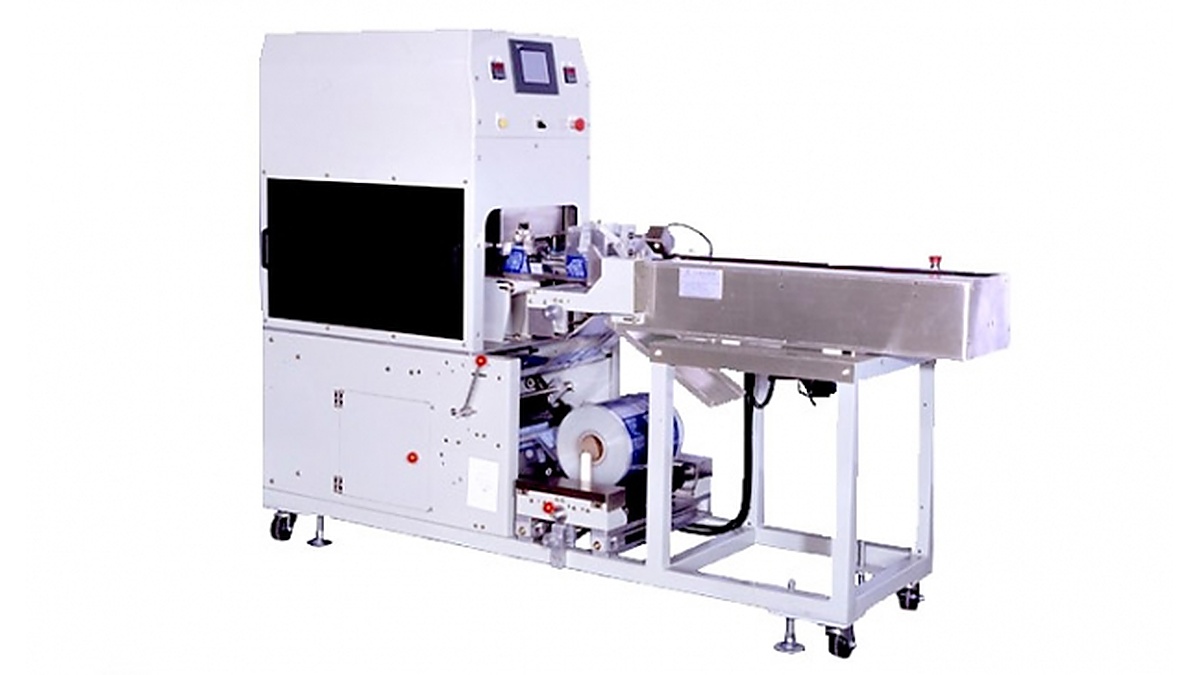
For readers comparing vegetable and mushroom packaging options, the manufacturer’s specifications for the Long Durable LF-720V automatic vegetable packaging sealer offer a useful starting point for reviewing adjustable bag settings, sealing-head product protection, and common retail pack formats. Final suitability should always be confirmed through trials using the intended produce and packaging film.

(4059)(20260924)(原).jpg)
(2367)(20260924)(原).jpg)