Unexpected equipment failures can disrupt production and increase costs. Learn how preventive maintenance, equipment monitoring, and data-driven maintenance strategies help manufacturers improve reliability and maximize operational efficiency.
For manufacturers, reliable equipment operation is the foundation of maintaining production efficiency and on-time delivery. Yet many factories continue to experience unexpected equipment failures that result in production downtime, delayed shipments, rising maintenance costs, and even damage to customer trust and business profitability.
Many companies still follow a reactive maintenance approach—repairing equipment only after it fails—treating maintenance as a response to breakdowns rather than an integral part of daily operations. When unexpected failures occur, businesses not only incur additional labor and repair costs but also disrupt production schedules, leading to even greater operational losses.
For manufacturers, effective equipment management is not defined by how quickly machines can be repaired, but by how effectively failures can be prevented. Establishing a preventive maintenance program is essential for improving equipment reliability, production efficiency, and overall operational performance.
Why Does Equipment Keep Failing Unexpectedly?
Equipment failures rarely occur without warning. In most cases, they are the result of gradual deterioration over time.
Before a breakdown occurs, equipment often exhibits warning signs such as excessive vibration, rising temperatures, inadequate lubrication, component wear, or declining performance. Without regular inspections and condition monitoring, however, these early indicators are easily overlooked until they eventually lead to unplanned downtime.
In addition, some manufacturers operate equipment continuously under heavy workloads to meet production demands, postponing scheduled maintenance or delaying component replacement. This significantly increases the likelihood of equipment failure.
When equipment history is poorly documented and maintenance relies heavily on the experience of individual technicians, manufacturers struggle to assess equipment health and prevent failures before they occur.
Ultimately, most unexpected breakdowns are not unpredictable—they are the result of insufficiently structured equipment management.
What Is the Difference Between Reactive and Preventive Maintenance?
Traditional Reactive Maintenance focuses on repairing equipment after it has already failed. While this approach may reduce maintenance expenses in the short term, it often results in unexpected downtime, production interruptions, and higher repair costs.
Preventive Maintenance, by contrast, follows scheduled inspections, servicing, and component replacement based on operating hours, maintenance intervals, or manufacturer recommendations. Its objective is to reduce the risk of equipment failure before breakdowns occur.
As smart manufacturing continues to evolve, many manufacturers are also adopting Predictive Maintenance, which uses sensors, IoT technologies, and equipment data analytics to continuously monitor machine conditions and predict potential failures before they happen.
Over the long term, both preventive and predictive maintenance help reduce downtime, extend equipment lifespan, and maximize return on equipment investment.
How Can Manufacturers Build an Effective Preventive Maintenance Program?
An effective preventive maintenance program is more than scheduling routine servicing—it requires a comprehensive equipment management system.
Establish Equipment History Records
Maintain complete records of equipment specifications, maintenance history, repair activities, failure causes, and replacement parts. These records provide valuable insights into equipment reliability and support more effective maintenance planning.
Develop Scheduled Maintenance Plans
Create inspection, servicing, and replacement schedules based on equipment criticality, operating frequency, and manufacturer recommendations to reduce the risk of failures caused by excessive use.
Standardize Maintenance Procedures
Implement Standard Operating Procedures (SOPs) and maintenance checklists to ensure inspections and maintenance activities are performed consistently, improving maintenance quality and operational efficiency.
Build a Maintenance-Oriented Culture
Equipment management should not be limited to maintenance teams alone. Production operators should also participate in routine inspections and report abnormalities promptly. Promoting the principles of Total Productive Maintenance (TPM) helps create a culture of shared responsibility for equipment reliability.
How Can Data Improve Equipment Reliability?
Equipment management is evolving from experience-based decision-making to data-driven management.
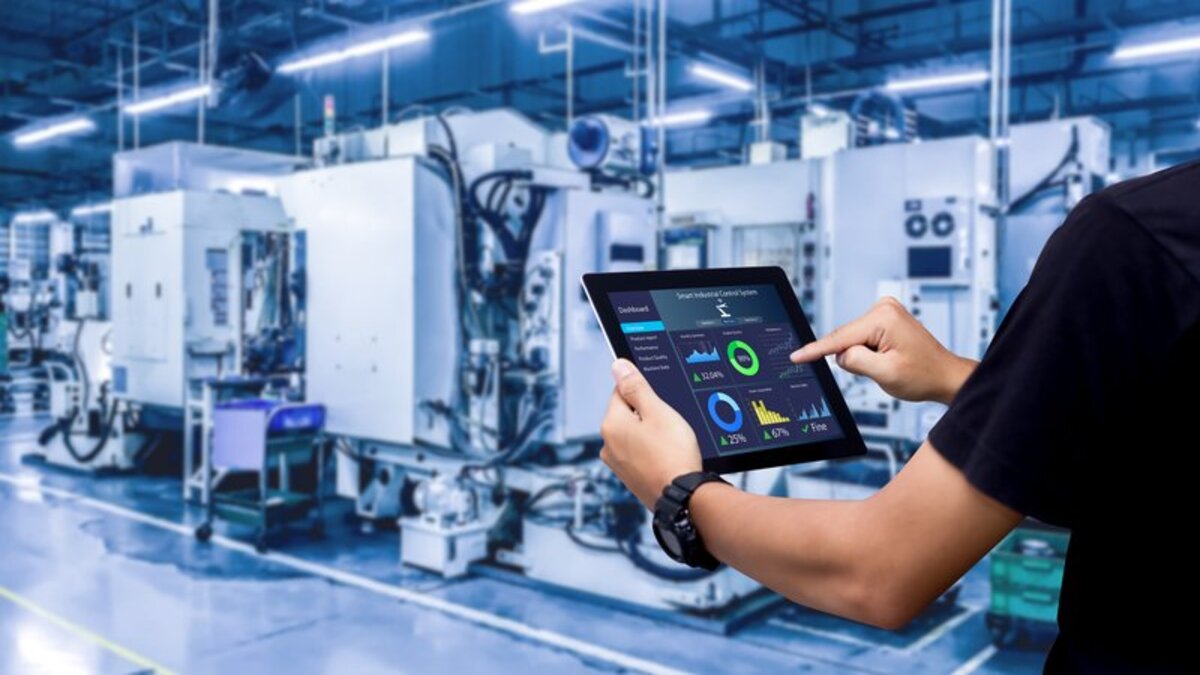
By integrating connected equipment, IoT sensors, and equipment monitoring systems, manufacturers can monitor machine temperature, vibration, energy consumption, and operating conditions in real time, allowing abnormalities to be detected at an early stage.
In addition, performance indicators such as Overall Equipment Effectiveness (OEE), Mean Time Between Failures (MTBF), and Mean Time to Repair (MTTR) provide valuable insights into equipment performance and support continuous improvement of maintenance strategies.
When maintenance decisions are based on data rather than reactive responses, manufacturers can significantly improve equipment reliability and production stability.
From Equipment Repair to Equipment Management
In today's increasingly competitive manufacturing environment, equipment management is no longer solely the responsibility of the maintenance department. It has become a strategic capability that directly influences production efficiency, cost control, and business competitiveness.
Effective equipment management is not simply about repairing machines quickly—it is about continuously monitoring, maintaining, and improving equipment throughout its entire lifecycle to minimize downtime and maximize asset utilization.
In the future, manufacturing competitiveness will depend not only on investing in advanced equipment but also on keeping that equipment operating reliably. By implementing comprehensive preventive maintenance programs and leveraging data-driven equipment management, manufacturers can reduce operational risks, improve production efficiency, and build more resilient manufacturing operations.





.jpg)
.jpg)