Understanding KVM & AV Integration: Fundamentals & Applications
Knowledge

Understanding KVM & AV Integration: Fundamentals & Applications

As smart building, IoT, and cloud technologies advance rapidly, the demand for remote control and multi‑device integrated management across industries has surged. Any environment with multiple integrated devices needs a stable, secure, and efficient system that allows centralized monitoring and control—ensuring real‑time transmission of information and video. However, traditional single-point management struggles with large-scale, geographically dispersed deployments. In this context, KVM technology combined with AV integration solutions has emerged as a critical tool in the smart era.
Published: Aug 08, 2025
Understanding KVM & AV Integration: Fundamentals & Applications

What is KVM?

KVM (Keyboard, Video, Mouse) is a system that allows users to operate multiple computers or servers from a single control station. Early KVM setups relied on hardware switches for manual target selection. As technology evolved, KVM now supports high‑resolution video and USB device sharing for smoother operation.

With modern advances like KVM over IP, remote control extends across the internet—breaking geographic barriers. This evolution transforms KVM into more than a switching tool: it's a foundation for remote maintenance, centralized management, and cybersecurity.

Integration of KVM and AV Technology

In many applications, managing just keyboard, mouse, and video isn't enough—high‑resolution AV content must also be transmitted in real time.

AV integration plays a key role by unifying video, audio, and data streams onto a single platform with low latency.

Combined with KVM, this integration offers:

  • A single interface for centralized control, reducing cumbersome switching and setup.
  • Support for multiple formats and resolutions, maintaining high-quality visuals and sound.
  • Real-time monitoring and response, improving operational efficiency and safety.
  • Through this fusion, KVM evolves into not just a tool for managing multiple computers, but a core platform for multimedia and control systems.

    Application Examples

  • Education:

    In large digital campuses or multi‑classroom environments, IT administrators use KVM over IP to remotely manage classroom PCs, projectors, and cameras—enabling instant lesson switching, recording, and quick troubleshooting.

  • Traffic Control Centers:

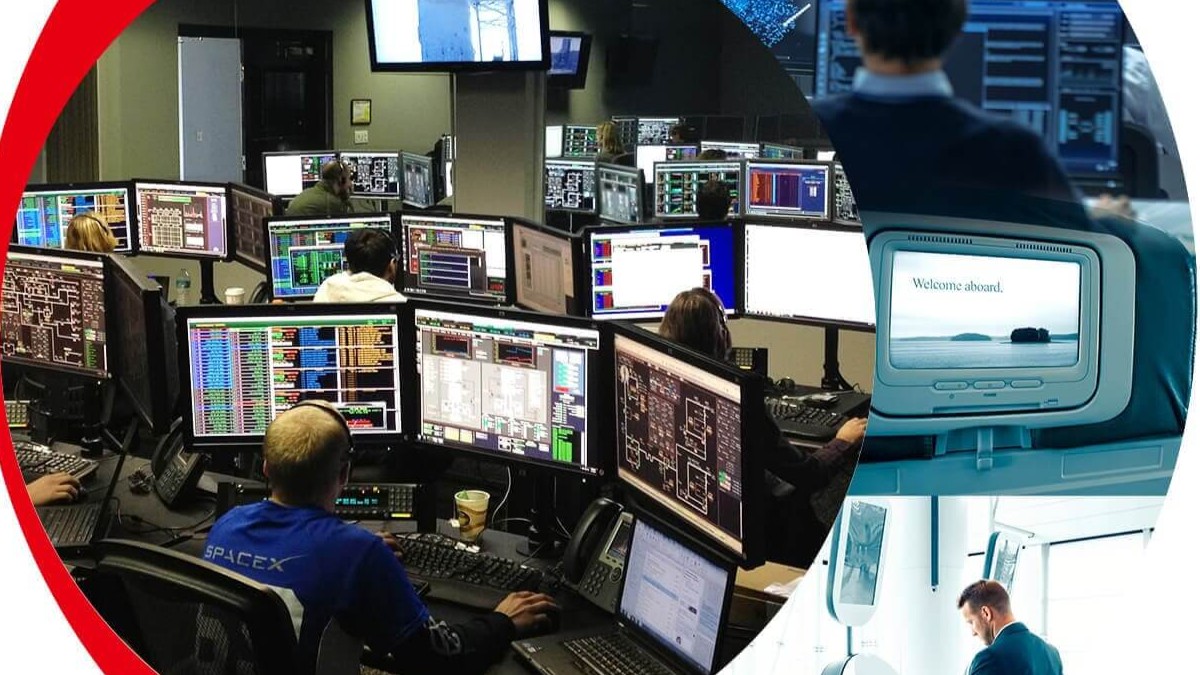
    For highway surveillance and metro dispatching, operators manage dozens of video feeds. KVM + AV integration allows quick switching with minimal latency, ensuring timely decisions.

  • Live Events:

    Stage crews manage lighting, audio, and multimedia from a single interface—boosting collaboration efficiency.

  • IT Server Rooms:

    Engineers remotely maintain, update, and troubleshoot servers via KVM over IP—reducing on-site labor and improving response.

  • Value for Smart Buildings & IoT

    In smart buildings and IoT contexts, the value of KVM + AV integration includes:

  • Centralized management:

    Consolidate devices from multiple floors or zones under one control system.

  • Immediate response:

    Instantly switch to relevant devices when anomalies are detected.

  • Resource convergence:

    Integrate AV monitoring, access control, environmental sensors, and IT systems for holistic efficiency.

  • AI integration:

    Future enhancements could include AI‑driven real‑time video/data analysis—automatically switching to critical feeds and notifying operators when issues arise.

  • Conclusion

    In today’s era of digital transformation and intelligence, KVM—enhanced with AV integration—is no longer merely a backend utility. It is a strategic solution for improving efficiency, ensuring security, and optimizing resources across diverse industry environments.

    As AI, cloud computing, and IoT continue to merge, this technology will broaden its role—becoming the indispensable engine of remote management in the smart era.

    Published by Aug 08, 2025

    Further reading

    You might also be interested in ...

    Headline
    Knowledge
    How to Choose the Right Ball Bearing Drawer Slide: Light, Medium, or Heavy Duty?
    Choosing the right Ball Bearing Drawer Slide is essential for smooth operation, reliable load support, and long-lasting performance.
    Headline
    Knowledge
    Stop the Stress: 5 Non-Negotiable Questions to Ask Your Bubble Tea Ingredient Supplier Today
    Opening a bubble tea shop is exciting, but the reality is built on a complex, global supply chain.
    Headline
    Knowledge
    Exploring the Pros and Cons of Seal-less Magnetic Drive Pumps in Industrial Use
    Industrial process engineers are increasingly adopting seal-less magnetic drive pumps to enhance system safety and reliability. Unlike traditional pumps that rely on mechanical seals, magnetic drive pumps offer a fully enclosed structure that eliminates leakage risks—a major advantage when dealing with corrosive or toxic liquids.
    Headline
    Knowledge
    H-Beams and I-Beams: Modern Cutting Methods for Structural Steel
    In structural engineering projects such as bridges, high-rise buildings, and industrial facilities, the accurate cutting of H-beams and I-beams is vital for ensuring safety and structural integrity. Fabricators utilize a variety of cutting methods to meet project demands, including laser cutting, plasma cutting, water jet cutting, and large band saws.
    Headline
    Knowledge
    Essential for Precision Machining: A Complete Guide to Tungsten Carbide Center Drills
    In modern manufacturing, precision is the core standard by which product quality and performance are measured. From aerospace components to medical devices, even a minor deviation can lead to serious consequences. When it comes to precision drilling, a critical challenge is ensuring that a drill bit can be accurately positioned at the start of a cut while maintaining stability during high-intensity operations. The tungsten carbide center drill is the professional tool engineered specifically to solve this problem.
    Headline
    Knowledge
    From Cavitation Effect to Industrial Applications: The Secrets of Ultrasonic Cleaning
    When your glasses, tableware, or electronic components are stained with stubborn dirt, what can you do? Traditional methods often require vigorous scrubbing or even harsh chemical solvents, which are not environmentally friendly and may scratch the item. At this moment, ultrasonic cleaning acts like an “invisible little helper”, reaching deep into grooves and gaps to gently yet effectively remove contaminants.
    Headline
    Knowledge
    The “Spark Magician” of Metalworking
    Electrical Discharge Machining (EDM) is a non-traditional machining process that removes metal through electrical sparks. Unlike conventional methods, it is not limited by material hardness and can precisely create deep cavities, micro-holes, and complex structures in hardened steel, tungsten carbide, or superalloys. The three main types of EDM include wire cutting, die-sinking, and hole drilling, which are widely applied in mold making, aerospace, automotive, and medical industries. Although EDM has a slower processing speed, works only with conductive materials, and requires consideration of electrode wear and surface treatment, its advantages in high precision, zero cutting force, and superior surface finish make it an indispensable technology in precision manufacturing. Moreover, it continues to evolve in line with the trend toward smart manufacturing.
    Headline
    Knowledge
    Press Brake vs Shearing Machine: Functional and Technical Comparison of Industrial Processing Equipment
    Press Brake and Shearing Machine are two essential types of equipment in the field of machine tools, widely used in the processing of metal, wood, and other materials. They play critical roles in manufacturing, enabling efficient and precise material forming and cutting. This article introduces the definitions, functions, technical features, and applications of folding and cutting machines, offering neutral and practical knowledge sharing.
    Headline
    Knowledge
    Master Chuck Types & Selection: The Essential Guide for Machinists
    In the world of precision manufacturing, every minute detail can determine the quality of the final product. The chuck is a critical yet often overlooked component—it's not just a tool for holding a workpiece, but the very heart of ensuring machining accuracy, efficiency, and safety. This article will take you on a deep dive into the diverse universe of chucks, covering their operating principles, design philosophies, common types, and how to select the right jaws and chucks for different needs. Whether you're new to the industry or a seasoned engineer, this guide will unlock the intricate secrets of chucks, helping you master every detail on your path to manufacturing success.
    Headline
    Knowledge
    An Overview of Electrical Discharge Machining (EDM)
    Electrical Discharge Machining (EDM) is a non-traditional manufacturing process that utilizes electrical sparks to remove material from a workpiece. Unlike conventional machining methods such as milling or turning, which rely on physical contact between a tool and the material, EDM operates without direct contact, making it ideal for processing hard or brittle materials that are difficult to machine otherwise. The process involves generating a series of rapid electrical discharges between an electrode and the workpiece, submerged in a dielectric fluid, which erodes the material through thermal energy. This technique has revolutionized precision manufacturing by enabling the creation of complex geometries with high accuracy.
    Headline
    Knowledge
    Applications of Machine Tools in the Aerospace Industry
    The aerospace industry is a highly specialized and technology-driven sector, encompassing the design, manufacturing, and maintenance of aircraft, spacecraft, satellites, and related equipment. Machine tools play a critical role in this field, enabling the precision machining of complex metal and composite material components. These tools enhance production efficiency while ensuring the accuracy and reliability required to meet the stringent safety and performance standards of aerospace. This document outlines the key applications, technologies, benefits, and future trends of machine tools in the aerospace industry.
    Headline
    Knowledge
    Smart Healthcare Uncovered:How AI Is Transforming Clinical Practice?
    With the rapid rise of artificial intelligence (AI), the healthcare industry is undergoing a disruptive transformation. AI is significantly improving diagnostic accuracy and treatment efficiency while profoundly redefining healthcare professionals’ roles and patient experiences. A comprehensive understanding of the core technologies and clinical applications behind this transformation is essential for grasping the future trends and strategic directions of smart healthcare.
    Agree