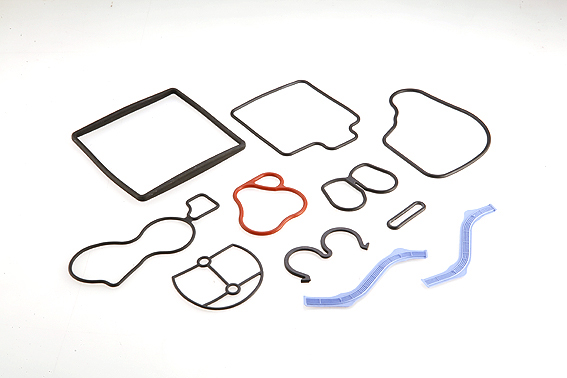
Anodizing is a treatment used to enhance the surface properties of metals. It can improve the appearance, durability, conductivity or other properties of a metal surface and help protect it from wear and corrosion. In addition, it can also be used to make different shaped materials, such as rubber rings, pressure-type parts or trimming cutting tools. Therefore, anodizing is a common metalworking method.
Purpose and Application of Anodizing Treatment
Generally, aluminum alloys are easily oxidized in the air. Although the natural oxide layer has a certain passivation effect, as a result of long-term exposure, the oxide layer will still be damaged and peeled off, losing its protective effect.
Therefore, the purpose of anodic oxidation treatment is to use its easy-to-oxidize characteristics to quantitatively form an oxide layer on the surface of the product by electrochemical methods to prevent further natural oxidation of the aluminum material and increase the mechanical properties (functionality) of the surface; another purpose is, through different back-end reactions, various colors are produced to enhance the appearance (decorative).
Aluminum alloy anode treatment is widely used in aerospace, military weapons, electronic digital, auto parts, precision machinery equipment, semiconductor industry, optoelectronic industry, construction industry, aluminum doors and windows, etc.
Anodizing Overview
Metal anode treatment is metal in the electrolytic solution, with the treated part as the anode, and the corrosion-resistant material as the cathode, through the electrochemical treatment method to generate wear-resistant, corrosion-resistant and other functional or decorative components on the metal surface. The process of transforming the film layer.
Anodizing objects can be aluminum and aluminum alloys, magnesium alloys, titanium and titanium alloys, etc. The most widely used and fastest growing in the market is anodizing of aluminum and aluminum alloys.
Natural hard anodizing
Aluminum anodizing is a processing method that allows the color to penetrate into the inner layer of the object. The process is to place the aluminum or aluminum alloy workpiece on the anode in the electrolytic bath, and apply a certain voltage and current to promote the formation of a well-adhesive oxide layer on the surface of the workpiece. Because aluminum alloys are easy to oxidize, although the oxide layer has a certain passivation effect, the oxide layer will still peel off and lose its protective effect after long-term exposure. Therefore, the purpose of anodizing is to use its easy-to-oxidize characteristics to control oxidation by electrochemical methods. The formation of a layer to prevent further oxidation of the aluminum, while increasing the mechanical properties of the surface, such as increasing the hardness.
Applicable: mechanical assembly applications, automobile and locomotive industries, ship parts, aerospace industry, food equipment, biotechnology, medical equipment, optoelectronics, and semiconductor industries.
Black hard anodizing
Different chemical reactions produce various colors to enhance the appearance.
Applicable: optoelectronic semiconductor industry, mechanical assembly application, aerospace industry, biotechnology, automobile and motorcycle industry, ship workpiece, food equipment, medical instrument.
Natural anodizing
Applicable: optoelectronic semiconductor industry, mechanical assembly application, aerospace industry, biotechnology, automobile and motorcycle industry, ship workpiece, food equipment, medical instrument.
Black anodizing
Different chemical reactions produce various colors to enhance the appearance.
Applicable: optoelectronic semiconductor industry, mechanical assembly application, aerospace industry, biotechnology, automobile and motorcycle industry, ship workpiece, food equipment, medical instrument.
Chromates
Different chemical reactions produce various colors to enhance the appearance.
Applicable: mechanical assembly application, aerospace industry.
Characteristics of Aluminum Alloy Anodizing
General anodic treatment can also be called "decorative anodic treatment". Its characteristic is that it can form a bright and corrosion-resistant surface on the surface of aluminum, and can choose bright surface treatment or matte surface treatment (pear surface) according to customer's preference. Because the formed surface is porous and has excellent permeability, the surface can be soaked or sublimated with organic or inorganic dyes to make it penetrate into the capillary pores to form finished products with various colors and patterns. And the color comes with various changes, which is the characteristic of general anodic treatment.




.jpg)
.jpg)