Through ultrasonic-assisted processing technology, hard and brittle materials can be processed easily, reducing-edge chipping and improving surface quality.
What is Ultrasound?
A sound wave is a kind of longitudinal wave that can be felt by the human ear. The upper limit of human hearing frequency is 16 ~ 20 kHz, so the frequency is higher than 16 kHz, which is an ultrasonic wave. Because the frequency of ultrasonic waves can be high, the directionality of propagation is strong. During the transmission of ultrasonic waves, the acceleration of medium vibration is large. Ultrasonic waves are widely used in industry, such as ultrasonic flaw detection, ultrasonic cleaning, emulsion manufacturing, chemical reaction promotion, ultrasonic welding, metal, and plastic processing, cutting, grinding, etc. The methods of ultrasonic cutting and grinding can be roughly divided into ultrasonic machining (USM) and rotary ultrasonic machining (RUM).
How is Ultrasound Processed?
The processing principle of ultrasonic processing applied to advanced materials is based on the critical depth of cut in the ductile processing characteristics of various materials, and removes materials with micro-impacts up to 20,000 to 50,000 times per second, supplemented by scraping off materials in a rotating manner Composite processing method.
It can be widely used in occasions with special process requirements such as various hard and brittle materials, difficult-to-cut materials, high-temperature-resistant superalloys, and composite materials. When the chip thickness is less than or equal to the critical depth of cut, the cutting pattern is no different from the traditional metal material cutting. However, when the chip thickness gradually increases and exceeds the critical depth of cut for ductile processing of the material, the phenomenon of material rupture will occur immediately, resulting in the result of processing failure. However, such a small critical depth of cut is impossible to achieve in terms of the motion resolution of the current general processing equipment, and it can be achieved with the help of ultra-precision processing equipment. Therefore, ultrasonic processing technology was proposed as early as the 1950s. Mainly for processing solutions for hard and brittle materials, applied to hard and brittle materials such as alumina, zirconia, sapphire, silicon, quartz, and glass-ceramic.
Install the ultrasonic processing equipment on the traditional lathe equipment, through the ultrasonic oscillator and the tool fixing device with the amplitude amplification structure, according to the sine wave design of the ultrasonic amplitude transmission and amplification, the tool is fixed at the place with the largest ultrasonic amplitude position, for cutting hard and brittle optical glass materials. The ultrasonic processing frequency used is 39~40 kHz and the maximum amplitude is 5 µm. With rotary ultrasonic machining technology, traditional machine tools can be used to perform fine cutting patterns, replacing the technical barriers of ultra-precision machining equipment and its extremely fine motion resolution.
What is an Ultrasonic Rotary Processing Machine?
The development of ultrasonic processing is applied to the processing of hard and brittle materials, and to improve the processing efficiency of hard and brittle materials. Ultrasonic processing has been successfully applied to the processing of materials such as carbide, stainless steel, ceramics, and glass.
Ultrasonic processes can be used in conjunction with many traditional turning, drilling, and boring operations to efficiently process metal and non-metal materials. Benefits include increased material removal rates, reduced tool wear, and improved machined surfaces.
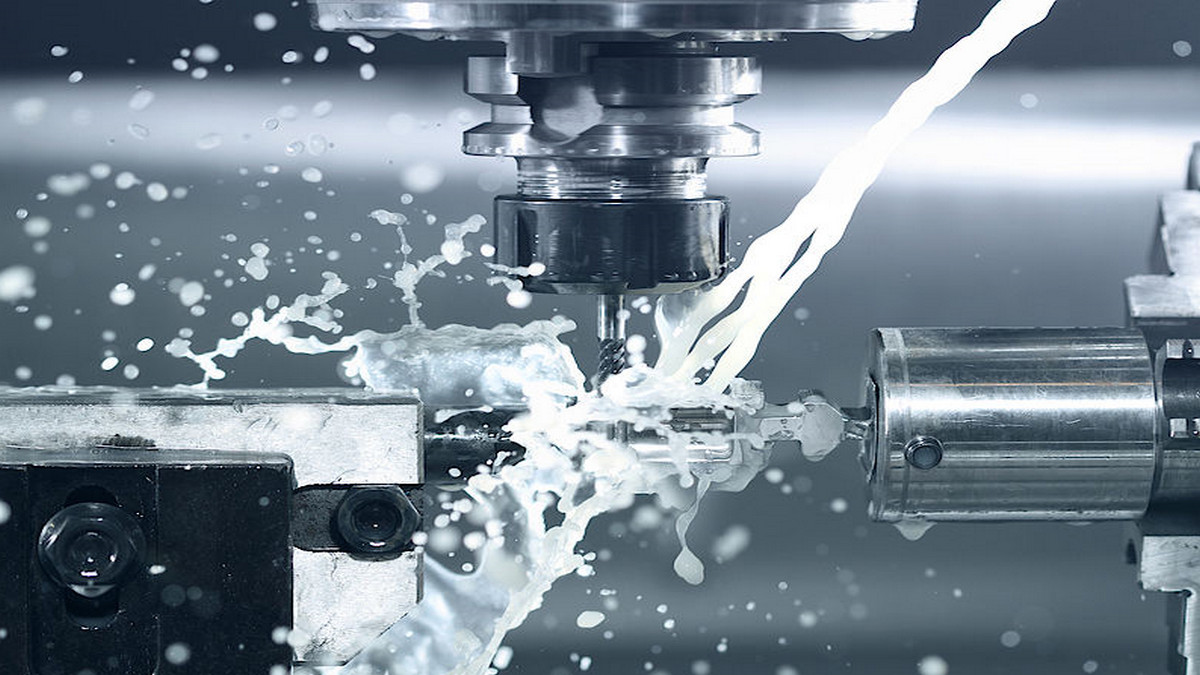
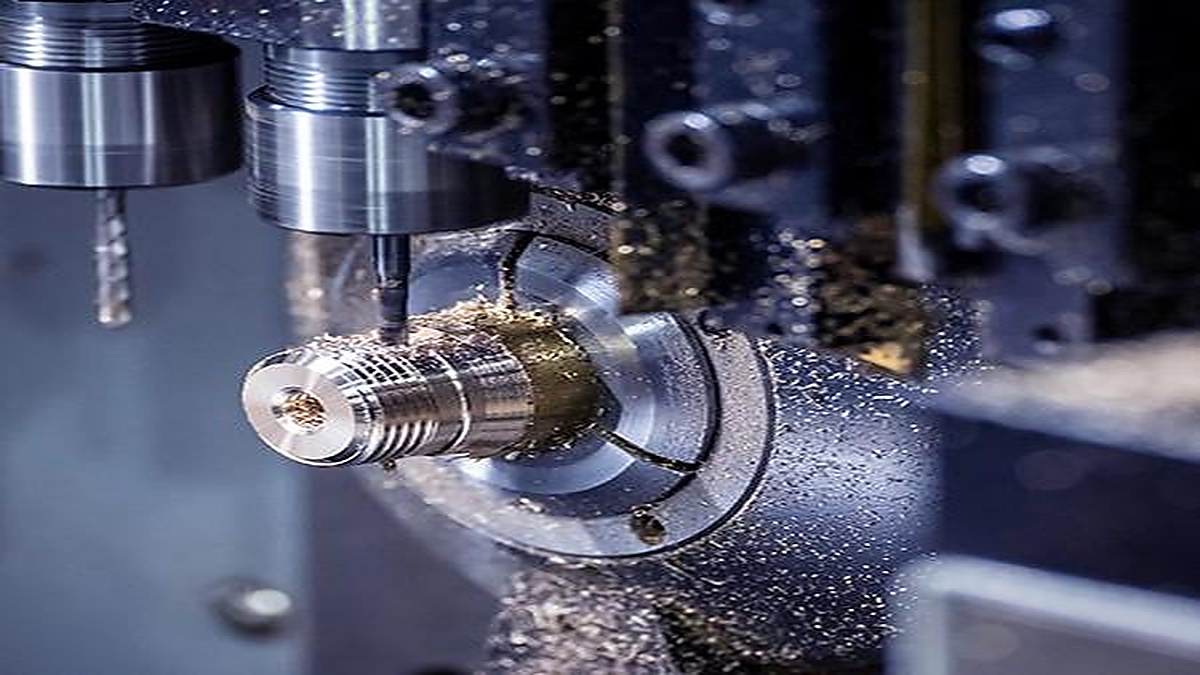
In the processed semiconductor and 3C industries, the demand for processing hard and brittle materials is increasing. Ultrasonic Given the need for ultrasonic processing, develop an ultrasonic rotary machining spindle. The tools used in its processing are processed with high-speed rotation and high-frequency vibration in the axial direction and can be applied to drilling, cutting, boring, or thread cutting. The ultrasonic rotary machining spindle can be easily installed on the CNC machine.
What is the Processing Principle of Ultrasonic Processing?
The ultrasonic rotary machining spindle uses the tool to contact the workpiece to cut, which is different from ultrasonic abrasive machining. The diamond cutter used in it rotates at a high speed to grind. In some processing occasions, the workpiece also needs to be rotated. Material removal can be facilitated under multiple motions such as axial, high-frequency vibration, and tool rotation.
-
Cutting:
Ultrasonic rotary machining spindle is often used to process hard, brittle, and difficult-to-cut materials. Such as ceramics and pure iron materials, and can provide efficient cutting processing on aluminum alloy, glass, quartz, zirconium, ruby, sapphire, beryllium oxide, boron, etc.
-
Drilling process:
Drilling needs to be done on hard materials, and it is difficult to drill small holes with traditional tools. Bits can deflect, making it difficult to control straightness tolerances. Ultrasonic rotary machining is often more precise than conventional drilling when drilling holes in hard materials. The coolant flows from the core of the drill bit to wash away the chips and cool the tool, and some tools are supplied with coolant from the outside. During processing, the diamond drill can vibrate axially to reduce friction, which is more efficient and faster than traditional methods, and the blockage of the tool and the core can be reduced.
The advantages of ultrasonic processing applied to the processing of hard and brittle materials:
CNC ultrasonic rotary spindle processing machine, because the tool itself is a set of ultrasonic longitudinal vibration horns, so compared with traditional CNC spindle processing machines, the advantages of applying to hard and brittle materials are as follows:
- Reduce processing resistance.
- Improve processing efficiency.
- Improve the roughness of the processed surface.
- The tool itself will never stick to debris, prolonging the service life of the tool.
- No residual processing stress.
Application Fields of Ultrasonic Processing:
Ultrasonic processing application fields and market opportunities Ultrasonic processing technology expands in the application field. With semiconductors, optoelectronics, aerospace, medical equipment, energy, electric vehicles, 3C electronics, precision machinery, etc. Many lightweights, harder, tougher, and high-temperature-resistant advanced materials are gradually popularized and deepened in the scope of various applications, and continue to deepen, gradually becoming one of the standard process technologies in various industrial fields.
Application fields of CNC ultrasonic rotary spindle processing machine:
- Glass processing (touch panel).
- Processing of hard and brittle materials (such as quartz, silicon carbide, zirconia.)
- Processing mode Drilling, square hole opening, edge trimming, chamfering, long slot milling, blind hole milling, etc.
What are the Advantages of Ultrasonic Processing?
Rotary ultrasonic processing technology has verified the particularity and superiority of ultrasonic processing in occasions requiring processes. Such as optical components, hard and brittle materials, difficult-to-cut materials, high-temperature-resistant superalloys, and composite materials.
- Cutting force reduced by 40%.
- Cutting efficiency increased by 300%.
- Tool life is effectively improved.
- Reduce the phenomenon of micro-cracks in hard and brittle materials.
- Improve workpiece surface roughness.
Material processing has become a market for the CNC machine tool industry. In the future, the decisive point will be high-efficiency, high-quality hard, tough, and lightweight advanced material processing technology and equipment, no longer traditional precision metal cutting technology. However, there is still a long way to go for the mold and precision machinery parts industry, as well as the application and change of new materials. It is expected that ultrasonic processing technology can also improve the processing quality and efficiency of traditional metal materials, higher-grade mold steel materials, and various tool alloy sheets of steel, and even simplify the current manufacturing procedures. To achieve rapid production and reduce the dependence on manual processes.
Ultrasonic processing technology applied to mold industry analysis Ultrasonic processing technology applied to the field of mold and precision parts processing has gradually become popular. At present, in the range of common materials such as various special die sheets of steel, alloy tool steels, powdered high-speed steels, and tungsten steels, we can analyze the specific target expectations of the market for process technology improvement needs.
Common needs in the fields of various mold manufacturing industries:
- CNC automated high-gloss and mirror processing, reducing or even replacing manual polishing and grinding processes.
- Reduce or replace reliance on discharge processes.
- Reduce the surface stress residue caused by various processing techniques or additionally remove the surface hardening layer.
- Improve overall processing efficiency and reduce processing costs.
- Improved tool life and reliability.
The current ultrasonic processing technology for the mold and precision parts processing industry has successfully verified the feasibility of three important indicators, namely, significant changes in materials, manufacturing processes, and performance. In terms of materials, ultrasonic machining technology has been proven to easily process tough special alloy tool steels, and even higher-grade ceramic materials such as SiC, SiN, or ceramic matrix composite materials.
As for the change in the manufacturing process, many small-diameter grinding rods are used for grinding instead of milling. Therefore, the grinding process can be further refined to the grinding and polishing process, replacing the long-term dependence on manual labor. Manual grinding and polishing can improve the negative impact caused by human factors and the serious problem of serious fault shortage of current practitioners. It can be combined with the current technological requirements for surface finishing and mirror surface processing of advanced metal laser volume layer manufacturing technology to bring an effective solution to surface hardening layer processing and can be applied to current molds that require maintenance and welding repairs for the final finishing process requirements.






.jpg)
.jpg)