Technology today is evolving at a rapid pace, and these changes and progress have resulted in an even greater acceleration of change. One of the greatest areas of change that has come about as a result of COVID-19 outbreak is IT technologies. IT professionals have come to realize that their role will not stay the same in the contactless world of tomorrow.
TrendForce, a global market research organization, has sorted out the top technology trends for the development of the technology industry in 2022. Let’s look at the details and grasp the trend pulse ahead!
Active drive solutions will become the development trend of Micro/Mini LED displays:
Although there have been many bottlenecks in Micro LED technology development in 2022, with overall cost remaining high, the upstream, midstream and downstream manufacturers participating in Micro LED production are still enthusiastic and actively establishing Micro LED production lines. Of the Micro LED self-luminous display application products on the market, TV products are the most popular. At present, one of the main product technologies being developed is Micro LED displays. TV has a lower resolution specification threshold than other IT products, so this is conducive to the development of Micro LED technology. Samsung has launched a 110-inch commercial Micro LED, and is expected to continue to develop household TVs that are under 88 inches. By transitioning from large-scale, commercial display applications to home applications, they hope to expand the overall market for Micro LED applications.
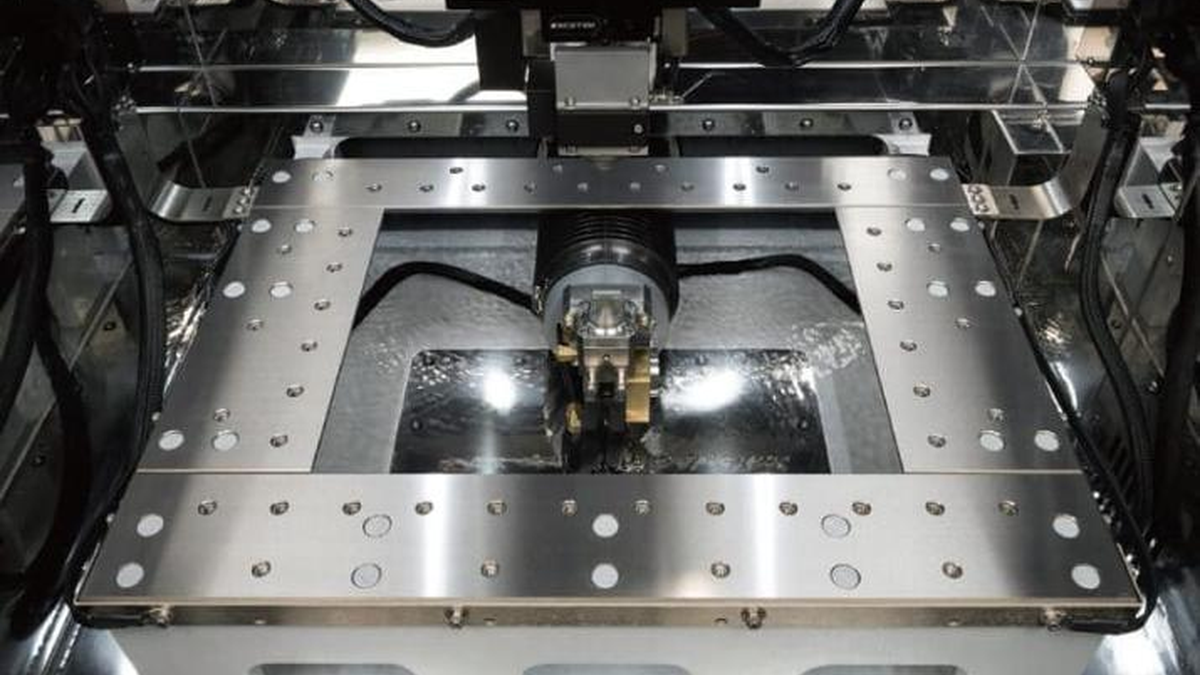
Brand manufacturers are adding new highlights to Mini LED backlight display application products, pursuing higher contrast ratios to compare with OLED. They are increasing the number of Mini LEDs used to more than ten times the number of LEDs used in traditional LED screens. Production equipment precision and production capacity of Mini LED’s will also need to be improved. At present, the Mini LED is a passive solution, but in the future, active solutions will be developed, and the usage of Mini LEDs will increase significantly. Therefore, the performance and production capacity of Mini LED equipment will become one of the key factors brand manufacturers will use to evaluate the supply chain.
The further improvement of AMOLED technology and the innovation of the lens will bring a new look to mobile phones:
With the increase in supply and the gradual expansion of production capacity, AMOLED technology has gradually matured. In order to maintain the leading edge, first-tier manufacturers are still trying to add more functions and specifications to enhance the added value of AMOLED panels. First of all, we can see the continuous evolution of the folding design, which is more optimized in terms of thinness and power saving; in addition to the left and right folding design seen in the past, the upper and lower folding is similar to the Clamshell design, which makes the product type closer to the current mobile phone design. In addition, the pricing is also close to the price band of mainstream flagship mobile phones, which is expected to drive sales growth. Attempts at other folding types, including multi-folding and scrolling, are also expected to be realized in the near future. TrendForce expects that the penetration rate of folding mobile phones will exceed 1% in 2022 and challenge 4% in 2024. In addition, the installation of LTPO backplane will improve the power consumption problem caused by 5G transmission and high refresh rate specifications, and it is expected to gradually become the standard specification of flagship phones. After two years of development and adjustment, the lens module finally has the opportunity to appear on the flagship mobile phones of many brands, and it is expected to realize a real full-screen mobile phone.
The foundry process has ushered in innovation. TSMC and Samsung 3nm production use FinFET and GAA technology respectively:
As semiconductor processing gradually approaches its physical limits, for chip development to continue to achieve the goals of improving performance, reducing power consumption and reducing chip size, it must transition to making changes in "transistor architecture," "back-end packaging technology,” or “material compositions." With the introduction of EUV lithography technology in 2018, processing of chips below 7nm became possible, with TSMC and Samsung planning to release 3nm chips in the second half of 2022. TSMC chose to continue the fin field effect transistor structure (FinFET) in its 3nm chip production while Samsung introduced the MBCFET structure (Multi-Bridge Channel Field-Effect Transistor) based on the Gate All Around (GAA) technology.
Compared with the three-sided coating of FinFET, GAA surrounds the gate on four sides, and the Source and Drain channels are changed from a fin-shaped, three-dimensional structure to Nanowire or Nanosheets. GAA increases the contact area between the Gate and the channel, improving the controllability of the gate and channel, and effectively reducing current leakage. The first batch of 3nm process products is expected to be mass-produced in the second half of 2022. Their application focus will be mainly on high-performance computing and smartphone platforms that have higher requirements for improving performance, reducing power consumption, and reducing chip size.
DDR5 products will gradually enter mass production, and NAND Flash stacking technology will exceed 200 layers:
In terms of DRAM, Samsung, SK Hynix, and Micron will gradually mass-produce next-generation Double Data Rate 5 (DDR5) products. At the same time, stimulated by the demand for 5G mobile phones, they will continue to increase the market share of Low-Power Double Data Rate 5 (LPDDR5). The DDR5 specification pushes the speed to more than 4800Mbps. The high speed and low power consumption can greatly optimize computing quality. With the mass production of Intel's new CPU platform, the timing sequence will be released on the PC platform Alder Lake first, and then released. The Eagle Stream of the server is expected to reach a market share of 10-15% of the total bit output by the end of 2022. In terms of process, the two major Korean suppliers have successively mass-produced 1 alpha nm process products using EUV technology, and market visibility will increase quarter by quarter in 2022.
The number of NAND Flash stacking layers has not yet faced a bottleneck. Following the mass production of 176-layer products in 2021, it will move to more than 200-layer technology in 2022, while the single-chip capacity remains at 512Gb/1Tb. In terms of storage interface, the penetration rate of PCIe Gen4 in the PC consumer market will increase significantly in 2022; in the server market, with the mass production of Intel Eagle Stream, enterprise SSD will be further upgraded to support PCIe Gen 5 transmission, which is higher than the previous generation Gen4 The transmission rate has doubled to 32GT/s, and the mainstream capacity has also been expanded to 4/8TB to meet the high-speed computing requirements of servers and data centers, and also contribute to the rapid increase in single-machine capacity in this field.
From the perspective of the server market, the flexible pricing strategies of data centers and the diversity of services have directly driven enterprises' demand for cloud applications in the past two years. From the perspective of the server supply chain, these changes have prompted the supply chain model to be replaced by ODM Direct. The business model of the traditional server brand factory will gradually be replaced by labor, and the business model of the existing brand factory will face structural transformation, such as providing leasing business and one-stop solutions for cloud assistance. This change also means that corporate customers will rely on more flexible and diversified pricing methods and hedging in the face of uncertainties in the general environment. In particular, due to the epidemic in 2020, the transfer of work models was accelerated, and lifestyles changed significantly. It is expected that by 2022, the demand for servers in hyperscale data centers will account for about 50% of the market, and the ODM Direct foundry model will account for more than 10%.
In 2022, 5G will expand the proportion of SA network slicing and low-latency applications, and will conduct extensive trials:
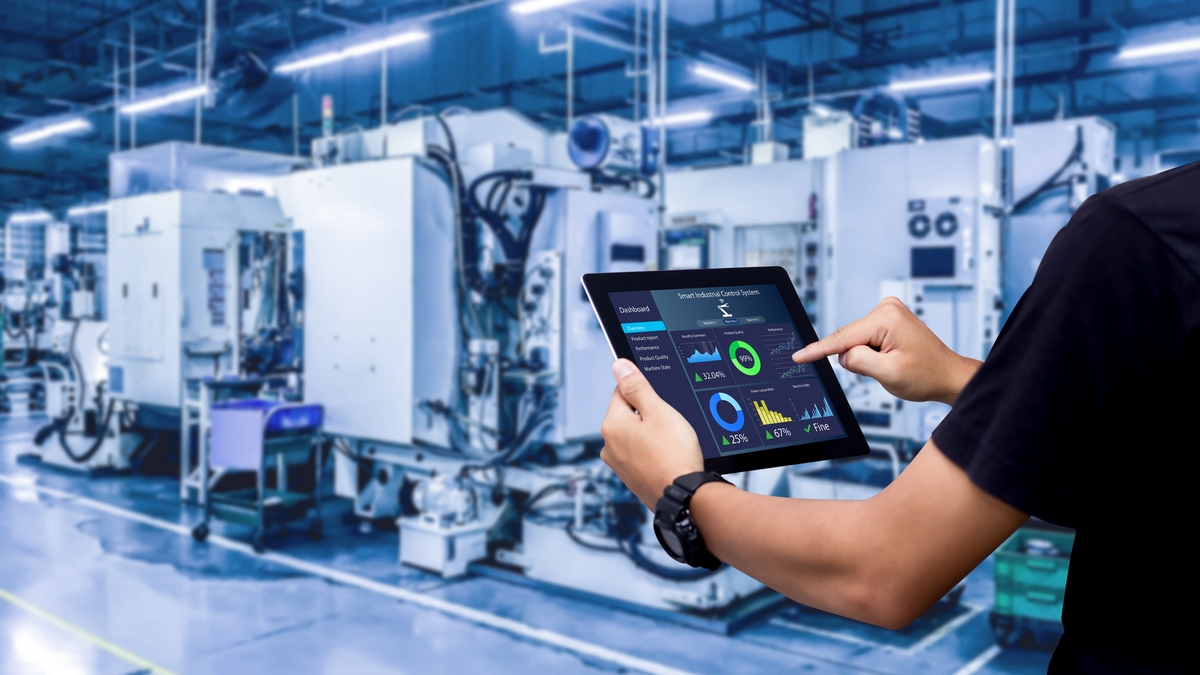
Global telecom operators have actively launched 5G standalone (SA) architecture as the core network required to support various services, accelerate the construction of base stations in major cities, and diversify network services based on network slicing and edge computing, providing end-to-end quality assurance. Enterprise demand in 2022 will drive 5G combined with Massive IoT and Critical IoT applications, including more network endpoints connecting data transmissions such as smart factory light switches, sensors and temperature readings. The key Internet of Things covers smart grid automation, telemedicine, traffic safety and industrial control, etc. In addition, combined with Industry 4.0, it provides asset tracking, predictive maintenance, field service management and optimized logistics processing.
The epidemic has forced digital transformation of enterprises and changes in personal lifestyles, which once again highlights the importance of 5G deployment. In 2022, operators will compete in network slicing functions, development of 5G private networks, openRAN, unlicensed spectrum, millimeter waves, etc., In the multi-party ecosystem, in addition to traditional operators, there are also participants from OTT, cloud, social media, and e-commerce, becoming emerging service providers. In the future, operators will actively build 5G enterprise applications, such as O2's participation in the 5G-ENCODE project, exploring new business models for private 5G networks in industrial environments, and the Vodafone and Midlands Future Mobility alliance to test self-driving car networking.
To be continued …