When we examine the progress of the manufacturing industry, the role of cutting tools is often taken for granted. Their value seems straightforward: cut faster, more accurately, and last longer to boost production efficiency and lower costs. However, at the forefront of high-end manufacturing in aerospace, medical, and semiconductor industries, this traditional mindset is being completely redefined. A deeper insight is emerging: the true value of a cutting tool is no longer just about improving cutting efficiency but about becoming a key explorer that helps industries push the boundaries of material application.
The Limitations of Traditional Thinking: The Efficiency-First Bottleneck
In the past, the competitiveness of cutting tools was centered on cost-effectiveness. Manufacturers raced to develop products that could cut at higher speeds and with longer lifespans to meet the demands of high-volume, low-cost production. While this "efficiency-first" model remains important in many industries, it has proven inadequate when facing the complex challenges of the 21st century.
When engineers attempt to use high-temperature superalloys for next-generation aerospace engine blades or high-hardness ceramics for precision medical implants, traditional tools are often powerless. They not only wear out quickly but also fail to achieve the required precision, leading to a standstill in both design and manufacturing.
The Awakening of Cutting Tools: A New Ability to Push Material Boundaries
This bottleneck is the very force driving innovation in the tooling industry. The development of a new generation of cutting tools no longer aims for "versatility" but focuses on "extremity." Their innovations are primarily embodied in two aspects:
- Application of Advanced Materials:
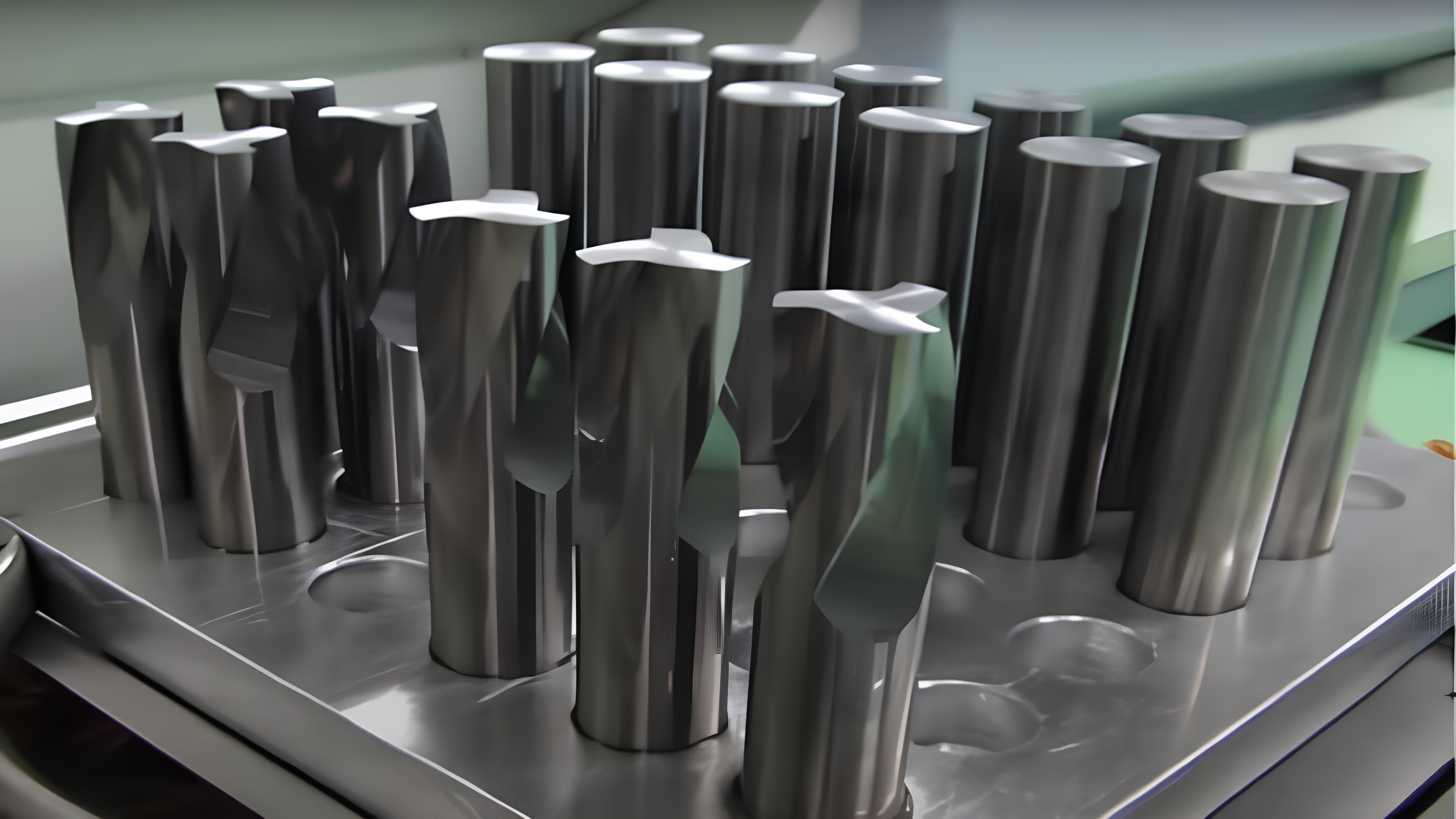
Tool manufacturers are actively adopting new materials like ceramics, cubic boron nitride (CBN), and polycrystalline diamond (PCD). Each of these materials has unique properties: ceramic tools, with their excellent high-temperature resistance, are the top choice for machining nickel-based superalloys in the aerospace industry; CBN specializes in high-hardness ferrous materials like hardened steel, replacing traditional grinding processes; and PCD tools, with their extreme hardness, show unparalleled efficiency and surface quality when machining non-ferrous metals like aluminum alloys and composites. This breakthrough allows designers in high-end industries to use superior-performing materials more boldly, creating lighter, stronger, and more durable products.
- Nanoscale Coating Technology:
Advanced coatings act like a nanoscale "invisible armor" for cutting tools, pushing their performance to new heights. For example, a titanium aluminum nitride (AlTiN) coating forms a hard protective layer when high temperatures are generated during high-speed cutting, effectively preventing the tool from softening and wearing out.
Similarly, a diamond-like carbon (DLC) coating, with its extremely low friction coefficient, helps tools avoid built-up edge when machining sticky materials, ensuring ultimate machining quality. These revolutionary coatings not only significantly extend tool life but, more importantly, provide the necessary stability and precision for machining heat-sensitive or ultra-hard materials.
Conclusion: From Tool Maker to Innovation Enabler
The essence of this transformation is that the role of the cutting tool supplier is shifting from a "passive tool provider" to a "proactive innovation enabler." Each breakthrough in tool material or coating technology unlocks new possibilities for high-end manufacturing. It allows for more fuel-efficient aerospace engines, better biocompatibility in medical devices, and greater precision in semiconductor manufacturing.
The tooling industry is no longer just a link in the manufacturing chain; it is a critical driving force shaping the future. The companies that continue to explore the limits of cutting tool materials will be the ones that help their clients challenge the boundaries of science and engineering, securing a central strategic position in the progress of the world.