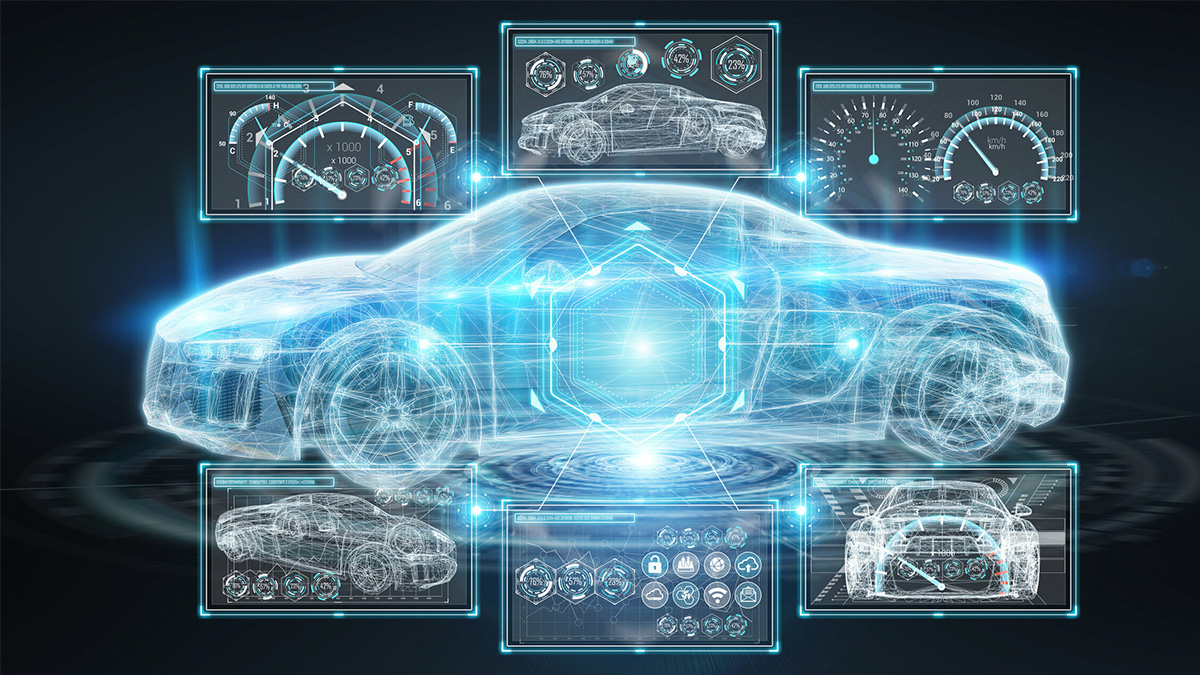
With the growth of the electric vehicle market in 2021 having exceeded expectations, we will review several major events that occurred in 2021, and address key trends worth watching in 2022.
What Is the Present State of the Electric Vehicle Market?
In 2021, the electric vehicle market grew at an astonishing rate. Despite the ongoing chaos of the epidemic and tight supply chain issues, electric vehicle sales were still strong. Even though Tesla’s implamanted continuous price hikes, there were still shortages of supply. Volkswagen, Ford, Hyundai, General Motors, Mercedes-Benz, BMW and various Chinese car manufacturers’ electric vehicles’ production has grown considerably since 2020. While full figures are not yet available, EV sales in 2021 were up about 80 percent from 2020.
In November 2021, Tesla's stock price soared due to the news of its cooperation with the car rental group Hertz. Investors are not looking at Tesla's profitability, but are optimistic about the future potential. Looking at the S-shaped curve of Tesla’s stock price history, Tesla is probably still in its infancy.
Tesla's sales approached 1 million units in 2021, while maintaining excellent profitability. With its ever-expanding Gigafactory, Tesla is on track to sell 20 million vehicles by 2030. Estimated at an average of $30,000 per vehicle, even if Tesla only achieves its goal of 5 million vehicles in 2030, that would be equivalent to $150 billion in revenue. It is conservatively estimated that the electric vehicle market will be worth about $450 billion in 2030, of which Tesla may occupy one third.
Traditional car manufacturers are also focusing on electric vehicles to attract investors' attention. In addition to the electric Mustang, Ford’s best-selling electric truck, the F-150, received large orders; 150 in the United States. Ford stock price tripled from the end of 2020 to the beginning of 2022, with the market value reaching 80 billion US dollars.
We can't be sure how much more dramatic changes will be in the electric vehicle-related stock market in 2022, but what is certain is that electric vehicle-related industries, including car manufacturing, batteries, metals, charging equipment, etc., will continue to attract more capital.
Large Commercial Hydrogen Fuel Cell Electric Vehicles
Compared with the passenger electric vehicle market, hydrogen fuel electronic vehicles are difficult to popularize due to factors such as cost, infrastructure, and raw material prices. However, in the large-scale commercial market, hydrogen fuel cells are still promising, including long-distance passenger transportation and link trucks.
Hydrogen fuel cells have the advantages of high battery life and rapid energy replenishment, and are very suitable for large vehicles with simple routes. This can be seen from the continuous delay of the Tesla Semi. For large trucks that use lithium batteries the cost is very high. Therefore, Tesla has been delaying its Semi production, pinning its hopes on new hydrogen fuel cell batteries.
Conversely, hydrogen fuel cell buses are already in operation in many countries, with 65 in the US, 150 in Europe, and as many as 3,000 in China, and orders are growing. While Honda stopped production of hydrogen fuel cell passenger cars in June 2021, it isn't planning to drop hydrogen fuel development. Hyundai Motor announced in September 2021 that all its commercial vehicles will have hydrogen fuel cell power options by 2028. Hyundai has a fleet of 46 trucks in Switzerland that run entirely on hydrogen fuel cells and plans to expand to 1,600 by 2025.
China and the United States have orders for more than 4,000 FCEV trucks in hand, which shows that production of hydrogen fuel cells has not come to an end. On the other hand, although most European carmakers have given up on FCEVs, they have not stopped researching large-scale hydrogen fuel cell trucks. Mercedes-Benz GenH2 hydrogen trucks have begun road tests and are expected to be tested with customers in 2022.
Of course, there is also Toyota, which has not given up on FCEVs, but has continued to try various possibilities for hydrogen fuel cell trucks.
Black Technology of Electric Vehicles
Electric vehicles currently have several major design difficulties, the most critical being the endurance of the battery. However, there are developments in electric vehecle design that are bringing breakthroughs. Although calling them black technology may be a bit exaggerated, these technological developments are expected to bring breakthroughs to the electric vehicle market in 2022.
Axial Magnetic Field Motor
The principle of electric vehicles is very simple. The battery provides electricity to the motor, and the motor turns the wheels to move the vehicle forward. While the world is chasing more efficient and cheaper batteries, the motor is what keeps the vehicle moving. However, almost all electric vehicle motors on the market currently use "radial magnetic fields", and an ancient and innovative mechanism is about to change the ecology.
An electric motor called an "axial magnetic field motor", also known as disc motor, was actually one of the first types of electric motors invented. It is a highly efficient and lightweight motor. However, due to the axial magnetic field motor being limited by material technology and problems of motor overheating, the less efficient radial motor has been more commonly used.
YASA, a British company specializing in the research of axial magnetic field motors, has made breakthroughs in this regard in recent years. In 2019, it received an order from Ferrari to use this new motor on the Ferrari SF90 gasoline-electric supercar. In 2021, Mercedes-Benz will directly acquire YASA and make this new technology its own.
The axial magnetic field motor is lighter in weight and has a higher torque density, which can extend the battery life of electric vehicles by 5%. Mercedes-Benz and Renault have been sourcing new motor suppliers to extend their vehicles’ battery life. Compared with the slower development of battery efficiency, rapidly developing improvements in motor technology are being quickly applied in the Electric Vehicle industry.
Silicon Carbide and 800V High Voltage Architecture
On the electric vehicle battlefield, one of the leading factors to boost Tesla's power efficiency has been its bold use of third-generation semiconductor silicon carbide parts to reduce the loss of energy transmission between components. In 2022, silicon carbide will be a must consideration for electric vehicle development.
Tesla, Audi, Renault, Ford, Hyundai, Porsche, BYD and Toyota (Mirai) will all use silicon carbide parts to improve endurance performance.
In addition, TrendForce research pointed out that globally, electric vehicles are gradually upgrading to 800V high-voltage architecture, which will also push up the demand for silicon carbide. Therefore, currently Tier 1 suppliers, including Delphi, BorgWarner, ZF and Vitesco, are also gearing up to provide silicon carbide components.
Silver sinter die-attach technology can provide much higher temperature tolerance than the current common tin solder, and can withstand operating conditions of 250 degrees Celsius or higher. The Japanese technology giants Hitachi, Showa Denko and Mitsui have successively demonstrated the improved performance of copper sintering technology and will be introducing production lines in 2022.
The Counterattack of Hybrid Electric Vehicles
Hybrid electric vehicles may seem to have been swamped by the electric car tsunami, but sales of both plug-in and non-plug-in vehicles has continued to rise over the past few years. In 2020, sales of plug-in electric vehicles (PHEVs) in Europe tripled to more than 600,000 units.
While the variety of hybrid forms can be confusing, there is no denying that hybrid electric vehicles are an effective short-term option in the transition to zero carbon emissions.
In the long run, hybrid electric vehicles will eventually be phased out, but for now, various subsidies and vigorous promotion by traditional car manufacturers promises optimistic growth of the sales of hybrid electric vehicles in 2022. Until the charging infrastructure is more complete and the price of pure electric cars is more affordable, hybrid electric vehicles will still have a good share of the market.
Top 10 Tesla’s Autonomous Vehicle Competing Companies In 2022
Autonomous driving has moved from the realm of science fiction to a very real possibility in recent years. This is largely due to the massive advancements in radar technology and microprocessor capacity. Autonomous vehicles have been under development for quite a long time now, and several companies have emerged as the pioneers in developing new and innovative features to these autonomous vehicles that are making this class of automobiles more advanced and agile. Among all the companies, Tesla has emerged as a leader in producing electric and autonomous cars. The company has showcased record -breaking innovations in this domain and has established itself as a competitor to beat in the future. Tesla competitors are adding new features to their autonomous cars to compete with the company, and also among themselves to provide the best services to the target audience. Naturally, this means unexpected, new, explosive innovations in the domain. Here, we have listed the top autonomous vehicle companies that are also the top Tesla competitors for 2022.
- General Motors
- Hyundai (KIA)
- Volkswagen
- Ford Motor
- Mercedes-Benz
- Rivian
- Waymo
- Porsche
- Honda Motors