Impact of US-China Trade War on Taiwan's Machine Tool Market
Photo by unsplash
Market News

Impact of US-China Trade War on Taiwan's Machine Tool Market

In response to the impact of the U.S.-China trade war, Taiwanese machine tool makers are actively entering the European and Southeast Asian markets.
Published: Mar 24, 2020
Impact of US-China Trade War on Taiwan's Machine Tool Market

The European Machine Tool Exhibition - EMO Hannover launched a three-day exhibition in Germany in September. Many of Taiwan's machine tool manufacturers actively participated in the exhibition and also observed German industrial manufacturing technology, precision, and durability. By participating in the EMO Hannover show, manufacturers are expected to open up international visibility and hope to get international orders.

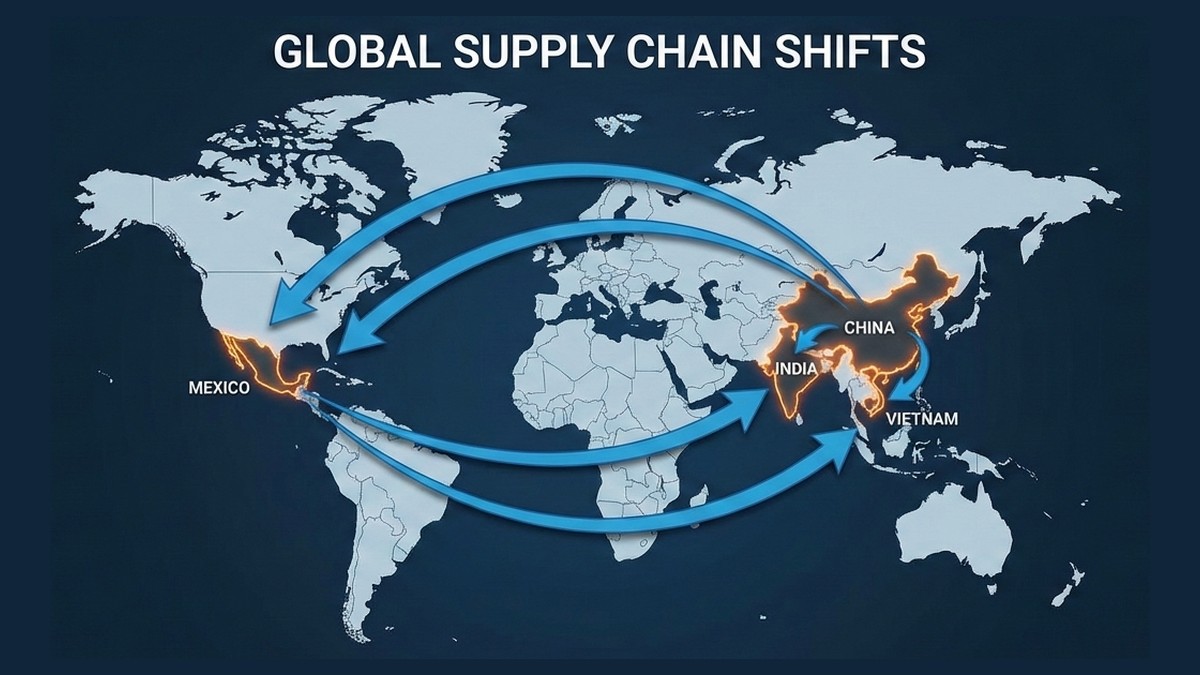
In recent months, due to the U.S.-China trade war, it has brought a big impact on the machine tool industry. USA and China are the major export markets for most industries in Taiwan. Take Taiwan’s tool machinery industry as an example. Chine is the largest exporter of Taiwan Machinery. Under the volatility of the U.S.-China trade war, many manufacturers expect to transfer some markets to Europe or neighboring Southeast Asian markets, to achieve dispersion market risks.

At present, Taiwan's tool machinery industry is also actively investing in the development direction of smart machinery. It is expected that Taiwan's technology and brand will continue to enhance its international reputation. Expected the machine tool market can promote the vigorous development of Taiwan's economy.


Published by Mar 24, 2020 Source :ctee

Further reading

You might also be interested in ...

Headline
Market News
Ensuring Safety and Efficiency in Can-Making Equipment for High-Corrosion, High-Pressure Applications
In industrial packaging—particularly for chemicals, paints, and coatings—three-piece metal cans must endure extreme conditions: aggressive chemical formulations, internal pressurization, and long-term storage stability. Unlike beverage or food-grade containers, these applications demand superior corrosion resistance, leak-proof sealing, and structural robustness. Meeting these requirements starts not with the can itself, but with the can-making equipment that produces it. Manufacturers like Shin-I Machinery Works Co., Ltd. are rising to this challenge, offering specialized machinery designed explicitly for non-food, high-performance packaging. This article explores the critical design and production considerations for industrial three-piece cans, outlines key equipment selection criteria, and highlights leading global suppliers—including Shin-I—serving this demanding sector.
Headline
Market News
How Patented Screws Enhance Precision and Sustainability in Modular Projects
From Factory Precision to On-Site Efficiency: The Impact of Patented Screws on Modular Assembly
Headline
Market News
Mastering Aluminum Cutting - How Band Saw Machines Support EV and Aerospace Manufacturing
The growth of electric vehicles (EVs) and the aerospace industry has dramatically increased demand for advanced aluminum processing solutions. Aluminum’s high thermal conductivity and susceptibility to deformation require specialized cutting tools capable of precise, consistent cuts. Band saw machines have become central to this evolution, providing manufacturers with the control and efficiency needed to meet stringent specifications.
Headline
Market News
Recycled Plastics & Blow Molding - Equipment Trends Enabling a Circular Packaging Economy
The following article reviews how Plastic Blow Molding Machines are being adapted to process higher shares of recycled plastics (PCR and mechanically/chemically recycled streams). It evaluates machine design trends—full-electric drives, multi-layer co-extrusion, accumulator systems—and summarizes implications for manufacturers and brand owners. Key industry players are highlighted for context.
Headline
Market News
The Cross-Border Health Boom: Why Are Global Consumers Buying Supplements Abroad?
At airports, it's a common sight to see travelers dragging suitcases packed with health supplements from Japan or Germany. Why are so many people willing to spend extra money and risk customs checks just to bring home capsules from Japan, Germany, or even the US? This "cross-border health" trend is more than a personal choice; it reflects a mix of market factors driven by brand preference, price differences, and product uniqueness.
Headline
Market News
From Cold Chain to Retail: How Smart Labels Are Reshaping Supply Chains
As the IoT rapidly advances, traditional printed labels are evolving into intelligent “smart tags.” No longer merely adhesive printings, these tags embed chips and sensor modules to enable real-time product tracking, authentication, and even consumer interaction. This technological shift is reshaping operations across logistics, retail, healthcare, and manufacturing.
Headline
Market News
Can CNC Technology Make Food Processing Faster and Safer?
The core requirements for food processing equipment lie in safety, efficiency, and durability. CNC (Computer Numerical Control) technology, with its precision and automation advantages, has become a key enabler in the manufacturing of slicers, packaging machines, mixers, and other equipment. With the global food processing equipment market projected to grow from USD 55 billion in 2023 to USD 75 billion by 2030 (a CAGR of approximately 4.5%), CNC is driving the industry toward greater intelligence and efficiency.
Headline
Market News
Do You Know the Manufacturing Secrets Behind Sports Equipment?
In the sports equipment industry, CNC (Computer Numerical Control) machines are the key driver for high product performance, extended durability, and enhanced market competitiveness. From golf clubs to bicycle frames, CNC machining combines high precision and flexibility, not only meeting the strict quality demands of professional athletes but also providing efficient and customizable manufacturing solutions for buyers.
Headline
Market News
Nurturing Talent in Taiwan's Manufacturing Sector: The Government's Strategy for a Competitive Future
The global high-tech sector is at a critical crossroads, facing the dual challenges of rapid technological iteration and a severe talent shortage. In Taiwan, a world-renowned hub for precision manufacturing, the situation is no different. As the end-user market demands higher precision processing and the wave of smart manufacturing and digital transformation sweeps in, the government has long recognized that nurturing talent is paramount to maintaining the nation's industrial competitiveness.
Headline
Market News
2025 Continued Innovation in Healthcare Driving Market Growth
In 2025, the global healthcare industry is experiencing a profound revolution, fueled by the deep integration of digital technology and AI. As medical service models rapidly evolve, institutions are adopting innovations to enhance diagnostic accuracy, treatment efficiency, and patient experience while also controlling costs. This article analyzes the key drivers, applications, and future challenges in the 2025 healthcare market, offering a comprehensive insight into industry trends and growth potential.
Headline
Market News
Elevating Drone Manufacturing: The Machining Advantages of CNC Machines
With the rapid expansion of the unmanned aerial vehicle (UAV) industry, CNC (Computer Numerical Control) machines play an indispensable role in precision manufacturing. According to market research firm Grand View Research, the global drone market is expected to grow from approximately USD 40 billion in 2023 to USD 90 billion by 2030 a remarkable trajectory. CNC machining’s high-precision capabilities, from structural components and electronic parts to critical modules, can directly impact drone performance while linking the entire supply chain from raw materials to global trade.
Headline
Market News
U.S.–China Trade War and the Russia–Ukraine Conflict: Challenges and Adjustments in the Textile Raw Material Supply Chain
The textile industry has always been one of the most globalized sectors, with raw materials often crossing multiple borders before reaching the apparel market. However, in recent years, growing geopolitical uncertainties—most notably the U.S.–China trade war and the Russia–Ukraine conflict—have created unprecedented challenges for textile supply chains. Trade frictions between the U.S. and China have restricted exports of cotton and fabrics, forcing brands to reassess sourcing strategies. Meanwhile, the Russia–Ukraine war has driven up energy and chemical raw material prices, indirectly raising costs for synthetic fibers such as polyester and nylon. Together, these factors are pushing the global textile industry to rethink supply chain resilience and its future trajectory.
Agree