Food certifications are not only tools for ensuring quality and safety but also vital passports for businesses to enter international markets. Facing regulatory differences across countries and regions, companies must adapt to local laws and cultures—for example, obtaining Halal certification required by Muslim markets. Although these certifications involve complex procedures, they are essential for building brand trust and expanding overseas markets. Only by thoroughly understanding the export market’s demands before going global can businesses allocate resources effectively and successfully advance their international strategies.
Food Certification Label
For most consumers, when faced with products that carry a degree of uncertainty, endorsement by a professional third-party organization can significantly boost trust and willingness to purchase. That’s why, before launching products into the market, companies often actively seek relevant certifications to build consumer confidence and enhance brand credibility.
Take the food industry as an example—obtaining internationally recognized food safety certifications such as HACCP or ISO 22000 not only serves as a fundamental assurance of product quality, but also signals a strong commitment to safety and compliance. These certifications cover multiple stages, including food processing, storage, and packaging, ensuring that products meet regulatory and risk management standards throughout the entire production chain.
As a result, nearly all medium to large-scale food manufacturers strive to acquire these certifications—not only to comply with legal and export requirements, but also to strengthen brand competitiveness and market trust. For consumers, a food product that has earned international certification is often seen as a more “reliable” and “reassuring” choice.
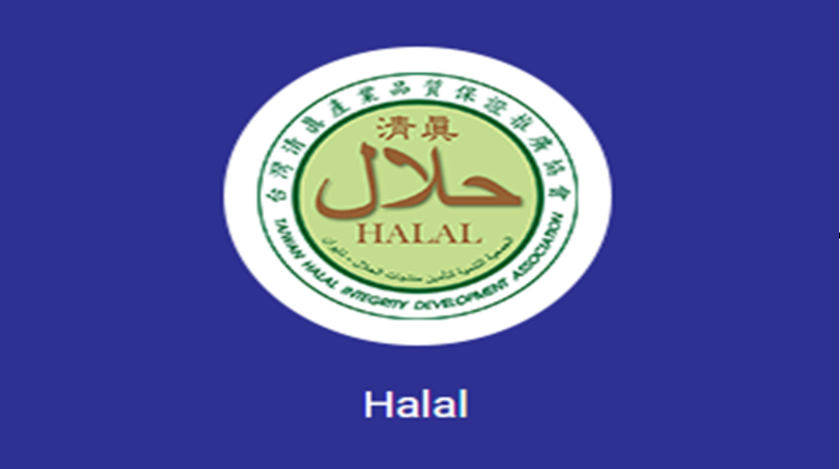
Halal Certification
In certain regions, in addition to obtaining internationally recognized food safety certifications, manufacturers may also need to meet specific local religious or cultural requirements. For example, when exporting food products to predominantly Muslim markets, companies must obtain Halal Certification to ensure compliance with Islamic dietary laws.
The process of obtaining Halal Certification is rigorous and complex. It is not only a religious endorsement but also a critical gateway for legally entering Muslim markets. Earning this certification means that the product complies with Shariah Law throughout the entire manufacturing process, allowing it to be legally exported to Islamic countries and helping businesses expand their reach in the global market.
To obtain Halal Certification, companies must ensure the following key elements:
- Ingredient compliance: All ingredients used in the product must be free from pork, lard, and related derivatives, as well as any form of alcohol.
- Process integrity: The entire production process must fully comply with Shariah Law, covering every stage from processing and seasoning to packaging and storage.
- Separation of equipment and environment: Halal products must be produced and stored separately from non-Halal items to prevent cross-contamination. All tools, containers, and production lines must be clearly separated and regularly sanitized to meet both cleanliness and ritual requirements.
While implementing Halal Certification can be challenging for businesses, it also serves as a symbol of market competitiveness. For food manufacturers aiming to expand into Muslim-majority markets such as the Middle East and Southeast Asia, Halal certification is not just a basic requirement—it’s also a value-added strategy.
Specific Application Process for Halal Certification:
Specific Application Process for Halal Certification:
Applying for Halal Certification is a highly specialized and complex process. For food manufacturers—especially those aiming to expand into Muslim markets—it serves as an essential entry requirement. The following outlines the standard application process:
- Initial Contact and Information Exchange
The company must first contact an accredited Halal certification body in its region to discuss product categories, production processes, and certification needs. Based on the nature of the products, the certification body will provide a list of required documents and application guidelines.
- Document Preparation and Submission
The company is responsible for preparing and submitting all required documentation to support the application or certification process. This includes a comprehensive list of product ingredients and formulations, with clear identification of any additives and their sources. Information about raw material suppliers must also be provided to ensure traceability and compliance. In addition, the company should include detailed descriptions of the production process, often supported by flowcharts that illustrate each stage of manufacturing. Documentation outlining the company’s quality and hygiene management systems—such as HACCP or ISO certifications—is also essential. Finally, descriptions of factory facilities, storage conditions, and logistics operations must be submitted to demonstrate adherence to operational standards.
- Document Review and Additional Clarifications
The certification body will review the submitted documents to assess whether the product ingredients, processes, and cross-contamination prevention measures comply with Halal regulations. If any potentially non-compliant components are found, the company may be asked to provide proof of ingredient sources or propose alternative solutions.
- On-site Audit and Inspection
Once the document review is approved, the certification body will arrange for auditors to conduct an on-site inspection of the facility. During this audit, several key areas will be assessed, including the storage and handling of raw materials, potential risks of cross-contact with non-Halal products, employee training practices, and adherence to standard operating procedures. Inspectors will also evaluate equipment sanitation measures and overall contamination control protocols. After the inspection, a detailed audit report will be issued. Should any instances of non-compliance be identified, the company is required to implement corrective actions within a specified timeframe to address the issues.
- Certification Issuance and Validity Management
Upon successful completion of all reviews and audits, the certification body will issue a Halal certificate with a defined validity period—usually one year. The certificate must be renewed regularly, and the company will be subject to follow-up inspections. Businesses that intend to continuously produce Halal products must establish long-term compliance and maintenance mechanisms.
Real-World Applications
Many well-known food companies at home and abroad have successfully entered Muslim markets by obtaining Halal certification, expanding their international channels and enhancing brand trust. Below are some notable examples:
- Saffron Road (USA):Specializing in frozen meals, ready-to-eat packs, and healthy snacks, all of Saffron Road’s products are Halal certified. Their products are widely available in major U.S. supermarket chains such as Whole Foods and Walmart, earning strong consumer trust.
- QL Foods Sdn Bhd (Malaysia):A prominent Malaysian food manufacturer with products ranging from seafood processed goods to ready-to-eat meals. After obtaining Halal certification, QL Foods successfully exported to multiple Islamic countries in the Middle East, laying a foundation for its international growth.
- Al Islami Foods Corporation (UAE):Headquartered in Dubai, Al Islami is a leading supplier of frozen meat and prepared foods in the Middle East. Their products strictly adhere to Halal regulations and are widely used in chain restaurants, airline catering, and retail channels.
- BRF S.A. (Brazil):One of the world’s largest food manufacturers, its brand Sadia produces Halal-certified frozen chicken and ready-to-eat products, exporting extensively to Muslim markets in the Middle East and North Africa.
- BOBA EMPIRE (Taiwan):With its brand BOBA CHiC focusing on bubble tea and related beverages, the company has successfully expanded sales to the U.S., Middle East, and Southeast Asia by obtaining Halal certification, tapping into the global Muslim consumer market.
Conclusion
Although some food certifications have international recognition, in practice, each country’s regulations for imported products still vary. Often, companies must obtain locally required certifications to legally enter those markets. For example, Halal Certification is one of the necessary conditions for entering Muslim-majority countries, while exporting to the U.S. market requires compliance with inspections and pre-registration processes governed by the U.S. Food and Drug Administration (FDA).
This highlights that obtaining a single international certification does not guarantee “global acceptance without barriers.” Different markets have their own specific requirements regarding food safety, ingredient labeling, packaging, and production processes. Companies intending to expand overseas must conduct thorough early-stage market research and regulatory review, including:
- Assessing the target market’s consumer demographics and size
- Confirming local laws and certification standards
- Evaluating risks related to export and customs clearance
Only by doing so can businesses avoid resource misallocation, redundant certifications, or import delays, ensuring that their international expansion is more efficient and competitive.











.jpg)