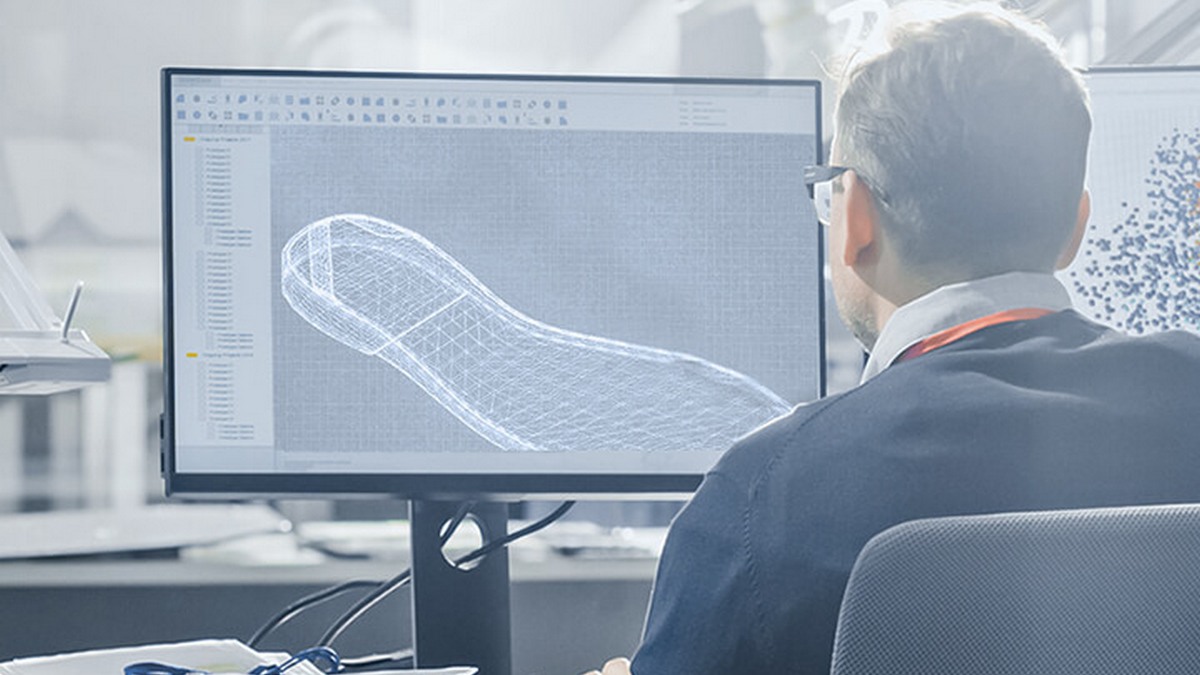
The digitalization of the textile industry, which is highly connected with the consumer market, is the general trend. In particular, the digitalization of the supply chain such as 3D simulation technology can greatly simplify and speed up the product development and production process, and at the same time achieve the reduction of manpower, which promotes fashion and textiles. Industry players are all vigorously promoting digital transformation, and the recent digital development of the textile industry has mostly focused on issues such as sustainable fashion, circular economy, and digital innovation.
The Trend of Sustainable Fashion in The Textile Industry
Sustainable fashion and circular economy have become important issues that major companies need to pay attention to in recent years. Faced with the continuous expansion of this issue, the textile industry has also begun to pay more attention to this item in the process of digitization. Whether it is reducing waste pollution or maintaining material recycling, you can see the participation of digital technology, which will help the fashion industry enter a circular economy model with a faster process.
- CircularID project
The research and development of blockchain, RFID tags, and digital production certificates are all helpful for the follow-up tracking of clothing, and can also provide a large amount of available information such as product location through the introduction of smart devices. Most of the clothes sold in the market are based on traditional clothing labels, and then add details such as brand, price, dyeing process, and recycling instructions to communicate with consumers. Traditional labels seem to have complete information at first glance, but it is difficult to track and verify products. When a product reaches the end of its life cycle, it is difficult to trace its raw material, hampering the recycling process. In order to solve the limitations of traditional labels, the CircularID project came into being. Using Eon software to create unique digital identities for each product in the supply chain, in addition to improving the tracking visibility of products after they are sold, dealers and recycling organizations can also use this to obtain product value and data, and develop new business models.
- Fully automatic textile sorting plant
The ReHubs agreement of the European Clothing and Textile Industry Federation (Euratex) aims to establish collection, sorting, reuse, recycling facilities for textile and clothing waste throughout Europe to gather waste from various textile and clothing industries.
The world's first fully automatic textile sorting plant demonstrated by Norwegian resource sorting and recycling solution provider Tomra and Swiss construction company Stadler uses near-infrared light and visible light smart scanning technology to scan and identify fiber types, colors and materials. Sorting, and then the sorted clothes are sorted to the appropriate production line by the automated compressed air system; finally, the waste clothes are processed, sorted and recycled with industry 4.0 technology.
The Development of Digital Innovation
Under the catalysis of the epidemic, the digital development trend of the textile industry has become clearer, prompting the industry to focus on digital innovation in the field of innovation in the textile industry.
- Karl Mayer
After German textile equipment manufacturer Karl Mayer acquired Stoll, a major textile equipment manufacturer, in 2020, it integrated Stoll's smart knitting technology solution Knitelligence®, and cooperated with shoemaking machinery manufacturer DESMA to further optimize the production process of knitted shoes. Karl Mayer's equipment can use fibers with different functions in different areas of the upper, such as using polyester fibers on the outside of the shoe and wool on the inside to improve wearing comfort; or provide stability around the ankle through knitting. These customized requirements can be completed through a one-time process.
In addition, Stoll and Karl Mayer focus on software and digital solutions for the textile industry, and cooperate with KM.ON, a service provider, to innovate for knitwear production. Digitalization of design and development accelerates the workflow from product design to marketization. CREATE can customize the shape of knitwear, assist in digital stitch development and digital yarn creation to evaluate yarns of different types and colors, and can also conduct technical inspections to reduce back-and-forth confirmations with suppliers.
- Cifra
Cifra, a manufacturer of seamless warp-knitwear in northern Italy, has launched an innovative and sustainable women's clothing range that includes beachwear, athleisure bodysuits and underwear. Among them, the new beachwear is made of Cifra's patented warp-knitting seamless WKS technology and 3D body fitting technology, which can form diverse and rich clothing patterns. Greater or lesser fit to ensure extra breathability and flexibility in certain areas of the body and visually accentuate feminine features.
- Liyang Knitting
Liyang Knitting digitizes the supply chain with the goal of eliminating the waste caused by manufacturing samples, such as virtual sample technology, which digitally presents the yarn style and actual size, and presents the design on a real model through color rendering technology, supporting real-time modification, in order to greatly shorten the development time, and help customers to evaluate the style and fit at a lower cost; the Knitcloud platform of the New Industrial Order in the Netherlands is a similar innovation.
- AWI
Digital innovation in the textile industry is not only reflected in the design and manufacture of product development, but also covers the procurement of raw materials. The Australian Wool Initiative (AWI), a not-for-profit organization funded by wool growers, is promoting a number of innovative projects, including modular sheep transport units, in response to Australia's wool production being reduced by multi-year drought and the impact of Covid-19 and issues such as logistics and sales shocks. AWI encourages Australian manufacturers to use 3D printing technology to produce fabrics made of merino wool, which can be 3D printed directly on the base material of merino wool. While improving the visual effect, it can still retain the comfort and durability, wear resistance, and functionality of the fiber.
- adidas
The 4D technology developed by adidas, a major sporting goods manufacturer, adopts Digital Light Synthesis, a digital light synthesis technology exclusively developed by Carbon. It uses programmable liquid resin to irradiate light sources and solidify, and injects oxygen into the shape to make midsoles and high-performance footwear. By combining this midsole manufacturing process with sports science data for product design, highly customized midsoles can be made, and because of the integrated molding method, it is beneficial to shorten the time and cost required for the manufacturing process, making traditional prototype design (prototyping) are no longer necessary.
adidas has also developed the Strung upper manufacturing technology, using adidas previously accumulated a large number of different types of runner data to ensure the precise configuration of each seam, thereby improving the performance of the upper. adidas launched the Futurecraft.Strung brand new concept running shoes, which combines Strung and adidas 4D technologies, and is also the first pair of running shoes developed by importing athlete data in the industry.
- Yuima Nakazato
Biosmocking, a new generation of 3D clothing technology developed by Japanese haute couture brand Nakazato Weima, uses digital printing and Brewed Protein, an artificial protein material developed by Spiber, a new biological startup company, to create a new creation. Since the Brewed Protein fiber has the characteristic of shrinking when wet, the Biosmocking technology is based on the tailor-made calculated results. After printing with a digital printing machine, place the fabric in water for 30 seconds, and gradually form a 3D pattern and shape during the drying process. By precisely controlling the degree of shrinkage of the fabric, you can make perfectly fitting clothes without needles and threads, and do not waste any textiles.
Conclusion
Digital transformation has become the only way for the textile industry to pursue sustainable management. It is no longer an insignificant option. Just like computers 30 years ago, it is an expensive investment now, but it is indispensable in the future. Especially when digital transformation has become a common demand in the industry, introducing it as soon as possible is to grasp the competitive advantage in advance. If you want to succeed, you need to incorporate digital transformation into the core of your business growth strategy. It is an investment in the future. Of course, there is a risk of failure. But without this determination, no matter how advanced the technology is, it will be in vain.
In the future, digital transformation will no longer be an optional option. How to redefine service value centered on customers, find new marketing models and operating procedures for brands, avoid risks, and at the same time find new business models to provide value and create revenue have become the top priorities for the textile industry.