From Standalone Machines to Automated Lines: Understanding the Timing and Benefits of Custom Winding Solutions
Choosing a coil winding machine is not only about speed or price. The critical question is whether the equipment aligns with your product design, available floor space, output targets, and required process flow. For simple, highly repeatable applications, off-the-shelf machines are often the most practical choice. However, when production involves unique coil geometries, strict spatial limits, or multiple connected assembly steps, a custom winding turnkey solution becomes the more reliable and profitable option.
The Role of Standard Coil Winding Machines
Standard equipment works best when the product structure is stable, the winding pattern is straightforward, and the process does not require deep integration with other manufacturing stations. In these scenarios, off-the-shelf machines offer a rapid starting point, quicker installation, and a lower initial investment.
This approach is highly effective if winding is an independent task and manual transfers to other stations do not cause major delays or quality variations.
When a Standard Machine Is No Longer Enough
The decision to upgrade to a custom solution usually arises when the limitations of standalone equipment begin to throttle output, consistency, or workflow integration.
Unique Coil Geometries
Unusual bobbin shapes, tight winding paths, fine or flat wire handling, and strict dimensional tolerances often exceed the capabilities of standard configurations. Even if a standard machine can technically process the product, maintaining long-term process stability and repeatability is highly challenging.
Space Constraints
A fixed machine footprint may not integrate efficiently into an existing factory layout. Custom systems are designed around your actual site conditions, factoring in transfer paths, operator ergonomics, and future expansion needs.
Complex Assembly Processes
When winding must seamlessly connect with pin insertion, soldering, taping, testing, or final assembly, isolated machines create bottlenecks. Manual transfers between stations increase handling risks, disrupt cycle balance, and make strict process control nearly impossible.
Quick Comparison: Standard vs. Custom
Before selecting an approach, evaluate how the equipment will function within your full production flow:
| Factor |
Standard Coil Winding Machine |
Custom Turnkey Solution |
| Product Complexity |
Best for stable, straightforward designs |
Engineered for non-standard or evolving geometries |
| Initial Investment |
Lower upfront cost |
Higher upfront, stronger long-term ROI |
| Process Integration |
Limited to isolated winding tasks |
Designed for seamless, connected operations |
| Space Adaptation |
Fixed, rigid footprint |
Tailored to actual factory floor conditions |
| Quality Control |
Often handled at a separate station |
Fully integrated into the automated workflow |
The fundamental difference is simple: standard machines solve a standalone winding task, while custom turnkey systems solve a comprehensive production challenge.
Co-Developing a Bespoke Turnkey Line: From Concept to Deployment
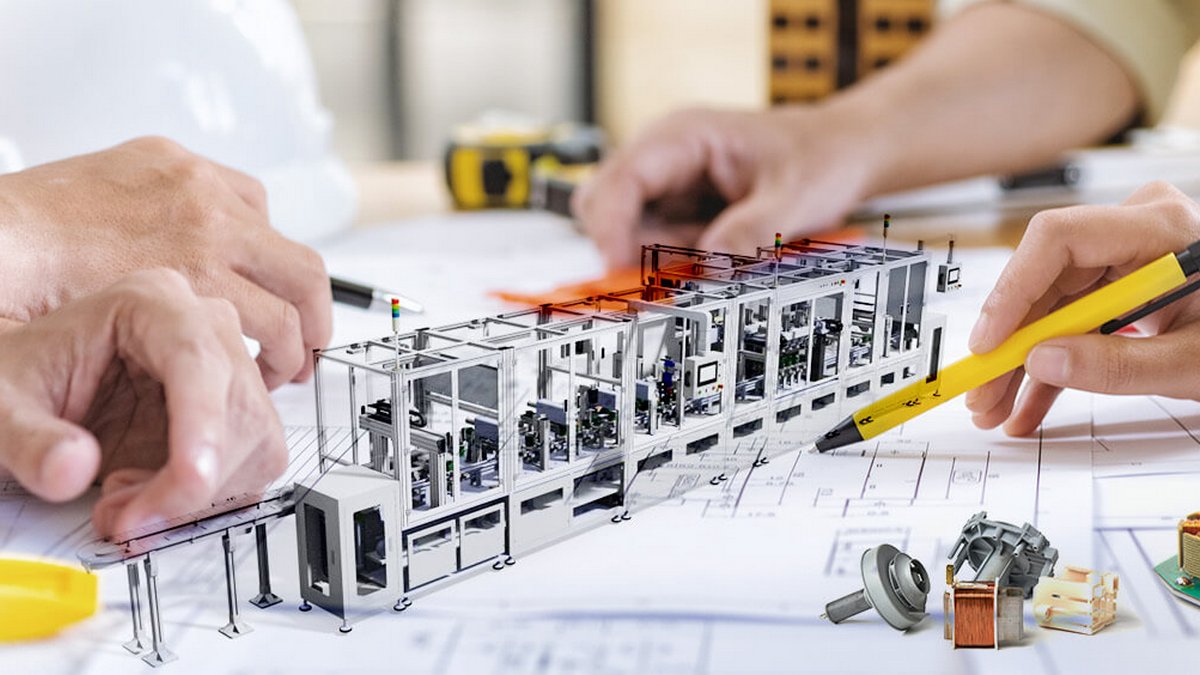
A custom winding line is not just purchased; it is collaboratively developed. This process translates your specific manufacturing requirements into an executable, automated reality.
- Requirement Discussion: The project begins by reviewing the product structure, winding method, output targets, process sequence, and site conditions to define the practical scope.
- Feasibility & Solution Planning: The overall line concept is evaluated, covering automation scope, station arrangement, transfer logic, and integration with upstream/downstream processes.
- Detailed System Design: Once the concept is approved, engineers design the machine layout, custom tooling and fixtures, inspection protocols, and synchronized workflows.
- Manufacturing & Integration: Modules are built and assembled. The focus is on harmonizing all stations so they operate as one unified, coordinated line.
- Installation & Testing: The final stage involves on-site installation, adjustments, and rigorous testing to guarantee the system meets production targets under real-world conditions.
DETZO: Your Engineering Partner for Bespoke Turnkey Solutions
When standalone machines fall short, DETZO acts as your consultation-driven engineering partner. Specializing in Customized Production Lines and Winding Turnkey Solutions, DETZO bridges the gap between complex product designs and efficient mass production for applications like transformers, relays, solenoids, automotive coils, and motor stators.
To ensure your bespoke line perfectly aligns with real-world manufacturing conditions, DETZO delivers end-to-end integration focused on:
- Production Planning: Evaluating product structures and output targets to determine the most effective automation strategy.
- Space & Layout Optimization: Designing tailored footprints that adapt to your factory constraints and maximize workflow efficiency.
- Advanced Transfer Logic: Synchronizing winding with upstream and downstream processes (e.g., pin insertion, soldering, assembly) to eliminate manual handling.
- Bespoke Tooling Design: Engineering precision fixtures to handle unique bobbin geometries and specialized fine or flat wires.
- Integrated Quality Control: Embedding inspection and testing directly into the automated workflow to guarantee consistency.
From initial concept to on-site deployment, DETZO ensures your custom winding line is reliable, fully coordinated, and built to scale.
Making the Right Choice for Long-Term Production Fit
While standard winding machines serve simple applications well, complex manufacturing demands a more strategic approach. If your process requires automated coordination across multiple assembly steps or involves challenging coil designs, a bespoke turnkey solution is the optimal path forward. The ultimate goal is not merely to automate a single winding motion, but to engineer an efficient, scalable production line that drives long-term manufacturing success.