A practical guide to choosing the right packaging equipment strategy for your production volume, product mix, and automation goals.
Packaging is often the last major step before a product becomes saleable, but it is also where hidden bottlenecks appear. A factory may produce goods efficiently, yet still lose time through manual transfers, inconsistent sealing, labeling errors, slow changeovers, or labor shortages. This is why many manufacturers eventually ask: should they invest in a fully automatic packaging line, or continue using standalone packaging machines?
The answer depends less on which option sounds more advanced and more on how the factory operates. Automatic lines can improve flow, consistency, and data visibility. Standalone machines can offer flexibility, lower upfront cost, and a gradual path to automation.
What Each Option Means
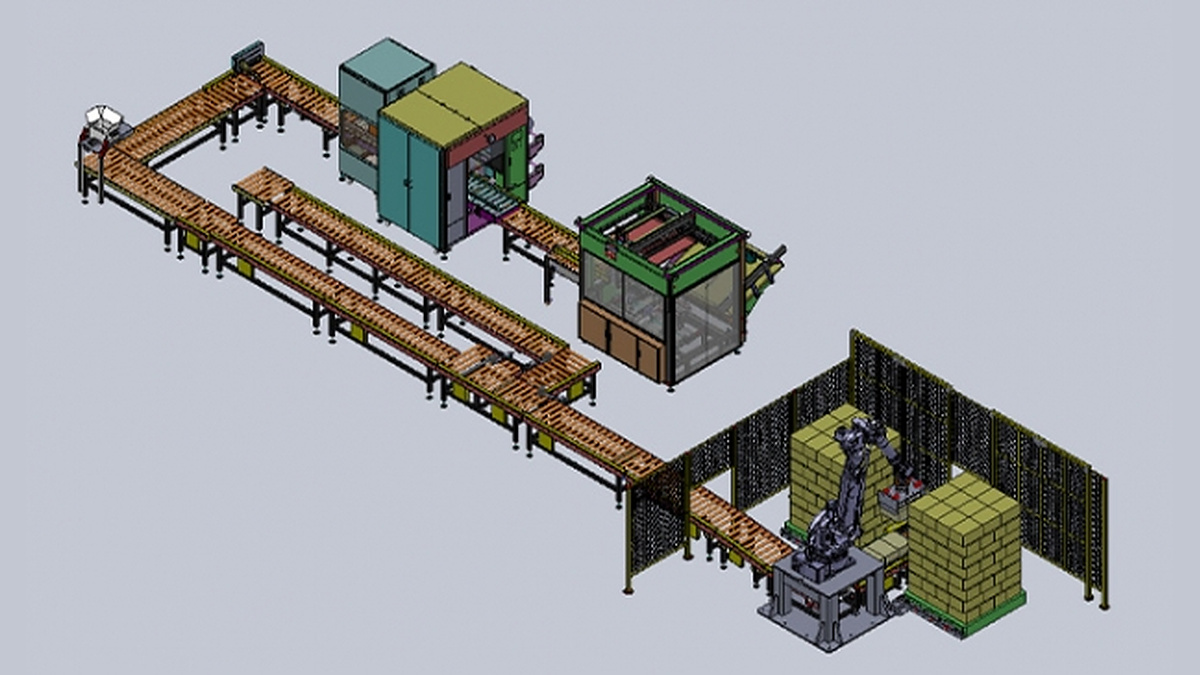
An automatic packaging line connects several packaging steps into one coordinated system. It may include feeding, filling, weighing, sealing, capping, labeling, inspection, cartoning, case packing, conveying, and palletizing. The goal is not simply to buy more equipment, but to synchronize machines, controls, sensors, and product flow.
Standalone packaging machines perform individual tasks separately. A factory might use one filling machine, one labeler, one sealer, and one carton closer, with operators moving products between them. Some standalone machines are highly automated in their own function, but they are not linked into a complete line.
Key Comparison
| Factor |
Automatic Packaging Line |
Standalone Packaging Machines |
| Best fit |
Stable products, higher volume, repeatable workflows |
Short runs, frequent SKU changes, phased investment |
| Upfront cost |
Usually higher |
Usually lower |
| Labor need |
Lower manual handling when well designed |
More operator involvement |
| Flexibility |
Good if designed for changeover, but less movable |
Easier to rearrange or repurpose |
| Throughput |
Strong potential for consistent output |
Often limited by transfers between steps |
| Maintenance impact |
One fault may stop the line |
Problems may stay isolated to one machine |
When an Automatic Packaging Line Is Better
An automatic line usually makes sense when demand is predictable, packaging formats are stable, and the factory needs sustained output. If the same bottle, pouch, carton, or case format runs for long periods, integration can reduce repetitive handling and improve consistency.
Labor is another major driver. Packaging departments often rely on tasks that are hard to staff: loading containers, moving products, watching for defects, stacking cartons, or coordinating between machines. Automation does not eliminate people, but it can shift workers toward supervision, maintenance, quality checks, and problem solving.
Automatic lines can also improve visibility. When machines are connected, managers can monitor speed losses, stoppages, rejects, and downtime patterns more systematically. That helps teams identify whether issues come from materials, machine settings, operators, or upstream production.
However, automation is not a cure for unclear processes. If packaging materials vary, product specifications change often, or operators rely on informal workarounds, a full line may simply automate those problems. Before investing, factories should document current output, downtime, defect causes, changeover time, and labor usage.
When Standalone Machines Are Better
Standalone machines are often better when flexibility matters more than maximum speed. A startup food producer, cosmetics brand with many bottle shapes, chemical packer with variable container sizes, or contract packager handling short runs may benefit from machines that can be moved, adjusted, or replaced independently.
They also reduce investment risk. A factory can automate one pain point first, such as sealing, labeling, weighing, or carton closing, then evaluate the result before buying more equipment. This staged approach is useful when future demand is uncertain or when management wants automation benefits without redesigning the entire packaging area.
Maintenance can be simpler as well. If one standalone machine fails, other packaging tasks may continue manually or through temporary rerouting. In a tightly integrated line, one fault can stop the whole system until the issue is resolved. The downside is that operators may still spend hours transferring products, correcting alignment, waiting for the next step, or reworking packaging defects.
Product Mix, Changeover, and True Output
The central question is not “Which machine is faster?” but “Which system produces more saleable product under real factory conditions?” Rated speed is only part of the equation. Effective output also depends on changeovers, cleaning, material jams, startup checks, rejects, and operator availability.
High-volume, low-variety production usually favors line automation. Low-volume, high-variety production usually favors standalone or modular equipment. Between those extremes, the best solution may be a semi-automatic or partially integrated line.
Changeover deserves special attention. A fast automatic line that takes hours to adjust may perform poorly in a factory with many short batches. On the other hand, a modern line with recipe controls, quick-change parts, tool-less adjustments, and clear operator guidance can handle variety much better than older equipment.
Cost, Safety, and Quality
The purchase price is only one part of the decision. Factories should also estimate installation, training, floor changes, spare parts, utilities, safety guarding, validation, maintenance, and commissioning downtime. Return on investment is strongest when automation addresses measurable problems such as overtime, scrap, rework, product damage, missed shipments, or labor shortages.
Safety must be planned for both options. Moving parts, conveyors, sealing jaws, rotating equipment, robotics, and stored energy all create hazards if guarding and procedures are weak. Quality should also be designed into the process through appropriate inspection, reject systems, date coding, and records. In food, pharmaceuticals, cosmetics, and chemicals, cleaning, labeling accuracy, traceability, and packaging integrity may matter as much as speed.
FAQ
1. Is an automatic packaging line always faster?
Not always. It may have a higher rated speed, but actual output depends on changeover time, material quality, downtime, and line balance.
2. Are standalone machines only for small factories?
No. Larger factories often use them for specialty products, testing, rework, backup capacity, or short-run production.
3. Can standalone machines become part of a line later?
Often yes, especially if the factory plans for compatible speeds, communication interfaces, conveyors, and layout space.
4. What is the biggest risk of buying a full line?
The main risk is underestimating product variety, material variation, or changeover complexity before the system is specified.
5. What is the biggest risk of staying with standalone machines?
The factory may continue carrying hidden labor, handling, waiting, and rework costs that reduce overall efficiency.
Conclusion
An automatic packaging line is usually stronger for stable, higher-volume production where consistent flow and reduced manual handling matter most. Standalone packaging machines are often better for flexible, short-run, or budget-conscious operations that need gradual automation. The best choice is not always the most automated one; it is the one that fits the factory’s product mix, labor situation, maintenance capability, quality requirements, and growth plan.
For manufacturers comparing automation paths, Long Durable provides a practical starting point for exploring packaging line automation concepts, equipment configurations, and possible planning directions before committing to a final system design.

(4059)(20260924)(原).jpg)
(2367)(20260924)(原).jpg)