Different Functions of Common Wrenches
A wrench is a tool used to turn bolts, nuts, and other objects that are difficult to turn by hand. A wrench is a tool that uses the principle of leverage as its actuation mechanism.
Published: Oct 31, 2022
What is a Wrench?
A wrench is a commonly used installation and removal tool. Hand tools for turning bolts, screws, nuts, and other threaded fasteners that hold bolts or nuts in openings or through holes using the principle of leverage. The wrench usually has openings or sleeve holes for holding the bolt or nut at one or both ends of the shank. When in use, an external force is applied to the shank in the direction of thread rotation to turn the bolt or nut. The wrench is usually a chrome vanadium alloy tool steel, usually, drop forged. Corrosion-resistant and easy to clean. The specifications are determined by the distance between the rows of the head end or the nut that can be tightened, or by the length of the wrench. The wrench can be used according to different shapes, uses, and structures.
What are the Common Wrenches?
- Open Wrench:
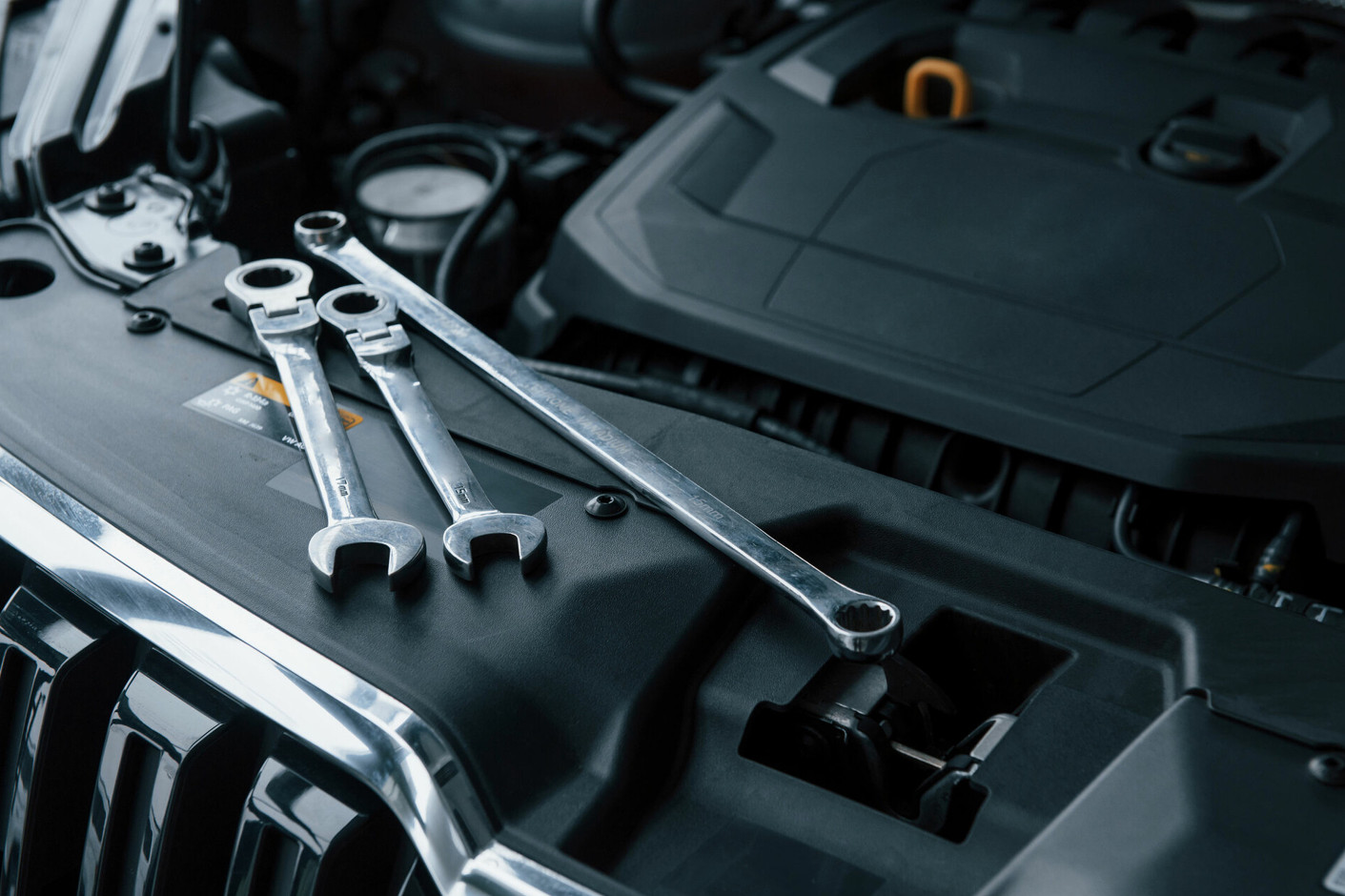
This type of wrench has a U-shaped opening at the end for easy grip on both sides of a bolt or nut. Such wrenches are usually double-ended, with a different size opening on each end. Since the opening of this type of wrench is fixed, bolts and nuts of different sizes need to correspond to the wrench one by one. The opening specification is usually marked on the wrench. The distance between the opposite sides of the hexagonal or quadrangular nut is the model for the opening of the wrench. The whole set of dumb wrenches will be from small to large, and each size will be one according to the standard specifications. Depending on the span covered by the size, a set of wrenches often consists of several to twenty.
- Box Wrench:
This is the most basic fixed-size collar wrench. This type of wrench has a closed opening at the end to grip the sides of the bolt or nut. The working surface of the torx wrench is fixed, and to correspond to different specifications, the specifications of the torx ring will be marked on the wrench. Closed openings are usually hexagonal or dodecagonal, and the hexagonal bolt or nut can be turned. Among them, the dodecagon-shaped opening can cover the bolt or nut at twelve angles, which is especially useful in a place where the space is narrow. Usually used as the initial loosening and final locking of the screw cap.
- Dual-purpose Wrench:
This type of wrench is a double-ended wrench, one end is open and the other is closed. The size of the two ends is the same, and the bolts or nuts of the same specification are screwed at both ends. A dual-purpose wrench is a necessary tool in equipment installation, equipment, and equipment overhaul and maintenance.
- Adjustable Spanner:
An open-end wrench that can freely adjust the size of the opening. The working surface of the adjustable wrench has two kinds of the fixed lip on the main working face and the movable lip on the movable working face. The movable wrench lip moves through the turbine roller to adjust the size of the wrench. Since the opening size of the adjustable wrench is continuously adjustable, the size of the applicable nuts and bolts is wide. According to the design and characteristics of the adjustment button, it is further subdivided into the crescent wrench, water pipe wrench, etc.
- Set of Socket Wrenches:
This type of wrench has a hollow socket at the end that fits over the end of a bolt or nut. Sockets are sometimes attached with handles, and universal joints and sockets are used with other tools. The advantage is that the clip seat has a built-in one-way mechanism such as a ratchet, which can swing back and forth directly without having to let go.
- Hexagonal Wrench:
L-shaped thick steel wire is common, and the cut surface of the steel wire is a regular hexagon, and there are various sizes. The hexagonal steel rod is L-shaped, and there is a T-shaped hexagonal straight steel rod that is fixed to the plastic handle horizontally. This type of wrench is suitable for turning screws and bolts with hexagonal grooves and is a tool used to drive bolts and screws with hexagonal grooves in the head.
- Inner Triangle Wrench:
A small wrench with an elbow and an equilateral triangle cut surface and a circular sheath on the outside. A switch commonly used in train doors is a universal key.
- Outer Triangle Wrench:
The cut surface is a regular triangle, which is similar to the inner triangle wrench.
- Star Wrench:
Another type of wrench used to turn grooved screws, cut in a star shape, commonly found in automatic combination instruments. Used for fixing screws of industrial equipment or automobiles.
- Band or Chain Wrench:
Consists of a metal band or belt or chain attached to a handle for gripping and turning a smooth cylindrical object.
- Pipe Spanner:
A pipe spanner, also known as a pipe wrench, has serrated hard teeth on both sides of its movable jaw, which can increase the gripping force and clamp the smooth pipe wall. The size of the opening can be adjusted by adjusting the nut, and the opening is perpendicular to the length of the handle body to hold the rotating steel pipe or other circular work objects. It is used to fasten or disassemble various pipes, pipeline accessories, or round parts, and is a common tool for pipeline installation and repair.
- Pneumatic Wrench:
Powered by compressed air, it can provide greater torque than a manual wrench. Provides constant speed and higher rotational torque.
- Screw Wrench:
The tool can be held in the middle, and it can be rotated with long handles on both sides to perform thread cutting and various hole processing operations. Used to turn bolts, nuts, and other objects that are difficult to turn by hand.
- Torque Wrench:
A wrench that can tighten a nut with a specific torque. A torque wrench is a tool for tightening a nut with a specific torque, mostly in the form of a socket wrench with a specific mechanical structure. When screw and bolt tightness is critical, using a torque wrench allows the operator to apply a specific torque value. Torque screwdrivers are similar to torque wrenches that can set torque.
Published by Oct 31, 2022
Source :wikipedia

(4059)(20260924)(原).jpg)
(2367)(20260924)(原).jpg)