What Do You Know About Planetary Reducer?
Knowledge

What Do You Know About Planetary Reducer?

Planetary reducer has been in existence for more than 30 years. During this long period of time, planetary reducer has gradually entered the field of automation from only appearing in high-end equipment in Europe and America, and has been widely used in machine tools, semiconductors, and packaging industries in recent years. The equipment in the medical food industry, aerospace and other fields will be used with planetary reducers. High, medium and low power servo motors with planetary reducers have become standard. What are the applications and advantages of planetary reducers? This article will let you know more about planetary reducers.
Published: Aug 04, 2022
What Do You Know About Planetary Reducer?

What is A Planetary Reducer?

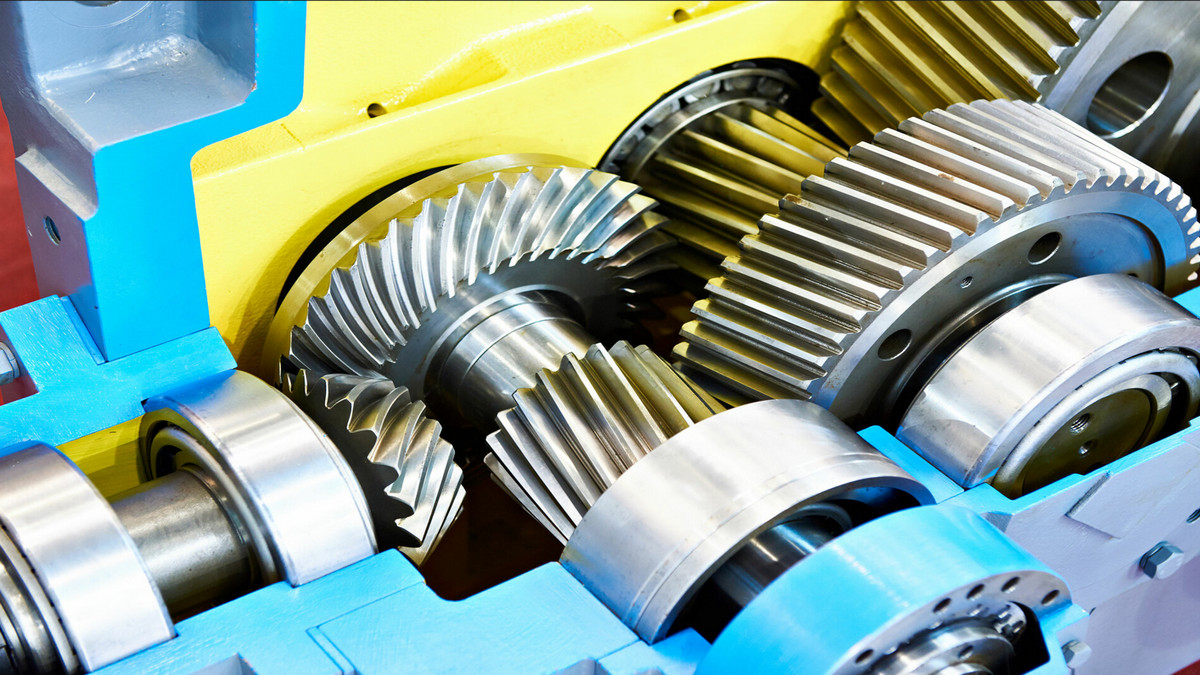
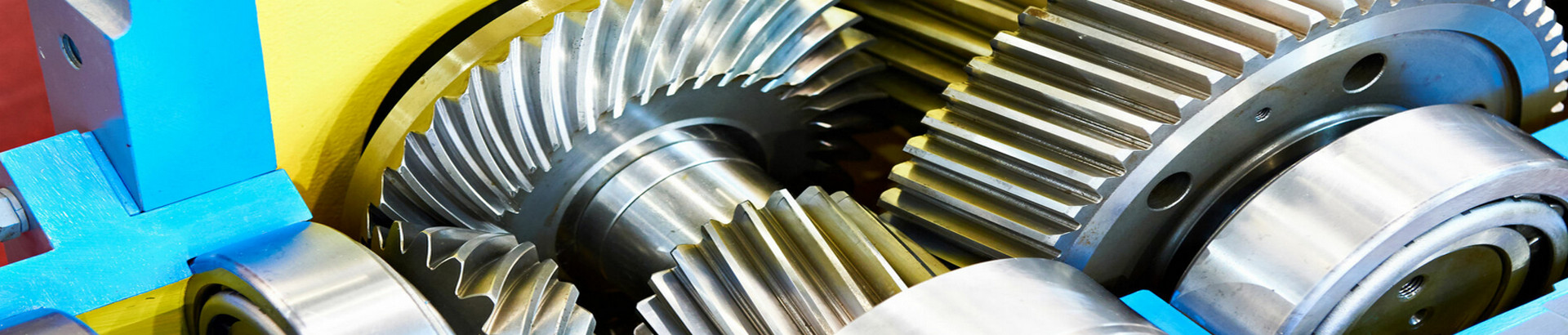
Gear reducers or gearboxes, although derived from ancient metalworking techniques, are the basis for many current innovations. The planetary reducer is a gear reducer, and the internal structure of the planetary reducer is mainly composed of four parts. They are Sun Gear, Planetary Gear, Ring Gear and Carrier. In this gear train, the outer ring gear is fixed, and the sun gear driven by the motor is located in the center of the gear train, that is, the input shaft. The sun gear is driven by the motor and simultaneously moves the planetary gears fixed in the planetary arm. In addition to its own rotation, the planetary gear also revolves around the axis of the sun gear. The planetary arm itself is the output shaft (or output shaft) of the reducer. While the planetary gear is running, it also transmits the power of the motor through the travel arm. The operation of this gear train is similar to the orbits of the planets in the solar system, which is how the planetary gear train gets its name. The reducer made with this structure is called a planetary reducer.

There are many types of reducers, with different structural designs and transmission methods, and planetary reducers are just one of them. Even so, planetary reducers can be used in countless different fields, and their uses are beyond our imagination. Planetary reducer is a multi-purpose, durable, high-precision gear reducer, which can provide high-efficiency power transmission when combined with servo motors or stepper motors. Because of its many advantages, the planetary reducer has a wide range of applications, no matter how complex or severe the conditions, it can get the job done.

What are the Advantages of Planetary Reducer?

The advantages of planetary reducer:

1. High torque density, under the same volume, it can withstand higher torque than other reducers.
2. Cost saving, with planetary reducer, the designer can use a motor with lower power, because the power becomes smaller, the cost of the overall configuration has to be greatly reduced.
3. High precision, down to one arc minute.
4. Low noise, down to 55 decibels.
5. High efficiency, up to 97%.

What are the Types and Applications of Planetary Reducers?

After years of development, the planetary reducer currently has the following styles:

Output Shaft
The planetary reducer itself has an output shaft, and the output shaft is coaxial or parallel to the input shaft. There are several forms of output shaft to choose from, for example, the common output shaft with key, which can make the reducer and the equipment end connected and assembled quickly and safely. In addition, there are optical shafts or bolt-slot shafts, etc. and other additional driving parts such as pulleys, gears, sprockets, etc. can be configured. The output shaft type planetary reducer has a wide range of applications and is suitable for almost all kinds of automation or machinery and equipment occasions. Such as machine tool, lathe, milling machine, water jet cutting machine, laser cutting machine, bottle blowing machine, rubber and plastic machinery, packaging machinery, CNC metal processing machine automatic loading and unloading automatic door-type robotic arm and so on.

Flange Type
The output side of the reducer is an output flange designed according to ISO 9409 specifications, which can be matched with various pinions, pulleys or couplings that meet this specification to easily and quickly connect to the application machinery and equipment. The flange type planetary reducer can provide higher torsional rigidity due to the structural design and the large diameter of the output flange surface, and is especially suitable for applications where the motion direction is constantly changing. Commonly used in parallel delta industrial robots with rack and pinion drives.

Right Angle
The right-angle planetary reducer is equipped with a 90-degree right-angle gearbox, which outputs the torque and speed of the servo motor at a 90-degree turn, which can save installation space and make the overall design of the equipment more compact. The output end of the right-angle planetary reducer usually also has two types of output shaft type and flange type to choose from, which can be installed and used in any direction, which greatly increases the flexibility of design and installation. It is often used in automatic mechanical devices with servo motors, photoelectric panel handling, automatic storage systems, robotic arms, pipe benders, unmanned guided vehicles (AGV), etc.

Customized Models
World Association has been focusing on the design and manufacture of motors and reducers for decades. Well-trained, professional and experienced R&D engineers and flexible coordinated manufacturing capabilities are able to develop exclusive drive solutions together with customers. Whether it is a special application environment, high output power or strength, or special requirements in surface treatment or materials, we can design, develop and manufacture according to your exact specifications, while meeting the performance, quality and cost standards you expect.

Published by Aug 04, 2022 Source :REASON

Further reading

You might also be interested in ...

Headline
Knowledge
Scaling and Corrosion in Plastic Machinery Cooling Systems: Causes, Risks, and Preventive Measures
Scaling and corrosion are persistent risks in plastic machinery cooling systems. This article outlines their causes, their effect on heat transfer and flow stability, and practical maintenance measures manufacturers can use to reduce efficiency loss, blockage risk, and long-term equipment damage.
Headline
Knowledge
Chemical Packaging Lines Evolve as Safety and Precision Demands Increase
As chemical manufacturers face stricter safety regulations and complex material requirements, packaging lines are evolving from standalone machines into fully integrated production systems. This article explores key considerations including filling technology selection, equipment durability under chemical exposure, workplace safety, and the shift toward complete system solutions. Understanding these factors helps manufacturers improve accuracy, ensure safety, and enhance overall production efficiency in hazardous chemical packaging environments.
Headline
Knowledge
Improving Multi-Computer Workflow Efficiency with a 4-Port USB-C KM Switch
How mouse roaming, 10Gbps USB sharing, and flexible control help streamline modern multi-system environments
Headline
Knowledge
How Anti-Static And Protective Films Reduce Surface Damage In Sensitive Manufacturing
In sensitive manufacturing, many costly defects do not begin with machine failure or operator error. They begin with static charge, airborne particles, micro-scratches, adhesive residue, and unnoticed surface contamination. These issues are often underestimated because they appear as scattered defects rather than one major failure. Yet in electronics, optics, display processing, and coated surface production, even small flaws can reduce yield, increase rework, slow inspection, and weaken final product quality.
Headline
Knowledge
What Buyers Should Know Before Choosing a Automatic Plastic Blow Molding Machine
For buyers, factory owners, and packaging manufacturers, selecting an automatic blow molding machine is no longer just a matter of comparing output speed or initial price. In real production environments, the performance of a plastic blowing machine is often determined by the quality and coordination of its core components. A machine may appear competitive on paper, yet still create costly problems once production begins. Uneven wall thickness, unstable parison formation, excessive scrap, slow cooling, and difficult maintenance are all issues that can usually be traced back to the design of several key modules. This is why experienced buyers tend to look beyond catalog specifications and focus instead on the machine’s screw, die head, clamping system, and cooling design. These components do more than support production. They directly influence product quality, material efficiency, energy use, maintenance frequency, and overall return on investment.
Headline
Knowledge
What Buyers Overlook When Choosing a Wire Harness Manufacturer
A practical guide to evaluating engineering support, quality control, customization and sourcing risk
Headline
Knowledge
How High-Efficiency Gear Motors and Brushless Motors Support ESG and Energy Savings
Industrial motor efficiency directly affects a factory’s electricity use, carbon footprint, maintenance burden, and long-term operating cost. For factory owners, procurement teams, and equipment designers, choosing a more efficient gear motor or Brushless Motor is not only a technical upgrade. It is also a practical way to improve ESG performance, reduce energy waste, and strengthen return on investment. In most industrial facilities, motors are among the largest sources of electricity consumption. When motors run continuously in conveyors, packaging lines, automated machinery, food processing systems, and material handling equipment, even a modest improvement in efficiency can produce significant annual savings. That is why motor efficiency is increasingly linked to ESG strategy, cost control, and supply chain competitiveness.
Headline
Knowledge
Die Casting Vs. Forging: How To Choose Based On Strength, Geometry, And Volume
Choosing between die casting and forging affects far more than part cost. It influences structural performance, design flexibility, tooling strategy, machining requirements, lead time, and long-term production efficiency. When the wrong process is selected too early, projects often run into redesigns, extra machining, or higher-than-expected production costs. The right decision depends on how much strength is required, how complex the part geometry is, and whether the target is lower-volume production or stable high-volume output.
Headline
Knowledge
How Material Design Affects Fitness And Rehabilitation Rubber Products
In fitness and rehabilitation products, material design has a direct effect on performance, comfort, durability, hygiene, and long-term user trust. A resistance band that stretches unevenly, a grip that becomes slippery, or a flexible component that tears too early can quickly lead to complaints, returns, and lower confidence in the product. The key challenge is not simply choosing an elastic material. It is selecting and validating a material system that can perform consistently under repeated stretching, skin contact, sweat exposure, and ongoing mechanical stress.
Headline
Knowledge
Choosing the Right Coating for Paper Cups and Food Containers
Selecting the right coating for paper cups and food containers affects far more than leak resistance. For foodservice brands, importers, product teams, and packaging decision-makers, coating choice directly shapes heat resistance, grease performance, sealing behavior, disposal options, compliance risk, and overall cost. A paper cup or food container may look similar on the outside, but the coating often determines whether it performs well in real service conditions or creates problems after launch. That is why coating specifications should be defined early rather than treated as a minor detail after size, structure, or artwork are approved.
Headline
Knowledge
Understanding Lathe Types: Differences Between Manual, Engine, and CNC
When manufacturers evaluate different lathe types, the decision usually goes beyond machine specifications alone. Choosing between a **manual lathe**, an engine lathe, and a CNC lathe can influence production flexibility, machining consistency, labor requirements, and long-term investment efficiency. For many workshops, factories, and industrial buyers, understanding these differences is essential to selecting equipment that truly fits the job. In metalworking, the wrong machine choice can create avoidable problems. A machine that is too simple may limit output, while a machine that is too advanced may increase cost without delivering enough return. That is why buyers often need a clear, practical comparison rather than a purely technical definition. This article explains the differences between manual, engine, and CNC lathes, where each one performs best, and how buyers can choose the right type based on actual production needs.
Headline
Knowledge
Biometric, RFID or Face Recognition: Which Access Controller Fits Your Site Best?
What procurement and technical teams should review when selecting an access controller for security, throughput and long-term fit.
Agree