Why Do We Need to Anodize the Precision Machined Parts?
Knowledge

Why Do We Need to Anodize the Precision Machined Parts?

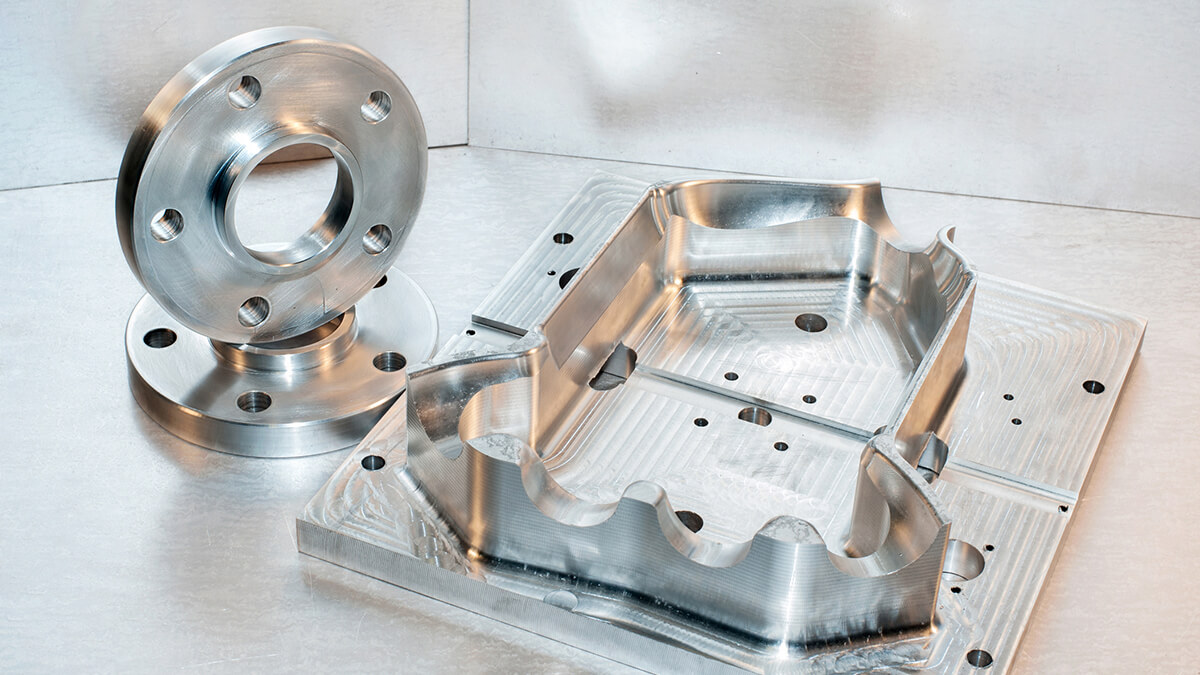
Anodizing is a process of surface treatment. The final process of metal manufacturing is surface finishing, anodizing precision machined metal parts, a reliable and relatively inexpensive method to improve wear resistance and coloring aluminum and other non-ferrous metals.
Published: May 12, 2020
Why Do We Need to Anodize the Precision Machined Parts?

Anodizing is a process of surface treatment

Anodizing is an electrochemical conversion process that usually forms an oxide film in an electrolyte (chemical solution) on aluminum. The aluminum part is the anode (hence the name "anodization"), and current passes through them and the above electrolyte (most commonly sulfuric acid is used) between the cathode and the cathode, which is usually a flat aluminum strip. There are different types of anodizing, the most common being type I-chromic acid anodizing, type II-sulfuric acid anodizing, and type III hard anodizing or Mil-A-8625 name Hardcoat. Other less common types are phosphoric acid and anodized titanium. Anodizing is a porous structure grown from an aluminum matrix and can absorb color dyes well. This is done by using a secondary operation of organic or inorganic coloring.
Other common types include chromic acid anodizing, boric acid anodizing (BSAA), sulfuric acid anodizing, hard anodizing (hard coating), titanium anodizing, electrolytic two-step anodizing-AnoBlack EC.

Anodizing precision-machined parts can provide a reliable and relatively inexpensive method to improve wear resistance and color aluminum and other non-ferrous metals. This electrochemical process was first developed in the 1920s. It revolutionized many industries, requiring lightweight, strong, and corrosion-resistant aluminum profiles for window frames, decorative facade panels, and many other architectural elements.
Today, it can protect satellites, skyscraper facades, and components in many industries, from aerospace to medical, and is one of the most effective ways to manufacture durable and almost maintenance-free aluminum components.

How to do it? Anodizing is a form of highly controlled oxidation. Essentially, oxidation corrodes ferrous metals. However, if applied correctly to non-ferrous metals, the effect is reversed. Aluminum is a common choice because of its lightweight and corrosion resistance, but for titanium, magnesium, zinc, and other metals that lack iron, there are indeed processes.

The common method of anodizing aluminum is to immerse the part in a sulfuric acid bath, which will form tiny holes (nanopores) in the aluminum surface. An electric current is applied to the medium, and by adding a cathode, oxygen ions are released from the acid and combined with aluminum. This forms an oxide layer, and the color can be applied at this time if necessary. Finally, a sealant is applied to close the nanopores and any micro-cracks in the oxide layer.
Unlike electroplating or paint that only covers the surface, anodizing is part of the metal, so it does not flake, flake, or flake over time. Just like the black oxidation conversion process of steel alloys, since the oxidation is derived from the metal, it will not flake or flake.

Benefit of anodizing

  • Durability: As mentioned above, anodization changes the aluminum substrate at the molecular level. Anodized parts will not chip, flake or flake, and have extremely strong corrosion resistance and wear resistance. If sealed properly, wait at least five years in outdoor conditions.
  • Low Cost: High value. The service life of anodized aluminum parts is longer than its sprayed or plated similar parts, and the manufacturing cost is lower.
  • Safe for the Environment: Unlike spray coating and electroplating, anodizing does not produce hazardous waste or interfere with the recyclability of aluminum.
  • Easy to Maintain: The parts look original from production and have remained in this condition for many years. Soap and water or mild detergents can remove dirt and restore the finish relatively easily.
  • Aesthetics: The precision-processed parts are anodized to preserve the metallic luster of the parts, and the color is easy to repeat, which can be used in future production.
  • Improve lubrication: For internal components, the porosity of the unsealed anodized surface can improve the adhesion and lubricity of the adhesive. However, this may expose them to contaminants, and unsealed or partially sealed parts require special attention and consideration.
Precautions of working process
  • The positive factors are far greater than the negative factors, but anodizing is not a miraculous solution. Before choosing anodizing as the final application, the application and environment of each component must be carefully considered.
  • Long-term exposure to ultraviolet (UV) light will cause the dye to fade over time. More resistant dyes can be used, but UV resistance will reduce the range of available colors.
  • It is almost impossible to miss the make-up of anodized products. Although anodized surfaces are incredibly resistant to damage, they are not invincible. Even untrained eyes, paint modification is obvious.
  • Compared with paint, color choices are limited. With all the advantages of anodizing, paint will always provide more color options in exchange for higher cost and lower durability.
  • If you, unfortunately, hire an unqualified manufacturer, poor seals can cause corrosion of anodized parts.
  • Temperatures above 176 ° F (80 ° C) will rupture the anodized aluminum, which has a lower thermal conductivity and linear expansion coefficient than uncoated aluminum.
  • Anodizing can change the size of the components, with thickness ranging from .0002 inches to 0.002 inches (5 microns to 50 microns). This process increases the size of any surface by half the thickness of the oxide because the surface itself is half processed.

Published by May 12, 2020 Source :pioneerserviceinc, Source :anoplate

Further reading

You might also be interested in ...

Headline
Knowledge
Industrial Ultrasonic Cleaning Machines-Applications, Specifications, and Buyer Selection Guide
An industrial ultrasonic cleaning machine is a precision cleaning system that uses high-frequency sound waves to remove contaminants from surfaces. Unlike manual or spray-based cleaning, ultrasonic systems rely on cavitation the rapid formation and collapse of microscopic bubbles in a liquid medium to dislodge particles from even the most complex geometries.
Headline
Knowledge
Scaling and Corrosion in Plastic Machinery Cooling Systems: Causes, Risks, and Preventive Measures
Scaling and corrosion are persistent risks in plastic machinery cooling systems. This article outlines their causes, their effect on heat transfer and flow stability, and practical maintenance measures manufacturers can use to reduce efficiency loss, blockage risk, and long-term equipment damage.
Headline
Knowledge
Chemical Packaging Lines Evolve as Safety and Precision Demands Increase
As chemical manufacturers face stricter safety regulations and complex material requirements, packaging lines are evolving from standalone machines into fully integrated production systems. This article explores key considerations including filling technology selection, equipment durability under chemical exposure, workplace safety, and the shift toward complete system solutions. Understanding these factors helps manufacturers improve accuracy, ensure safety, and enhance overall production efficiency in hazardous chemical packaging environments.
Headline
Knowledge
Grease Pumps in Maintenance Operations: Types, Applications, and Selection Considerations
A Practical Guide to Grease Pump Applications, Performance, and Selection
Headline
Knowledge
BLDC vs. Induction Motors in Lifting and Hoisting Applications: Efficiency, Safety, and System Cost
What makes BLDC motors a better fit for today’s lifting and hoisting systems.
Headline
Knowledge
Improving Multi-Computer Workflow Efficiency with a 4-Port USB-C KM Switch
How mouse roaming, 10Gbps USB sharing, and flexible control help streamline modern multi-system environments
Headline
Knowledge
How Anti-Static And Protective Films Reduce Surface Damage In Sensitive Manufacturing
In sensitive manufacturing, many costly defects do not begin with machine failure or operator error. They begin with static charge, airborne particles, micro-scratches, adhesive residue, and unnoticed surface contamination. These issues are often underestimated because they appear as scattered defects rather than one major failure. Yet in electronics, optics, display processing, and coated surface production, even small flaws can reduce yield, increase rework, slow inspection, and weaken final product quality.
Headline
Knowledge
What Buyers Should Know Before Choosing a Automatic Plastic Blow Molding Machine
For buyers, factory owners, and packaging manufacturers, selecting an automatic blow molding machine is no longer just a matter of comparing output speed or initial price. In real production environments, the performance of a plastic blowing machine is often determined by the quality and coordination of its core components. A machine may appear competitive on paper, yet still create costly problems once production begins. Uneven wall thickness, unstable parison formation, excessive scrap, slow cooling, and difficult maintenance are all issues that can usually be traced back to the design of several key modules. This is why experienced buyers tend to look beyond catalog specifications and focus instead on the machine’s screw, die head, clamping system, and cooling design. These components do more than support production. They directly influence product quality, material efficiency, energy use, maintenance frequency, and overall return on investment.
Headline
Knowledge
What Buyers Overlook When Choosing a Wire Harness Manufacturer
A practical guide to evaluating engineering support, quality control, customization and sourcing risk
Headline
Knowledge
How High-Efficiency Gear Motors and Brushless Motors Support ESG and Energy Savings
Industrial motor efficiency directly affects a factory’s electricity use, carbon footprint, maintenance burden, and long-term operating cost. For factory owners, procurement teams, and equipment designers, choosing a more efficient gear motor or Brushless Motor is not only a technical upgrade. It is also a practical way to improve ESG performance, reduce energy waste, and strengthen return on investment. In most industrial facilities, motors are among the largest sources of electricity consumption. When motors run continuously in conveyors, packaging lines, automated machinery, food processing systems, and material handling equipment, even a modest improvement in efficiency can produce significant annual savings. That is why motor efficiency is increasingly linked to ESG strategy, cost control, and supply chain competitiveness.
Headline
Knowledge
Die Casting Vs. Forging: How To Choose Based On Strength, Geometry, And Volume
Choosing between die casting and forging affects far more than part cost. It influences structural performance, design flexibility, tooling strategy, machining requirements, lead time, and long-term production efficiency. When the wrong process is selected too early, projects often run into redesigns, extra machining, or higher-than-expected production costs. The right decision depends on how much strength is required, how complex the part geometry is, and whether the target is lower-volume production or stable high-volume output.
Headline
Knowledge
How Material Design Affects Fitness And Rehabilitation Rubber Products
In fitness and rehabilitation products, material design has a direct effect on performance, comfort, durability, hygiene, and long-term user trust. A resistance band that stretches unevenly, a grip that becomes slippery, or a flexible component that tears too early can quickly lead to complaints, returns, and lower confidence in the product. The key challenge is not simply choosing an elastic material. It is selecting and validating a material system that can perform consistently under repeated stretching, skin contact, sweat exposure, and ongoing mechanical stress.
Agree