The U.S.-China trade war has been on the rise for more than a year, and both sides have become more and more fierce. The economy has been affected by the recession and the global manufacturing supply chain has also accelerated. Although Taiwan has benefited from this wave of trade wars in the short term, it may still suffer a lot in the long run. Also, the influence of other Asian countries affects the layout of Taiwanese businessmen. In the face of complex situations, we must be prepared to respond.
The U.S.-China trade war is intensifying. Whether it is the transfer of global manufacturing production bases or the transfer of orders resulting from the avoidance of trade war tariffs, the import and export trade data of countries around the world have changed. According to the observation reports submitted by Zicheng Joint Accountant Affairs, the World Trade Organization (WTO), and the International Monetary Fund (IMF), it can be found that the U.S.-China trade war continues to intensify, bringing about changes in global import and export trade, as well as a new situation in Asian trade, At this critical moment, Taiwanese companies must pay careful attention to the global layout and adopt corresponding strategies to maintain their competitive advantage in the fierce competition.
U.S.-China trade war is still fierce
The U.S.-China trade war continues to burn. Starting September 1, 2019, the United States will impose a 10% tariff on USD $ 300 billion in mainland China goods that have not yet been levied tariffs, some of which cover smartwatches, Bluetooth headsets, flat-screen TVs and Several commodities such as shoes are expected to be included in smartphones, laptops, toys, and clothing by December 15th, which will be subject to a 10% tariff, which is like a comprehensive tax on Chinese mainland goods.
What's more, Trump had left a message on Twitter on August 23rd. Starting October 1, the US $ 250 billion of goods exported to the United States that had already imposed tariffs on mainland China will be raised from 25% to 30%; And from September 1st, the 10% commodities items will be raised to 15%.
In this regard, mainland China has also fought back. In addition to the 750 to 10% tariffs imposed on USD $ 75 billion worth of goods imported from the United States on August 23, it is expected that on December 15 it will resume Automobiles and components are subject to 25% and 5% tariffs. The WTO warned that if the future trade war is expanded to 8% of global trade in automotive products, the chain reaction will be quite significant and difficult to estimate.
In the "PwC's Global Economy Watch" (PwC's Global Economy Watch) recently released by Zicheng United Accounting Firm, PwC UK economist Mike Jakeman mentioned that if a country wants to solve the trade imbalance problem Bilateral tariffs are by no means perfect tools, because "Import substitution" will only replicate the same trade imbalances in other countries.
Impact on the global economy and commodity trade
It is true that in the face of the intensifying trade war between the United States and China, the world ’s leading economic forecasters all hold unoptimistic views on the future development of the economy, import and export trade, and manufacturing. The Global Economic Outlook report pointed out that since mid-2018, the US and China have imposed import tariffs on each other, which has weakened the confidence of financial markets and enterprises, leading to a slowdown in investment and an impact on economic growth. The IMF estimates that the existing tariffs will lower the global economic growth rate by 0.2 percentage points in 2019. If the United States imposes the next round of tariffs on China imports, the IMF estimates that global GDP will drop another 0.5 percentage points in 2020.
While the overall economy was hit, "commodity trade" was the most affected. WTO Secretary-General Roberto Azevedo pointed out in the "World Trade Report 2019" that global trade tensions continue to intensify, trade restrictions increase, and various uncertainties, which pose a huge challenge to global trade and significantly slow the growth of global trade. The growth of merchandise trade in 2018 will only be within 3%, a decrease of 4.6% from 2017, and this downward trend will continue into this year. It is estimated that this year's global trade growth is only 2.6%. If trade growth is to resume in 2020, tensions must be resolved.
Director of Information and External Relations at the World Trade Organization (WTO), pointed out at a Singapore seminar not long ago that the latest WTO data show that the amount of trade tariff barriers during the one year from October 2017 to October 2018 An increase of 588 billion US dollars, an increase of 7 times more than in the past year. Besides, there are as many as 24 trade disputes based on the US-China trade war, which shows that the impact of the trade war on global imports and exports is huge.
The future trade war will start and the increase in tariff barriers may increase to the level before the emergence of the global multilateral trading system. At this time, the severity of the manufacturing shutdown and the decline in export orders may be better than that in 2008. The global financial tsunami will cause global trade volume to shrink sharply by 17%.
Asian Economic Observation after the Trade War
However, while the U.S.-China trade war has had a severe impact on the global economy, some countries have developed unexpectedly. Global Economic Outlook report found that, due to the impact of the US-China trade war, in the first quarter of 2019 alone, the total amount of US imports from China fell by 15% compared with the same period last year; Total imports of economies have grown by more than 16%, including Bangladesh, India, Indonesia, Malaysia, South Korea, Taiwan, Thailand, and Vietnam, and if the US-China trade war continues, it may help accelerate the economic growth of Vietnam, South Korea, and Taiwan.
In terms of the economic growth of Asian countries, the Global Economic Outlook report predicts that the mainland Chinese economy will continue to slow down from 2019 to 2020, with an economic growth rate of 6.3% in 2019 and another 6.2% in 2020. In contrast, India will continue to become the fastest-growing large economy in the next two years, and the growth rate is expected to exceed 7%. In Japan, although the government will increase the consumption tax rate in October 2019, it is expected to drive a wave of economic momentum, but in the long run, it may lead to economic weakness.
Vietnam is already an important part of the global value chain
The country that has benefited the most from the US-China trade war is Vietnam. The Global Economic Outlook report shows that the US trade deficit with Vietnam in the first quarter further expanded to USD $ 13.5 billion, an increase of 45% from USD $ 9.3 billion in the same period in 2018. Also, according to a survey by Nomura in Japan, Vietnam's customs merchandise trade order received in the first quarter of 2019 is equivalent to 7.9% of GDP. Official Vietnamese estimates that Vietnam ’s economic growth rate is expected to grow to 6.9% to 7% in 2019.
The reason why Vietnam can benefit the most from this wave of US-China trade war is that, in addition to the abundant human resources and cheap conditions suitable for the establishment of production bases, in recent years, Vietnam has actively promoted trade liberalization, which is also the key.
A global tax services accountant at Zicheng United Accountants, pointed out that Vietnam has signed multi-country or bilateral trade agreements. When Vietnamese manufacturers export goods to other countries, tariff concessions have become a major attraction for foreign investment, strengthening Vietnamese companies to advance all over the world. China ’s trade competitiveness has enabled Vietnamese companies to participate more deeply in the global production chain and value chain.
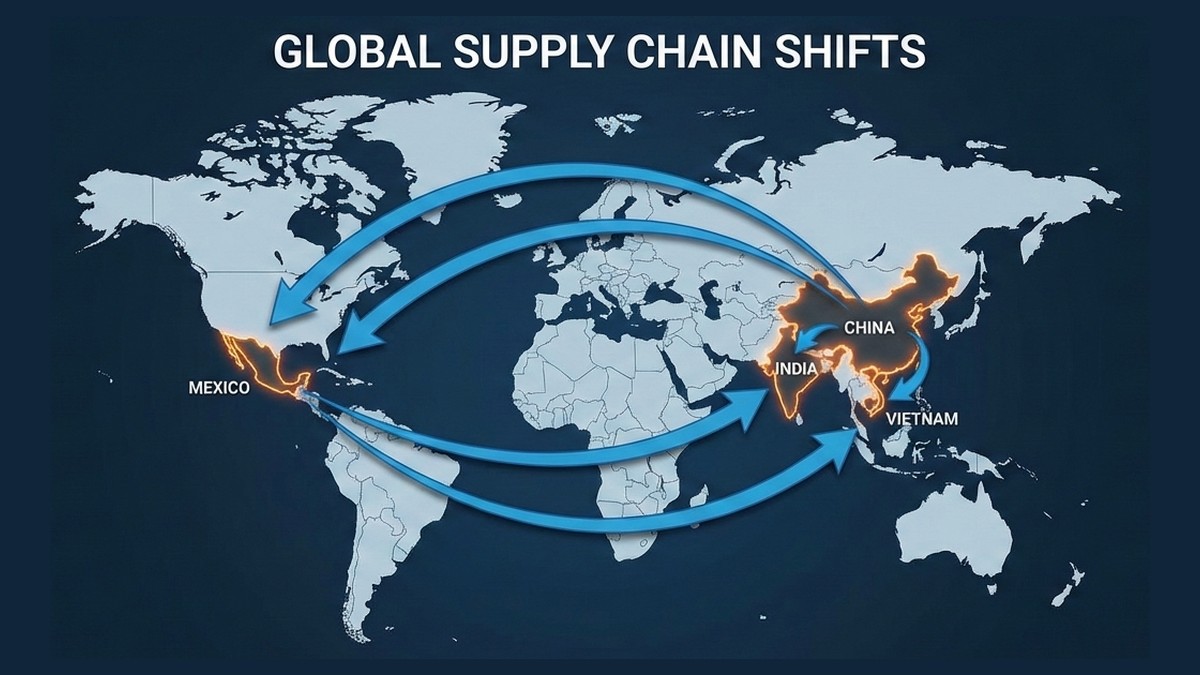
Especially in the past year, affected by the US-China trade war, many multinational companies have adjusted their production chains and transferred their production bases to Vietnam. Taiwanese companies that have relied on mainland China for production and exported to European and American markets have also regarded Vietnam as an important manufacturer. base. According to the "2019 Zicheng Taiwan Business Leaders Survey Report", the importance of "Vietnam" has doubled from 9% in 2018 to 18% in the overseas market for corporate growth. It has become an important global layout for Taiwanese business leaders.
"Taiwan businessmen should understand the relevant local laws and regulations, tailor their investment structure, and pay more attention to tax burden issues." Liu Xinping reminded Taiwanese businessmen that the Vietnam Customs General Administration of the People ’s Republic of China promulgated Circular No. 4138 on local export tax refund Matters, Vietnamese enterprises import raw materials for processing and production, and export or sell the products to foreign manufacturers after the completion of the products, but the foreign manufacturers designate the goods to be handed over to other manufacturers in Vietnam, that is, to export by local export, for export used in production Import duties on raw materials of goods are exempt. However, whether other taxes such as business tax are exempted is yet to be clarified. Taiwanese businessmen should continue to pay attention to the development of laws and regulations and consult professional opinions on individual cases to avoid misuse.
The accountant in charge of the Vietnamese market of Zicheng United Accountants, emphasized that the Vietnamese market is very diverse and should respect the local culture. Individually understand the unique national conditions and national characteristics of Vietnam. The adjustment of the chain and the development of business strategies according to local conditions can increase the added value.
Taiwanese businessmen's repatriation and transfer order effect stabilizes Taiwan's exports
As for other Asian countries, South Korea ’s exports to the United States increased by 7.2% in the first half of this year, Singapore increased by 9.5%, Japan increased by 3.8%, and Taiwan increased by 17.4%. This is because the return of Taiwanese businessmen and the transfer of orders resulting from the US-China trade war have driven Taiwan ’s increased investment and growth in exports to the United States, and slowed the impact of Taiwan ’s shrinking global economic conditions.
According to the data released by the Ministry of Economics ’Statistics Office, during the US-China trade war, the “computer electronics and optics industry” in mainland China were the most affected. The production line moved back to Taiwan and the effect of transfer orders was the most obvious. Since the second half of 2018, The output value of the "Computer Electronics and Optics Industry" began to pick up, with a growth rate of up to 16.5%, of which the US orders for Netcom equipment increased by 45.8% year-on-year, and the server increased by 4 times as the production line moved back to Taiwan.
Also, the "electrical equipment and equipment industry" and "mechanical equipment industry" are the second and third largest industries affected in mainland China. Although the two industries in Taiwan have fallen due to the global economic downturn, the output value of the first half of 2019 decreased by 10.5% and 13.2%, but exports to the United States belong to the 301 list of products, respectively growing 16.2% and 8.9%, of which there is no shortage of conversion products. Overall, the above-mentioned three major industries contributed 90% to the growth of US exports in China in the first half of 2019. Among them, computer electronics and optical products were the most affected by the re-single effect and production line return.
The Ministry of Economic Affairs pointed out that although Taiwan ’s exports to the world declined by 3.4% and China ’s exports declined by 9.1% from January to June 2019, exports to the United States grew by 17.4% over the same period, especially the growth of telecom products, indicating that Chinese companies have launched According to the layout. Therefore, Goldman Sachs also predicted that Taiwan's GDP growth rate in 2019 will be 2.3%, ahead of South Korea's 1.9%, Singapore's 0.4%, and Hong Kong's 0.2%.
Three strategies Taiwan businessmen respond to the trade war
The fierce US-China trade war will not stop in the short term, and even more, unpredictable events will occur in the future. In the face of many uncertainties, if Taiwanese businessmen cannot control the major environmental factors, they can only go back and carefully evaluate their business operations. The direction of the management and the strategy of the global layout are responding positively to the trade war.
-
Strategy 1: Adjusting the supply chain should be evaluated multiple times
In response to the trade war, the two sides of the strait have successively introduced policies to attract companies to increase investment. However, once the group's resource allocation is adjusted, it will face a series of issues, such as renegotiation with customers and supplier selection. , Move tangible or intangible assets to affiliated companies, dispatch personnel for cost-benefit assessment, build local tax and accounting systems and systems, etc. In the face of these complex internal and external factors, it is recommended that Taiwanese companies should maintain their past flexibility and seek innovative opportunities when trading patterns and supply chains change.
When Taiwanese companies transfer production bases, they should thoroughly understand the tax discounts for the new manufacturing base. For example, when redeploying high-end products back to Taiwan for production, the Chinese government has newly added two rent taxes in July this year: "Investment Credit for Smart Machinery and the Introduction of 5G System Expenses" and "Deduction of Tax Base for Unallocated Earnings Actual Investment" Taiwanese businessmen should make good use of concessions.
-
Strategy 2: Master the market opportunities in emerging countries such as India and Vietnam
In the face of the environmental changes arising from the rise of global protectionism, although Taiwan has been named as one of the beneficiary markets under the US-China trade war, Taiwanese businessmen still face the challenge of a long-term trade war that may lead to recession, so this wave of trade must be used effectively To open up the next wave of growth, we must more keenly look for new opportunities under the political and economic landscape and grasp the opportunities of new markets. The emerging countries with strong economic growth, such as India and Vietnam, are important markets that Taiwan businessmen cannot ignore in the future.
-
Strategy 3: Promote smart manufacturing to enhance competitiveness
On the other hand, as manufacturers shift their production bases, companies can introduce smart manufacturing when they build new factories. Zhang Zhichao, an Associate Associate of Zicheng Innovation Consulting Company, said that in the past era of mass manufacturing, "lean production" has always been the principle of the manufacturing industry. To meet the needs of lean production, immediate supply and cost reduction, "Just-in- Time's real-time supply chain plays an indispensable role and creates many economic miracles. Nowadays, consumer demand has changed, and enterprise production has shifted from "mass manufacturing" to "mass customization". Taiwan's manufacturing industry is accelerating towards "Industry 4.0". Through the integration of on-site information, the ability of smart factories is enhanced to meet the needs of different customers.
Enterprises should strengthen the multi-angle relationship of orders, inventory, production, and suppliers through digital transformation, combining information, technology, and artificial intelligence, to change the process of different value activities to achieve the goal of increasing production flexibility and reducing product costs. Although the US and Chinese high-level leaders will restart trade negotiations in October this year, it seems that there is a glimmer of light. However, Larry Kudlow, the chief economic adviser of US President Trump, bluntly stated that the US-China trade conflict may continue for 10 years. While waiting for the trade war to stop, Taiwanese businessmen might as well take positive measures to develop smart production and new market layouts, etc., to welcome the uncertain future economic and trade structure.