In the world of precision manufacturing, every minute detail can determine the quality of the final product. The chuck is a critical yet often overlooked component—it's not just a tool for holding a workpiece, but the very heart of ensuring machining accuracy, efficiency, and safety. This article will take you on a deep dive into the diverse universe of chucks, covering their operating principles, design philosophies, common types, and how to select the right jaws and chucks for different needs. Whether you're new to the industry or a seasoned engineer, this guide will unlock the intricate secrets of chucks, helping you master every detail on your path to manufacturing success.
Why Are Chucks Necessary?
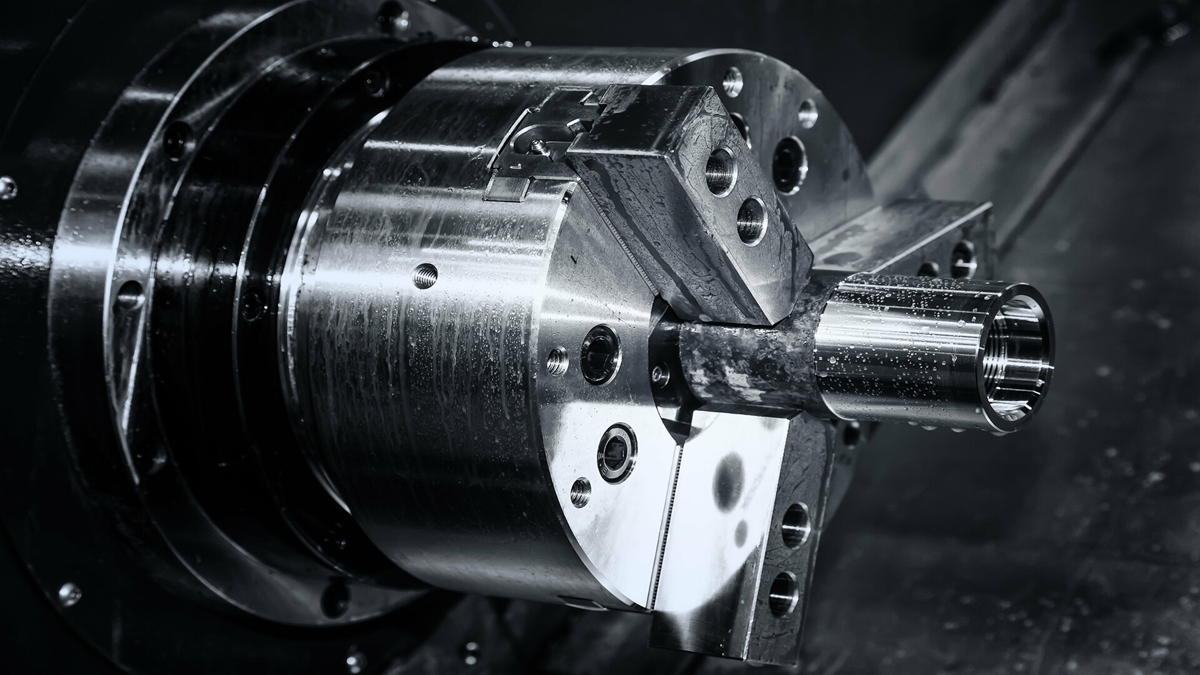
In manufacturing, factories need a reliable way to secure workpieces to machinery. This is where a chuck comes in. It's a tool designed to clamp materials firmly, preventing any movement during machine operation. As machining equipment has diversified, so too have the types of chucks, leading to a wide variety of models to suit different needs.
Before advanced technology, workpieces were often secured using more rudimentary methods like a lathe center. This involved supporting and fixing the workpiece by pushing against both ends. Even with modern clamping advancements, the lathe center hasn't become obsolete. In fact, it remains an indispensable solution, especially when processing long, cylindrical workpieces, as it ensures both rigidity and concentricity.
The Art and Science of Chuck Design
Chuck design varies significantly to accommodate different workpiece shapes. As a result, you'll find chucks with specific designs, such as those with varying numbers of jaws, chucks that employ special clamping methods, and even custom-designed chucks.
A chuck's clamping force directly impacts the precision of the finished product, making the right amount of clamping force absolutely crucial. Insufficient clamping force can cause the workpiece to shift during high-speed rotation or when subjected to the strong pressure of a cutting tool. This instability in the machining datum point severely compromises accuracy. Conversely, excessive clamping force can damage or deform the workpiece, potentially even ruining the finished product.
Beyond clamping force, selecting the right jaws is another critical aspect of chuck use. For engineers, every machining operation wears down the jaws. Therefore, the application of jaws differs entirely between large-volume, single-item production and diverse, varied production runs.
Soft Jaws vs. Hard Jaws: Choosing the Right Chuck Jaws
Chuck jaws are primarily categorized into two types:soft jaws and hard jaws. The choice between them depends largely on the volume and variety of workpieces being processed.
- Soft Jaws
Soft jaws haven't undergone heat treatment, making them less hard. They're typically used for single-piece machining applications where there's a lot of variation in workpiece shape and the overall production quantity is small. However, once a soft jaw is machined to fit a specific shape, it usually can't be adapted for other shapes, leading to rapid wear and frequent replacement.
- Hard Jaws
Hard jaws, on the other hand, have been heat-treated, giving them superior hardness and making them difficult to modify. Consequently, they are generally preferred for high-volume production of single-item parts where the workpiece shape changes very little.
Regardless of whether you're using soft or hard jaws, especially considering the diverse machining scenarios in factories, it's often recommended to opt for customized chucks. This approach helps maintain consistent clamping force and stability, while significantly reducing jaw consumption in the long run.
A Guide to the Main Chuck Types
Chucks come in a vast array of types, categorized by their structure, clamping method, and application. Below are some of the most common and important chuck types:
- Three-Jaw Chuck / Self-Centering Chuck
The three-jaw chuck is the most common type found on lathes. Its three jaws move simultaneously toward or away from the center via a linked mechanism, usually a scroll plate or worm gear. It's widely used for everyday machining on both conventional and CNC lathes.
Advantages:
- Automatic Centering:It automatically centers the workpiece with the spindle axis, eliminating the need for additional adjustments.
- High Efficiency:It allows for quick clamping and unclamping of workpieces.
Disadvantages:
- Limited Workpiece Shapes: It can only effectively clamp round or regular polygonal workpieces, making it unsuitable for irregularly shaped parts.
- Potential for Deformation:Thin-walled workpieces may deform when clamped due to the radial clamping force.
- Four-Jaw Independent Chuck
A four-jaw independent chuck features four jaws that can move and adjust independently, each with its own adjusting screw. It's commonly used for machining irregularly shaped workpieces, eccentric workpieces, large and heavy workpieces, and for single-piece or small-batch production that demands high precision.
Advantages:
- Wide Clamping Range: It can clamp round, square, rectangular, and irregularly shaped workpieces, and even eccentric ones.
- Strong and Even Clamping Force: Since each jaw can be adjusted independently, it can provide greater clamping force and better distribute clamping pressure, which helps reduce workpiece deformation.
- High Precision: Workpiece centers can be precisely aligned using tools like dial indicators, achieving very high concentricity.
Disadvantages:
- Slower Operation: Each jaw needs individual adjustment and centering, which is time-consuming.
- Requires Centering: Every new workpiece requires re-centering.
- Collet Chuck
A collet chuck consists of an elastic collet and the chuck body. The collet has a precise internal bore, and pressure applied by an external tapered sleeve or nut causes the front end of the collet to contract and clamp the workpiece. These are used for precision machining and small part manufacturing, such as components for watches, medical devices, and electronic parts.
Advantages:
- Extremely High Clamping Precision: Collets offer a large contact area with the workpiece and uniform clamping force, providing extremely high concentricity and runout accuracy.
- Stable Clamping: They are well-suited for high-speed rotation and are less prone to vibration.
- Quick Changeover: Swapping out collets for different diameters is relatively fast.
Disadvantages:
- Small Clamping Range: Each collet can only clamp workpieces within a specific diameter range (usually only a few millimeters of flexibility), necessitating a collection of different sized collets.
- Higher Cost: Precision collets generally have higher manufacturing costs.
- Hydraulic Chuck
Hydraulic chucks utilize hydraulic fluid pressure to drive the clamping mechanism. The chuck's interior is filled with hydraulic oil, and an external hydraulic pump transmits oil pressure to the clamping sleeve or jaws, achieving the clamping action. These chucks are ideal for high-speed cutting, heavy cutting, high-precision machining, and automated production lines, such as those for automotive components and aerospace parts.
Advantages:
- Large and Stable Clamping Force: Hydraulic transmission provides immense and consistent clamping force, which minimizes workpiece deformation.
- High Clamping Precision: Due to the uniform transmission of hydraulic oil, clamping precision is typically very high.
- Fast Clamping: Clamping and unclamping speeds are rapid, making them suitable for automated production.
- Excellent Vibration Damping: Hydraulic oil has a damping effect, which helps reduce machining vibrations.
Disadvantages:
- Higher Cost: The system is complex and requires auxiliary equipment like hydraulic pumps and piping.
- Maintenance Requirements: Regular inspection of hydraulic oil and seals is necessary.
- These are some of the most common chuck types in industrial production. Each possesses unique advantages and application ranges, collectively forming an indispensable clamping system in modern mechanical processing.
The Future of Clamping Technology
In summary, chucks are an indispensable tool in precision manufacturing. Their diverse types, designs, and applications reflect the continuous advancement and innovation in industrial technology. From traditional manual chucks to modern intelligent hydraulic chucks, and even the lathe center which still plays a crucial role in specific scenarios, each clamping solution embodies the pursuit of efficiency, precision, and stability.
As Industry 4.0 and intelligent manufacturing progress, the future development of chucks will undoubtedly move towards greater intelligence, automation, and adaptability, continuing to lead the manufacturing industry toward a more precise and efficient future.

(4059)(20260924)(原).jpg)
(2367)(20260924)(原).jpg)