Semiconductor supply chain include all kinds of semiconductor manufacturing and design industries, such as IC manufacturing, IC packaging and testing, IC design, and discrete component manufacturing.
What Is in the Semiconductor Industry?
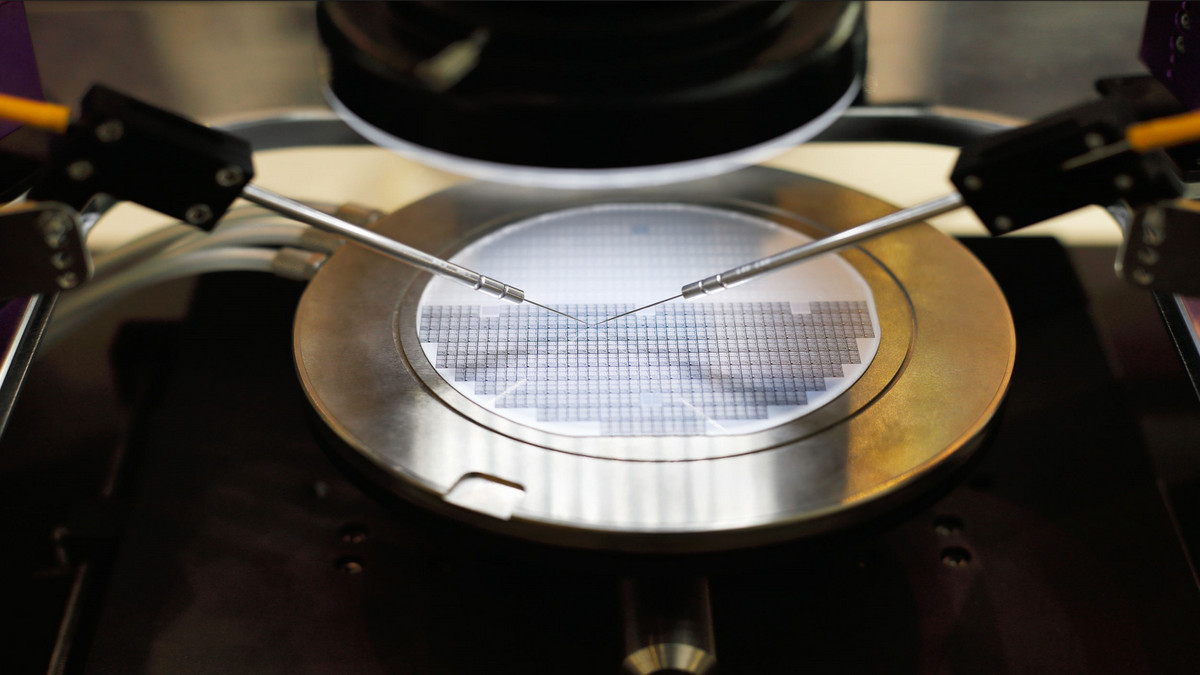
In the production process of IC chips, the designed circuit diagram is first transferred to the semiconductor wafer. Through a series of procedures, an integrated circuit (IC, Integrated Circuit) is formed on the surface of the wafer, which is then cut into a piece called Dies. These Dies are finally wrapped in a protective shell, forming the final chip.
The upper, middle, and lower reaches of the semiconductor supply chain
- Upstream: IC design. Production of IC design drawings.
- Midstream: IC manufacturing. The actual manufacturing of the integrated circuit on the design drawing.
- Downstream: IC packaging and testing. After passing testing, the wafer is cut into bare crystals, and the shell is added to package the chips.
Upstream of the Semiconductor Industry: IC Design Process
A chip is a complete circuit system used to process information. Before manufacturing a chip, engineers must first plan the functions that the chip needs to have according to requirements, and which areas on the chip to distribute these functions. Hardware Description Language (HDL) Describes the chip's functions and puts it into program code. An Electronic Design Automation (EDA) tool allows the computer to convert the program code into a circuit diagram.
Chips can be divided into 4 categories according to their functions:
- Memory IC: Used to store data. Divided into ICs that will either continue or not continue to hold stored data after the power supply is stopped.
- Volatile: Data will disappear when power is turned off, including Dynamic Random-Access Memory (DRAM).
- Non-Volatile: Data will continue to be stored after power is turned off, including Ready Only Memory (ROM) and Flash.
- Micro Component IC: a component with special data processing functions.
- Micro Processor Unit (MPU): Processing complex logic operations, such as Central Processing Unit (CPU); or microprocessor, such as Instruction Set Architecture (ISA).
- Micro Controller Unit (MCU): It is equivalent to a microcomputer, which integrates the basic components of the computer: CPU, memory, and input and output interfaces (I/O) on an IC chip. Also known as Single-Chip Microcomputer.
- Digital Signal Processor (DSP): Processing and computing Digital Signal.
- Micro Peripheral (MPR): Support MPU, MCU circuit components. Used to process the chips of computer peripheral equipment.
- Logic IC: IC that performs logic operations.
- Standard Logic IC: Perform basic logic operations, such as AND, OR, etc., mass-produce and sell IC standard products to different customers.
- Application Specific Integrated Circuit (ASIC): IC tailored for special purposes or a single customer, with the characteristics of customization, differentiation, and small quantity, and is used in markets with fast industrial changes and high integration requirements.
- Analog IC: An IC that processes analog signals, mainly used in Power Management, Amplifier, and Converter.
In the IC design industry, when engineers design ICs, in addition to the IC design itself, they also use IC design tools, which are also part of the IC design upstream of the semiconductor supply chain.
Midstream of the Semiconductor Industry: IC Manufacturing Process
When the IC design is completed, it will enter the production stage, that is, IC manufacturing. This stage is the midstream segment of the industrial semiconductor supply chain. In simple terms, IC manufacturing means that the foundry must transfer the designed circuit diagram to the semiconductor wafer.
IC manufacturing process: The IC manufacturing process of transferring the design drawing to the wafer is roughly divided into 6 stages, in order: wafer, target sputtering, coating photoresist, photomask lithography, etching, and photoresist removal.
IC manufacturing plants that manufacture chips need to use a variety of IC manufacturing equipment in the process of transferring circuits to wafers; there are also some important IC manufacturing materials in the process, such as basic material wafers, sputtering on the wafer as a metal thin film target for circuits, photomasks for transferring circuit diagrams, and chemicals such as photoresist. These IC manufacturing equipment and IC manufacturing materials are also part of the IC industry.
Downstream of the Semiconductor Industry: IC Packaging and Testing Process
When the circuit on the design drawing is placed on the wafer to form the IC, then it is necessary to test and package it, that is, to test whether these ICs can work, and then cut the IC on the wafer into a piece of die/ Die. Because these bare dies are very fragile, if the IC is usable after testing, it must be protected by wrapping it in a shell. This encapsulated Dai is now the final finished "chip".
Packaging involves wrapping the IC die into a chip. There needs to be a carrier that the die can be fixed to. This component is responsible for carrying the die and allowing the die to be connected to the outside. There are two main types of carriers: IC carrier board and Lead Frame. After the die is placed on the IC carrier board or lead frame, it is protected by a case.
IC packaging and testing manufacturers also use chip testing equipment and chip packaging equipment when conducting chip testing and chip packaging. Chip packaging can use various chip packaging materials, such as IC carrier plates, lead frames, solder balls, gold wire, and molding materials such as packaging glue and packaging shell.
Development of the Semiconductor Industry
The explosion of emerging technology applications such as 5G, high-performance computing, and the Internet of Things, coupled with the strong demand for automotive electronics, has driven wafer foundry production capacity to continue to rise. The machinery and equipment industry has benefited from semiconductor and 5G-related industries. In addition, the epidemic has accelerated the pace of manufacturers to install automation equipment. The production capacity of general-purpose production machinery and parts, linear slides, electronics and semiconductor equipment and parts, and metal manipulator tools has increased, to meet the strong global demand for chips and related semiconductor products.





.jpg)
.jpg)