What Is It About Stamping Press Machines?
Knowledge

What Is It About Stamping Press Machines?

A stamping press machine is a machine that can process sheet metal into the desired shape. It is commonly used for metal stamping to convert a flat metal sheet into a specific shape. What are the types of punching machines? Let's dig it out!
Published: Feb 10, 2023
What Is It About Stamping Press Machines?

What Is A Stamping Press Machine, or Stamping Press?

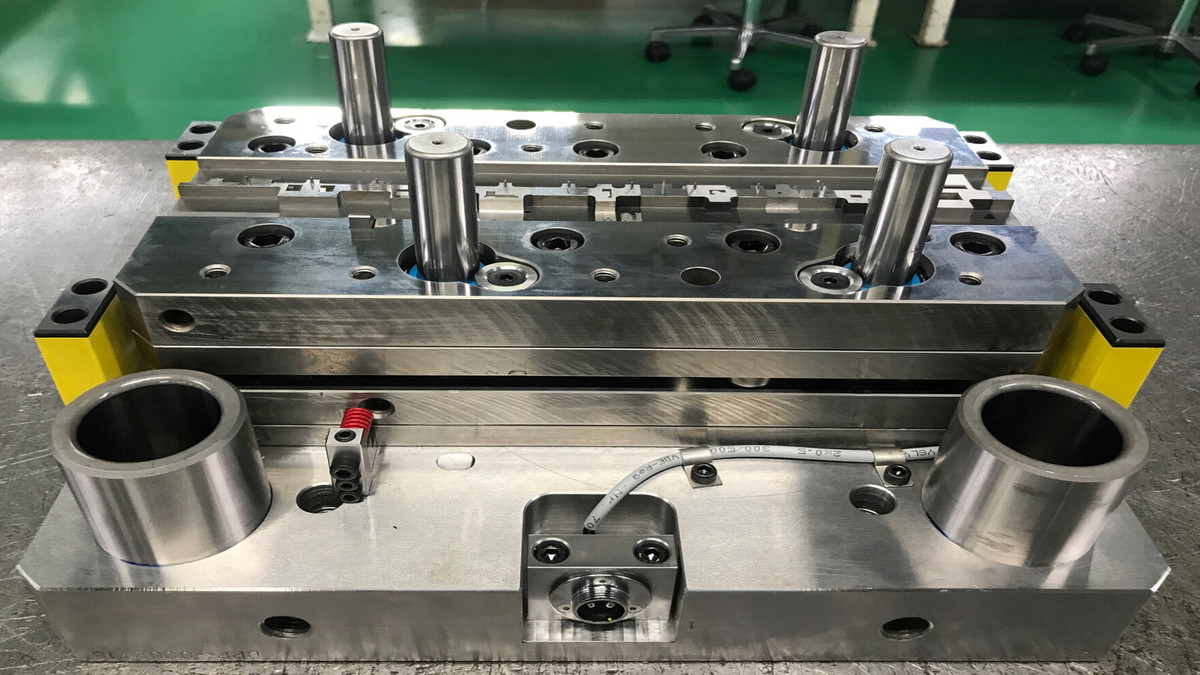
A stamping press machine is a machine that can process sheet metal into the desired shape. It is commonly used for metal stamping to convert a flat metal sheet into a specific shape. It can include a variety of metal forming techniques: blanking, punching, bending and perforating. A stamping press machine, also known as stamping press, or simply press machine, is a specific type of machine tool that is often used in metal forging to transfer energy through a certain distance and force.

What Are the Types of Punching Machines?

Hydraulic Press: Hydraulic press machine uses liquid pressure to release energy, and valves to increase or decrease the pressure of a liquid in the chamber. Hydraulic presses are more common than other types, but on the other hand, hydraulic presses are the most powerful punches. The machine can apply 75,000 tons of power, even higher. The working principle is that depending on the difference in fluid pressure, the liquid can be injected or reduced above or below, and the pressure is changed to allow the piston to rise or fall.

Mechanical Press: The mechanical press machine atmosphere has a wider variety of machine types, which convert the rotational force of the motor into pressure acting on the object. Mechanical presses are characterized by rapid and continuous application of pressure over a limited distance, often used for metal forging or sheet metal processing. The pressure of mechanical punching machines can reach 12,000 tons.

Crank Press: The crank press moves together with the driveshaft and rotates back and forth to transmit the force to the object. The transmission path of the crank press is long.

Knuckle Press: Through the connecting rod design, the huge energy of the motor can be transmitted.

Rack and Pinion Press: Through the movement of gears and racks, the transmission of energy is driven.

Screw Press: By rotating the screw, the energy of the rotation is driven, and the pressure is applied. The screw press operates slowly and can generate a relatively large constant force.

The stamping press machines can meet the needs of mass production and has a fast turnaround time, high quality and low cost. Pick the right type of stamping press regarding different needs would make forging easier.

Published by Feb 10, 2023 Source :thelibraryofmanufacturing

Further reading

You might also be interested in ...

Headline
Knowledge
Upgrading Legacy Machinery with an AC Brushless Motor: A Practical Guide to Fit, Driver, and Control Compatibility
The hardest part of replacing an old motor is usually not finding a newer model with similar power. It is making sure the new motor fits the machine, handles the actual load, and works with the existing control system.
Headline
Knowledge
How to Choose a Seal-less Pump for Corrosive Chemicals
The best pump choice prevents more than leaks. It helps prevent downtime, damaged equipment, and costly process interruptions.
Headline
Knowledge
Cold Chain vs Shelf-Stable Tapioca Pearls: Export Logistics Considerations
Evaluating shelf-stable dry pearls versus cold chain frozen formats to optimize international bubble tea supply chain logistics.
Headline
Knowledge
Custom Rubber Gasket Material Selection: NBR FKM and Silicone Compared
Comparing NBR, FKM, and silicone to optimize chemical compatibility, thermal limits, and long-term sealing performance in custom rubber gaskets.
Headline
Knowledge
OSM Ecosystem Explained: Future-Proofing Embedded Designs Across SoM Generations
From form factors to generational compatibility: An engineer's guide to evaluating Open Standard Modules (OSM) versus proprietary SoM designs.
Headline
Knowledge
Marine and Offshore Circuit Breaker Requirements: IP67 and Waterproof Design Considerations
Why IP67 is only part of the story, and how to verify electrical, thermal, and corrosion protection specs when specifying breakers for harsh marine environments.
Headline
Knowledge
Magnetic Sheet Applications in Retail POS Displays and Signage
From seasonal endcaps to shelf-edge tickets, flexible magnetic sheets let store teams swap graphics in minutes without drilling, taping, or damaging fixtures. Whether that promise holds up in daily store conditions comes down to picking the right thickness, adhesive, and surface finish.
Headline
Knowledge
EN 50155 Certified Computing for Railway Digitalization Projects
A comprehensive guide to selecting and specifying EN 50155-certified computing hardware for modern railway digitalization applications.
Headline
Knowledge
How Forging Allowance Shapes the Cost and Accuracy of Final CNC Machining
Why the extra stock left on a forging can determine machining time, dimensional stability, and total part cost.
Headline
Knowledge
Why Die-Sinking EDM Electrodes Wear Unevenly and How Geometry Changes the Result
How electrode geometry, discharge behavior, flushing, and process settings influence wear patterns and dimensional accuracy in die-sinking EDM.
Headline
Knowledge
Why Automatic Spray Guns Produce Uneven Coating at Line Starts and Stops
How spray timing, pressure transients, material viscosity and motion synchronization affect coating consistency
Headline
Knowledge
Horizontal 5-Axis Machining: When Chip Evacuation and Multi-Face Access Justify the Layout
How chip flow, setup reduction, multi-sided machining, and automation determine whether a horizontal five-axis platform delivers practical value.
Agree