"Sheet metal" in sheet metal processing refers to thin metal plates, which can be processed by stretching, stamping, bending, etc., and the thickness is usually less than 6mm. Common materials include iron plates (black steel SPHC, cold-rolled steel SPCC, galvanized steel SECC), hot-dip galvanized steel sheet SGCC), stainless steel (SUS304, SUS316), aluminum (AL5052), copper, etc. Sheet metal processing is different from other processing technologies. It includes many different steps, such as: laser cutting, NCT punching, cutting, folding, welding, riveting, etc. The specific products produced are usually support frames, equipment covers, internal parts and some functional objects, such as electronic control panels, medical equipment covers, airport automatic clearance machine covers or parts, snapshot cabinets, food processing equipment covers and parts.
Sheet metal work is a kind of mechanical processing, and its operation is to cut, form and combine various metals into various shapes. For human use, its finished products include aircraft bodies, automobile bodies, ships in transportation, air conditioning systems in construction equipment, heating and cooling ventilation ducts, various equipment in factories, and cabinets for offices and household products, kitchen utensils etc. It can be seen from this that the scope of sheet metal work is very wide, and it is also closely related to people's daily life. With the advancement of science and industry, sheet metal work also tends to be precision and automated manufacturing and development to improve product quality and productivity. However, in order to achieve this goal, it is necessary to have a thorough understanding and familiarity with the knowledge and skills of sheet metal work. Therefore, it is necessary to learn various basic manual working methods in order to learn by doing and to facilitate comprehensive application in the future.
Three Major Processes of Sheet Metal Processing
Sheet metal processing: shearing, cutting, punching
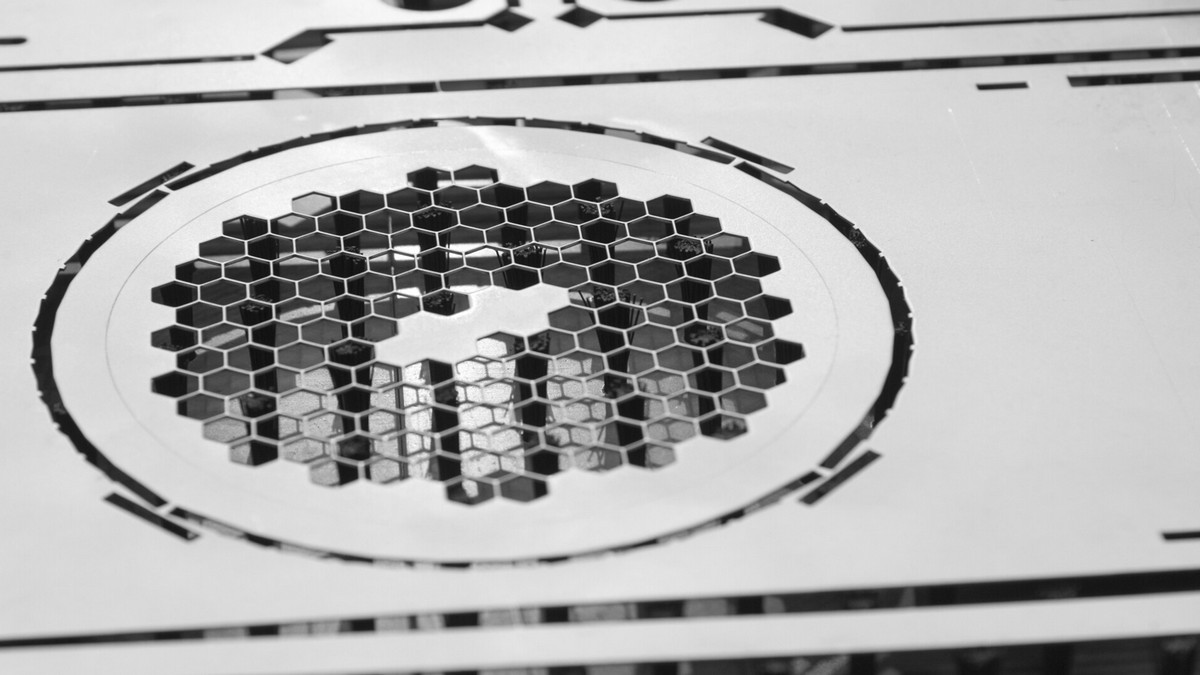
Shearing, cutting and punching are one of the three main processing of sheet metal. This step is to cut and cut out the desired shape of the sheet metal, or use a knife to punch out the desired hole and remove the excess sheet metal, so it can be regarded as a kind of material reduction. The most widely seen is laser cutting, which can be divided into CO2 or more advanced fiber laser. The power consumption of fiber laser is 1/3 of that of CO2 laser cutting in a month, and the beam is thinner, which can cut more detailed workpieces. It will not be burned and deformed, accurate and energy-saving.
Sheet Metal Processing: Forming
After laser cutting, the sheet metal is a flat metal plate. When it comes to forming, "bending" is the most common method of sheet metal line processing. In addition, there are die stamping (convex/concave), rounding, etc. One of the processing methods of sheet metal forming.
Metal bending is not as easy as paper bending. Metal materials have certain hardness and toughness, and relatively stronger pressure is required for bending and forming. The bending sequence is also very particular. It needs to be folded first without interfering with the next knife. Interfering backfolding, depending on the grade of equipment, affects the fineness of the bending.
Sheet metal processing: assembly and assembly
This process assembles and combines scattered workpieces into a finished product through welding, fastening bolts, rivets, etc.
The most common is welding, and usually the same plate thickness and material are combined, and occasionally there is a combination of different materials, such as black iron and white iron welding. The two most common types of welding are CO2 welding and argon welding. CO2 welding is usually used for iron plates, while argon welding is used for stainless steel or aluminum plates. The latest technology is fiber laser welding, just like the fiber laser automatic welding introduced by our company. Welding arm, more stable heat, beautiful weld bead.
The welding process will generate extremely high heat energy, and the metal will be deformed, so sometimes it is necessary to make additional auxiliary workpieces such as jigs and fixtures to assist the welding process. And the combination of most items requires alignment, and precision sheet metal workpieces are no exception. Usually, alignment is done in the form of "punching points", "positioning teeth" or "opening pins" during drawing.
Classifications of Sheet Metal Work
- According to the operation method, it is divided into manual sheet metal and mechanical sheet metal. The former is completely manual work, while the latter replaces manual work with machinery.
- According to the operation target, it can be divided into general sheet metal and shaped sheet metal. The processing method of the former is mainly bending, and the thickness of the material itself remains unchanged, and it is made into various finished products; while the latter is made of various irregular shapes. Curved surface, so the thickness of the material has changed, and it is not easy to restore the original shape of the material itself.
- According to the thickness of the material, it is divided into thin plate and thick plate. Generally, 3mm (1/8") is the limit. Those below 3mm are thin plate gold, and those exceeding 3mm are thick plate gold. Now it is generally called Western work or cold work. The objects of the work are the skeletons of various machinery and buildings, large containers, boilers and ships, etc. Although the working methods are different due to the thickness of the materials, the working principle is similar to that of ordinary thin plates.
Common Materials Used in Sheet Metal
There are many types of materials used in sheet metal work, including ferrous metals and non-ferrous metals. Whether they are processed at room temperature or high temperature, they must have properties such as ductility, shearing, and compression forming, and must have properties such as not easy to break and deform.
- SPHC (Steel-Plate-Hot Rolled-Coil)
Commonly known as black iron sheet, there is a dense oxide layer on the surface. Although it has a little anti-rust effect, it is easy to cause poor welding quality.
- SPCC (Steel-Plate-Cold Rolled-Coil)
After pickling treatment by SPHC, the black oxide layer on the surface is removed, so that the surface presents a metallic gray primary color. Due to the absence of the oxide layer on the surface of the hot-rolled steel coil, the welding properties are relatively good and stable, but the material becomes easily oxidized and corroded.
- SECC galvanized steel sheet
It is composed of a layer of zinc electroplated on the surface of SPCC, so that the easily oxidized zinc replaces the oxidation and rust reaction of iron to achieve the purpose of rust prevention. In non-extreme conditions (high temperature, high humidity, high acid or high salt), galvanized steel can maintain the effect of rust prevention for several years.
However, welding should be avoided when using galvanized steel sheets to make sheet metal products, because the high temperature of welding will easily evaporate the zinc on the surface of the steel sheets and lose the function of rust prevention; if galvanized steel sheets must be welded, the surface must be galvanized before welding. Otherwise, it is easy to produce pores due to the volatilization of zinc with a low melting point on the surface during the welding process, resulting in poor welding quality.
- Stainless steel
The commonly used materials on the market are 304 and 316. These two materials have good weldability and corrosion resistance, and are usually joined by argon welding (DC positive).
Stainless steel welding in general sheet metal operations is mostly carried out in the form of spot welding and weld bead (no penetration), because if the weld bead is penetrated by the traditional welding method, it will be oxidized due to the lack of inert gas protection on the back of the weld bead, resulting in penetration bead.
In addition to continuous spot welding for welding stainless steel sheets, it can also be welded in a (pulse) mode to obtain a more uniform and beautiful weld bead.
- Aluminum plate (here refers to soft aluminum)
The material is soft and light, easy to scratch and bend, but the material has poor toughness, and it is easy to break after repeated bending. Welding is usually argon welding (use alternating current, turn on high frequency).





.jpg)
.jpg)