2026 Precision Machining Trends- Essential Tools for Smart Manufacturing
Trend

2026 Precision Machining Trends- Essential Tools for Smart Manufacturing

As we approach 2026, the precision machining industry is poised for significant transformation. The increasing demand for complex and high-precision parts has driven the adoption of smart manufacturing and automation technologies. In this article, we'll explore the top 5 trends in precision machining for 2026 and how SYIC is supporting the industry's evolution.
Published: Nov 13, 2025
2026 Precision Machining Trends- Essential Tools for Smart Manufacturing

What is Smart Manufacturing in Precision Machining?

Smart manufacturing refers to the integration of advanced technologies, such as artificial intelligence, robotics, and the Internet of Things (IoT), to create a more efficient, flexible, and responsive manufacturing system. In precision machining, smart manufacturing enables the production of high-quality parts with reduced lead times, costs, and environmental impact.

Top 5 Trends in Precision Machining for 2026

Based on industry research and analysis, here are the top 5 trends in precision machining for 2026:

  1. Industrial 4.0 and Digitalization: The fourth industrial revolution, also known as Industry 4.0, is driving the digitalization of precision machining. This trend involves the adoption of digital technologies, such as cloud computing, big data analytics, and cybersecurity, to improve manufacturing efficiency and productivity.
  2. Smart Tool Holders and Tool Management: Smart tool holders and tool management systems are becoming increasingly important in precision machining. These technologies enable real-time monitoring of tool performance, predictive maintenance, and optimized tool usage.
  3. Automation and Robotics: Automation and robotics are transforming the precision machining industry. Robots and automated systems are being used to perform tasks such as part loading, tool changing, and quality control.
  4. Artificial Intelligence and Machine Learning: Artificial intelligence (AI) and machine learning (ML) are being applied to precision machining to improve process optimization, predictive maintenance, and quality control.
  5. Sustainability and Environmental Considerations: As the precision machining industry continues to grow, sustainability and environmental considerations are becoming increasingly important. Manufacturers are looking for ways to reduce their environmental impact, improve energy efficiency, and implement sustainable practices.

How SYIC is Supporting Smart Manufacturing

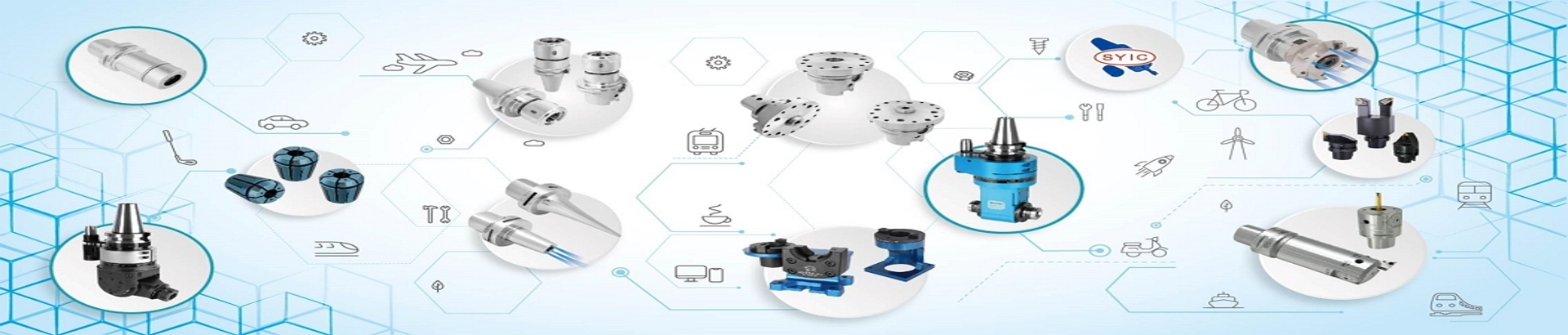
At SYIC, we're committed to supporting the precision machining industry's evolution towards smart manufacturing. Our company specializes in designing and manufacturing high-quality tool holders, cutting tools, and other precision machining solutions. We're dedicated to providing innovative products and services that enable our customers to improve their manufacturing efficiency, productivity, and sustainability. Our smart tool holders, for example, are designed to provide real-time monitoring of tool performance, predictive maintenance, and optimized tool usage. We're also working on developing AI-powered tool management systems that can help manufacturers optimize their tool usage and reduce waste.

Conclusion and Call-to-Action

In conclusion, the precision machining industry is on the cusp of significant transformation in 2026. The top 5 trends outlined in this article will shape the future of the industry, and SYIC is committed to supporting this evolution. If you're interested in learning more about our products and services, or if you'd like to discuss how we can help you implement smart manufacturing solutions, please don't hesitate to contact SYIC.

Published by Nov 13, 2025 Source: SYIC

Further reading

You might also be interested in ...

Headline
Trend
How Food Certifications and Halal Standards Drive the Global Bubble Tea Ingredients Market
The global demand for bubble tea is driving stricter requirements for ingredient sourcing, making food certifications and Halal standards essential for market access. Suppliers of tapioca pearls, flavored syrups, and toppings must comply with recognized food-safety frameworks like ISO 22000 and FSSC 22000, while Halal certification ensures products meet Islamic dietary laws for Muslim-majority markets. Together, these certifications not only safeguard quality and safety but also enable manufacturers, café owners, and distributors to expand their reach with confidence when sourcing OEM/ODM bubble tea ingredients and other bubble tea supplies.
Headline
Trend
Ensuring Safety and Efficiency in Can-Making Equipment for High-Corrosion, High-Pressure Applications
As the event and stage engineering industry faces increasing demands for speed, safety, and sustainability, temporary structures must evolve beyond traditional construction methods. Modular scaffolding has become a core infrastructure solution, redefining how large-scale events are built, managed, and optimized.
Headline
Trend
The Future of Construction Screws in 2026 - Balancing Innovation, Durability, and Environmental Responsibility
As construction projects become more complex, builders and engineers are seeking screws that combine efficiency, strength, and eco-friendly materials. Patented construction screws are at the forefront of this trend in 2026. This article examines key technological developments, global applications, and leading manufacturers driving innovation in the construction screw market.
Headline
Trend
Automation and Sustainability: The Future of Metalworking
The global metalworking industry is undergoing a major transformation. Two forces—automation and sustainability—are redefining how manufacturers approach efficiency, quality, and competitiveness. Companies that once relied on incremental machinery upgrades are now turning to connected ecosystems, data-driven production, and environmentally responsible practices.
Headline
Trend
Powering the Future of Packaging: Highlights of Next-Gen Automation
With over three decades of development and more than 30 machine models, Taiwan’s automated packaging industry has built a reputation for delivering flexible, efficient, and customizable solutions. These systems are widely used in both food and non-food sectors, providing stable performance and high adaptability to meet diverse packaging demands.
Headline
Trend
Why U.S. and European Cafes Are Embracing Bubble Tea: Market Trends & Business Insights
Over the past decade, bubble tea—once a niche Taiwanese beverage—has become a global sensation. What was once considered a novelty is now a mainstream beverage option in cafés, restaurants, and even hotels across the United States and Europe. The question many in the foodservice industry are asking is: Why are Western businesses adding bubble tea to their menus?
Headline
Trend
Why Smart Factories Are Prioritizing High-Efficiency Oil Mist Filtration
An analysis of how cleaner air leads to longer machine life and lower costs in the CNC industry.
Headline
Trend
Navigating the Future: Taiwan's Lathe Industry in 2025 and Beyond
Taiwan's lathe industry, a cornerstone of the global machine tool sector, is currently at a critical juncture. Known for its expertise in mid-to-high-end CNC lathes and multi-axis machining centers, the industry has a storied history of evolution and resilience. However, the late 2025 landscape is complex, demanding strategic agility to overcome intense international competition and technological shifts.
Headline
Trend
The Application of Materials Science in Medical Device Manufacturing
In the field of medical device manufacturing, materials science plays a central role, directly impacting the safety, durability, and clinical performance of equipment. With the rapid development of smart healthcare and precision medicine, the demands for material performance have become increasingly stringent, particularly in the areas of biocompatibility, antimicrobial properties, and lightweight design.
Headline
Trend
Globalization and Steel-and-Glass Structures: Has the Architectural Divide Between East and West Disappeared?
In the West, concrete is a symbol of strength and efficiency, yet in the hands of a Japanese master, it can become a vehicle for Zen philosophy. In Asia, bamboo is revered as a sustainable material, but in the West, it is being redeveloped into a high-tech, eco-friendly solution. This article will delve into why architects from the East and West, even when faced with the same materials, can create two completely different architectural identities. The root of this lies in a fundamental difference in philosophy: the Eastern focus on living in harmony with nature and the Western drive to challenge physical limits.
Headline
Trend
Sewing Challenges in the Era of Sustainability: Balancing Durability and Eco-Friendliness
In discussions on sustainable textiles, sewing threads may seem insignificant, yet they play a crucial role. The material and production process of threads not only affect the durability of garments but also have long-term environmental impacts. In particular, under the influence of “fast fashion,” low-quality threads often break or fade easily, leading to garments being quickly discarded. In contrast, durable threads made from sustainable sources help extend the life cycle of clothing, reduce waste, and embody the concept of “slow fashion.”
Headline
Trend
Smart Breathing Masks: From Pandemic Essential to Intelligent Healthcare
The evolution of healthcare is a continuous response to the needs of the times. Breathing masks, a medical consumable we once paid little attention to, are a concrete example of this transformative wave. They are shifting from being a cold, professional tool to a gentle companion infused with intelligence and human-centered care.
Agree