Explore the key machines used in mold manufacturing, including CNC milling, EDM, grinding, inspection, automation, and injection molding equipment.
Mold manufacturing is a precision-intensive process that requires more than a single machine. From shaping mold bases and cavities to creating fine details, producing electrodes, testing finished molds, and supporting mass production, different machines perform different functions throughout the mold-making workflow.
The original B2B Molding machine types page highlights injection molding machines, milling machines, and other mold-related machinery as important parts of the mold industry. Modern mold manufacturing, however, often combines CNC milling, electrical discharge machining (EDM), grinding, inspection, and automated production technologies to achieve the required accuracy and surface quality.
Understanding the role of each machine can help manufacturers choose the appropriate equipment based on mold geometry, material hardness, dimensional tolerance, production volume, and final application.
Why Does Mold Manufacturing Require Different Machines?
A mold is typically made from multiple components that require different manufacturing processes.
Some mold components must be milled from steel or aluminum. Deep cavities or complex internal geometries may require EDM. Precision holes and profiles may be produced by wire EDM, while grinding and finishing processes help achieve tighter tolerances and surface quality.
After the mold is completed, an injection molding machine or another forming machine may be used to test the mold and manufacture the final product.
For this reason, mold manufacturing should be viewed as an integrated process rather than a single machining operation.
Different machines may be used for:
- Mold base machining
- Cavity and core machining
- Electrode manufacturing
- Hard-material machining
- Precision cutting
- Surface finishing
- Mold testing
- Injection molding production
- Quality inspection
- Automated material handling
The correct combination depends on the type of mold and the product being manufactured.
What Is an Injection Molding Machine?
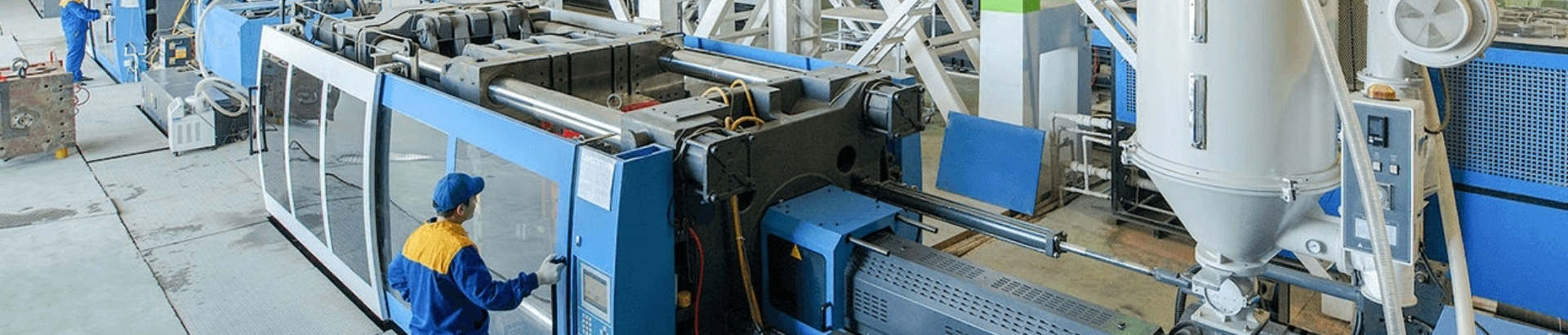
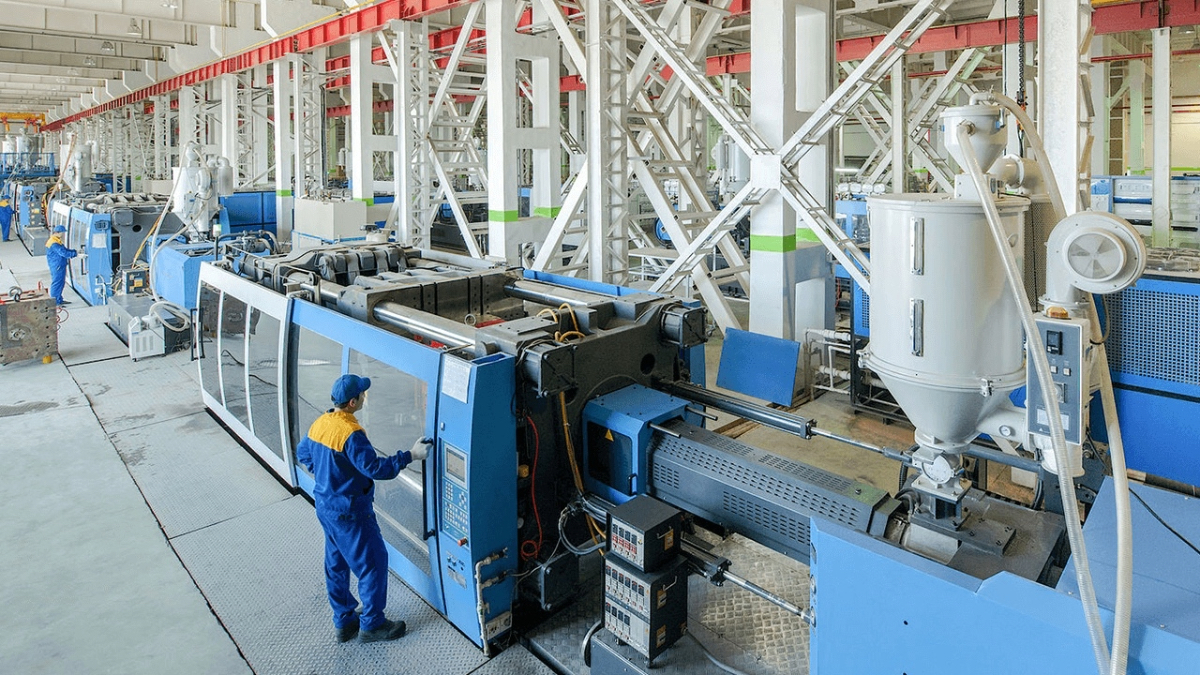
An injection molding machine is used to manufacture plastic parts by injecting molten polymer into a mold cavity.
Although the injection molding machine does not normally manufacture the mold itself, it plays an essential role in mold testing, validation, and mass production.
The machine typically performs several basic functions:
- Melting plastic material
- Injecting the melt into the mold
- Applying holding pressure
- Clamping the mold
- Cooling the molded component
- Opening the mold
- Ejecting the finished part
Injection molding machines are therefore closely connected with mold manufacturing because a newly completed mold must be tested under actual production conditions.
What Are the Main Types of Injection Molding Machines?
Injection molding machines can be classified in several ways.
Hydraulic Injection Molding Machines
Hydraulic machines use hydraulic systems to provide injection and clamping force.
They are widely used across general-purpose plastic molding applications and can support a broad range of mold sizes and production requirements.
Electric Injection Molding Machines
All-electric machines use servo motors to control major machine movements.
They are commonly selected for applications where precise motion control, repeatability, energy efficiency, and clean production environments are important.
Hybrid Injection Molding Machines
Hybrid machines combine hydraulic and electric technologies.
The goal is to combine the strengths of both systems depending on production requirements.
Vertical and Horizontal Injection Molding Machines
Injection machines may also be classified according to mold orientation.
Horizontal machines are widely used for conventional plastic-part production, while vertical machines are often suitable for insert molding and applications where parts or inserts need to be positioned manually or automatically before molding.
The appropriate machine depends on mold size, part geometry, production volume, material, automation requirements, and required precision.
Where Are Injection Molding Machines Used?
Injection molding machines are used across a wide range of industries, including:
- Automotive components
- Consumer electronics
- Medical products
- Packaging
- Household appliances
- Industrial components
- Connectors
- Agricultural equipment
- Construction products
Because injection molding supports repeatable high-volume production, the machine and mold must work together as a complete manufacturing system.
Machine stability, clamping force, injection control, mold temperature, and process settings can all affect final molded-part quality.
What Is a Milling Machine in Mold Manufacturing?
Milling machines are among the most important machines used to manufacture molds and dies.
The original B2B Molding page specifically highlights high-speed machining as an important development for mold makers. High-speed machining introduced new requirements for cutting tools, feeds, speeds, and machining harder mold materials.
Modern CNC milling machines can be used to manufacture:
- Mold bases
- Mold cavities
- Mold cores
- Inserts
- Electrodes
- Parting surfaces
- Complex three-dimensional mold surfaces
High-performance mold machining requires accuracy, rigidity, thermal stability, and suitable spindle speed.
Why Is High-Speed Milling Important for Mold Making?
Mold surfaces are often complex and require precise three-dimensional machining.
High-speed milling allows manufacturers to use higher spindle speeds and optimized cutting conditions to remove material efficiently while maintaining surface quality.
It is particularly useful for:
- Complex mold cavities
- Hardened tool steel
- Fine surface features
- Three-dimensional contours
- Electrode production
- Finishing operations
Modern hard milling can sometimes reduce the amount of EDM or manual polishing required, depending on the mold geometry and material.
However, milling cannot efficiently produce every geometry.
Very deep cavities, narrow internal features, sharp internal corners, or extremely hard materials may require EDM.
What Is EDM and Why Is It Used in Mold Manufacturing?
Electrical discharge machining, or EDM, removes conductive material through controlled electrical discharges rather than conventional cutting.
This makes EDM particularly useful when mold manufacturers need to machine hardened materials or complex geometries that are difficult to produce with conventional milling.
Two major EDM technologies are commonly used in mold and die manufacturing:
What Is Die-Sinking EDM?
Die-sinking EDM uses a shaped electrode to create a corresponding cavity in a conductive workpiece.
It is commonly used for:
- Deep mold cavities
- Narrow slots
- Complex internal shapes
- Sharp details
- Hardened tool steels
- Precision mold inserts
Because the process does not rely on direct cutting force, EDM can create shapes that would be difficult to machine using a conventional cutting tool.
What Is Wire EDM?
Wire EDM uses a continuously moving wire electrode to cut through conductive material.
It is commonly used for:
- Precision mold inserts
- Punches and dies
- Slots
- Profiles
- Small-radius features
- Tool-steel components
Wire EDM is particularly valuable when extremely accurate profiles or hardened materials need to be machined.
Milling vs. EDM: Which Process Should Mold Makers Use?
Milling and EDM are complementary rather than competing technologies.
| Requirement |
CNC Milling |
EDM |
| General material removal |
Highly suitable |
Less efficient |
| Complex 3D surfaces |
Highly suitable |
Suitable for selected features |
| Deep narrow cavities |
Limited in some cases |
Highly suitable |
| Hardened tool steel |
Suitable with appropriate tooling |
Highly suitable |
| Sharp internal details |
Tool-radius limitations |
Highly suitable |
| Electrode required |
No |
Yes for die-sinking EDM |
| Cutting force |
Mechanical cutting force |
No conventional cutting force |
| Typical role |
Roughing and finishing |
Difficult cavities and fine details |
In practice, many mold manufacturers use both technologies.
For example, milling may remove most of the material and create major mold surfaces, while EDM is used for cavities or features that cannot be efficiently reached with cutting tools.
Modern mold-making cells can even combine hard milling, graphite electrode milling, and EDM in one automated production workflow.
What Role Does Grinding Play in Mold Manufacturing?
Grinding is used when mold components require tight dimensional tolerances, flatness, surface quality, or precision fitting.
Common applications include:
- Mold plates
- Inserts
- Sliding components
- Guide surfaces
- Precision tooling
- Die components
Grinding can be particularly important after heat treatment because mold components may require final dimensional correction before assembly.
Although CNC milling and EDM perform much of the mold-shaping work, grinding remains valuable for precision surfaces and mold components where dimensional control is critical.
What Other Machines Are Used in Mold and Die Manufacturing?
The original B2B Molding page groups additional technologies under “Other Machines,” with emphasis on reducing trial molds, improving mold accuracy, stamping technology, mold design, and materials.
In a modern mold-making environment, several additional machine and equipment categories may support these goals.
Drilling and Hole-Making Equipment
Molds contain many precision holes for:
- Guide pins
- Ejector pins
- Cooling channels
- Fasteners
- Hydraulic or pneumatic systems
CNC machining centers may perform many of these operations, while specialized drilling equipment can be used for deep or small holes.
Coordinate Measuring Machines and Inspection Equipment
Precision inspection is essential because even small dimensional errors can affect mold assembly or final product quality.
Inspection equipment can be used to check:
- Mold dimensions
- Flatness
- Hole position
- Cavity geometry
- Electrode accuracy
- Finished part dimensions
Inspection can be performed during mold manufacturing as well as during mold trials.
Polishing and Surface Finishing Equipment
Some molds require high-quality surface finishes for appearance, optical performance, demolding, or final product texture.
Finishing may include:
- Polishing
- Lapping
- Texturing
- Surface treatment
The level of finishing depends on the final product requirements.
Automation Systems
Automation is increasingly used to connect mold-manufacturing processes.
Automated systems may handle:
- Workpiece loading
- Electrode changes
- Pallet transfer
- EDM operations
- Milling operations
- Inspection
- Tool management
Automation can reduce manual setup time and support more consistent production.
Which Machines Are Used for Different Mold-Making Tasks?
Different production stages require different equipment.
| Mold-Manufacturing Task |
Typical Machine or Technology |
| Mold base machining |
CNC milling machine |
| Cavity and core machining |
High-speed CNC milling |
| Hardened mold material |
Hard milling / EDM |
| Deep complex cavity |
Die-sinking EDM |
| Precision profile or insert |
Wire EDM |
| Mold plate finishing |
Grinding |
| Cooling or ejector holes |
CNC machining / drilling |
| Mold dimensional inspection |
Measurement / inspection equipment |
| Mold trial |
Injection molding machine |
| Plastic-part mass production |
Injection molding machine |
| Automated mold production |
Robotic and pallet automation systems |
The exact workflow varies according to mold type, material, tolerance, and production requirements.
How Are Mold Manufacturing Machines Used in Different Industries?
Mold and die equipment supports many industrial applications.
Automotive Industry
Automotive manufacturers require molds and dies for:
- Interior plastic components
- Exterior plastic components
- Connectors
- Lighting components
- Metal stamping parts
- Die-cast components
Large production volumes make repeatability and tooling durability particularly important.
Electronics Industry
Electronics molds often contain very small and precise features.
Applications can include:
- Connectors
- Housings
- Switch components
- Small precision plastic parts
High-speed milling, EDM, and micro-machining are therefore important technologies for many electronics-related tools.
Medical Industry
Medical molds can require high accuracy, clean surfaces, and repeatable micro-features.
High-performance milling and EDM are used in precision medical mold manufacturing.
Consumer Products and Packaging
Injection molds are widely used to mass-produce:
- Containers
- Caps
- Household products
- Appliance components
- Packaging products
For these applications, mold-making accuracy influences both production efficiency and finished-product consistency.
How Should Manufacturers Choose Mold-Making Machines?
Machine selection should begin with the mold requirements.
Important factors include:
Mold Size
Large molds require machines with sufficient travel, table size, load capacity, and spindle capability.
Mold Material
Soft aluminum, pre-hardened steel, hardened tool steel, and specialty materials require different cutting strategies and equipment.
Geometry
Deep cavities, thin ribs, sharp internal corners, and complex free-form surfaces may require different combinations of milling and EDM.
Accuracy and Surface Finish
High-precision molds may require additional grinding, EDM, inspection, or polishing operations.
Production Volume
Manufacturers producing large numbers of molds or repeated components may benefit more from automation.
Mold Application
Injection molds, stamping dies, die-casting molds, and other tooling types have different manufacturing requirements.
Therefore, choosing mold-making equipment should focus on the complete production workflow rather than selecting individual machines independently.
Integrated Mold Manufacturing Is Becoming More Important
Modern mold manufacturing increasingly combines different machining and production technologies.
A typical workflow may involve:
CAD/CAM design → CNC milling → EDM → grinding → inspection → mold assembly → mold trial → injection molding production
Not every mold requires every step, but the overall trend is toward greater integration.
Automation, digital process control, high-speed machining, EDM, and precision inspection allow mold manufacturers to reduce manual handling and maintain more consistent manufacturing conditions.
As mold geometries become more complex and customers demand shorter lead times and tighter tolerances, the ability to coordinate multiple machines becomes increasingly important.
Choosing the Right Machine for Each Mold Manufacturing Stage
There is no single machine that can complete every mold-making operation efficiently.
CNC milling machines provide fast and flexible material removal. EDM provides access to complex cavities and hardened materials. Grinding supports dimensional accuracy and precision surfaces. Injection molding machines validate the completed mold and produce final plastic components.
The most effective mold manufacturing process therefore combines machines according to the requirements of the mold rather than relying on one technology alone.
By understanding how each machine contributes to mold manufacturing, manufacturers can improve machining efficiency, mold accuracy, production reliability, and final product quality.

(4059)(20260924)(原).jpg)
(2367)(20260924)(原).jpg)