Where conventional cutting stops and spark erosion starts
Walk through a job shop that serves aerospace and medical customers in 2027 and look at what is sitting on the pallets. A titanium bracket still welded to its build plate from the metal printer. A block of D2 tool steel hardened past 60 HRC. An Inconel ring segment with a profile that no end mill will survive. None of these is a milling job anymore. More and more of them are becoming a wire cutting EDM job.
Wire cutting EDM is not new. The process has been in tool rooms for decades, and the physics of a spark eroding metal has not changed. What is changing is the work it gets handed. Materials are harder, geometries are tighter, and the parts that used to be exceptions are now the order book. This article looks at four jobs wire cutting EDM is taking over, what makes it the right process for each, and where it still should not be used.
What wire cutting EDM does that cutting tools can't
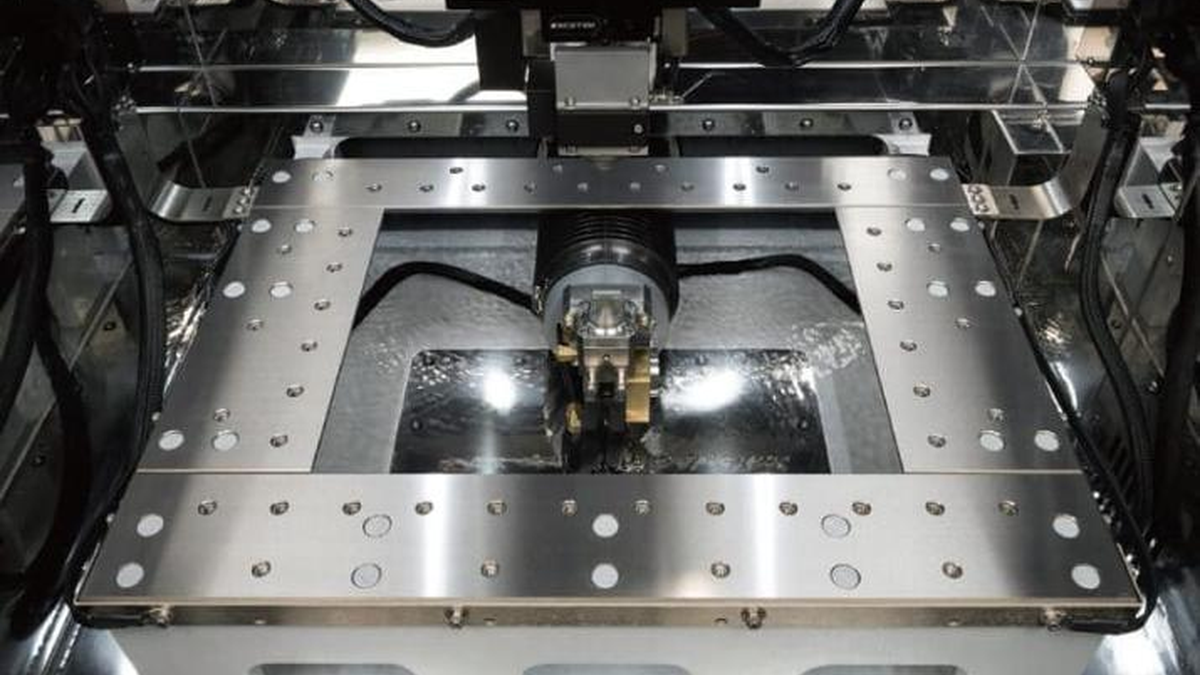
Wire cutting EDM, or wire electrical discharge machining, removes metal with thousands of controlled sparks per second that jump between a thin moving wire and the workpiece, both submerged in deionized water. The wire never touches the part. There is no cutting force, no tool pressure and no contact wear, which is why material hardness has almost no effect on whether the part can be cut.
That single fact explains most of the jobs below. Compared with milling or grinding, wire cutting EDM offers four things no cutting tool can:
- Hardness is irrelevant. A 65 HRC die block cuts at the same quality as a soft steel one. There is no tool to dull.
- No mechanical stress. Thin walls, flexible parts and heat-treated components do not deflect or distort during the cut, because nothing is pushing on them.
- Internal corners as small as the wire. A 0.25 mm wire leaves a corner radius of roughly 0.13 mm; a 0.07 mm wire gets close to sharp. An end mill cannot do that.
- Profiles through any thickness. A 300 mm thick block cuts with the same side-wall accuracy as a 10 mm plate, because the wire is a straight line, not a cantilevered tool.
The trade-off is speed. Wire EDM removes metal slowly compared with milling, so it earns its place where the alternatives either cannot do the job or destroy too many tools and parts trying.
Job #1: Cutting 3D-printed metal parts off the build plate
Every laser powder-bed part leaves the printer fused to a steel build plate, and somebody has to separate them. For years that meant a bandsaw. In 2027 it increasingly means a wire cutting EDM, and the reason is the parts themselves.
Why saws fall short
A bandsaw works fine for a solid test coupon. It does not work for a lattice heat exchanger with 0.4 mm walls, or a titanium medical implant whose base surface is a finished feature. The saw cut is rough, the blade pushes on the part, and thin features bend or tear. The next step is a milling or grinding operation to clean up the base, which adds a setup and a chance to scrap a part that already cost hundreds of dollars in powder and machine time.
What wire EDM adds
A wire cut takes the part off the plate with no force on it and leaves a surface that is often good enough to ship. A single pass gives a flat, burr-free base with no heat-affected distortion in the part above it. Because the wire goes under the whole plate at once, a full build of 40 brackets comes off in one unattended cycle rather than 40 individual saw cuts. Shops running both processes report that the growth of additive manufacturing has created a steady secondary demand for wire EDM, which is routinely used to finish printed metal parts (Intel Market Research).
Two limits are worth stating plainly. Loose powder trapped inside closed features can wash into the dielectric tank and needs to be cleaned out first. And a wire EDM is a bigger capital purchase than a saw, so the economics only work when the parts are worth protecting, which in aerospace and medical they almost always are.
Job #2: Titanium, Inconel and the alloys that eat end mills
The second job is the one most engineers associate with wire cutting EDM already, but the volume behind it has changed. Demand for precision parts in aerospace, medical devices and semiconductor tooling is the main driver of wire EDM growth through 2027, with the aerospace sector showing the strongest adoption because of its need to machine difficult alloys to tight tolerances (Intel Market Research).
The tool-wear problem
Inconel 718, Ti-6Al-4V, Hastelloy and cobalt-chrome share a habit: they work-harden under the cutter, hold heat at the cutting edge instead of carrying it away in the chip, and shorten tool life to a fraction of what steel allows. A shop milling an Inconel ring segment might change inserts every 20 minutes and still fight chatter on the thin sections. Each tool change is downtime, each worn edge is a dimensional drift, and each thin wall is a deflection risk.
Where wire EDM becomes the economic choice
None of that applies to a spark. The wire is a consumable, but it is a cheap one that feeds continuously, so there is no tool change and no cutting edge to wear. Wire cutting EDM cuts Inconel at nearly the same rate as it cuts steel, and the absence of cutting force means a 1 mm wall in titanium comes out straight. For profiles, slots, keyways and any feature with a sharp internal corner in these alloys, the comparison usually comes down to this: milling can sometimes do it, but wire EDM does it every time, without the tooling budget and without the scrap.
The same logic now reaches medical. Device makers are moving to wire EDM for minimally invasive surgical instruments and implant-grade components because it produces complex geometry without introducing mechanical stress into the part (Reports and Data).
Job #3: Turbine rings, blisks and large aerospace components
The third job is where wire cutting EDM stops being a tool-room machine and becomes a production asset. Engine makers and their tier-2 suppliers are using it for turbine rings, shroud segments, blade root fir-trees and, increasingly, for blisks where blades and disk are one piece.
Why turbine components are a wire EDM job
Three things line up. The materials are nickel superalloys, which brings back every tool-wear problem from Job #2. The geometries are deep, precise profiles with tapers and small radii, exactly what a wire does well and a cutter does badly. And the tolerances are unforgiving: a fir-tree slot is a fit, not a clearance, and it has to be identical across every slot on the disk. A wire that cuts the first slot and the sixtieth slot with the same spark does that by nature.
Aerospace demand is also simply larger than it was. Commercial aircraft backlogs have pushed up orders for precision-machined turbine components and tooling, and engine maintenance cycles add a steady stream of repair and replacement work (Reports and Data). Shops with the right certifications are seeing that flow down to them.
Custom and large-envelope machines
Standard wire EDMs top out around 600 mm of X travel. A full turbine ring does not fit. This is where the builders who treat wire EDM as a specialty, rather than one product line among many, have an edge: they will build the machine around the part. Taiwan's Excetek, for example, developed a dedicated turbine-ring wire EDM for a European engine maker and has since shipped machines with 2,000 mm of X travel for similar large-format work. A rotary axis, a large submerged tank and software written for long unattended cuts matter more on these jobs than any headline cutting speed.
Job #4: Hardened tool steel and carbide for the mold and die shop
The fourth job is the oldest one, and it is on this list because the bar has moved. Cutting punches, dies and carbide inserts was always wire EDM work. What is different in 2027 is that mid-range machines are now judged on the accuracy of their corners and the consistency of their finish, not on whether they can cut hardened steel at all. Everyone can.
Corner control is where accuracy is actually decided
Cutting speed in a straight line is set mostly by physics and the thickness of the material, and it is roughly the same across builders in the same class. Accuracy is not. Where machines separate is at the corner. As the wire turns, the spark gap and the wire's own lag want to round the inside of the turn and over-cut the outside, an effect toolmakers call washout. The generator has to ramp power down into the corner, hold a compensation dwell while the wire catches up, and ramp back out, all in step with the axis motion. Builders that get this right produce a punch that fits its die on the first try; builders that do not leave the operator adding skim passes.
What a mid-range machine looks like now
The gap between Taiwanese and Japanese mid-range wire EDMs has narrowed noticeably on this front. Linear-motor drives, submerged automatic wire threading and generator-level corner control used to be premium features. Today a machine such as the Excetek NP400L pairs a 400 × 300 mm travel with linear motors, auto threading that handles wire down to 0.07 mm, and a generator that the company rates at 320 mm²/min with roughly a third less power draw than its previous design. Whether a given shop needs those numbers depends on the work, but the point for a buyer is that corner accuracy and fine-wire capability are no longer reasons to pay a premium.
What's changing in 2027: speed, automation and energy
Three shifts are pushing wire cutting EDM out of the tool room and onto the production floor.
Speed has plateaued, so throughput comes from elsewhere. Trade press has noted for years that the straight-line cutting speed of a wire EDM has largely leveled off, and that builders now compete on throughput, ease of use and automation instead (Cutting Tool Engineering). Faster threading, fewer wire breaks and shorter skim passes now matter more than peak removal rate.
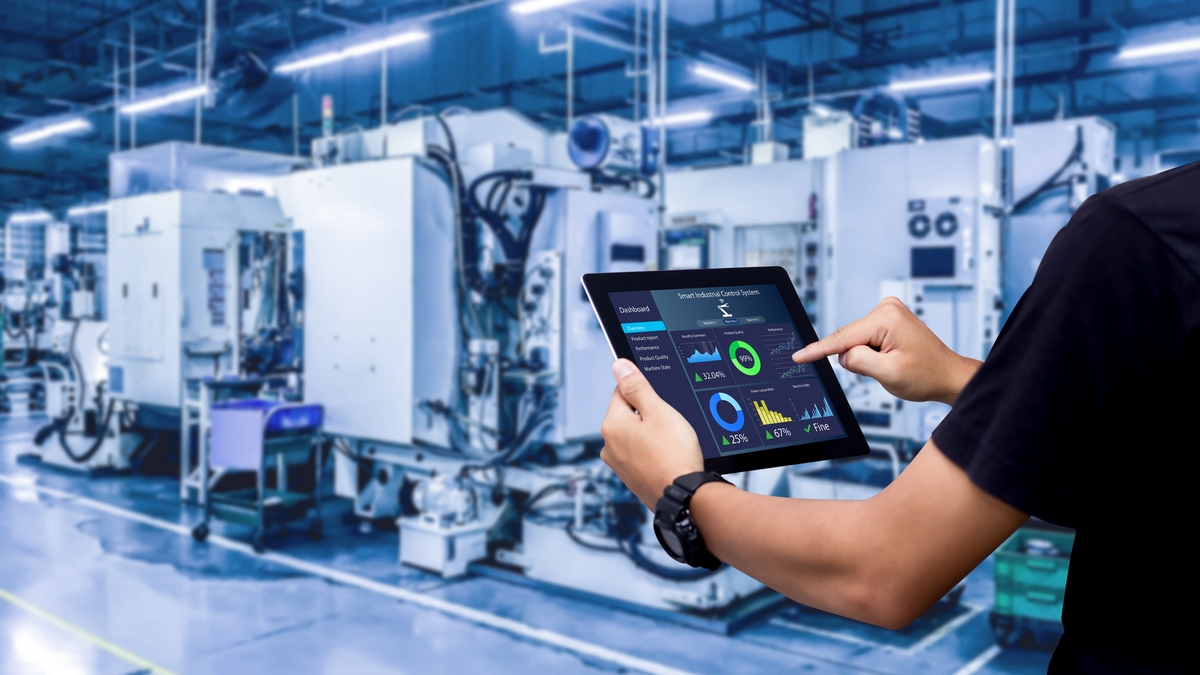
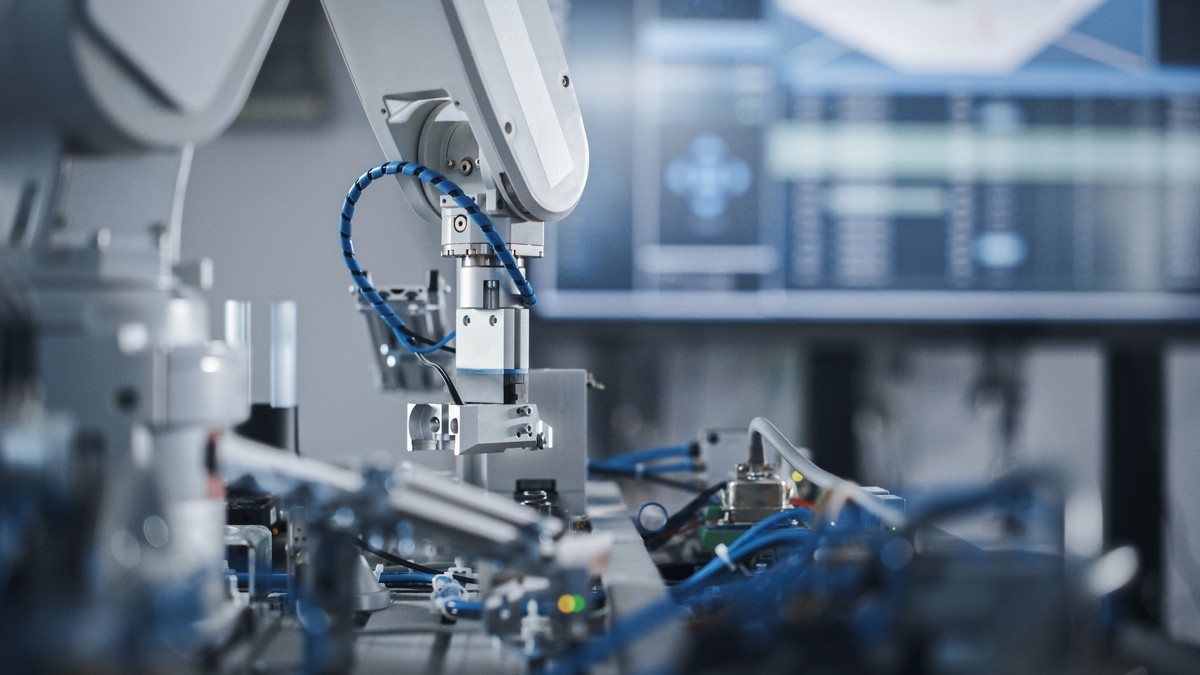
Unattended running is the default expectation. Automatic wire threading that re-threads at the break point, submerged threading that avoids draining the tank, and pallet or robot loading have made it normal to run a wire EDM overnight and over weekends with nobody present. One EDM builder put it simply: the machines have become reliable enough to stage parts, add a robot and let them cut untended through the night (Cutting Tool Engineering). For a shop short on operators, a machine that produces for 20 hours a day on an 8-hour payroll changes the math on every job above.
Energy and wire cost are now purchasing criteria. Tariffs on copper, brass and zinc have raised EDM wire prices, and electricity is a visible line on the cost-per-part sheet. Market forecasts for the sector list AI-tuned cutting parameters, IoT monitoring and energy-saving generator designs among the main trends through the forecast period (The Business Research Company). A generator that cuts the same part on less power is no longer a nice-to-have; it is on the spec sheet buyers compare.
When wire cutting EDM is NOT the right answer
Wire EDM earns its place on hard, precise, stress-sensitive parts. It loses on everything else, and a shop that forgets this will tie up an expensive machine on work a mill would finish before lunch.
- Non-conductive materials. Ceramics, plastics, composites and glass cannot be cut. The spark needs a conductive path.
- Bulk material removal. Hogging a pocket out of aluminum is a milling job. Wire EDM only cuts along a path; it does not remove volume.
- Blind features. A wire has to pass through the part. Cavities, pockets and blind holes belong to sinker EDM or milling.
- Simple flat work. A plate with a few holes and a square edge does not need micron accuracy or a stress-free cut.
- Parts that cannot be submerged or flushed. Trapped powder, sealed cavities or porous materials cause flushing and short-circuit problems.
The practical rule: if the material is soft and the geometry is open, use a cutter. If the material is hard, the corner is sharp, the wall is thin or the tolerance is tight, use the wire.
Frequently asked questions
Can wire EDM cut 3D-printed titanium parts off the build plate?
Yes. Wire cutting EDM is now a standard method for separating laser powder-bed parts from the plate. It applies no force to the part, so thin walls and lattices are not damaged, and it leaves a flat base that often needs no further machining.
Is wire cutting EDM faster than milling for hard materials?
Not in raw material removal; milling removes metal faster. Wire EDM wins on total job time for hardened steel and superalloys because there are no tool changes, no deflection, no rework and the machine can run unattended.
What is the smallest wire diameter used in wire cutting EDM?
Production machines commonly run 0.25 mm brass wire. Fine-wire work uses 0.10 mm and below, and several current mid-range machines thread 0.07 mm wire automatically for medical and semiconductor parts. Specialist micro-EDM goes down to 0.02 to 0.03 mm.
How accurate is wire cutting EDM in 2027?
Mid-range machines hold positioning accuracy of about ±2 to ±3 µm and surface finishes around Ra 0.2 µm after skim cuts. High-end machines reach ±1 µm and Ra 0.1 µm. Corner accuracy depends more on the generator's corner control than on the machine's stated resolution.
Which industries use wire cutting EDM the most?
Mold and die making remains the largest user. Aerospace, medical devices and semiconductor tooling are the fastest-growing segments because they combine hard materials, complex geometry and tight tolerances in the same parts.
Conclusion
The spark has not changed. The parts have. In 2027 the work arriving at precision shops is harder, thinner and tighter than it was five years ago, and wire cutting EDM is the process that treats all three as normal. Cutting printed metal off the plate, profiling superalloys, producing turbine components and holding corner accuracy in hardened tool steel are no longer the edge cases a wire EDM handles when the mill cannot. They are the reason to own one.
For a shop weighing that purchase, the spec sheet questions have shifted too. Ask less about peak cutting speed and more about three things: how reliably the machine threads fine wire after a break, how it controls the spark through a corner, and what it costs in power and wire to run for a 20-hour day. Those are the numbers that decide whether the jobs above are profitable, not just possible.