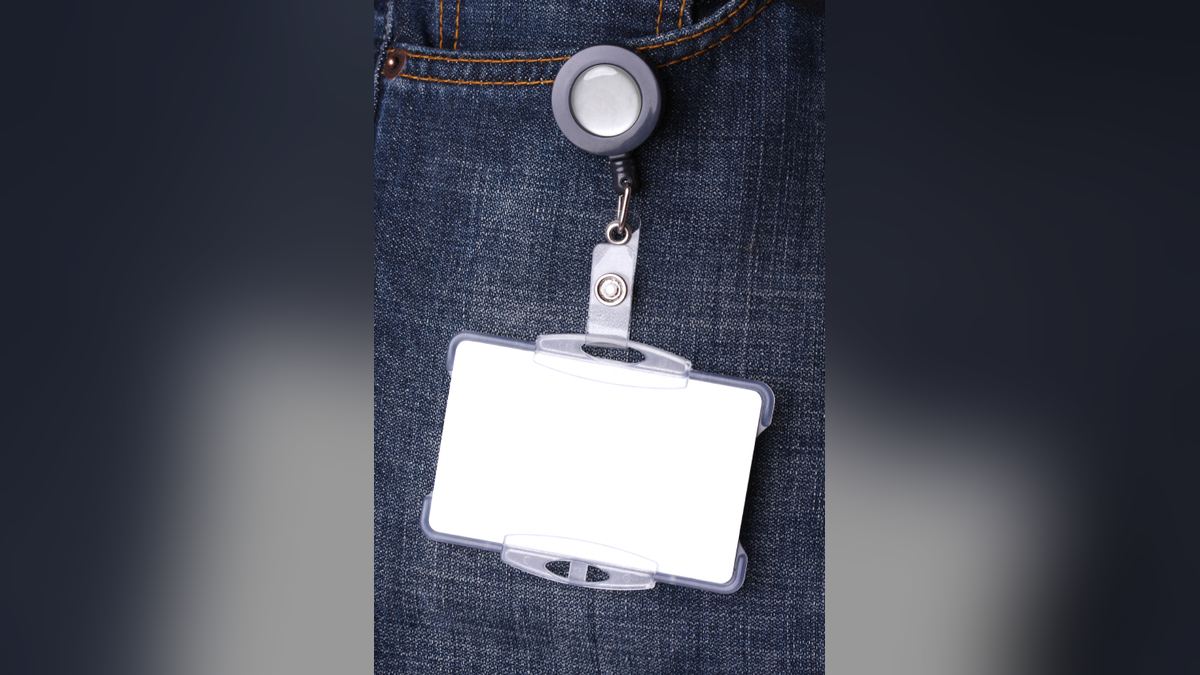
Three questions decide the right badge holder: where it’s worn, what it protects, and how many you need.
Choosing the right badge holder for an organization comes down to three questions: where the badge will be worn, how sensitive the credential inside it is, and how many you need to order. Answer those three and the right type, whether PVC, rigid, RFID-blocking, armband or biodegradable, usually becomes obvious.
Most buying guides on this topic are written for individuals shopping for a single holder. This one is written for the people who have to specify, order and justify a few hundred or a few thousand badge holders at once: HR managers, facilities teams, event organizers, and procurement staff. It walks through the main types, maps them to industries, lists the specs to check before placing a bulk order, and answers the questions that come up most often in supplier conversations.
Why the Badge Holder You Choose Matters More Than You Think
A badge holder is one of the cheapest items on a facilities budget, which is exactly why it gets chosen badly. The holder itself might cost less than a cup of coffee, but the card inside it does not. A replacement photo ID with an encoded access chip can run several times the price of the holder, plus the staff time to reissue it, update the access control system and retrieve the old credential. Multiply that by a few percent of headcount every year and a "cheap" holder stops looking cheap.
There is also a security dimension that did not exist a decade ago. Most corporate access cards now carry an RFID or NFC chip, and the move toward mobile credentials and cloud-managed badging has not replaced the physical card so much as added to it. In healthcare, government, manufacturing and education, a visible photo ID is still mandatory, and in 2026 that card is increasingly also the key to the door, the printer and the payroll clock. Protecting it has become part of the job.
Finally, procurement teams are being asked new questions. ESG and sustainability policies now reach down to small consumables, and "what is this made of, and what happens to it afterwards?" is a question more buyers have to answer. The badge holder you choose is a small decision, but it touches durability, security, brand image and sustainability all at once.
The 5 Main Types of Badge Holders (and Who Each One Is For)
Almost every badge holder on the market fits a standard CR80 card (85.6 × 54 mm, 30 to 35 mil thick), the same size as a credit card. The differences are in material, rigidity, security features and how the holder is worn.
PVC (Soft Vinyl) Badge Holders
A PVC badge holder is a flexible, transparent sleeve that slides over the card, with a slot or chain hole at the top for a lanyard, clip or reel. It is the lowest-cost option and the one most people picture when they hear the term.
- Best for: offices, schools, conferences, visitor passes and any environment where the badge is worn indoors and replaced periodically.
- Strengths: inexpensive, lightweight, available in vertical and horizontal formats, easy to print or color-code.
- Limitations: scratches and clouds over time, offers limited impact protection, and can trap moisture in humid or outdoor settings.
Rigid Badge Holders
A rigid badge holder is a hard plastic case, typically polycarbonate or PP, that fully encloses the card or holds it in a stiff frame. Some designs are sealed on all sides; others leave a thumb slot so the card can be pushed out for swiping.
- Best for: factories, warehouses, hospitals, construction sites, outdoor roles and anyone who taps a card dozens of times a day.
- Strengths: protects against bending, cracking, scratches and UV yellowing; extends the life of expensive encoded cards; looks more professional than a soft sleeve.
- Limitations: higher unit cost, slightly heavier, and enclosed versions require the card to be removed for magnetic stripe readers.
RFID-Blocking Badge Holders
An RFID-blocking badge holder has a shielding layer built into the holder that prevents a contactless card from being read until the wearer deliberately presents it. Most access cards operate on 125 kHz (proximity) or 13.56 MHz (smart card / NFC), and a good holder is rated for the frequency your system uses.
- Best for: organizations whose cards open doors, log into systems or hold payment value, particularly in finance, government, data centers and healthcare.
- Strengths: protects against unauthorized reading and card cloning; reduces "card clash" when several contactless cards are carried together.
- Limitations: the wearer has to remove, flex or squeeze the holder to use the card, so it works best for cards that are presented a few times a day, not fifty.
Armband Badge Holders
An armband badge holder straps the card to the upper arm with an elastic or adjustable band. The ID stays visible without a lanyard swinging into equipment or a clip catching on clothing.
- Best for: logistics, warehousing, construction, cleaning crews, nursing and any role where hands and the chest area need to stay clear.
- Strengths: hands-free, safer around machinery than a lanyard, keeps the badge visible when the wearer is bending or carrying.
- Limitations: less convenient for cards that need to be tapped at readers; sizing and comfort matter for all-day wear.
Biodegradable (BIO) Badge Holders
A biodegradable badge holder is made from plant-based or compostable plastics instead of conventional PVC. It looks and functions like a standard soft or semi-rigid holder but breaks down far faster at end of life.
- Best for: organizations with ESG or plastic-reduction targets, large events that issue thousands of single-use passes, universities and public-sector bodies.
- Strengths: supports sustainability reporting, well received by attendees and employees, now available at a price close to standard PVC.
- Limitations: slightly less durable for multi-year daily use; some materials are more sensitive to heat and humidity in storage.
Badge Holder Types at a Glance
|
|
|
|
|
|
| Type |
Material |
Durability |
Security level |
Unit cost |
Typical use |
| PVC (soft) |
Flexible vinyl |
Low to medium |
Basic |
Lowest |
Offices, schools, events, visitors |
| Rigid |
Polycarbonate / PP |
High |
Medium (physical protection) |
Medium |
Factories, hospitals, outdoor, high-tap roles |
| RFID-blocking |
Shielded plastic |
Medium to high |
Highest (anti-skimming) |
Medium to high |
Finance, government, data centers, access-critical sites |
| Armband |
Elastic band + holder |
Medium |
Basic |
Medium |
Warehouses, construction, nursing, cleaning |
| Biodegradable (BIO) |
Plant-based plastic |
Medium |
Basic |
Low to medium |
ESG programs, large events, universities |
Choosing by Industry: A Quick Decision Framework
The fastest way to narrow the options is to start from the environment, not the catalog. The table below is a starting point; most organizations end up with two or three holder types for different groups of staff rather than one for everyone.
|
|
|
| Environment |
Recommended badge holder |
Why |
| Healthcare (hospitals, clinics, care homes) |
Rigid, or armband for ward staff |
Cards are tapped constantly and wiped down often; rigid cases tolerate disinfectant, and armbands keep lanyards away from patients and equipment |
| Manufacturing, logistics, construction |
Rigid or armband |
Impact, dust and moisture destroy soft sleeves; hands-free wear is safer near machinery |
| Corporate offices |
PVC for general staff; RFID-blocking where the card opens doors or logs into systems |
Low cost for the majority, shielding where the credential carries real access rights |
| Education |
PVC for students; rigid for faculty and staff |
Student IDs are replaced yearly; staff cards with building access justify a longer-lasting holder |
| Events and conferences |
PVC or biodegradable |
Short-term use, high volume, and a visible sustainability choice for attendees |
| Government, finance, data centers |
RFID-blocking, often in a rigid body |
Highest consequence if a credential is cloned; shielding is a standard control, not an upgrade |
Two refinements are worth adding. First, if a site mixes indoor and outdoor roles, specify by role rather than by building. Second, if the card doubles as a payment or time-clock credential, treat it as a security asset and move it one tier up the table.
6 Specs to Check Before You Order Badge Holders in Bulk
Once the type is settled, the order itself can still go wrong on details. These six checks cover most of the problems procurement teams report after the boxes arrive.
- Card size and thickness. Confirm the holder is sized for CR80 cards at 30 to 35 mil. Thicker proximity cards and cards with embedded chips may need a holder with a slightly deeper pocket; a holder that is too tight will crack and one that is too loose will drop cards.
- Orientation and attachment point. Decide between vertical and horizontal, and check whether the holder has a slot (for straps and clips), a chain hole (for reels and hooks) or both. The orientation should match how the ID is printed, and the attachment point should match the lanyards or reels you already own.
- Material and environment. PVC for indoor, low-wear use; polypropylene or polycarbonate for impact, heat, UV and chemical exposure; a biodegradable blend where sustainability goals apply. Ask for the material spec in writing rather than relying on a product photo.
- Compatibility with your other ID accessories. A badge holder is rarely worn alone. Check that the slot width fits your lanyard clips, that a retractable reel can be attached without a secondary ring, and that a magnetic or strap clip will hold the combined weight of a rigid holder plus card.
- Customization options. Logo printing, Pantone-matched colors, department color coding and custom molds are all common requests. Printed holders usually carry a higher minimum order and a longer lead time than stock items, so decide early whether branding is worth it for the group in question.
- MOQ, samples and lead time. Minimum order quantities for stock badge holders typically start around 1,000 pieces per item, with custom designs sometimes requiring more. Always request physical samples and test them with your actual cards, lanyards and readers before confirming the order. Working directly with a factory-direct badge holder manufacturer rather than a reseller usually gives more flexibility on MOQ, faster answers on material questions, and a clearer picture of lead times for large or customized runs.
Common Mistakes Organizations Make When Buying Badge Holders
Buying on unit price alone. The holder is the cheapest part of the ID program. A holder that saves a few cents but fails in six months costs more in replacement cards and admin time than a durable one that lasts three years.
Skipping the sample test. Specs on paper do not tell you whether a card will slide out of a slot, whether a reel clip fits the chain hole, or whether an RFID shield actually blocks your reader. Order samples, hand them to a few staff in different roles, and run them for a week.
Ignoring the working environment. The same holder that is perfect at reception will fail in a kitchen, a loading dock or a hospital ward. Specify by role, not by headcount.
Underestimating credential risk. If a card opens doors, logs into workstations or holds payment value, it is a security credential and the holder is part of its protection. Shielding is cheap compared with the cost of a cloned access card.
Treating sustainability as an afterthought. Choosing a biodegradable holder after the order is placed is expensive; choosing it at the specification stage usually is not. Build it into the brief if your organization reports on plastic reduction.
Frequently Asked Questions About Badge Holders
What is the standard size for a badge holder?
Most badge holders are made for CR80 cards, the credit-card format measuring 85.6 × 54 mm (3.375 × 2.125 in) at 30 to 35 mil thickness. Holders are sold in vertical and horizontal versions to match how the card is printed. If your cards are thicker proximity cards, confirm the pocket depth with the supplier before ordering.
Rigid vs. soft badge holder: which one lasts longer?
A rigid badge holder lasts longer in almost every setting. Polycarbonate and PP cases resist bending, scratching and UV yellowing, and typically outlive a soft PVC sleeve by two to three times in daily use. Soft holders remain the better choice where cost matters more than lifespan, such as visitor passes and short events.
Do I really need an RFID-blocking badge holder?
If the card only shows a name and photo, no. If it opens doors, logs into systems, records time or holds payment value, an RFID-blocking badge holder is a low-cost control against unauthorized reading and cloning. Check that the holder is rated for your card's frequency (125 kHz or 13.56 MHz), and consider how often staff present the card, since shielded holders require a deliberate action to read.
What is a typical MOQ for custom badge holders?
Stock badge holders from manufacturers generally start at around 1,000 pieces per item. Custom printing, colors or molds may raise the minimum or add lead time. Resellers sometimes offer smaller quantities at a higher unit price, so the right source depends on volume.
Are biodegradable badge holders durable enough for daily use?
For most office, campus and event use, yes. Modern biodegradable badge holders are made from plant-based plastics that perform similarly to standard soft holders over a typical one- to two-year replacement cycle. For heavy industrial use or multi-year wear, a rigid holder is still the safer choice; many organizations use BIO holders for the majority of staff and rigid holders for high-wear roles.
Final Thoughts: Match the Holder to the Environment, Not the Price Tag
The right badge holder is the one that fits where it will be worn, protects what it carries, and can be ordered in the quantity and finish your organization needs. Start from the environment, decide how much security the credential inside deserves, and only then compare prices. Most organizations land on a mix: PVC or biodegradable holders for the majority, rigid or armband holders for high-wear roles, and RFID-blocking holders wherever the card is also a key.
When it comes to choosing a supplier, prioritize the ones that will send samples, state materials and MOQs clearly, and answer technical questions quickly. For a product this small, those three things tell you most of what you need to know.