The business case is simple: when shooters spend less time waiting and more time receiving useful feedback, a range can improve both capacity and customer loyalty.
Commercial shooting ranges face a constant operating challenge: every minute a lane is occupied without meaningful training is a minute that cannot be sold again. Customers may wait for staff to reset drills, replace targets, explain scores, or organize the next activity. These interruptions can make a session feel slow, especially for new shooters, group bookings, and repeat customers who expect more than a paper target at the end of a lane.
An electronic target system helps address this problem by making target response, drill changes, and performance feedback more immediate. For range owners and procurement teams, the question is not simply whether electronic shooting targets look more advanced. The more useful question is: can the system create enough additional revenue, customer value, and operational savings to justify the investment?
This guide explains how commercial range operators can evaluate that question with practical metrics rather than assumptions.
Important scope note: Electronic targets vary by projectile type, muzzle energy, facility layout, and intended use. Always confirm product compatibility, safe-distance requirements, local regulations, and range safety procedures before installation. Systems designed for airsoft or low-energy training should not be assumed suitable for live-fire use.
What Is an Electronic Target System?
An electronic target system is a target setup that detects a valid hit and provides an immediate response, such as a light, sound, timer result, score, or target sequence. Depending on the model, it can support single-target practice, timed drills, multi-target exercises, randomized target activation, and competitive scenarios.
Unlike paper targets, electronic shooting targets can make the result of each shot visible immediately. Unlike a purely manual drill setup, they can reduce the number of times staff must pause a session to reset the activity.
For commercial facilities, the value is usually created through four connected improvements:
- Faster drill resets and fewer interruptions between rounds
- More engaging sessions for beginners, groups, and regular members
- Structured training products that can be sold at a premium
- Clearer operating data for managers to measure utilization and return on investment
The technology alone does not create ROI. The operating model around it does.
Why Waiting Time Is an Expensive Range Problem
A range lane has a limited number of sellable hours. If a customer spends part of a paid session waiting for a target change, a staff instruction, or a manual reset, the range still carries the same fixed costs for rent, utilities, staffing, insurance, and maintenance.
Small delays can compound across a busy day. Consider a range that operates six lanes and schedules 30-minute sessions. If manual resets and drill explanations add five minutes of inactive time to each booking, one-sixth of the booked lane time is not being used for shooting or training.
Electronic shooting targets cannot remove every delay. Customers still need safety briefings, equipment checks, and staff supervision. However, they can reduce the avoidable delays that occur after the session has already started.
How Electronic Shooting Targets Improve Throughput
The best systems improve throughput by shortening the time between one useful activity and the next. This can happen in several ways:
- Immediate hit confirmation: Shooters do not need to walk forward, retrieve a target, or wait for a staff member to confirm whether a hit registered.
- Faster drill transitions: A timer or preset target mode can start the next activity without rebuilding the exercise manually.
- Simpler group management: Instructors can run structured activities for corporate groups, beginner classes, or competitive events with less verbal coordination.
- Reduced reset labor: Staff can focus on safety, coaching, and customer service instead of repeatedly resetting a basic drill.
- More predictable session design: Operators can build 20-, 30-, or 60-minute packages around a repeatable format.
The following comparison shows how the experience can differ in a commercial setting.
| Operating Area |
Manual or Paper-Target Session |
Electronic Target System Session |
| Hit confirmation |
Shooter or instructor checks target later |
Immediate visual or audio response |
| Drill change |
Manual explanation and target setup |
Preset mode or timed sequence |
| Group activity |
More staff coordination required |
Structured game or challenge format |
| Customer takeaway |
General impression of performance |
Visible results, time pressure, and completed challenges |
| Staff time |
Repeated resets and target handling |
More time for supervision and coaching |
| Capacity planning |
Variable session flow |
More repeatable session structure |
A more repeatable session does not always mean rushing customers. In fact, it can give them more meaningful shooting time within the booking they already paid for.
Measure “Active Training Time,” Not Only Lane Occupancy
Many ranges measure utilization by asking whether a lane is booked. That is useful, but incomplete. A booked lane may still include several minutes of low-value waiting.
A stronger operating metric is active training time: the percentage of a paid session during which the customer is actively shooting, receiving feedback, participating in a drill, or receiving useful coaching.
Use this simple formula:
Active Training Time (%) =
(Active shooting and feedback minutes / Total paid session minutes) × 100
For example, a 30-minute booking with 18 minutes of active shooting and useful feedback has an active training time of 60%. If an electronic target system helps the range increase that to 23 minutes, active training time becomes about 77%.
That improvement is meaningful because the customer experiences more value without the range necessarily extending the booking. At the same time, the operator gains a more reliable session format that can support additional bookings during peak periods.
Track These Before-and-After Metrics
A procurement decision should start with a baseline. Measure current performance for at least two to four representative weeks, including both busy and quiet periods.
| Metric |
Why It Matters |
How to Measure It |
| Average session duration |
Shows whether sessions are running over schedule |
Booking start and end times |
| Reset minutes per session |
Identifies avoidable operational delay |
Staff observation log |
| Active training time |
Measures customer-facing value |
Active minutes divided by booked minutes |
| Sessions per lane per day |
Shows potential capacity gain |
Completed bookings by lane |
| Staff minutes per group |
Helps assess labor demand |
Staff roster and activity log |
| No-show and cancellation rate |
Indicates whether booking format is attractive |
Booking system data |
| Repeat-visit rate |
Measures customer loyalty |
Customer records or membership data |
| Revenue per lane-hour |
Connects operational changes to financial results |
Lane revenue divided by available lane-hours |
Do not rely on vendor promises alone. A pilot installation should produce facility-specific data because staffing, local pricing, customer type, and booking patterns vary widely.
Why Instant Feedback Can Increase Return Visits
A first-time customer may enjoy shooting once. A returning customer usually needs a reason to improve, compete, or bring someone else. This is where electronic target systems can add value beyond operational efficiency.
Paper targets can show where shots landed, but they often provide feedback only after a pause. Electronic systems can make the session feel more like a measurable activity. A shooter can see whether they completed a timed exercise, responded to the correct target, or improved compared with an earlier attempt.
For many customers, especially beginners, immediate feedback reduces uncertainty. They do not need to guess whether they are progressing. For experienced shooters, timers, multi-target sequences, and randomized drills create a repeatable challenge.
Turn Feedback Into Customer Retention
Range operators can use electronic shooting targets to create products that encourage customers to return:
- Personal-best challenges: Record a customer’s best time or score and invite them to beat it on their next visit.
- Beginner progress sessions: Offer a three-visit training package with simple milestones.
- League nights: Run consistent timed or multi-target formats so results are comparable across weeks.
- Corporate team events: Create accessible group challenges that are easy to understand and fun to watch.
- Membership benefits: Include a monthly electronic-target session or priority access to advanced drills.
- Instructor-led assessments: Use standardized exercises to show clients a clear starting point and later improvement.
The goal is not to collect data for its own sake. The goal is to convert data into a useful story for the customer: “Here is where you started, here is what improved, and here is the next challenge.”
This approach can also help staff have better conversations. Instead of offering a vague suggestion to “come back soon,” they can invite customers to return for a specific drill, course, or score challenge.
A Practical ROI Formula for Range Owners
A good ROI calculation should include more than the purchase price of the equipment. It should also include installation, staff training, maintenance, downtime risk, software or controller requirements, and the cost of adapting the lane or training area.
Use the following formula as a starting point:
Monthly Net Benefit =
Additional session contribution margin
+ Incremental training or event revenue
+ Labor savings
+ Reduced consumable or reset costs
- Additional monthly operating costs
Payback Period (months) =
Total Installed Investment / Monthly Net Benefit
“Contribution margin” means the revenue left after the direct cost of serving an additional customer. It is more useful than gross revenue because a range may incur extra instructor time, equipment wear, or consumable costs when capacity rises.
Illustrative Payback Example
The figures below are an example only, not a promised result or an industry benchmark. Each operator should replace them with local pricing and actual baseline data.
Assume a range installs an electronic target area for a total installed investment of US$12,000. The area helps the business sell two additional 30-minute sessions per day, across 26 operating days per month. Each added session contributes US$18 after direct costs.
| ROI Driver |
Example Assumption |
Monthly Value |
| Additional sessions |
2 per day × 26 days |
52 sessions |
| Contribution margin per added session |
US$18 |
US$936 |
| Premium drills and group upgrades |
Conservative estimate |
US$650 |
| Reset labor saved |
18 hours × US$16 per hour |
US$288 |
| Additional operating and maintenance cost |
Estimate |
-US$174 |
| Estimated monthly net benefit |
|
US$1,700 |
Using this illustrative model:
US$12,000 / US$1,700 = approximately 7.1 months
The result is not a guarantee. It shows why a range should model several scenarios:
- Conservative case: No premium pricing, modest capacity gain, higher maintenance allowance
- Expected case: Moderate extra bookings and one new group product
- Upside case: Strong event demand, higher repeat visits, and better peak-hour turnover
If the investment only works in the upside case, it may not be a strong purchasing decision. If it works under a conservative case, the business case is more resilient.
Procurement Checklist: What to Ask Before Buying
Electronic target systems should be evaluated as operating equipment, not just as a product demonstration. Ask suppliers specific questions and document the answers.
System Fit and Safety
- What projectile type, energy level, distance, and environmental conditions is the target designed for?
- What safe-use instructions, protective equipment, and range-layout requirements apply?
- Does the system work in the intended indoor, outdoor, low-light, or mobile environment?
- How does it behave when nearby impacts, vibration, weather, or other interference occur?
- What happens if a target loses power or communication during a session?
Operating Reliability
- How long does installation take for the proposed layout?
- Is the system wired, battery-powered, USB-powered, or wireless?
- How many targets can be controlled in one configuration?
- What components are likely to require replacement?
- What warranty, spare-parts availability, and technical support are included?
Commercial Value
- Which modes are suitable for beginner sessions, groups, leagues, and advanced training?
- Can employees learn to operate the system quickly and safely?
- Can the range package the experience as a premium session or event product?
- What reporting, timing, scoring, or customer-facing feedback is available?
- Can the system expand without replacing the initial investment?
For live-fire facilities, equipment planning must sit alongside ventilation, lead-management, backstop, local licensing, and other regulatory obligations. In the United States, OSHA’s lead standard sets an action level of 30 micrograms per cubic meter and a permissible exposure limit of 50 micrograms per cubic meter as an eight-hour time-weighted average for covered workplace exposure. Target automation does not replace those responsibilities.
A Relevant Option for Airsoft and Low-Energy Training Facilities
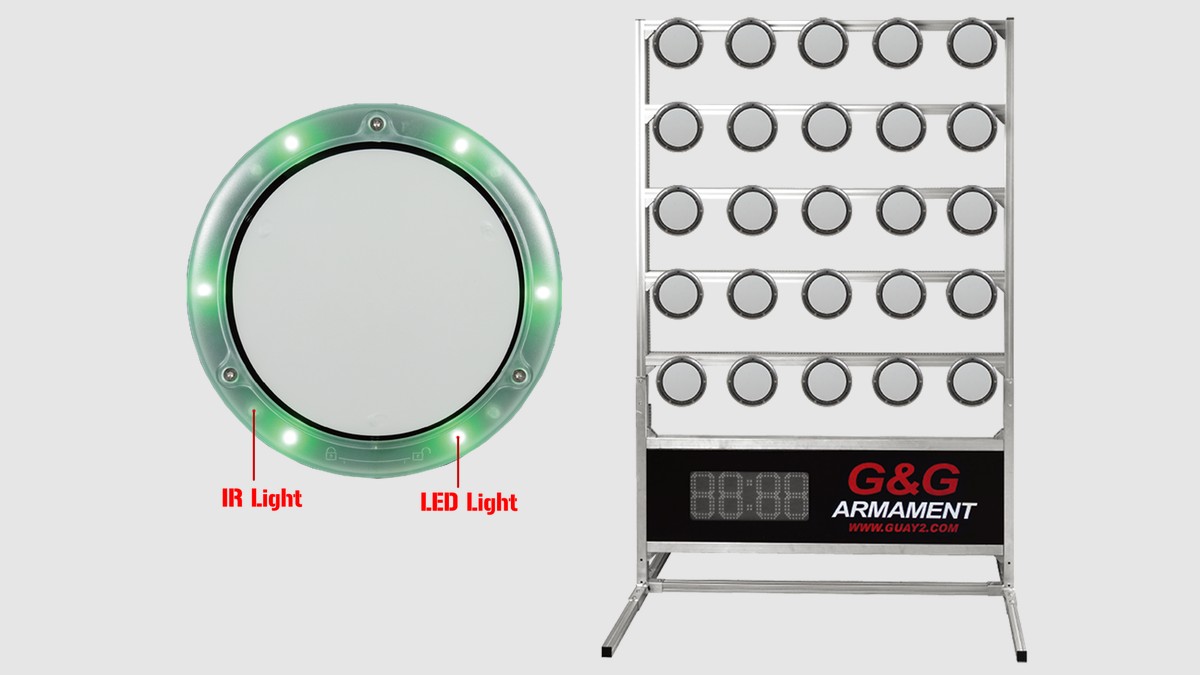
For commercial airsoft venues, tactical training centers, retailers, and organizers of structured shooting events, G&G Armament Taiwan offers the E.T.T. Electronic Training Target system.
According to G&G Armament’s product information, the second-generation E.T.T. system uses high-strength steel target faces and MEMS-based hit detection designed to distinguish direct impacts from environmental disturbance. The system provides immediate audio-visual feedback and offers eight selectable training modes, including quickdraw, random, hostage rescue, search-and-destroy, and timed multi-target exercises.
The product range includes individual targets and modular layouts such as 3×2, 3×3, and 5×5 configurations. This modular approach can help operators begin with a focused activity zone, test customer demand, and expand the layout after validating utilization and revenue.
G&G Armament was established in Taiwan in 1986 and launched its G&G Armament brand in 2001. Its electronic target products are positioned for airsoft and training applications. Buyers should discuss their intended projectile type, operating environment, range dimensions, and desired target layout with the supplier before making a final selection.
Frequently Asked Questions
Do electronic shooting targets increase shooting range revenue?
They can, but only when the range uses them to improve capacity, create sellable training products, reduce avoidable reset time, or increase repeat visits. The equipment should be linked to a clear operating plan and measured against baseline lane data.
How quickly can an electronic target system pay for itself?
Payback depends on installed cost, local pricing, additional session margin, staff savings, maintenance, and how well the system supports premium activities. A practical calculation uses total installed investment divided by monthly net benefit. Ranges should model conservative, expected, and upside cases before purchasing.
Are electronic target systems only for advanced shooters?
No. They can be useful for beginners when the drill is simple and the feedback is easy to understand. A visible hit response, a straightforward timer, and a clear goal can make an introductory session more engaging without making it overly technical.
What should a range test during a pilot program?
Track reset minutes, active training time, sessions per lane, staff time, customer satisfaction, premium-product sales, and repeat bookings. Test the system during normal business hours, group events, and peak periods rather than only during a controlled demonstration.
Can an airsoft electronic target system be used for live-fire shooting?
Not automatically. Projectile energy, material design, target distance, ricochet management, and facility safety requirements differ significantly. Buyers must obtain written confirmation from the supplier that a system is suitable for their exact use case.
Build an Investment Case Around Customer Time
The strongest reason to invest in an electronic target system is not that it is digital. It is that it can make paid range time more active, measurable, and memorable.
For range owners, the opportunity is to reduce unproductive waiting, improve lane turnover, and create services that customers want to repeat. For procurement teams, the task is to validate compatibility, reliability, expansion options, and a conservative payback model before committing capital.
Contact our experts for a customized range planning solution.