What procurement and technical teams should review when selecting an access controller for security, throughput and long-term fit.
Selecting an access controller is no longer just a door-security decision. For procurement managers, technical directors and plant operators, it affects workforce flow, site risk, integration cost and ongoing maintenance. A poor choice can create bottlenecks at shift change, increase help-desk load or force an expensive redesign when new sites or credential types are added.
That is why the more useful question is not which technology is “best,” but which modality is best suited to your operating environment. RFID, biometric and face recognition systems each solve a different problem. The right choice depends on how you balance security, throughput, user acceptance, privacy and expansion plans.
Why access controller choice matters more than many buyers expect
Many projects begin with a simple feature request: card access, fingerprint login or touchless face entry. In practice, those are only the visible inputs. The access controller behind them determines how identities are processed, how door logic is enforced, how audit records are captured and how the system connects to other security infrastructure.
For buyers, the decision should start with three practical questions:
- What is the real risk being controlled: tailgating, credential sharing, unauthorized contractors or internal access segregation?
- How many users and transactions must the system handle during peak periods?
- What existing credentials, readers, software and lock hardware must remain compatible?
A site with 50 office staff has different needs from a factory with multiple shifts, a cleanroom with anti-passback rules or a distributor managing mixed employee and temporary-worker access.
What an access controller actually does in a modern site
An access controller is the decision engine of the physical access system. It receives identity data from readers or terminals, checks authorization rules, triggers door release, stores logs and often communicates with software platforms for monitoring and reporting.
That matters because buyers should evaluate more than the front-end reader. Ask for concrete controller details, including supported credential technologies, door capacity, input/output configuration, event storage, fail-safe behavior, networking method and integration options such as API, Wiegand, OSDP or relay interfaces. In higher-assurance environments, credential standards and PACS interoperability also become relevant evaluation points. Government guidance continues to emphasize interoperable, standards-based physical access control architectures rather than isolated point devices.
When RFID access control is the strongest choice
RFID remains the default choice for many commercial and industrial sites because it balances speed, simplicity and cost control. It works especially well where users already carry badges, where doors experience frequent traffic and where enrollment must be easy for employees, contractors or visitors.
RFID is usually the best fit when:
- user throughput is high and delays must stay low;
- privacy sensitivity makes biometric enrollment harder to justify;
- sites need low-friction replacement of lost credentials;
- the organization wants multi-door expansion without major retraining.
Its weakness is also clear: a card, tag or PIN can be shared, borrowed or cloned if credential policy is weak. That makes RFID suitable for many low- to medium-risk areas, but less suitable for zones where identity assurance must be tightly linked to the actual person, not just the credential in hand.
For factories and multi-site operators, RFID often becomes more effective when paired with layered controls such as anti-passback, door position monitoring, alarm integration and role-based access schedules.
When biometric access control makes sense
Biometric access control, especially fingerprint-based systems, is designed to reduce credential sharing and tighten person-to-permission matching. It is often chosen for server rooms, labs, restricted production areas or internal zones where auditability matters more than raw transaction speed.
Biometric control is a strong option when you need:
- stronger non-transferable identity verification;
- reduced dependence on physical cards;
- cleaner access logs for investigations or compliance review;
- tighter control of specific rooms rather than every perimeter door.
However, buyers should test real-world operating conditions before scaling. Gloves, dirty hands, moisture and surface wear can affect usability in industrial settings. A biometric controller also changes data-governance requirements. In many jurisdictions, biometric data needs a stronger legal basis, tighter retention control and clearer employee communication than standard card-based access. UK regulatory guidance and recent enforcement actions show that organizations cannot treat biometric attendance or access data as routine personnel data without proper justification and governance.
For procurement teams, the next step is simple: require the supplier to explain template storage, matching architecture, fallback mode and deletion workflow in writing.
Where face recognition access control fits best
Face recognition is typically selected for touchless entry, convenience and fast user experience. It can be attractive in corporate lobbies, premium residential sites, healthcare settings and some industrial entries where hands-free access improves flow.
But this is the modality where buyers need the most discipline. Performance varies with lighting, camera placement, user movement, PPE and demographic conditions. NIST evaluation work continues to show why buyers should review independently tested algorithm performance rather than rely on generic accuracy claims. NIST also notes that operating thresholds and deployment conditions materially affect false alerts and true-match rates.
Face recognition is usually a better fit when:
- touchless entry is operationally important;
- traffic flow matters, but a camera-based workflow is acceptable;
- the site can control lighting and terminal placement;
- privacy review and enrollment consent processes are mature.
It is less suitable where workers frequently wear masks, face shields or heavy protective gear unless the supplier can demonstrate reliable performance under those exact conditions.
How the three access control approaches compare
Before choosing a modality, align it with site conditions rather than vendor marketing. The table below gives a practical first-pass comparison.
| Criteria |
RFID |
Biometric |
Face Recognition |
| Identity assurance |
Medium |
High |
Medium to high, depending on tuning and conditions |
| Throughput at peak times |
High |
Medium |
High |
| User friction |
Low |
Medium |
Low |
| Privacy burden |
Low to medium |
High |
High |
| Credential sharing risk |
Higher |
Low |
Low |
| Harsh-environment tolerance |
Generally good |
Can degrade with dirty/wet hands |
Can degrade with glare, low light, PPE |
| Enrollment effort |
Low |
Medium |
Medium |
| Best-fit areas |
Offices, factories, multi-site operations |
Labs, server rooms, restricted internal zones |
Lobbies, touchless entry points, managed reception areas |
The key interpretation is straightforward: RFID is often best for scale and speed, biometric for identity certainty and face recognition for controlled touchless convenience. Buyers should only override that default logic when site conditions clearly support it.
The site conditions that should drive your specification
A strong specification should describe operating reality, not just desired features. At minimum, document the number of users, peak transactions per minute, indoor or outdoor placement, lighting conditions, PPE use, lock type, network architecture and fail-secure or fail-safe requirements.
From 2023 to 2026, three market trends have made this more important. First, buyers are under more pressure to justify privacy controls around biometric data. Second, standards-based PACS procurement remains a priority in regulated and public-sector environments. Third, supply-chain resilience and manufacturing readiness have become part of supplier evaluation, not just price comparison.
In practical terms, that means a supplier quote is incomplete unless it also answers: what can be customized, what lead time assumptions apply and which components or credential technologies are standard versus optional.
How to evaluate an access controller manufacturer, not just a device
Many projects fail because the selected product looked acceptable on paper, but the manufacturer could not support configuration changes, interface adaptation or delivery timing.
A better evaluation framework includes five checks:
-
Customization depth: Can the supplier adjust reader combinations, credential format support, I/O logic, housing, firmware behavior or regional interface requirements?
-
Integration readiness: Can they document compatibility with your existing ecosystem?
-
Quality stability: Do they provide test procedures, revision control and traceable product documentation?
-
Lead-time realism: Are promised delivery windows based on actual production capability?
-
Engineering response: Can they answer detailed specification questions before the PO is issued?
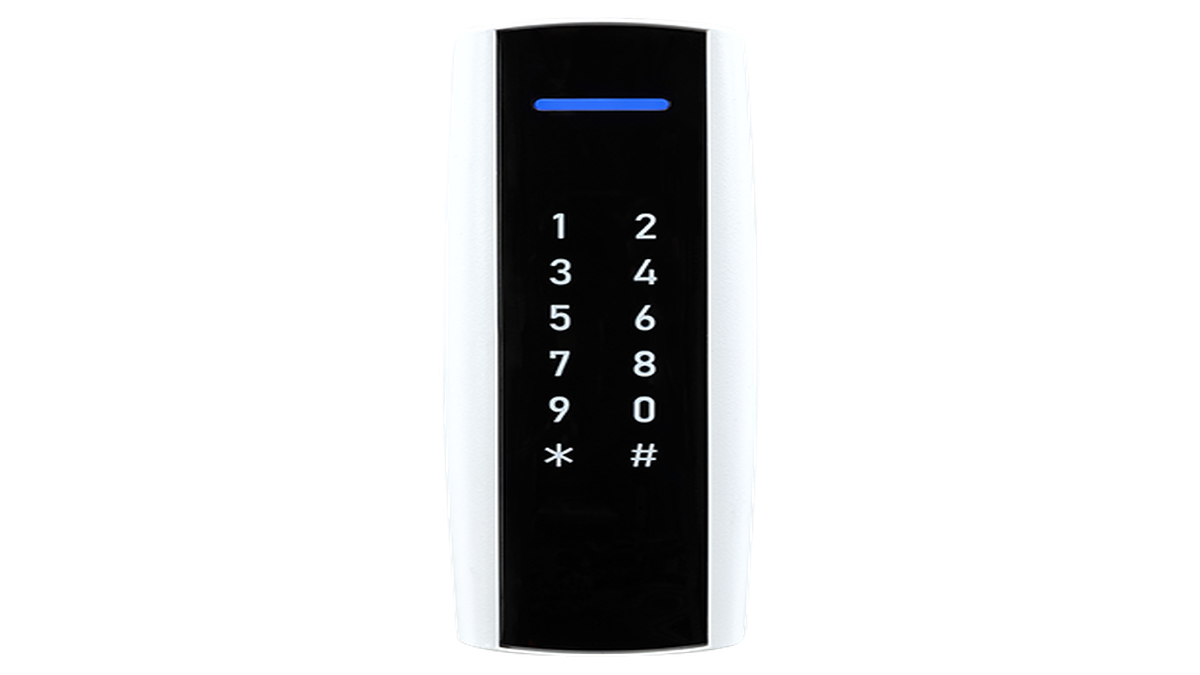
For readers moving from concept to specification review, examining a real product-page example can help. A manufacturer such as Chiyu may be relevant for buyers comparing controller configurations, especially where multi-frequency RFID plus PIN options, customization capability, stable quality, faster lead times and Taiwan-based supply-chain support are part of the sourcing criteria. That kind of review is useful not as a buying shortcut, but as a way to see whether a supplier presents enough technical detail for serious evaluation.
FAQ
1) When should I choose RFID over biometric access control?
Choose RFID when throughput, ease of use and simple enrollment matter most. It is usually the better option for high-traffic sites, multi-shift factories and deployments above 100 users unless credential sharing risk is your main concern.
2) Is face recognition accurate enough for industrial access control?
It can be, but only under controlled conditions. Ask for test evidence covering lighting, camera distance, user motion and PPE use and review independent evaluation sources such as NIST before approving deployment.
3) What should I ask a supplier about biometric data handling?
Ask where templates are stored, how long they are retained, whether deletion is auditable and what fallback method is used if matching fails. If the supplier cannot answer those four points clearly, stop the review and escalate to legal and IT security.
4) How many doors should one access controller support?
There is no single number for all models, but the answer must be documented in the controller specification. Require the supplier to state door capacity, input/output allocation, user capacity and event-log limits in writing before comparing price.
5) What is the safest way to evaluate an access controller manufacturer?
Run a pilot on one real application and score the result across five areas: compatibility, installation effort, user throughput, audit-log quality and support response time. A two- to four-week pilot is usually enough to expose integration or usability issues.
6) What makes customization genuinely valuable in access control?
Customization matters when it changes fit, not just appearance. Useful examples include credential format support, reader mix, regional interface options, enclosure changes, firmware logic and integration behavior with existing site systems.
Final Thoughts
There is no universal best access controller modality. RFID is often the most practical choice for high-throughput sites that prioritize speed, ease of deployment and scalable credential management. Biometric systems are better suited to restricted areas where identity assurance matters more than convenience, while face recognition can add value in controlled environments where touchless access and user flow are important.
For most buyers, the right decision comes from matching the controller to actual operating conditions rather than selecting the most advanced-looking technology. A sound evaluation should confirm not only security performance, but also integration readiness, privacy implications, maintenance demands and supplier responsiveness. Buyers moving into specification review should compare real product configurations, customization scope and lead-time realism before finalizing a shortlist.

(4059)(20260924)(原).jpg)
(2367)(20260924)(原).jpg)