Biodegradable Straw Making Machines: Key Technologies Driving Sustainable Packaging Production
This article examines how biodegradable straw making machines are supporting the shift toward sustainable packaging production. It covers PLA and paper straw manufacturing technologies, automation trends, production challenges, and key factors manufacturers should consider when selecting biodegradable straw production equipment.
Why the Packaging Industry Is Moving Toward Biodegradable Straws
The shift away from single-use plastics is driven by environmental regulations, ESG requirements, and increasing consumer demand for sustainable packaging. Governments across Europe, North America, and Asia have introduced restrictions on plastic straws, accelerating adoption of biodegradable alternatives in foodservice industries.
As a result, manufacturers are transitioning toward production systems that support PLA straws, paper straws, and plant-fiber-based materials. This has increased demand for efficient and scalable biodegradable straw making machines.
Common Technologies Used in Biodegradable Straw Making Machines
PLA Straw Extrusion Systems
PLA (Polylactic Acid) is widely used due to its biodegradable properties and plastic-like usability. Production systems typically include extrusion, cooling, and precision cutting modules.
Example equipment:
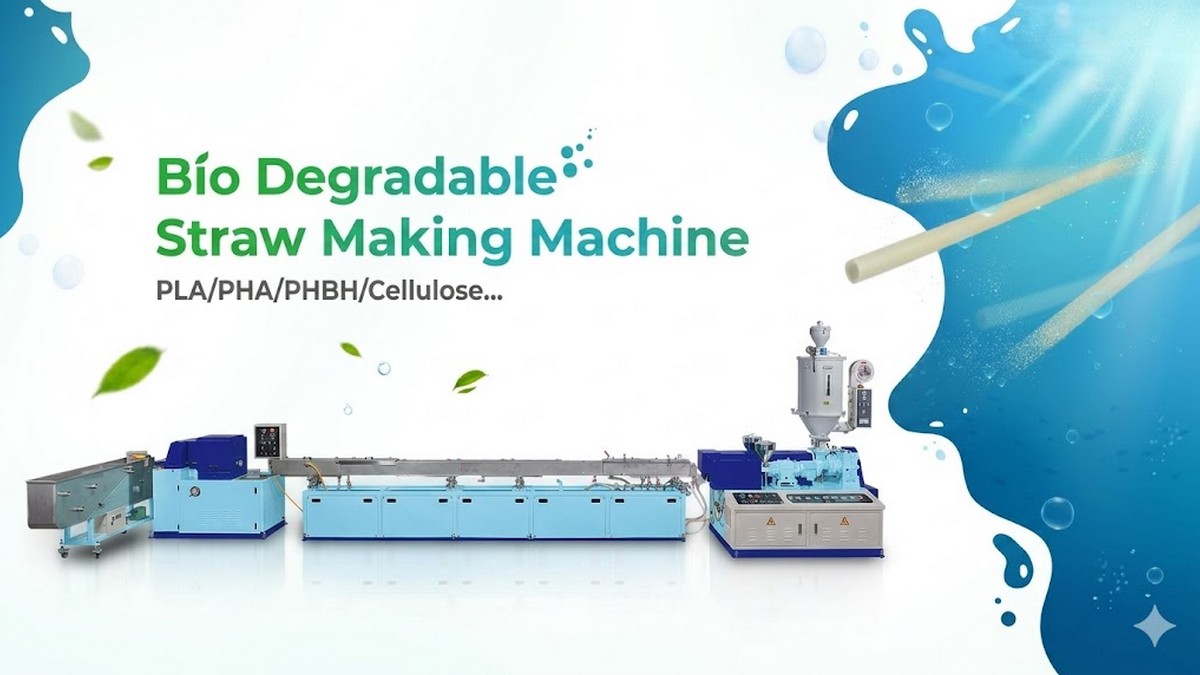
Jumbo Steel Machinery provides industrial PLA straw production solutions, including their
PLA Straw Making Machine designed for stable extrusion and automated operation.
Paper Straw Manufacturing Systems
Paper straw production involves spiral winding, adhesive bonding, drying, and cutting processes. Machines must ensure structural strength and moisture resistance during high-speed production.
Plant Fiber and Alternative Materials
Alternative materials such as bagasse, bamboo fiber, and rice-based composites require customized forming systems due to varying density and processing behavior.
Key Factors When Evaluating Production Equipment
Production Stability
Stable output, precise cutting, and consistent material feeding are essential for maintaining quality in large-scale production environments.
Automation and Efficiency
PLC control systems
Servo synchronization
Automatic counting and inspection
Smart monitoring systems
Material Flexibility
Modern manufacturers prefer equipment capable of handling multiple biodegradable materials to adapt to changing market demands.
Food Safety Compliance
Machines must meet food-grade standards, including stainless steel components, hygienic design, and international certifications such as CE compliance.
Manufacturing Challenges in Biodegradable Straw Production
Material Sensitivity
Biodegradable materials such as PLA and paper require precise process control due to narrow operating conditions and sensitivity to temperature and moisture.
Efficiency vs Sustainability
Manufacturers must balance production speed, energy consumption, and material waste reduction to achieve both economic and environmental goals.
Durability Performance
Ensuring straws maintain strength during beverage use remains a key challenge, particularly for paper-based products exposed to liquids.
Future Trends in Biodegradable Straw Manufacturing Technology
Smart Manufacturing
IoT-based monitoring, predictive maintenance, and real-time production analytics are becoming standard features in modern machinery.
Fully Integrated Production Lines
Future systems will combine forming, cutting, inspection, and packaging into fully automated production lines.
Material Innovation
New compostable materials are driving demand for more flexible and modular machine designs.
Conclusion
Biodegradable straw making machines are a key enabler of sustainable packaging transformation. As regulations tighten and demand increases, manufacturers must invest in efficient, flexible, and compliant production systems to remain competitive.
Companies such as Jumbo Steel Machinery Co., Ltd. continue to play a role in developing advanced PLA straw production technologies that support industrial-scale sustainability.
Both grades are ferrite powder in a rubber binder. The difference is whether the particles are aligned during manufacture, and that alignment decides how much holding force you get from a given thickness.
A DDP quote looks simpler because one price covers everything to your door. The trade-off is less visibility into freight and duty costs, and in the US a customs liability that does not always move with the price.
The hardest part of replacing an old motor is usually not finding a newer model with similar power. It is making sure the new motor fits the machine, handles the actual load, and works with the existing control system.

(4059)(20260924)(原).jpg)
(2367)(20260924)(原).jpg)