How to Determine Whether Your Legacy Calender Still Supports Safe, Consistent, and Cost-Effective Production
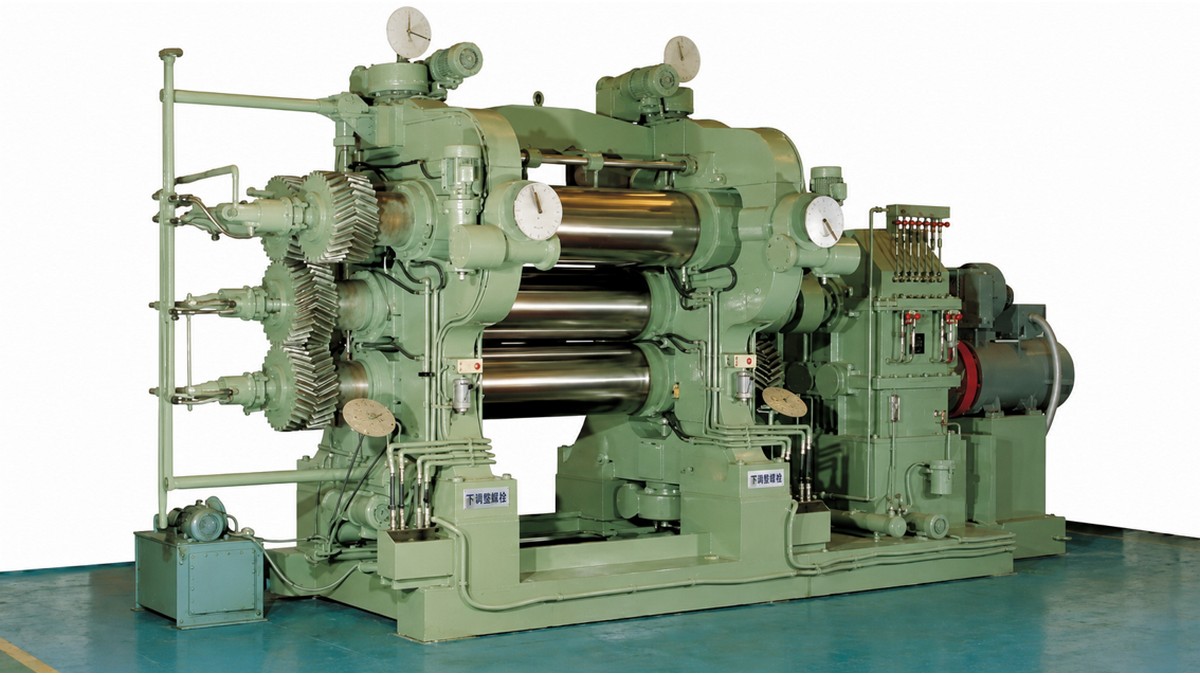
For many rubber manufacturers, a calendering machine remains one of the most valuable assets on the production floor. It directly affects sheet thickness, surface quality, output stability, material waste, and operator safety.
Many legacy rubber calenders have remained in operation for decades because their heavy-duty frames and mechanical components were built for long service lives. However, aging controls, obsolete electrical parts, inconsistent temperature performance, stricter safety expectations, and rising maintenance costs can turn a dependable machine into a production risk.
The key question is not simply whether an old calender still runs. It is whether it can continue to meet your required standards for quality, safety, uptime, and operating cost.
This guide helps plant managers, maintenance teams, and procurement professionals decide whether a legacy rubber calendering machine should be retrofitted or replaced.
Start With a Condition Assessment
Before approving a retrofit or new-machine budget, assess the actual condition of the machine. A practical evaluation should cover four areas:
- Mechanical structure and drivetrain condition
- Roll condition and temperature uniformity
- Electrical controls and spare-parts availability
- Safety systems and compliance requirements
A control upgrade can improve usability and repeatability, but it cannot correct a cracked frame, worn gears, unstable bearings, or excessive roll deflection. Likewise, a mechanically sound machine may still benefit greatly from modern controls, drive systems, and safety devices.
1. Electrical Controls and Drive Systems
Older calendering machines commonly use DC motors, analog drives, relay logic, and manual push-button controls. These systems may still function, but they often create maintenance and consistency issues.
Common warning signs include:
- Obsolete PLCs, drives, or electrical components
- Long downtime while sourcing replacement parts
- Unstable roll speed or web tension
- Limited process data and fault diagnostics
- High dependence on operator experience
A retrofit may include AC motors, variable frequency drives, a modern PLC, and an HMI touchscreen. These upgrades can improve speed control, alarm handling, recipe management, and maintenance visibility.
However, modern controls do not remove mechanical limits. If the gearbox, pinion stand, couplings, or bearings cannot safely support the desired operating conditions, increasing speed or torque may create a larger reliability problem.
Retrofit is often suitable when: the frame and drivetrain remain structurally sound, but the electrical system is obsolete.
Replacement is usually more appropriate when: electrical obsolescence is combined with major mechanical wear or frequent drivetrain failures.
2. Roll Precision, Roll Gap Control, and Temperature Performance
Calender roll condition has a direct impact on sheet thickness consistency and surface quality. Over time, roll surfaces can wear, lose their intended crown profile, or develop damage that affects product quality.
Key inspection points include:
- Roll surface condition
- Runout and concentricity
- Bearing condition
- Roll deflection under load
- Accuracy of the roll-gap adjustment system
- Temperature uniformity across the roll face
Regrinding or recoating rolls may restore surface quality and improve thickness control. Upgrading rotary joints, piping, and temperature-control equipment can also improve thermal stability.
Still, there are limits to what a retrofit can achieve. A legacy machine with worn bearing housings, excessive mechanical backlash, or a low-precision manual screw-down system may struggle to meet demanding tolerance requirements, even after control upgrades.
For manufacturers producing standard industrial rubber sheets, mats, coated fabrics, or other products with moderate tolerances, a carefully planned retrofit may deliver a strong return.
For applications requiring highly consistent thin-gauge material, automated closed-loop gap control, or tighter tolerances across a wide web, a new calender may provide a more dependable long-term solution.
3. Safety Guarding and Risk Reduction
Rubber calenders contain serious pinch-point hazards created by counter-rotating rolls. Older machines may rely on basic trip wires, mechanical pull-cords, or emergency-stop systems that no longer meet a plant's current risk-assessment requirements.
A safety retrofit may include:
- Safety-rated emergency-stop circuits
- Interlocked guards and access doors
- Safety light curtains or laser scanners
- Safety mats and trip devices
- Safety relays or safety PLCs
- Improved braking and controlled stopping systems
Safety improvements must be engineered as a complete system. Installing a new emergency-stop button alone is not enough if the stopping time, braking capacity, guarding layout, or control architecture remains inadequate.
Applicable requirements depend on the country, installation, and risk assessment. Manufacturers should consult qualified machine-safety specialists and relevant standards, such as ISO 13849-1, OSHA 29 CFR 1910.212, and applicable calender-machine safety requirements in their market.
Retrofit vs. Replacement: Key Differences
| Decision Factor |
Retrofitting an Existing Calender |
Replacing With a New Calender |
| Initial investment |
Lower than a full replacement in many cases |
Higher upfront capital expenditure |
| Installation disruption |
Can often be phased during planned shutdowns |
Requires removal, installation, commissioning, and possible foundation work |
| Mechanical capability |
Limited by the existing frame, rolls, and drivetrain |
Designed around current production, material, and output requirements |
| Product consistency |
Can improve with controls, roll servicing, and automation |
Can support advanced roll-gap, temperature, and thickness-control systems |
| Safety |
Can be upgraded, subject to machine layout and braking capability |
Integrated safety design from the beginning |
| Energy performance |
May improve through drive and heating-system upgrades |
Can be optimized across motors, drives, transmission, and thermal systems |
| Digital connectivity |
Basic production monitoring and data collection may be added |
Can be specified for broader Industry 4.0 integration |
| Expected service life |
Extends the useful life of a mechanically sound machine |
Provides a new asset lifecycle with warranty and current components |
When Retrofitting Makes Business Sense
Retrofitting is often the right decision when the machine has a solid mechanical foundation and the business objective is to improve reliability without making a major capacity expansion.
Consider retrofitting when:
- The main frame, bearing housings, gears, and drivetrain are in good condition.
- Your product tolerances are achievable with the existing mechanical design.
- Production volume is stable rather than rapidly increasing.
- Obsolete controls and safety systems are the main sources of risk.
- The machine can be upgraded during scheduled shutdown periods.
- A replacement machine would require major building or utility modifications.
A targeted retrofit can extend service life while improving operator control, process repeatability, diagnostics, and safety.
When Replacement Is the Better Long-Term Choice
Replacement becomes more compelling when mechanical limitations are holding back product quality, uptime, output, or safety.
Consider a new rubber calendering machine when:
- The frame, gears, bearings, or roll supports show serious wear or structural damage.
- Breakdowns are frequent and increasingly difficult to repair.
- Your plant needs higher throughput than the current drivetrain can safely provide.
- Customers require tighter thickness tolerances or more consistent surface quality.
- Existing roll-gap adjustment is too slow or inaccurate for the application.
- Safety improvements would require extensive redesign of the machine.
- The retrofit scope approaches a substantial portion of the cost of a new machine.
- You need integrated data collection, automated process control, and future capacity for smart manufacturing.
A new machine gives manufacturers the opportunity to specify roll configuration, roll face length, drive system, temperature-control design, safety architecture, and automation based on current production requirements rather than past limitations.
A Practical Three-Step Decision Framework
Step 1: Confirm Mechanical Health
Inspect the machine frame, roll journals, bearing housings, gears, couplings, drive system, and foundation alignment.
If structural integrity is questionable, replacement is generally the safer investment. Controls cannot compensate for a mechanically unstable calender.
Step 2: Define the Required Production Standard
Review current and future customer requirements:
- Required sheet thickness tolerance
- Material types and viscosity range
- Production speed
- Width and output volume
- Surface-finish requirements
- Traceability and data-recording needs
A machine that supports today's standard product may not support tomorrow's higher-value application. This is where production strategy should guide the equipment decision.
Step 3: Compare Five-Year Total Cost of Ownership
Do not compare only the purchase price. Include:
- Engineering and installation
- Production downtime
- Spare-parts availability
- Maintenance labor
- Energy consumption
- Product scrap and rework
- Safety upgrades
- Expected repair costs
- Training and commissioning
- Remaining value of the existing machine
If a retrofit only postpones unavoidable mechanical failures or cannot meet future product requirements, replacement may offer the better return despite the higher initial investment.
Work With an Engineering Partner That Understands the Full Line
A calender upgrade is not simply an electrical project or a mechanical project. It involves material behavior, roll design, heat transfer, drive performance, safety engineering, and integration with upstream and downstream equipment.
Yi Tzung Precision Machinery Corp. is a Taiwan-based manufacturer of rubber and plastics processing machinery. Its product range includes rubber calendering machines, rubber mixing mills, dispersion kneaders, batch-off equipment, sheeting systems, and related processing equipment.
When assessing a retrofit or replacement project, an experienced equipment partner can help evaluate:
- Existing machine condition and upgrade feasibility
- Production capacity and material-processing requirements
- Roll arrangement and temperature-control needs
- Drive and control-system specifications
- Safety and plant-layout considerations
- Integration with mixing, feeding, cooling, or downstream handling equipment
The best decision is not always to replace the entire machine, nor is it always to preserve an aging asset. It is to select the option that best supports safe, stable, and profitable production.
Frequently Asked Questions
Can an old rubber calender be upgraded with automatic thickness control?
In many cases, yes. Thickness sensors and modern PLC controls can be added, but true closed-loop control also requires a precise motorized roll-gap adjustment system. If the machine relies on manual adjustment or has excessive mechanical backlash, the retrofit may be complex or may not deliver the expected accuracy.
How long does a calender retrofit take?
Timing depends on the scope of work, spare parts, engineering requirements, and shutdown availability. A controls-only retrofit may be completed much faster than a project involving roll servicing, new drives, safety modifications, and mechanical rebuild work. Confirm the schedule after a detailed machine inspection.
Will a retrofit improve energy efficiency?
It can. Replacing inefficient motors, drives, and thermal-control components may reduce energy waste and improve process stability. Actual savings depend on the current machine condition, production schedule, material, heating method, and selected upgrade scope.
Does a new calender always deliver better quality?
A new machine can provide higher potential precision, automation, and process stability. However, final quality also depends on compound formulation, material handling, operator practices, temperature control, downstream equipment, and maintenance discipline.
Conclusion
Retrofitting is a practical option for a mechanically healthy rubber calender that needs improved controls, safety, reliability, or process visibility. Replacement is often the better investment when the machine cannot meet required tolerance, safety, output, or long-term maintenance expectations.
The decision should be based on a technical inspection and a total-cost-of-ownership comparison, not the age of the machine alone.
For manufacturers planning a rubber calendering upgrade or a new production line, consult an experienced equipment supplier such as Yi Tzung Precision Machinery Corp. to evaluate the requirements of your material, process, production target, and facility.



.jpg)
.jpg)