The push for sustainability in the plastics industry is accelerating globally. Manufacturers face rising raw material costs, waste management challenges, and increasing ESG regulations. Integrated recycling and blown film lines offer a practical solution, converting post-consumer or production scrap into high-quality packaging films while improving operational efficiency.
Industry Drivers for Circular Production
Global trends in environmental regulation and corporate ESG commitments are driving the demand for recycled content in packaging:
- Regulatory Pressure: Initiatives such as the EU’s target of 50% recycled plastic in packaging by 2030 encourage manufacturers to adopt recycling technologies.
- Sustainability Goals: Companies aim to reduce carbon emissions, minimize waste, and demonstrate commitment to sustainable practices.
- Cost Efficiency: Recycling post-industrial scrap reduces dependence on virgin resins, lowering raw material expenses.
According to Plastics Technology, integrated recycling and blown film processes can achieve material recovery rates of 70–95% and cut greenhouse gas emissions by up to 80%.
How Integrated Systems Work
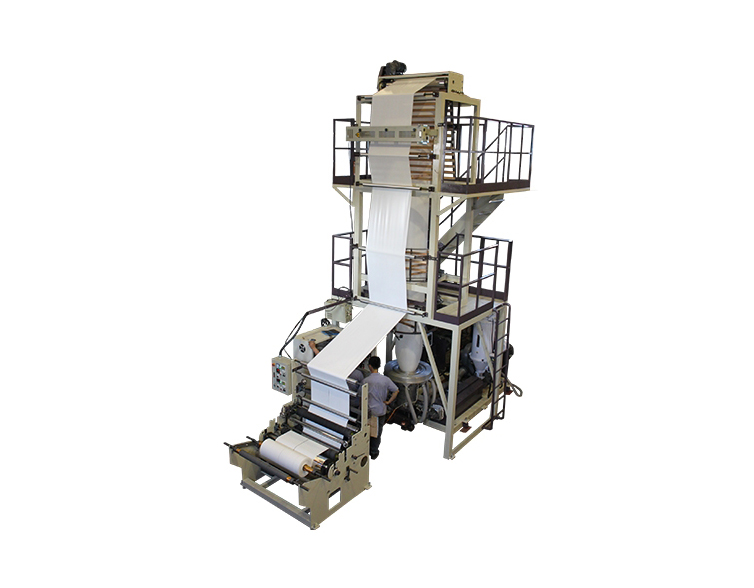
An integrated production line combines plastic waste recycling with blown film extrusion. This process typically involves several key stages:
| Step |
Process |
Key Benefits |
| 1 |
Collection & Sorting |
Removal of contaminants to ensure material quality |
| 2 |
Pelletizing |
Conversion of waste plastics into uniform pellets |
| 3 |
Blown Film Extrusion |
Production of high-quality packaging films with controlled thickness and strength |
| 4 |
Quality Monitoring |
Real-time checks on clarity, tensile strength, and film uniformity |
| 5 |
Distribution |
Ready-to-use recycled films for industrial applications |
This end-to-end integration ensures minimal handling, reduces contamination, and preserves material properties from recycling to final packaging film production.
Key Advantages of Integrated Systems
- Continuous Material Flow – Direct feeding of recycled pellets into film machines reduces downtime, simplifies logistics, and maintains consistent quality.
- Energy Efficiency – Optimized extrusion, cooling, and pelletizing processes, often supported by variable frequency drives (VFDs) and energy-efficient motors, lower operational energy use and production costs.
- High-Quality Output – Advanced filtration, degassing, and real-time monitoring ensure uniform pellet size and film quality suitable for high-performance applications.
- Automation and Control – Centralized Human-Machine Interfaces (HMIs) and AI-assisted monitoring enable operators to manage multiple materials, detect anomalies, and implement predictive maintenance.
- Flexibility and Scalability – Modular systems allow for rapid adaptation to different plastics such as PE, PP, and biodegradable materials, supporting diversified product offerings and expanding recycled content use.
Overall, these advantages make integrated lines ideal for manufacturers aiming to meet sustainability standards while maintaining operational efficiency.
Benefits for Manufacturers
Integrated recycling and blown film lines provide measurable business and environmental benefits:
- Cost Reduction – Lower reliance on virgin materials and minimized waste disposal expenses
- ESG Compliance – Improved recycled content rates and reduced carbon footprint
- Operational Efficiency – Streamlined processes, reduced downtime, and consistent product quality
- Market Competitiveness – Ability to meet growing demand for sustainable packaging films
By leveraging these integrated solutions, manufacturers can align their operations with both regulatory requirements and market expectations for sustainable packaging.
Leading Manufacturers of Integrated Recycling and Blown Film Solutions
Several global companies provide comprehensive solutions for circular production systems:
| Manufacturer |
Specialty |
| Matila Industrial Co., Ltd. (Taiwan) |
Modular recycling and blown film machines for PE, PP, and biodegradable plastics |
| POLYSTAR (Taiwan) |
Plastic film recycling systems with compactors and pelletizers for industrial and post-consumer plastics |
| Erema (Austria) |
Advanced recycling lines, including extrusion-based pelletizing for various polymer types |
| Starlinger (Austria) |
PET and polyolefin recycling with integrated blown film extrusion capabilities |
| AMUT (Italy) |
Turnkey solutions combining blown film and recycling processes for flexible packaging |
These companies demonstrate the industry’s shift toward fully integrated production, offering solutions that enhance circularity and enable manufacturers to meet increasing recycled content requirements.
Driving Sustainability and Circular Economy Goals
The integration of recycling pelletizing and blown film lines offers plastics manufacturers a tangible path to sustainability, operational efficiency, and high-quality film production. As global regulations tighten and demand for recycled content grows, leveraging advanced, integrated systems will be essential for companies aiming to remain competitive, reduce environmental impact, and deliver value to customers in the evolving packaging market. Embracing this approach not only supports circular manufacturing but also positions manufacturers to meet both ESG targets and consumer expectations for sustainable packaging.