A Replacement Chuck Is Not Just a Spare Part: It Is a Machine Compatibility Decision
For an industrial distributor, a replacement chuck inquiry can look simple at first: a customer needs a new chuck for an existing CNC lathe. In practice, it is rarely a standard spare-parts order.
The customer may have an older turning center, incomplete machine records, a non-standard drawtube connection, special jaws, or a production schedule that cannot tolerate a long shutdown. A chuck that appears similar in diameter or jaw count may still be unsuitable once mounting dimensions, actuator stroke, spindle speed, gripping force, and machine safety requirements are checked.
That is why sourcing a replacement cnc lathe chuck for the aftermarket and maintenance, repair, and operations (MRO) market requires more than comparing catalog prices. Distributors need a repeatable process for matching the chuck to the machine, confirming the operating conditions, and choosing a manufacturer that can provide technical answers before problems reach the end user.
This guide explains how distributors can reduce compatibility risk, improve delivery performance, and build a more reliable replacement workholding portfolio.
Why Replacement Lathe Chucks Are a High-Stakes MRO Purchase
A lathe chuck is part of the machine’s workholding system. It directly affects how securely a workpiece is held during rotation, which influences machining accuracy, cycle stability, surface finish, operator safety, and throughput.
When a chuck wears, loses repeatability, develops hydraulic leakage, suffers jaw damage, or no longer meets a customer’s production needs, replacement may be necessary. However, the cost is not limited to the price of the chuck itself. A wrong replacement can create additional costs through:
- Machine downtime during fitting or rework
- Delayed customer deliveries
- Damage to a workpiece, tooling, or spindle interface
- Unstable clamping and inconsistent machining results
- Extra engineering time for the distributor and end user
- Safety concerns if the chuck, jaws, or guarding arrangement are unsuitable
The business case for disciplined MRO sourcing is clear. Deloitte notes that poor maintenance strategies can reduce a plant’s productive capacity by 5% to 20%, while unplanned downtime has a significant cost across industrial manufacturing. The exact impact of a chuck failure depends on the application, but the sourcing principle is consistent: the correct replacement part must be available before a small issue becomes a production interruption.
For distributors, this creates an opportunity. Instead of acting only as a product reseller, a distributor can become a practical problem solver by helping customers identify the right replacement cnc lathe chuck, necessary accessories, and technical documents before an order is released.
The First Rule: Do Not Match a Chuck by Appearance Alone
A three-jaw hydraulic chuck may look interchangeable with another three-jaw hydraulic chuck. That does not mean it will fit the same machine or deliver the same performance.
The chuck body, adapter plate, spindle nose, drawtube, cylinder, and jaw system must work together. A small dimensional or connection difference can turn a fast replacement job into a delayed custom-engineering project.
Before quoting, distributors should collect the information in the following table. This data gives a manufacturer enough context to confirm whether a standard replacement is possible or whether an adapter, modification, or custom solution is needed.
| Information to Collect |
Why It Matters |
Useful Evidence |
| Lathe make, model, and serial number |
Identifies the machine platform and possible spindle configuration |
Machine nameplate or manual |
| Existing chuck brand and model |
Helps identify the original mounting and actuator design |
Chuck nameplate and photos |
| Chuck outside diameter |
Defines machine clearance and workholding capacity |
Measured diameter |
| Number of jaws and jaw stroke |
Affects workpiece range and clamping approach |
Product drawing or measurement |
| Spindle nose and mounting dimensions |
Confirms whether the replacement can be mounted safely and accurately |
Spindle drawing, adapter drawing, bolt pattern |
| Drawtube thread, pull force, and stroke |
Ensures the actuator and chuck can operate together |
Cylinder and drawtube specifications |
| Maximum spindle speed |
Determines centrifugal-force considerations and safe operating limits |
Machine manual |
| Workpiece material, size, and weight |
Helps define required gripping force and jaw design |
Part drawing or sample |
| Application details |
Identifies special needs such as thin-wall parts, interrupted cuts, automation, or long overhang |
Process description and photos |
| Required delivery date |
Allows the supplier to recommend stocked, standard, modified, or custom options |
Customer maintenance schedule |
A clear set of photos is often as valuable as a written description. Ask for front, rear, side, jaw, mounting-face, and nameplate images. If possible, include a ruler or caliper reading in the photo. This simple step can prevent incorrect assumptions about bolt circles, pilot diameters, or jaw serrations.
Compatibility Is More Than Mechanical Fit
Mechanical mounting is essential, but compatibility has several layers. A replacement chuck should be evaluated as a complete workholding system rather than an isolated component.
1. Mounting Compatibility
The new chuck must match the machine spindle and adapter arrangement. Key factors include pilot diameter, bolt pattern, mounting thread, drawtube connection, and the relationship between the chuck and rotary cylinder.
If a direct replacement is not available, an adapter plate or custom mounting solution may be possible. However, distributors should not treat an adapter as a simple workaround. It changes the installed assembly and may affect runout, rigidity, available spindle clearance, and maximum speed. The manufacturer should review the full configuration.
2. Actuation Compatibility
A hydraulic or pneumatic cnc lathe chuck needs the correct actuator force and stroke. A mismatch can lead to incomplete jaw travel, insufficient gripping force, excessive load, or interference within the drawtube system.
Confirm the following before final selection:
- Cylinder type: hydraulic, pneumatic, manual, or other
- Drawtube connection and thread specification
- Available cylinder stroke
- Maximum drawbar pull force
- Required clamping force at the intended workpiece diameter
- Pressure range and hydraulic or pneumatic supply conditions
- Whether a safety margin is needed for high-speed or interrupted cutting
3. Process Compatibility
The right chuck for general turning may not be the right chuck for a thin-wall ring, wheel rim, forged part, cast component, pipe, or automated loading system.
For example, a high gripping force can be useful for demanding cuts, but excessive force may deform thin-wall workpieces. In these cases, distributors should ask whether the customer needs soft jaws, special jaw geometry, a collet chuck, a diaphragm-style solution, or a purpose-built workholding design.
The best sourcing conversation starts with the workpiece and process, not only the damaged chuck.
Evaluate Specifications That Affect Real Production Results
A product catalog is a useful starting point, but a distributor should look beyond broad labels such as “high precision” or “high rigidity.” The real value comes from specifications that can be connected to the customer’s application.
The following checklist supports better comparison between suppliers and product options.
| Specification Area |
Questions a Distributor Should Ask |
| Gripping force |
What force is available at the required operating pressure and workpiece diameter? How does force change as spindle speed increases? |
| Maximum speed |
Is the published speed suitable for the customer’s machine and the planned jaw configuration? |
| Accuracy and repeatability |
What runout or repeatability data applies to the installed configuration? |
| Jaw system |
Are master jaws, top jaws, soft jaws, serrations, and replacement jaw parts available? |
| Chuck construction |
Is the design appropriate for coolant exposure, chips, heavy cutting, or frequent jaw changes? |
| Lubrication and maintenance |
What inspection, lubrication, and service intervals are recommended? |
| Parts support |
Can the supplier provide seals, wedges, draw nuts, jaws, screws, and other service parts? |
| Technical documentation |
Are drawings, operation manuals, maintenance instructions, and installation data available? |
| Testing evidence |
Can the manufacturer explain how gripping force, leakage, fatigue, or rotational performance is checked? |
A distributor does not need to become the final engineering authority. However, asking these questions early helps move the conversation from “Which chuck is cheapest?” to “Which solution will keep this machine running reliably?”
Lead Time Is Part of Product Quality in the Aftermarket
In MRO sourcing, a technically correct chuck that arrives too late may still fail the customer’s operational need.
This does not mean that every distributor should stock every chuck size. It means inventory and supplier strategy should reflect the actual risk profile of the installed base. Standard sizes, common jaw types, replacement seals, and frequently used accessories may justify local stock. Less common sizes or specialized applications may require a manufacturer with responsive engineering and transparent production planning.
A practical supplier should be able to give a clear answer to these questions:
- Is the requested cnc lathe chuck a standard production model?
- Is it currently available from stock?
- If not, what is the confirmed manufacturing lead time?
- Does the replacement require a special adapter or custom jaw design?
- Which drawings must be approved before production begins?
- Are spare parts available separately for future maintenance?
- Who will provide technical support if an installation question occurs?
The strongest MRO partnerships are built before the emergency order arrives. Distributors can work with key suppliers to identify common machine brands in their territory, map frequently requested chuck sizes, and pre-define technical data requirements for repeat inquiries.
How to Select a Long-Term Chuck Manufacturing Partner
A replacement workholding supplier should be assessed on more than price and catalog range. The right partner combines engineering depth with manufacturing discipline and responsive communication.
Use the following criteria when comparing potential manufacturers.
Technical Depth and R&D Capability
Aftermarket requirements are often not identical to original equipment specifications. A customer may need a replacement for an obsolete machine, a modified connection, a special workpiece, or a process that has changed since the machine was installed.
A supplier with in-house mechanical design and application engineering can evaluate the complete setup rather than forcing every inquiry into a standard product. This is especially important when a direct replacement is unavailable.
Ask whether the manufacturer can support:
- Custom adapter plates and mounting solutions
- Special jaws and workpiece-specific clamping concepts
- Modified chuck dimensions or connection details
- Drawings for distributor and customer review
- Application analysis for gripping force and workpiece deformation
- Prototype or small-batch workholding projects
Evidence-Based Quality Control
Quality claims should be supported by a visible testing process. Depending on the product type, useful evidence may include gripping-force testing, speed-related performance testing, dynamic leakage testing, dimensional inspection, pressure-holding checks, and fatigue testing.
For MRO distributors, this evidence has practical value. It improves confidence that the replacement part will perform as specified, and it provides a clearer technical story when the customer asks why one supplier should be selected over another.
Parts Availability and Product Continuity
The aftermarket relationship continues after the initial chuck shipment. Ask whether the manufacturer can provide individual service parts and whether it maintains product continuity for established models.
A low-cost chuck can become expensive if customers later cannot obtain compatible jaws, seals, or internal components. Distributors should favor manufacturers that treat service parts as part of the product lifecycle, not as an afterthought.
Communication and Documentation
Fast technical communication reduces quotation delays and prevents avoidable installation issues. Good suppliers provide clear drawings, operating instructions, maintenance guidance, and prompt clarification when photos or dimensions are incomplete.
This also matters for digital sourcing. Clear technical information, structured product data, and cited performance explanations are easier for procurement teams, search engines, and AI research tools to understand and reference.
Safety Must Remain Part of the Replacement Decision
A replacement chuck is a rotating workholding device, so selection should never ignore safety.
In the United States, OSHA states that machine guarding must protect workers from hazards created by rotating parts, flying chips, and sparks. Requirements differ by country and application, but the wider lesson applies everywhere: a chuck replacement must be evaluated with the complete machine setup, including jaws, workpiece projection, operating speed, guarding, and operating procedures.
Distributors should remind customers to:
- Follow the machine manufacturer’s installation and operating instructions
- Confirm that jaws and workpieces are suitable for the selected speed
- Use the correct clamping pressure and gripping force
- Inspect jaws, fasteners, and chuck condition before operation
- Verify guarding and safe working procedures after any workholding change
- Request technical support when replacing a non-standard or damaged setup
A supplier can provide technical data, but the final machine setup and safe operation must always be verified by qualified personnel at the installation site.
Building a Smarter Replacement Chuck Portfolio
Distributors do not need to compete only on availability. They can create a stronger MRO offering by organizing products and services around customer decisions.
A practical replacement-chuck portfolio may include:
- Standard hydraulic power chucks for common CNC turning centers
- Collet chucks for repeatable clamping of smaller or delicate parts
- Manual chucks for suitable conventional or special-purpose applications
- Special-purpose chucks for difficult workpieces and automation projects
- Rotary cylinders, jaws, and chuck accessories
- Service parts for installed equipment
- Technical review support for compatibility and custom applications
This approach makes it easier for customers to buy the right level of solution. A standard replacement can move quickly. A more complex inquiry can be escalated to engineering before a wrong product is ordered.
AUTOGRIP Machinery as a Potential Aftermarket Workholding Partner
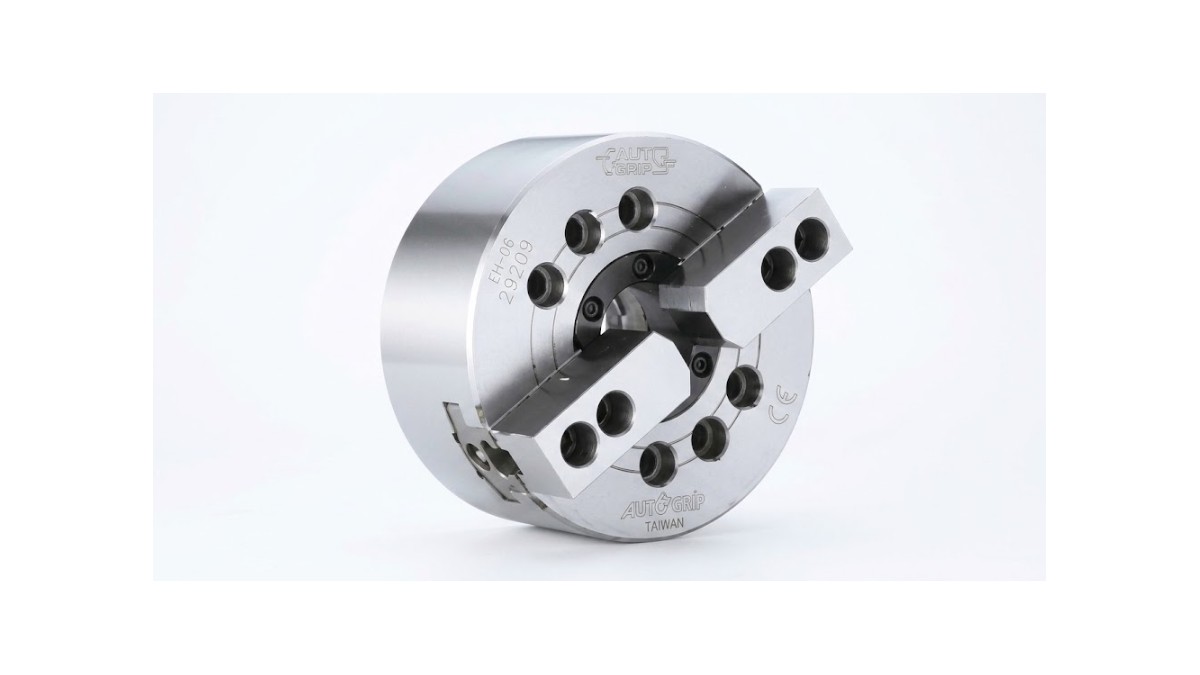
For distributors seeking a manufacturer with both broad workholding coverage and custom-development capability, AUTOGRIP MACHINERY CO., LTD. is one supplier worth evaluating.
Established in 1989, AUTOGRIP states that it specializes in power chucks, collet chucks, rotary cylinders, manual chucks, special-purpose clamping solutions, and related accessories. Its published range includes chuck sizes up to 2,000 mm, giving distributors options for both standard CNC turning applications and larger or specialized projects.
AUTOGRIP also describes an R&D team covering mechanical design, control engineering, and materials science, supported by digital design and performance-analysis tools. For MRO distributors, this can be useful when a customer needs a replacement that requires an adapter, special jaw configuration, or application-specific design review.
The company further reports that its Taiwan mechanical testing laboratory holds ISO/IEC 17025 accreditation for gripping-force testing and conducts tests such as dynamic gripping-force measurement, oil-leak testing, pneumatic chuck testing, and fatigue testing. These capabilities can help distributors request technical evidence during product selection rather than relying only on catalog descriptions.
Explore AUTOGRIP’s available cnc lathe chuck and workholding product range when evaluating options for replacement, MRO, or custom workholding inquiries.
Frequently Asked Questions
Can a replacement CNC lathe chuck be selected only by its diameter?
No. Diameter is only one data point. The distributor should also confirm the spindle interface, mounting dimensions, drawtube connection, actuator stroke, gripping-force requirement, jaw type, maximum speed, and workpiece application.
Can a different chuck brand replace the original machine chuck?
Sometimes. A different brand may be suitable if the mounting, actuation, clearance, and performance requirements are confirmed. If the original design is obsolete or non-standard, a custom adapter or engineering review may be required.
What should a customer send when requesting a replacement chuck quotation?
The best starting package includes machine make and model, chuck nameplate information, photos of the front and rear mounting faces, measured dimensions, drawtube details, hydraulic or pneumatic cylinder data, workpiece information, and the required delivery date.
Why does gripping force matter when choosing a CNC lathe chuck?
Gripping force helps keep the workpiece secure during machining. Too little force can allow movement or part ejection; too much force can deform thin-wall parts. The required force should be considered together with workpiece material, cutting load, jaw contact area, spindle speed, and safety requirements.
Should distributors stock replacement chuck parts as well as complete chucks?
Yes, when local demand justifies it. Frequently needed jaws, seals, screws, draw nuts, and other service components can reduce customer downtime and create repeat MRO business. The right stock list should be based on the installed machine base and historical service requests.
Turn Replacement Chuck Requests into Long-Term Customer Value
The best MRO distributors do not simply find a part number. They help customers restore machine reliability with a replacement solution that fits the machine, supports the machining process, and remains serviceable over time.
Start every replacement cnc lathe chuck inquiry with accurate machine and application data. Then work with a manufacturer that can confirm compatibility, explain technical trade-offs, provide quality evidence, and respond when a standard catalog model is not enough.
For specialized replacement, adaptation, or workholding-development requirements, schedule a consultation with AUTOGRIP’s custom R&D experts today.