The maintenance of CNC machine tools is divided into two categories: electrical and mechanical directions. In the repair and maintenance of actual machine tools, they are divided into electrical and mechanical directions.
CNC numerical control machine tool is composed of input and output equipment, CNC device, servo unit, drive device, programmable controller, PLC and electrical control device, auxiliary device, measuring machine tool body, measuring device. Then the maintenance of CNC machine tools includes the following points: equipment management, equipment maintenance, and fault maintenance.
The contents of common fault diagnosis of CNC machine tools:
- Software machine CNC system software failure analysis
- Analysis of electrical faults on the machine tool body
- Hardware failure analysis of CNC machine tool control system
- PLC control failure analysis
- Failure analysis of monitoring system and feedback link
- Failure analysis of servo drive system
- Failure analysis of spindle control system
Common faults and troubleshooting methods of CNC machine tools
With the rapid development of today's control theory and automation technology, especially the rapid development of microelectronics technology and computer technology, CNC technology is also developing rapidly and synchronously. The structural form of the CNC system is diversified, complicated, and highly intelligent. The diagnosis and troubleshooting of machine tools require professional skills and knowledge.
- Common fault classification of CNC machine tools
- Deterministic failure
Deterministic faults refer to the hardware damage in the host of the control system or as long as certain conditions are met, the CNC machine tool will inevitably occur. This type of fault phenomenon is most common on CNC machine tools, but because it has certain rules, it also brings convenience to the maintenance. Deterministic faults are unrecoverable. Once a fault occurs, if it is not repaired, the machine tool will not It will automatically return to normal. But as long as the root cause of the failure is found, the machine tool can return to normal immediately after the repair is completed. Correct use and careful maintenance are important measures to prevent or avoid failures.
- Random failure
Random faults are accidental faults that occur during the operation of exponentially controlled machine tools. The causes of such faults are relatively subtle, and it is difficult to find out their regularity. Therefore, they are often called "soft faults". The analysis of the causes of random faults and faults Diagnosis is more difficult. Generally speaking, the occurrence of failures is often related to many factors such as the installation quality of components, the setting of parameters, the quality of components, the imperfect software design, and the influence of the working environment. Random failures have recoverability and failures. After the occurrence, the machine tool can normally return to normal through measures such as restarting, but the same failure may occur during operation.
Strengthening the maintenance and inspection of the CNC system to ensure the sealing of the electrical box, reliable installation, and connection, correct grounding, and shielding are important measures to reduce and avoid such failures.
- Common failures of CNC machine tools
- Malfunction of main shaft components
Due to the use of a speed-regulating motor, the structure of the spindle box of the CNC machine tool is relatively simple, and the parts that are prone to failure are the automatic tool clamping mechanism and the automatic speed regulating device inside the spindle. To ensure that the tool holder will not be loosened during work or power failure, the automatic tool clamping mechanism adopts spring clamping and is equipped with a travel switch to send a clamping or loosening signal. If the tool cannot be loosened after clamping, consider adjusting the pressure of the hydraulic cylinder of the loose knife and the stroke switch device or adjusting the nut on the disc spring to reduce the amount of spring compression. Besides, the problems of spindle heat generation and headstock noise cannot be ignored. At this time, the main consideration is to clean the headstock, adjust the amount of lubricating oil, ensure the cleanliness of the headstock, replace the spindle bearings, repair, or replace the spindle gears, etc.
- Failure of the feed drive chain
In the feed drive system of CNC machine tools, ball screw pairs, static pressure screw nut pairs, rolling guides, static pressure guides, and plastic guides are commonly used. Therefore, there is a fault in the feed drive chain, which is mainly reflected in the decline in motion quality. Such as the mechanical parts have not moved to the specified position, the operation is interrupted, the positioning accuracy is reduced, the backlash is increased, the crawling, the bearing noise becomes larger (after the crash), etc. For such failures can be prevented by the following measures:
- Improve transmission accuracy:
Adjusting the pretension of each sports pair, adjusting the loose link, eliminating the transmission gap, shortening the transmission chain, and setting the reduction gear in the transmission chain can also improve the transmission accuracy.
- High transmission stiffness:
Adjusting the pre-tightening force of the screw nut pair and supporting parts and choosing the size of the screw itself are effective measures to improve the transmission rigidity. Insufficient stiffness will also cause crawling and vibration of the workbench or carriage and reverse dead zone, affecting the accuracy of the transmission.
- Improve motion accuracy:
On the premise of satisfying the strength and rigidity of the parts, the mass of the moving parts and the diameter and mass of the rotating parts are reduced as much as possible to reduce the inertia of the moving parts and improve the movement accuracy.
- Guide rail:
Rolling guides are relatively sensitive to stolen goods, and must have good protective devices, and the selection of the pretension of the rolling guides should be appropriate, and excessive traction will significantly increase the traction. The static pressure guide rail should have a set of oil supply systems with a good filtering effect.
- Failure of the automatic tool changer
The failure of the automatic tool changer is mainly manifested in: tool magazine movement failure, excessive positioning error, unstable gripping of the tool holder by the manipulator, and large movement error of the manipulator. When the fault is serious, it will cause the tool to change action to be stuck, and the machine tool is forced to stop working.
- Motion failure of the tool magazine
If the mechanical coupling between the motor shaft and the worm shaft is loose or the mechanical connection is too tight, it will cause the tool magazine to not rotate. At this time, the screws on the coupling must be tightened. If the tool magazine does not rotate in place, it is caused by motor rotation failure or transmission error. If the current tool sleeve cannot clamp the tool, you need to adjust the adjusting screw on the tool sleeve, press the spring, and tighten the clamping pin. When the upper/lower position of the knife sleeve is not in place, the installation and adjustment of the dial position or limit switch should be checked.
- Failure of the tool changer manipulator
If the tool clamp is not tight and the knife is dropped, adjust the clamping claw spring to increase the pressure, or replace the clamping pin of the manipulator. If the tool does not open after clamping, adjust the nut behind the lock spring so that the maximum load does not exceed the rated value. If the tool is dropped during a tool change, it is caused by the spindle box not returning to the tool change point or the tool change point drifting during a tool change. The spindle box should be operated again to return it to the tool change position and the tool change point should be reset.
- The failure of the pressure switch of the travel position of each axis
On the CNC machine tool, to ensure the reliability of automation, a large number of travel switches are used to detect the movement position. After the long-term operation of the machine tool, the movement characteristics of the moving parts change, the reliability of the stroke switch pressing device, and the quality characteristics of the stroke switch itself have a great impact on the performance of the whole machine. In general, it is necessary to check and replace the travel switch-on time, which can eliminate the impact of such a poor switch on the machine tool.
- Malfunction of auxiliary equipment
Hydraulic system- The hydraulic pump should use a variable pump to reduce the heat of the hydraulic system. The filter installed in the fuel tank should be cleaned regularly with gasoline or ultrasonic vibration. Common failures are mainly pumped bodywear, cracks, and mechanical damage, at which time it is generally necessary to overhaul or replace parts.
Air pressure system- Used in the pneumatic system for a tool or workpiece clamping, safety protection door switch, and chip cone hole blowing, the water separation air filter should be regularly drained and cleaned regularly to ensure the sensitivity of moving parts in pneumatic components. Malfunctions of the valve core, air leakage, damage to pneumatic components, and malfunctions are all caused by poor lubrication, so the lubricator should be cleaned regularly. Besides, the tightness of the pneumatic system should also be checked frequently.
Lubrication system- Including the lubrication of machine tool guide rails, transmission gears, ball screws, spindle boxes, etc. The filter in the lubricating pump needs to be cleaned and replaced regularly, and it should be replaced once a year.
Cooling system- It plays a role in the cooling and chipping of cutting tools and workpieces. Coolant nozzles should be cleaned regularly.
Chip removal device- The chip evacuation device is an accessory with independent functions, mainly to ensure that the automatic cutting process is carried out smoothly and to reduce the heat of the CNC machine tool. Therefore, the chip removal device should be able to automatically remove chips in time, and its installation position should generally be as close as possible to the cutting area of the tool.
- Common troubleshooting methods for CNC machine tools
Because CNC machine tool failures are more complicated, and the self-diagnostic capability of the CNC system cannot test all the components of the system, it is often an alarming number that indicates many causes of the failure, making it difficult for people to get started. The following describes the troubleshooting methods commonly used by maintenance personnel in production practice.
- Visual inspection:
The visual inspection method is that the maintenance personnel determine the fault scope based on the observation of various abnormal phenomena such as light, sound, and smell when the fault occurs and can narrow the fault scope to a module or a circuit board, and then eliminate it.
- Initial reset method:
Under normal circumstances, system alarms caused by transient faults can be reset by hardware reset or by switching the system power supply in sequence. If the working storage area of the system is chaotic due to power failure, plug-in circuit board, or battery under voltage, the system must be initialized and cleared. Before clearing, the data copy record should be made. If the failure cannot be eliminated after initialization, the hard Body diagnosis.
- Self-diagnosis:
The CNC system already has a strong self-diagnosis function and can monitor the working status of the hardware and software of the CNC system at any time. Using the self-diagnosis function, the status of the interface information between the system and the host can be displayed, determine whether the fault occurs in the mechanical part or the numerical control part, and display the general part of the fault (fault code).
- Functional program test:
The function program test method is to compile the function of the numerical control system into a function test program using the programming method and store it on the corresponding medium, such as paper tape and magnetic tape. Run this program during fault diagnosis to quickly determine the possible cause of the fault. The function program test method is often used in the following occasions: Tool machining causes waste products and it is impossible to determine whether it is due to improper programming operation or CNC system failure; the CNC system has random failures, and it is difficult to distinguish between external interference or system stability. ; Before the CNC machine tool with long idle time is put into use or when the CNC machine tool is regularly inspected.
- The spare parts replacement method:
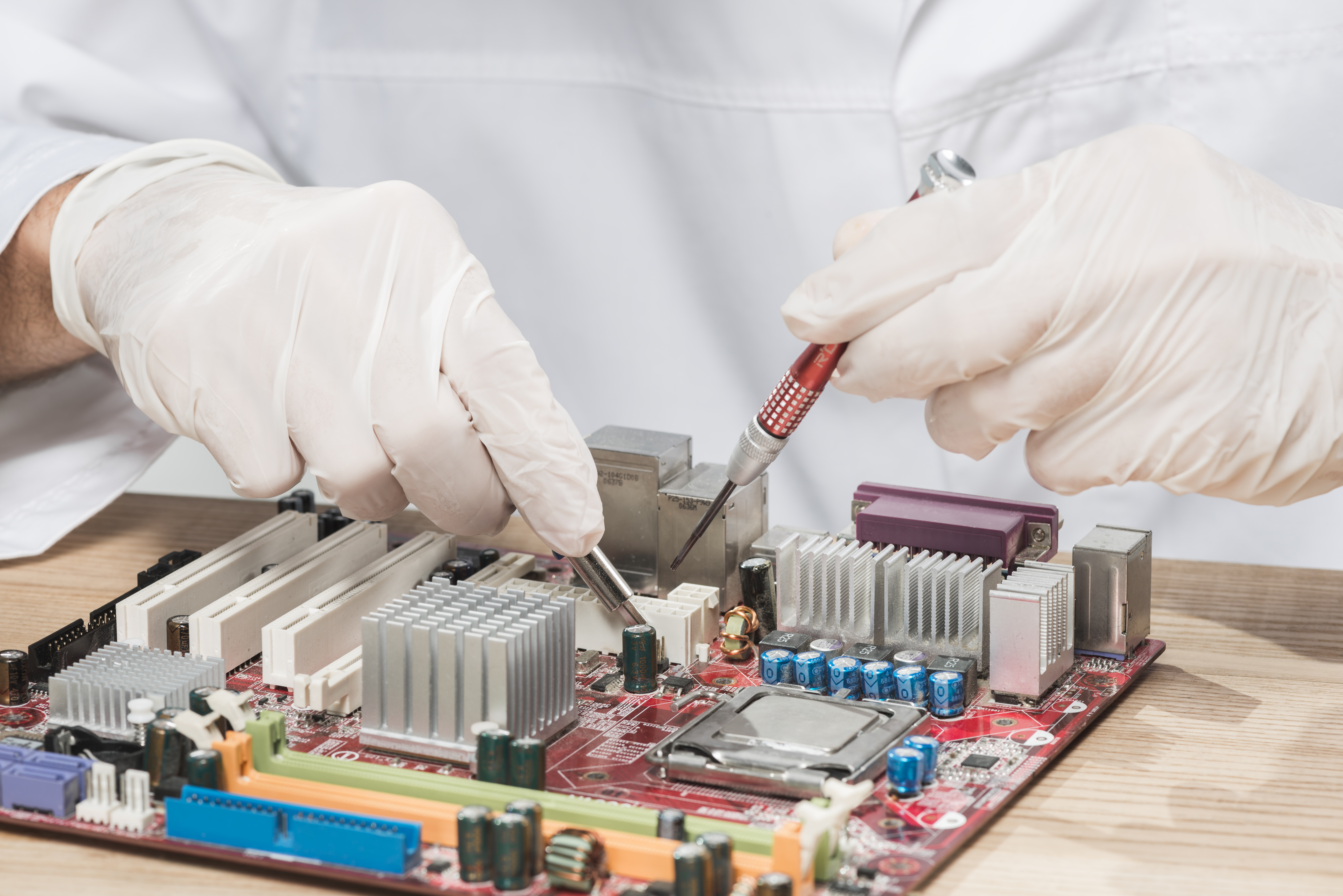
Replace the faulty circuit board diagnosed with good spare parts, that is, in the case of analyzing the approximate cause of the fault, the maintenance personnel can use the spare printed circuit board, integrated circuit chip or component to replace the suspected part, thus the fault scope Reduced to the level of printed circuit board or wafer. And do the corresponding initial start, so that the machine tool is quickly put into normal operation.
For the maintenance of modern numerical control, more and more cases use this method for diagnosis and then replace the damaged module with spare parts to make the system work normally. Minimize the downtime of the fault as much as possible. When using this method, please pay attention to the power failure, and also carefully check whether the circuit board version, model, various marks, and jumpers are the same. If they are inconsistent, they cannot be replaced. Marks and records should be made when removing the wire.
Generally, do not replace the CPU board, memory board, and electrical ground easily, otherwise it may cause the loss of the program and machine tool parameters, and expand the fault.
- Parameter check:
System parameters are the basis for determining system functions. Incorrect parameter settings may cause system failure or invalid functions. When a fault occurs, the system parameters should be checked in time. The parameters are generally stored in the bubble memory or in the OSRAM that needs to be maintained by the battery. Once the battery power is insufficient or due to external interference and other factors, individual parameters are lost or changed, and confusion occurs, causing the machine tool does not work properly. At this time, the fault can be eliminated by checking and correcting the parameters.
- Principle analysis:
According to the composition principle of the CNC system, the logic level and characteristic parameters of each point, such as voltage value and waveform, can be analyzed logically, and the instrument can be used for measurement, analysis, and comparison to determine the fault location.
In addition to the above commonly used fault detection methods, plug-in board method, voltage bias method, open-loop detection method, etc. can also be used. In short, according to different fault phenomena, several methods can be used simultaneously for flexible application and comprehensive analysis to gradually narrow down the fault scope and eliminate the fault more quickly.
The causes of machine tool failures are many. For more complex faults, several methods need to be used in combination to correctly determine the cause of the fault and diagnose the specific location of the fault, to solve the fault in time, reduce the loss caused by the CNC machine tool to the production, and effectively improve the tool The efficiency of the machine.






.jpg)