Functions and Types of CNC Machining Centers
A CNC machining center is a kind of CNC machining machine which has had many other functions added. Combining milling, boring, drilling, tapping, and threading functions into one machine, enables a machining center to perform multiple processes.
Published: Mar 28, 2023
What is a CNC machining center?
Machining centers are basic CNC milling machines which have been integrated with multiple other processing technologies. The machining center integrates the processing functions and procedures of a variety of machine tools, such as milling, boring, drilling, tapping and threading, and can complete multiple steps of the processing of the workpiece at one time.
Machining center classification:
-
Classification according to the relative position of the spindle and the worktable
- Vertical Machining Center:
The structure is generally a fixed column with a rectangular worktable. Generally, it has three linear motion coordinates, and a horizontal axis CNC rotary table installed on the worktable to process circular workpieces.
The vertical machining center is convenient for clamping the workpiece, is easy to operate, and is easy to observe while processing. Some disadvantages are that the chips are not easy to remove during processing, and due to the height limitation of the column and the tool changer, parts that are too high cannot be processed. The vertical machining center has a simple structure, a small footprint, a relatively low price, and a wide range of applications.
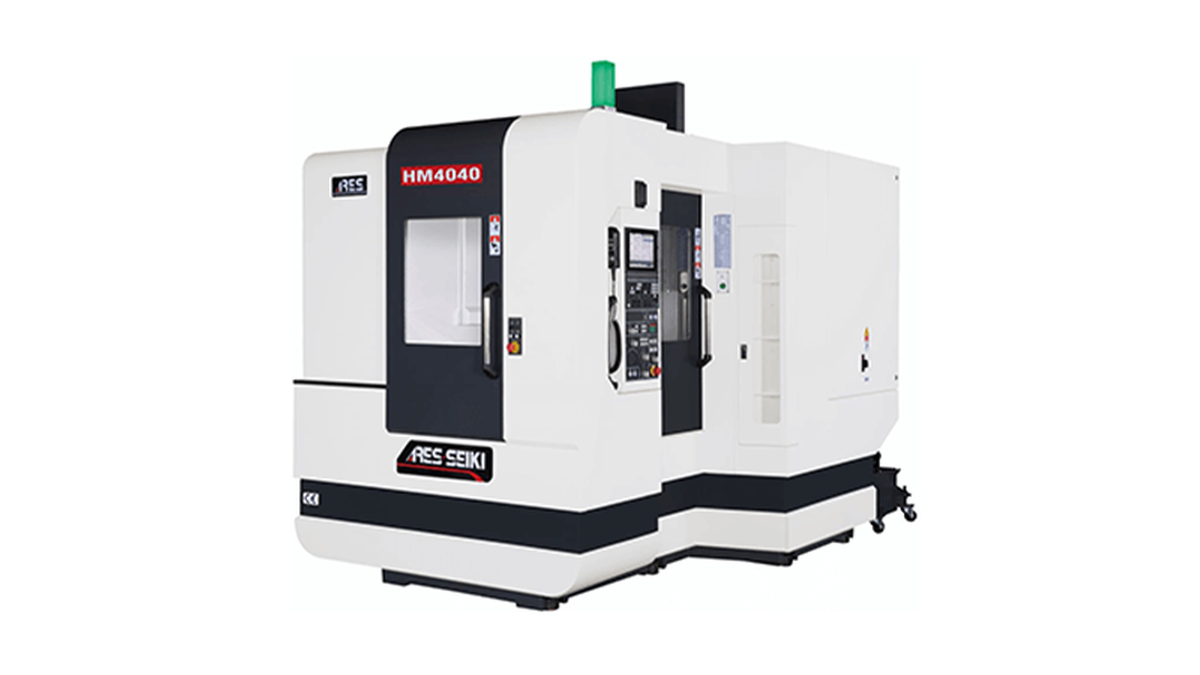
- Horizontal machining center:
A movable column is used, usually with a worktable that can perform indexing and rotating motion. The spindle box moves up and down along a guide rail between two columns. Horizontal machining centers generally have three linear motion coordinates, facing the machine, moving left and right as the X-axis, moving forward and backward as the Z-axis, and moving up and down as the Y-axis. They can process spiral and cylindrical parts.
The horizontal machining center is inconvenient to observe during debugging and trial cutting, inconvenient to monitor during machining, and inconvenient to clamp and measure parts, but it is easy to remove chips during machining, which is beneficial to machining. Horizontal machining centers are complex structures that take up a large space, and are high priced.
- Gantry machining center:
Spindles are mostly vertical, fitted with an Automatic Tool Changer (ATC) system which replaces spindle head attachments. The automatic tool changer is equipped with a library of replaceable spindle attachments. A numerical control device is programmed to complete a number of machining prosesses, so one machine can be used for multiple purposes. They are especially suitable for processing large or complex parts, such as beams, frames, and wall panels on aircraft.
- Universal machining center:
The universal machining center is a five-sided machining center, which has the functions of a vertical machining center and a horizontal machining center combined. The general-purpose machining center has a spindle that can be rotated 90 degrees and can be operated as a vertical machining center. It can also work like a horizontal machining center. The spindle does not change its direction, and the worktable rotates 90° with the workpiece to complete five-sided machining.
-
Classification according to the number of control axes
Machining centers can be divided into three-axis machining centers, four-axis machining centers, five-axis machining centers, six-axis machining centers, and other multi-axis machining centers according to the number of controlled axes.
-
Classification according to processing procedures
Machining centers are classified according to processing procedures and can be divided into two types: boring and milling.
-
Classification according to the number of workbenches
Machining centers can be divided into single table machining centers, double table machining centers, and multiple table machining centers according to the number of tables.
-
Classification according to the tool changing method of the tool magazine
According to the tool changing method of the tool magazine, the machining center can be divided into manipulator tool change machining center and non-manipulator tool change machining center.
-
Classification according to machining accuracy
Machining centers can be divided according to their machining accuracy into ordinary precision machining centers, high-precision machining centers, and precision machining centers. Ordinary precision machining centers have a resolution of 1μm, with a maximum feed speed of 15-25m/min, and a positioning accuracy of about 10μm. High-precision machining centers have a resolution of 0.1μm, a maximum feed rate of 15-100m/min, and a positioning accuracy of about 2μm. A machining center with a resolution of between 2 and 10μm, and accuracy of ±5 μm can be called a precision machining center.
What are the components of the machining center?
- Basic components:
The basic structure of a machining center consists of a bed, a column, and a workbench. These mainly control the cutting tool of the machining center and remove cutting chips generated during the machining process, so must have satisfactory rigidity. They are usually made with iron or welded steel construction and are the largest and heaviest parts of a machining center.
- Spindle parts:
The spindle consists of a spindle box, spindle motor, spindle, and spindle bearing. The spindle start, stop, speed change, and other actions are controlled by the numerical control system. A cutting tool on the main shaft performs the cutting operation required for the workpiece.
-
CNC system:
The CNC part of the machining center consists of CNC equipment, PLC, servo drive equipment, and operation panel.
- Automatic tool changing system:
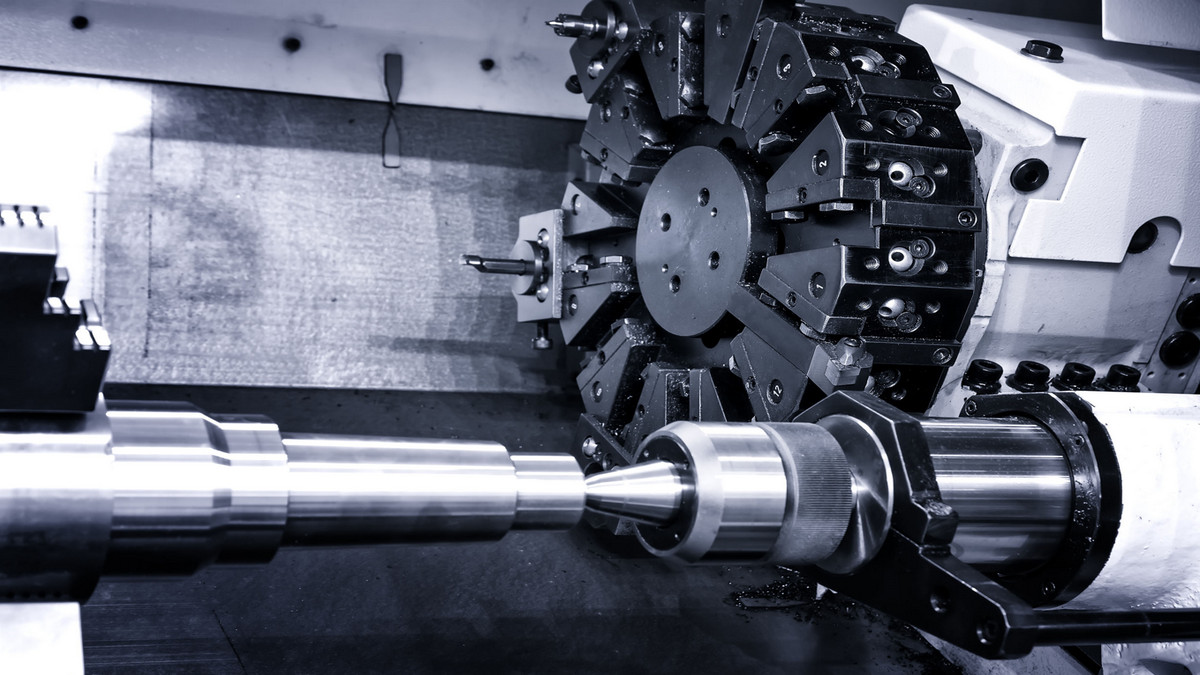
The tool changing system consists of a tool magazine, manipulator, drive arrangement, etc. When the tool needs to be replaced, the CNC system announces an order, and the CNC machining center manipulator moves the tool from the library into the spindle hole. The instructions for automatic storage, selection, transportation, and communication of tools during machining are managed by the CNC system.
Main items processed on a machining center:
- Box parts:
Box-type parts refer to parts that require processing of multiple holes, shapes and cavities. Such parts are found in many industries such as machinery, automobile, and aircraft, and include items such as engine blocks, machine tools, gear housings, etc.
Box-type parts are processed on the machining center, and one clamping can complete 60% to 95% of the process. The accuracy of the parts is consistent and the quality is stable. A machining center can shorten the production cycle and reduce costs. For parts requiring many processing stations or where the worktable needs to be rotated several times to complete the parts, a horizontal machining center is generally used. When there are fewer processing stations and the span is not large, a vertical machining center can be used.
- Complex surfaces:
Products such as impellers and propellers machined for aerospace, automobiles, ships, national defense, and other fields often have complex curved surfaces requiring various multiple operations to be performed.
When the process to be performed can be done in an area with no interference or blind areas on the workpiece, complex surfaces can generally be processed with a three-coordinate, ball-end milling cutter with high accuracy but low efficiency. If the machining area has some form of interference or blind area on the workpiece, a machine tool with four-coordinate or five-coordinate linkage will need to be considered.
- Irregular parts:
Most irregular parts that require mixed processing of point, line, and surface features such as brackets, bases, and templates, need multi-station processing. Because the rigidity of special-shaped parts is often generally poor, clamping pressure is difficult to control, and cutting deformation and machining accuracy are difficult to guarantee. With a machining center, measures can be adopted to complete multiple processes by using one or more clamping steps to fully utilize the machining centers capabilities.
- Sleeves and plates:
Disk sleeves or shaft parts with keyways, curved surfaces, radial holes, multiple holes, or holes distributed on the end face, are suitable for processing by machining centers. Vertical machining centers should be used for parts with distributed holes, and for workpieces with curved surfaces on the end faces, horizontal machining centers are preferred.
Published by Mar 28, 2023
Source :kknews,
Source :read01,
Source :kknews




.jpg)