Learn how plastic extrusion machinery works, from melting and shaping polymers to producing sheets, films, pipes, profiles, and pellets.
Plastic extrusion is one of the most widely used manufacturing processes for producing continuous plastic products such as pipes, sheets, films, profiles, and pellets. At the center of this process is the plastic extruder, which transforms solid plastic materials into a uniform melt before shaping them into the required form.
However, an extrusion line involves more than simply melting plastic. Different products require different dies, cooling systems, and downstream equipment. Understanding how extrusion machinery works—and how different extrusion processes are configured—can help manufacturers better evaluate production requirements and equipment choices.
What Is a Plastic Extrusion Machine?
A plastic extrusion machine, or extruder, is the core equipment used in the plastic extrusion process. Its primary function is to convert solid plastic feedstock, typically in pellet or powder form, into a uniform molten material that can be continuously shaped.
Inside the extruder, plastic material is fed into a heated barrel containing one or more rotating screws. As the material moves through the barrel, a combination of heat, pressure, and mechanical action gradually melts and homogenizes the plastic.
The molten material is then pushed through a die that determines the basic shape of the final product.
Because melting quality and material consistency directly affect downstream processing and final product quality, the extruder is often considered the heart of the extrusion line.
Single-Screw v.s. Twin-Screw Extruders
Two of the most common extruder configurations are single-screw and twin-screw extruders.
Single-Screw Extruders
Single-screw extruders use one rotating screw inside the barrel and are widely used across common extrusion processes. Their relatively simple structure makes them suitable for processing a variety of polymer materials and producing products such as pipes, sheets, profiles, and films.
They are generally valued for their straightforward operation, high throughput, and relatively low equipment cost.
Twin-Screw Extruders
Twin-screw extruders use two screws and can be further divided according to screw arrangement and rotation direction, including co-rotating and counter-rotating configurations.
Compared with single-screw systems, twin-screw extruders can provide greater control over material conveying and mixing, making them suitable for applications that require compounding, blending, or processing more complex material formulations.
The appropriate configuration depends on the material characteristics and the processing requirements.
For a more detailed comparison of single-screw and twin-screw systems, see
What Are the Different Types of Screw Extruders and Their Functions?
How Does the Plastic Extrusion Process Work?
Plastic extrusion is a continuous manufacturing process. Instead of forming individual parts one at a time, the extrusion line continuously produces material with a consistent cross-sectional shape.
A typical extrusion process can be understood through five main stages:
1. Material Feeding
Plastic pellets, powders, or other feedstock are introduced into the extruder through a feeding system.
The material formulation depends on the final application and may include polymers as well as additives or other ingredients.
2. Melting and Plasticizing
As the screw rotates, the material moves through the heated barrel.
Heat, pressure, and mechanical action gradually transform the solid plastic into a molten state. Maintaining a consistent melt is important because uneven plasticization can affect both processing stability and final product quality.
3. Shaping Through the Die
The molten plastic is pushed through a die at the end of the extruder.
The design of the die determines the shape produced by the extrusion line. Different applications therefore require different die designs.
For example, a pipe extrusion line requires a different die configuration from a sheet or profile extrusion line.
4. Cooling and Forming
After leaving the die, the newly formed plastic must be cooled while maintaining the required dimensions.
Depending on the product, the extrusion line may use water cooling, air cooling, cooling rolls, calibration equipment, or other downstream systems.
5. Cutting, Coiling, or Further Processing
The continuous extruded product is then prepared for its intended application.
Depending on the product, it may be cut into predetermined lengths, wound into rolls, pelletized, or transferred to additional processing equipment.
This is why an extrusion line should be viewed as an integrated production system rather than simply an extruder.
What Are the Main Types of Plastic Extrusion Lines?
Although the fundamental extrusion principle remains similar, different products require specialized production lines and downstream equipment.
Sheet Extrusion Lines
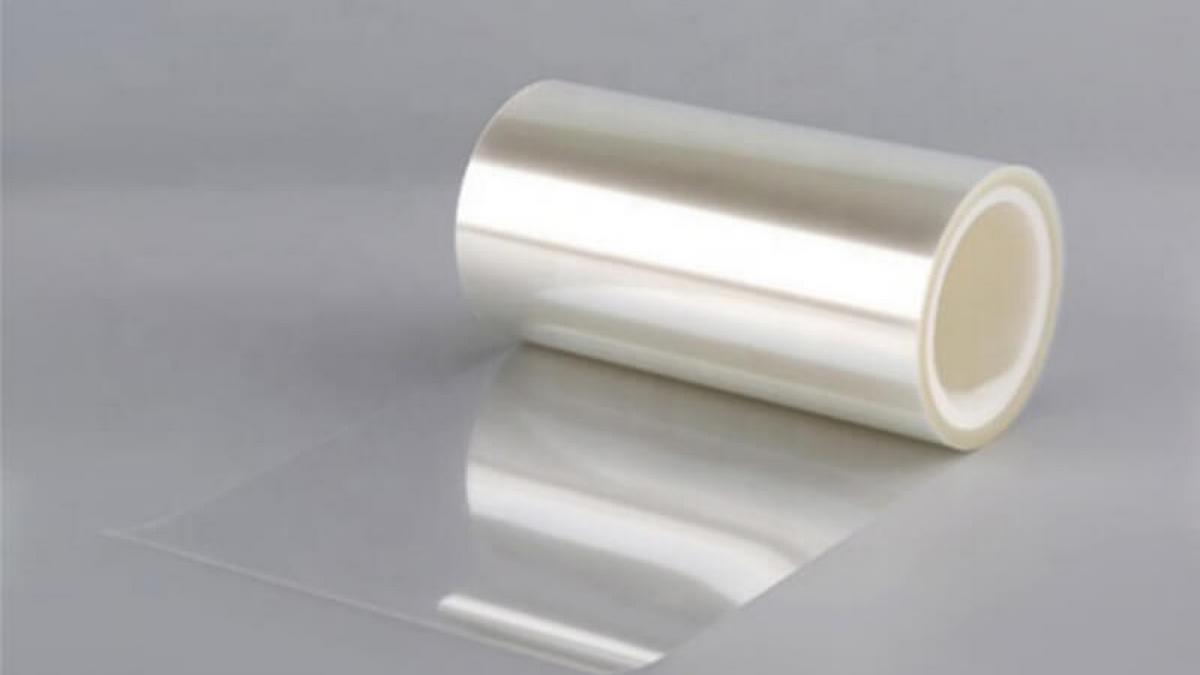
Sheet extrusion lines produce continuous plastic sheets that can later undergo additional processes such as thermoforming, cutting, or fabrication.
Extruded plastic sheets can be used to manufacture products such as food containers, cups, packaging materials, and other formed plastic products.
The production line typically needs to maintain consistent sheet thickness and cooling conditions before the material is cut or wound.
Blown Film Extrusion Lines
Blown film extrusion is used to produce thin plastic films.
After the molten plastic exits the die, it is inflated into a continuous tubular bubble. The film is then cooled, collapsed, pulled through rollers, and wound into rolls.
Blown films are widely used in applications such as plastic bags and packaging films, including films designed to protect food and extend shelf life.
Profile Extrusion Lines
Profile extrusion produces continuous plastic products with a specific cross-sectional shape.
Because the cross section remains consistent throughout the product, this process is suitable for manufacturing various structural or functional plastic profiles.
Die design and downstream calibration are particularly important for maintaining the required shape and dimensions.
Pipe Extrusion Lines
Pipe extrusion lines continuously form molten plastic into tubular shapes.
After extrusion through the die, the pipe is calibrated and cooled before being pulled through the production line and cut or coiled.
Plastic pipes are widely used in water distribution and other infrastructure applications.
Pelletizing Extrusion Lines
Extrusion can also be used to produce plastic pellets rather than finished profiles or sheets.
In pelletizing applications, plastic material is melted, homogenized, extruded, cooled, and cut into pellets. These pellets can then be used as feedstock for subsequent plastic manufacturing processes.
Why Does Downstream Equipment Matter?
The extruder may be the core of the extrusion process, but the final product is also strongly influenced by what happens after the plastic leaves the die.
Different extrusion processes require different downstream equipment.
A sheet extrusion line may require cooling and take-off rolls, while film extrusion requires bubble control, cooling, collapsing, and winding equipment. Pipe and profile lines may require calibration, cooling, pulling, and cutting systems.
This means that selecting extrusion machinery should not focus only on the extruder itself.
Manufacturers should consider the entire production line, including:
- Raw material characteristics
- Required product shape and dimensions
- Production capacity
- Die design
- Cooling and forming requirements
- Downstream equipment
- Cutting, winding, or pelletizing requirements
The interaction between these systems determines whether the extrusion line can maintain stable production and consistent output.
Advantages of Plastic Extrusion Machinery
Plastic extrusion offers several advantages for continuous manufacturing.
High production output:
Because extrusion is a continuous process, it is well suited for high-volume production.
Production flexibility:
Different dies and downstream systems allow extrusion technology to produce a broad range of plastic products.
Continuous processing:
Once stable operating conditions are established, the process can continuously convert plastic feedstock into finished or semi-finished products.
Uniform material processing:
Proper extrusion conditions help produce a consistent melt before the plastic reaches the die.
Broad application range:
Extrusion can be used to manufacture sheets, films, profiles, pipes, and pellets for a wide variety of industries.
What Are the Limitations of Plastic Extrusion?
Extrusion machinery also has several processing limitations.
One consideration is die swell, where the extruded polymer expands after leaving the die. This can cause dimensional variation and must be considered when designing both the die and process conditions.
Extrusion is also most suitable for products with continuous cross-sectional shapes. Products with more complex three-dimensional geometries may require other manufacturing processes, such as injection molding or blow molding.
Processing conditions are another important consideration. If temperature, pressure, material flow, or screw operation is not properly controlled, the polymer may not melt uniformly, which can affect final product quality.
For this reason, successful extrusion requires coordination between material properties, extruder configuration, die design, processing parameters, and downstream equipment.
Choosing Extrusion Machinery Based on the Final Product
There is no single extrusion machine configuration suitable for every application.
Instead, manufacturers should begin by defining what they need to produce.
| Production Requirement |
Typical Extrusion Solution |
| Plastic sheets |
Sheet extrusion line |
| Packaging or plastic films |
Blown or cast film extrusion line |
| Continuous shaped products |
Profile extrusion line |
| Plastic pipes |
Pipe extrusion line |
| Plastic raw material pellets |
Pelletizing extrusion line |
| General polymer processing |
Single-screw or twin-screw extruder depending on material and processing requirements |
Rather than evaluating only screw type or machine capacity, manufacturers should consider the complete relationship between material, extrusion process, die, downstream equipment, and final product requirements.
Understanding Extrusion as a Complete Production System
Plastic extrusion machinery plays an essential role in transforming solid polymer materials into continuous plastic products.
While the extruder performs the critical task of melting and homogenizing the material, successful extrusion depends on much more than the extruder alone. The die determines the product shape, while cooling, forming, pulling, cutting, and winding systems help maintain product dimensions and prepare it for subsequent use.
For this reason, extrusion machinery is best understood as an integrated production system.
Whether producing plastic sheets, films, profiles, pipes, or pellets, selecting the appropriate extrusion line begins with understanding the material to be processed, the desired final product, and the downstream operations required to produce it consistently.


(4059)(20260924)(原).jpg)
(2367)(20260924)(原).jpg)