From Concept to Shelf: The Blueprint for Building a High-Margin Private-Label Bubble Tea Brand
The global bubble tea market continues to attract new entrants. By 2025, it was valued at above USD 3.5 billion and continues to expand across North America, Europe, Australia, and Southeast Asia. For distributors, specialty retailers, hotel chains, and food service operators, the question has shifted from "should we add bubble tea to our portfolio?" to "should we launch our own brand?"
Building a private-label boba brand is more accessible than it was five years ago. Taiwan's established OEM manufacturers offer end-to-end services—product formulation, packaging, labeling, regulatory compliance support, and logistics—that allow brand owners to go from concept to market without building any manufacturing infrastructure of their own.
This guide explains what that process looks like in practice, and what procurement teams should understand before approaching a Taiwan OEM partner.
Why Private-Label Boba Makes Commercial Sense in 2026
Branded bubble tea kits command significant price premiums over commodity ingredient packs. Retail shelf prices for premium branded boba kits in Western markets range from USD 12 to USD 28 per serving kit, while the underlying cost-of-goods for a well-manufactured kit from a Taiwan OEM typically sits well below 30% of retail price—leaving substantial margin for distribution, marketing, and retail.
For food service operators, offering a branded boba kit as a menu item or retail take-home product creates a dual revenue channel: the in-store beverage experience drives foot traffic and average check, while the retail kit allows consumers to replicate the experience at home and extend brand engagement between visits.
Several structural market conditions are supporting the growth of private-label boba, specifically:
Consumers increasingly associate premium bubble tea with experience rather than with specific brand names, making them receptive to new branded entrants that deliver authentic quality. Supply chain maturity in Taiwan means that OEM partners can reliably produce consistent flavors, controlled sugar content, and allergen-compliant formulations to international food safety standards. Finally, packaging customization technologies now allow even moderate minimum order quantities to receive fully branded custom packaging—lowering the entry barrier for regional brands and specialty retailers.
What a Taiwan OEM Partner Can Deliver
A full-service Taiwan bubble tea OEM partner typically offers the following within a single engagement:
Product Formulation and Range Selection
The core product decisions for a private-label boba brand involve choosing between kit types. Mainstream categories include:
Complete Bubble Tea Kits — All components for preparing standard milk tea boba at home: tapioca pearls, milk tea powder, sugar syrup, and preparation instructions. These kits drive high repurchase rates and suit supermarket channels.
Popping Boba Kits — Fruit-juice-filled spheres that burst in the mouth, increasingly popular in premium beverage and cocktail applications. Cocktail-specific popping boba kits (featuring pearls compatible with spirits and mocktails) represent a growing adjacent category.
Health-Positioned Lines — Lower-sugar formulations, plant-based milk powder options, matcha bases with functional positioning. These align with the clean-label consumer shift documented across major Western markets in 2025–2026.
RTD (Ready-to-Drink) Options — Pre-packaged bottled bubble tea for direct shelf-stable retail. RTD formats reduce friction for consumers but require cold-chain consideration depending on formulation.
Savory and Dessert Kits — Expanding beyond the traditional sweet milk tea format into savory toppings, pudding kits, and dessert applications. These create premium gifting and novelty positioning opportunities.
A capable OEM partner will help brand owners assess which category aligns with their target channel, consumer demographic, and price positioning—rather than simply offering the same standard range to all clients.
Packaging and Label Customization
Custom packaging is where a private-label brand truly comes to life. Taiwan OEM partners working with international brands typically offer:
- Custom-printed outer boxes, pouches, and canisters with full graphic design support
- Bilingual labeling meeting importing country regulatory requirements (ingredient lists, nutritional panels, allergen declarations)
- Sustainable packaging options including recyclable materials and reduced plastic content, increasingly required by major retailers under their supplier sustainability policies
- Gift set configurations combining multiple SKUs into premium retail packaging suitable for holiday or corporate gifting channels
Minimum order quantities for custom-packaged runs vary by manufacturer but generally fall in the range of 500 to 2,000 units per SKU for initial pilot production, with economies of scale applying significantly above 5,000 units.
Quality Certifications and Compliance
For brands targeting international retail, certification is not optional. Key certifications to confirm with a Taiwan OEM partner include:
- HACCP (Hazard Analysis Critical Control Points) — baseline food safety management
- ISO 22000 — international food safety management system
- Halal certification — required for markets including Malaysia, Indonesia, the Middle East, and segments of North American and European Muslim consumer demographics
- Non-GMO and organic certifications — relevant for premium health-positioned lines
Regulatory support for target market import compliance (FDA registration for the US market, EU food safety documentation, etc.) should be confirmed with the OEM partner before finalizing product specifications.
The OEM Engagement Process: What to Expect
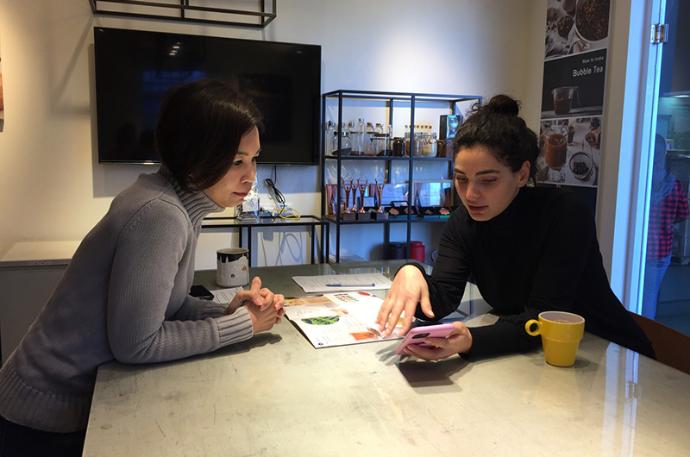
For procurement teams approaching a Taiwan OEM bubble tea manufacturer for the first time, understanding the typical engagement sequence reduces friction and accelerates time to market.
Stage 1: Requirements Brief — The brand owner provides category intent, target market, channel (foodservice vs. retail), price positioning, volume projections, and any existing brand identity. The OEM partner uses this to propose a product range and packaging concept.
Stage 2: Sample Development — The OEM produces formulation samples for taste testing and product validation. This stage may involve multiple revision cycles for flavor adjustments.
Stage 3: Packaging Design Confirmation — Artwork files are finalized, regulatory label content is confirmed for the target market, and print-ready files are approved.
Stage 4: Pilot Production Run — A small initial production run (often 500–2,000 units) validates the full production process, packaging assembly, and quality controls before scaling.
Stage 5: Commercial Production and Logistics — Ongoing production is scheduled against the brand owner's forecasted demand. Most Taiwan OEM partners offer FOB Taiwan pricing; logistics coordination to the destination country is typically managed by the brand owner's freight forwarder.
FAQ: Private-Label Boba OEM Sourcing
Q: How long does it take from first contact with a Taiwan OEM partner to having a product on the shelf?
A: Realistic timelines from initial engagement to first commercial shipment typically range from 16 to 24 weeks for custom-packaged products. This accounts for sample development (4–6 weeks), packaging design and approval (4–6 weeks), pilot production (2–3 weeks), sea freight transit (3–5 weeks), and import/distribution setup. Brands with strong internal decision-making processes and pre-approved artwork can compress this timeline somewhat.
Q: What is the minimum investment required to launch a private-label boba line?
A: Entry-level investment depends heavily on SKU count and packaging complexity. A single-SKU pilot run with custom-printed packaging from a Taiwan OEM can often be initiated for USD 8,000–20,000 in product cost (MOQ basis). Marketing, logistics, regulatory compliance, and distribution setup are additional costs that the brand owner manages independently.
Q: Can an OEM partner create exclusive formulations that competitors cannot copy?
A: Yes, leading Taiwan OEM partners offer proprietary formulation development under mutual NDA agreements, meaning specific flavor profiles, sugar/sweetener ratios, and ingredient combinations can be protected as exclusive to the commissioning brand. Standard product lines are not exclusive; custom R&D formulations typically are, subject to agreement terms.
Conclusion
The private-label bubble tea opportunity is genuine and growing. For distributors and retailers with established channel relationships, a Taiwan OEM partnership provides the fastest and most capital-efficient path to launching a branded boba line that reflects your market positioning and quality standards.
The key success factors are selecting an OEM partner with documented food safety certifications, substantive export experience in your target market, and genuine product development capability rather than just off-the-shelf catalog offerings.
BOBA CHiC, a Taiwan-based bubble tea specialist, offers a comprehensive OEM/ODM service for distributors and retail brands building their own boba product lines—covering formulation development, custom packaging, Halal-certified ingredients, and global logistics support.

.jpg)
.jpg)