A practical guide to relocating custom molded rubber part production from China to Vietnam: the 2026 tariff landscape, Vietnam's structural advantages, a 5-step transition framework, and a supplier qualification checklist for engineers and procurement teams.
![China+1 Sourcing: Why Global Buyers Are Moving Custom Rubber Part Production to Vietnam (and How to Do It Right)]()
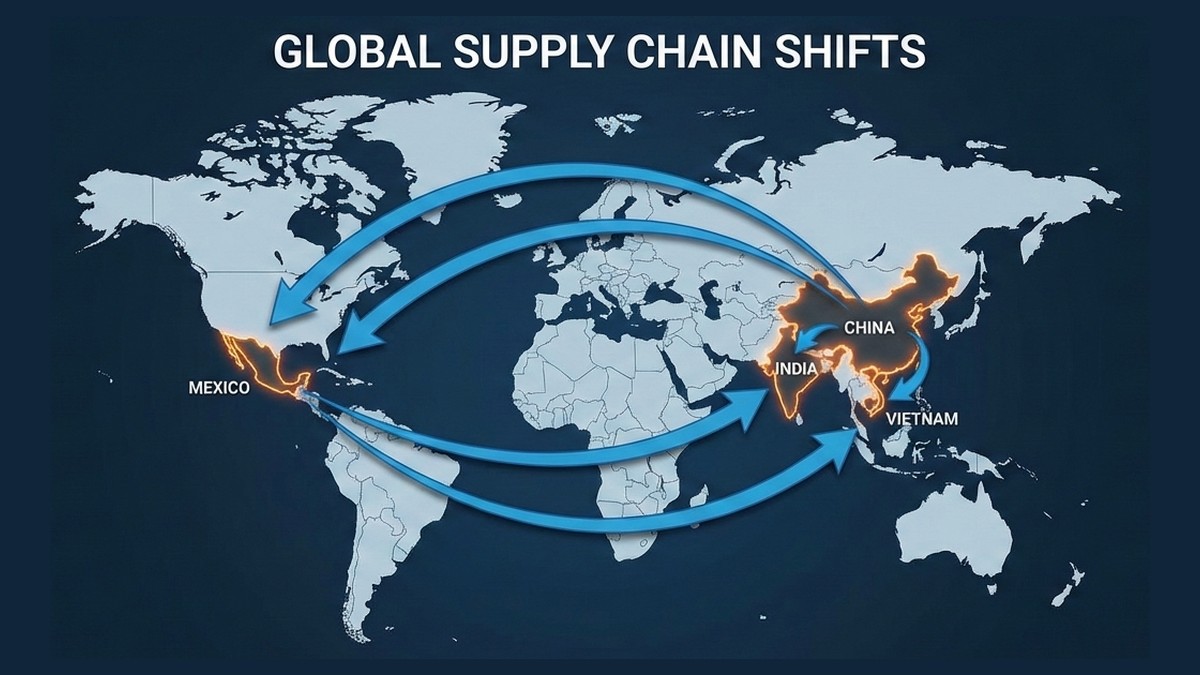
Photo by china.docshipper.com/en/logistics/2026-china-plus-one-vietnam-vs-india-vs-mexico/
In 2026, the China+1 strategy is no longer a contingency plan discussed in risk-management meetings — it is the default architecture of global sourcing. Procurement teams across automotive, industrial, electronics, and medical sectors now treat single-country dependence as an active liability, and custom rubber parts — gaskets, seals, grommets, O-rings, bellows, mounts, and other molded components — are squarely in the middle of this shift.
Vietnam has emerged as one of the leading “plus one” destinations, particularly for molded rubber and silicone products. But diversification done poorly can be worse than no diversification at all: qualification cycles for a new rubber parts supplier typically run a year or more, and rushed transitions are the most common cause of sourcing failures. This guide explains why Vietnam, why now, and how to execute the move correctly.
What Is the China+1 Strategy — and Why It Accelerated
China+1 means keeping China as a core manufacturing base while building genuine production capacity in at least one additional country. The goal is not to abandon China’s unmatched supply chain depth, but to reduce exposure to:
- Tariff volatility — the average effective tariff burden on Chinese goods entering the U.S. remains at its highest level in modern trade history, with Section 301 duties of up to 25% stacking on top of newer reciprocal measures.
- Geopolitical tension — policy shocks can reprice an entire supply chain overnight.
- Logistics fragility — the pandemic era proved that single-origin supply chains break at the worst possible moment.
The result: Vietnam, India, and Mexico have become the three leading alternatives — and for precision-molded components that rely on proximity to Asian raw material supply chains, Vietnam consistently ranks at or near the top of the shortlist.
Why Vietnam Wins for Custom Rubber Parts
Vietnam’s advantages go well beyond cheaper labor. For rubber component manufacturing specifically, several structural factors line up:
- A locked-in tariff position. Under the U.S.–Vietnam trade framework finalized in 2025, Vietnamese goods face a 20% U.S. tariff — far below the punitive 46% rate originally threatened, and meaningfully lower than the combined duty burden on most China-origin goods. The same framework imposes 40% on transshipped goods, which rewards genuine Vietnamese production while penalizing “relabeling” schemes (Euromonitor).
- A domestic rubber supply base few countries can match. Vietnam is the world’s third-largest producer of natural rubber, with output of roughly 1.3 million tonnes in 2024 and exports of around 2 million tonnes worth USD 3.4 billion (Vietnam Briefing, B-Company). Local access to raw material shortens lead times and reduces the compounding supply risk that plagues other low-cost destinations.
- Mature industrial clusters. The southern manufacturing corridor — Binh Duong, Dong Nai, and the greater Ho Chi Minh City area — combines decades of export manufacturing experience with dense networks of tooling, packaging, and logistics suppliers. Vietnam’s exports to the U.S. grew 77% between 2019 and 2024, evidence of how rapidly its manufacturing ecosystem has scaled.
- Trade agreement coverage. Vietnam is a party to the CPTPP, the EU–Vietnam FTA (EVFTA), and RCEP, giving buyers in Europe and Asia preferential access that China-only sourcing cannot offer.
- Where Vietnam still needs help — and why that matters to you. Industry analyses note a technology gap in high-value compounding and engineered rubber products within Vietnam’s domestic base. In practice, the strongest sourcing outcomes come from Vietnam factories backed by experienced engineering partners — for example, Taiwanese manufacturers with decades of compounding and tooling know-how operating Vietnamese plants. This hybrid model pairs Vietnam’s cost and tariff position with proven process control.
What Makes Rubber Parts Different: Product-Specific Considerations
Moving rubber part production is not like moving apparel or assembly work. Four issues deserve special attention:
- Tooling ownership and transfer. Molds are the heart of any molded rubber program. Confirm who owns existing tooling, whether it can physically transfer (many buyers commission duplicate molds instead), and ensure new tooling contracts explicitly assign ownership to you.
- Compound validation. Rubber is a formulated material, not a commodity. A “same spec” transfer often fails because equivalents to a Chinese compound must be re-validated against hardness, tensile strength, compression set, temperature range, and chemical resistance. Budget time for requalification — first-article inspection alone can take months for automotive-grade parts.
- Rules of origin under the 40% transshipment clause. Genuine transformation must occur in Vietnam. A supplier that imports finished or near-finished Chinese parts for minor secondary operations exposes you to the punitive tariff tier. Audit where mixing, molding, curing, and inspection actually happen.
- Traceability expectations. Automotive (IATF 16949), food contact (FDA/NSF), and electrical (UL) applications all require lot-level material traceability that must be rebuilt, not assumed, at a new site.
A 5-Step Framework for Moving Rubber Parts to Vietnam
Adapted from established China+1 transition methodology (Cosmo Sourcing):
- Audit your current supply base. List every part produced in China with annual volumes, FOB costs, lead times, quality history, and tooling ownership. This audit becomes the foundation of every decision that follows.
- Select the first movers. Prioritize parts with the highest tariff exposure, the simplest tooling to recreate, and the lowest requalification burden — typically high-volume compression- or injection-molded parts. Move one to three part numbers first, never the whole catalog.
- Source and qualify factories properly. Sign NDAs before sharing drawings. Run two to three sample rounds against your China-made reference parts, then conduct an on-site audit — paper reviews and video calls routinely miss subcontracting, certification gaps, and quality control weaknesses.
- Run parallel production. Keep the Chinese line running at reduced volume for one to three months while Vietnam ramps. Validate multiple production lots against benchmarks before trusting logistics and unit economics at scale.
- Scale in increments. Shift volume 25% → 50% → 75% only after consecutive clean production runs. Decide your end-state mix deliberately — many buyers retain ~25% in China as a permanent hedge.
Supplier Qualification Checklist: What to Verify On-Site
When auditing a Vietnam rubber manufacturer, verify each of the following in person:
| Area | What to Check |
|---|
| Certifications | IATF 16949 (automotive), ISO 9001, plus application-specific credentials: FDA/NSF for food & water contact, UL for electrical |
| Molding capability | Compression, injection, transfer, and LSR/LIM capacity matched to your part mix; machine condition and maintenance records |
| In-house tooling | Mold design and fabrication on-site (vs. outsourced) — critical for iteration speed and IP control |
| Quality lab | Hardness testers, tensile testers, CMM/vision inspection, aging ovens; calibration records |
| Compounding knowledge | Ability to formulate or source-equivalent compounds, with documented incoming material inspection |
| Genuine production | Mixing, molding, curing, and inspection performed on-site — not subcontracted |
| Export track record | References from U.S./EU buyers; familiarity with Incoterms, packaging standards, and customs documentation |
| Engineering communication | English-capable engineering staff who can discuss drawings, tolerances, and DFM feedback directly |
Common Pitfalls That Derail Vietnam Transitions
- Compressing the timeline. Properly qualifying a new factory — capacity validation, quality system alignment, sample rounds — takes a year or more. Attempts to compress this are the most common root cause of failure (Novex Global).
- Chasing the lowest quote. On-paper savings evaporate when hidden costs appear: subcontracted processes, inconsistent compounds, and rework.
- Ignoring the transshipment rule. Origin fraud risk now carries a 40% tariff penalty — verify value-added steps physically occur in Vietnam.
- Moving everything at once. Diversification is a portfolio decision. A phased migration protects revenue while the new supply line proves itself.
Partnering with Expertise: The “Taiwan Engineering + Vietnam Production” Model

The pitfalls above explain why many buyers specifically seek manufacturers that pair Vietnam’s structural advantages with a mature quality culture. JHAO YANG RUBBER (Onis Rubber) is a representative example of this model. Founded in 1971 and headquartered in Taiwan with a dedicated factory in Vietnam, Jhao Yang brings more than 50 years of custom molding experience to its Vietnamese production lines.
The company manufactures custom molded rubber and silicone products — including gaskets, seals, grommets, O-rings, bellows, washers, and rubber-to-metal bonded mounts — using compression, injection, transfer, and liquid silicone (LIM) molding processes. With in-house mold development, a documented quality inspection capability, and international certifications spanning IATF 16949, ISO 9001, FDA, NSF, UL, and CE, Jhao Yang supports customers through the full transition journey described above: material selection, design feedback, tooling development, sampling, and volume production across automotive, industrial, medical, electronics, and food-contact applications.
For buyers executing a China+1 transition, this structure offers a pragmatic shortcut — Vietnam’s tariff and cost position, governed by an engineering team with five decades of compounding and tooling knowledge.
Final Thoughts
China+1 is now standard practice, but the winners will be the buyers who execute it with discipline: audit first, move a few parts well rather than many parts fast, verify every claim on the factory floor, and choose partners whose engineering depth matches Vietnam’s structural advantages. Share your part drawings, material requirements, and annual volumes with qualified Vietnam-based manufacturers early — the 12-month qualification clock starts with the first conversation.
This article is for educational purposes and reflects general industry practices. Tariff rates and trade terms change frequently; verify current regulations with your customs broker or trade counsel before making sourcing decisions.