Successful industrial automation starts with identifying production bottlenecks—not simply adding more machines. Learn how manufacturers can prioritize automation investments, improve capacity, and build a smart factory step by step.
Facing labor shortages, rising labor costs, growing demand for high-mix, low-volume production, and shorter delivery lead times, many manufacturers view industrial automation as an important way to increase capacity. From robotic arms, collaborative robots, and machine vision to automated material handling and connected equipment, companies hope to reduce manual workload and keep production lines operating more consistently for longer periods.
However, adding more automated equipment does not necessarily increase overall factory capacity.
If the real constraints are material shortages, excessive changeover time, quality problems, or unstable production scheduling, making upstream equipment run faster may only cause more work-in-process to accumulate before the bottleneck. Instead of improving delivery performance, the company may end up increasing depreciation, maintenance, system integration, and inventory costs.
The central question in industrial automation should therefore not be, “Which tasks can be assigned to machines?” It should be, “Which processes are truly limiting total output?”
The U.S. National Institute of Standards and Technology (NIST) notes that manufacturing automation can be applied to machine tending, material handling, vision inspection, and human-robot collaboration. However, before making a formal investment, companies should first evaluate their operational needs and identify the applications most likely to solve real business problems or create the greatest value.
Effective automation does not mean transforming an entire factory into a lights-out operation all at once. It means beginning with processes that are repetitive, hazardous, labor-intensive, easy to measure, or clearly limiting production capacity—and then gradually releasing more output from existing resources.
Why Does Adding More Equipment Fail to Increase Overall Capacity?
When orders increase or delivery delays become more frequent, many manufacturers immediately assume that they do not have enough equipment. However, factory capacity is not simply the sum of every machine’s individual capacity. It is limited by the weakest point in the overall production flow.
For example, an upstream machining process may be capable of producing 100 units per hour, while a downstream manual assembly station can complete only 60 units per hour. Even if the company purchases another machining center, total shipping capacity will still be determined by the assembly station. The new machine will simply cause more work-in-process to accumulate.
This type of capacity problem usually results from several interconnected issues.
First, companies may focus on individual machine utilization without analyzing end-to-end production flow. When every department pursues its own output target, upstream processes may continue producing at high volume while downstream operations struggle with insufficient labor, inspection capacity, or packaging resources. The factory appears busy, but completed output does not improve significantly.
Second, surrounding activities may remain manual after the core equipment has been automated. An automated machine may reduce cycle time, but if loading, unloading, material replenishment, quality confirmation, and transportation still depend on employees being available, the machine will be unable to sustain its theoretical capacity.
Process instability can also offset the benefits of automation. Quality abnormalities, equipment downtime, frequent changeovers, and material shortages will repeatedly interrupt automated equipment. If standardized work, preventive maintenance, and material supply are not improved first, the new automation system may simply be added to an already unstable process.
Industrial automation includes robots, CNC equipment, control systems, sensors, vision systems, and industrial computers. Its real purpose is to control, measure, and improve the performance of the entire production line—not merely to increase the speed of a single machine.
Before planning automation, manufacturers should therefore analyze the complete order flow from production release to completion. They need to determine whether time is being consumed by processing, waiting, transportation, changeovers, inspection, or rework. Without identifying the true bottleneck, automation may improve local efficiency without increasing final output.
Which Processes Are Best Suited for Early Automation?
The processes most suitable for early automation usually share several characteristics: highly repetitive work, relatively stable cycle times, heavy manual workload, high risk of quality variation, or a clear impact on downstream output.
Repetitive Machine Tending
Machine loading and unloading is a common starting point for automation in small and medium-sized factories. Operators may repeatedly open doors, remove finished parts, load new materials, start machines, and wait for processing, while only a limited portion of the work requires technical judgment.
Using robotic arms or collaborative robots for machine tending can extend effective equipment operating time, reduce operator waiting, and allow employees to manage multiple machines or focus on quality and abnormality handling. NIST also identifies machine tending as a common application of manufacturing robotics and automation.
However, companies must first confirm that part positions, fixtures, machine interfaces, and processing cycles are sufficiently stable. If product dimensions vary significantly, changeovers are frequent, or every batch requires reprogramming, the return on investment for fixed robotic systems may be limited.
Material Handling, Palletizing, and Packaging
Manual material handling rarely creates direct product value, yet it can consume substantial labor hours and create risks related to musculoskeletal injuries, collisions, and material waiting.
For materials that move along fixed routes, at high frequency, or at heavier weights, manufacturers can evaluate conveyors, automated guided vehicles, autonomous mobile robots, palletizing systems, and automated packaging equipment.
These technologies may not directly increase processing speed, but they can reduce waiting between operations and improve material flow.
The effectiveness of automated handling depends heavily on shop floor layout. If material routes are disorganized, storage locations are inconsistent, or production schedules change frequently, the company should first improve logistics and workplace management. Otherwise, automated vehicles may still be delayed by waiting and route conflicts.
High-Speed, Repetitive Quality Inspection
Manual visual inspection is affected by fatigue, differences in operator experience, and production line speed. When defects are small, product volumes are high, or 100 percent inspection is required, quality inspection can become a delivery bottleneck.
Machine vision can inspect dimensions, appearance, seals, labels, barcodes, and assembly completeness while retaining images and batch records. NIST identifies automated vision inspection as a major manufacturing automation application for measurement, identification, inspection, and robot guidance.
However, if product appearance varies widely, defect criteria are unclear, or lighting and camera conditions are unstable, manufacturers should first establish clear inspection standards and representative image data to avoid excessive false judgments.
Dangerous, Dirty, or Physically Demanding Work
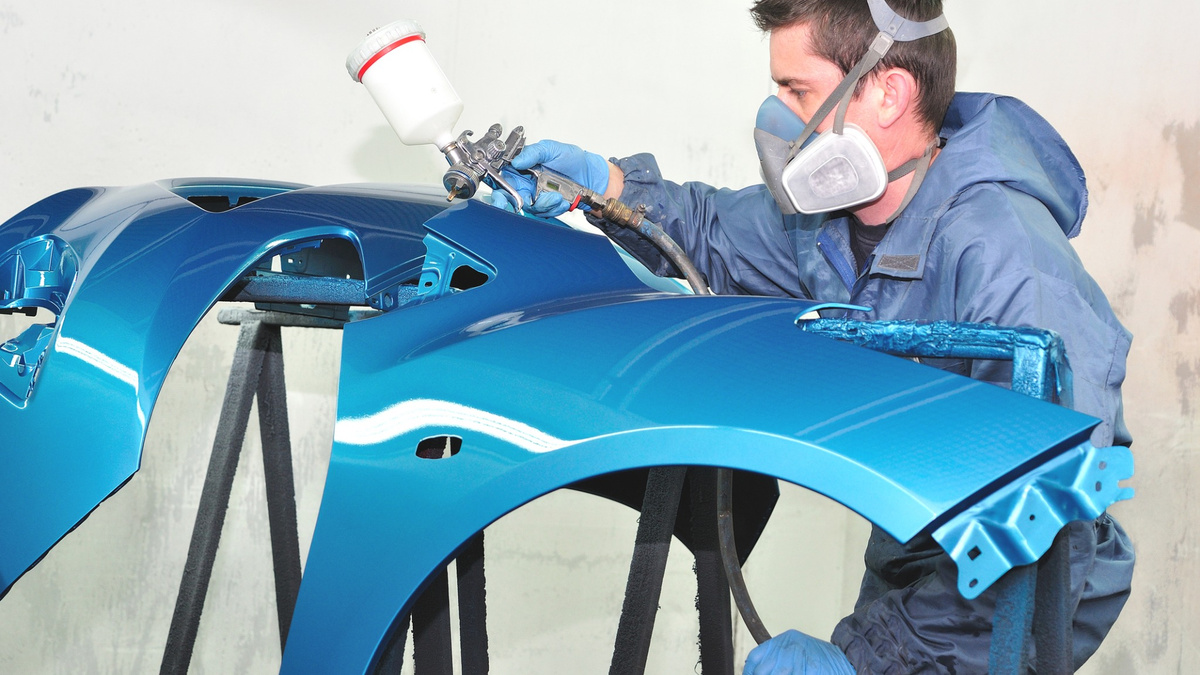
Processes such as welding, painting, grinding, high-temperature handling, chemical exposure, and heavy lifting affect not only capacity but also worker safety and recruitment.
These tasks often offer strong automation value because companies can improve operating consistency while reducing occupational injuries and exposure to hazardous environments. The purpose of automation is not simply to replace workers, but to assign repetitive, hazardous, and high-intensity work to machines while employees focus on equipment monitoring, quality decisions, and process improvement.
NIST also identifies improved worker safety and the ability to shift employees toward higher-value activities as major benefits of manufacturing automation.
Processes That Clearly Limit Total Output
The highest-priority automation target is not always the easiest process to automate. It is the one with the greatest impact on total delivery capacity.
Companies can compare output rates, waiting time, work-in-process levels, downtime causes, and employee workload across operations. If large quantities of semi-finished products consistently accumulate before one station, or a particular process repeatedly requires overtime to meet the schedule, that process may deserve priority.
Before automating a bottleneck, however, the company should verify whether the constraint is truly caused by processing speed. If the actual causes are material shortages, equipment failures, frequent specification changes, or delays in quality decisions, installing more automation will not solve the underlying problem.
How Can Companies Evaluate Whether an Automation Investment Is Worthwhile?
Automation investments should not be evaluated only by comparing equipment cost with the number of employees saved. Companies should determine whether the investment improves total output, quality, delivery performance, and operational risk.
The most basic step is to establish baseline data for the current process. Manufacturers should first measure actual output, unit cycle time, labor hours, equipment downtime, yield, rework, scrap, and work-in-process waiting time.
Without reliable pre-improvement data, it becomes difficult to determine whether performance gains after installation came from automation or from changes in order volume, staffing, or other operating conditions.
The next step is to estimate how much effective capacity the automation can release. If a system only shortens a non-bottleneck operation without increasing final shipment volume, the return on investment may be lower than expected.
By contrast, even a more expensive automation system may deliver significant business value if it removes a critical bottleneck, reduces downtime, and improves On-Time Delivery.
Labor benefits should not be measured only by asking how many positions can be eliminated. Automation may not directly reduce headcount. Instead, it may allow existing employees to manage more machines, reduce overtime, avoid dangerous work, or fill roles that are difficult to recruit.
These benefits may not appear as immediate labor reduction, but they can strengthen long-term factory operations.
Companies must also include integration and lifecycle costs, such as fixture modifications, machine interfaces, software licenses, sensors, maintenance, spare parts, employee training, and future changeover adjustments. Comparing only the purchase price of a robot or automated machine can significantly underestimate the total investment.
NIST recommends that manufacturers begin with an operational assessment, identify the highest-priority opportunities, build a business case aligned with corporate strategy, and measure implementation results rigorously.
Companies can organize expected benefits across capacity, quality, cost, delivery, safety, and flexibility, then define clear acceptance criteria. For example, after implementation, does the system increase hourly output, reduce changeover time, lower inspection errors, shorten lead time, or reduce manual material handling?
Previous cases also show that the benefits of automation often come from integrated process improvement rather than from a single robot.
Smart manufacturing examples presented by the World Economic Forum have shown that combining robotics, AI, and digital twin simulation for complex assembly tasks can shorten deployment time, improve cycle time, and reduce error rates. However, these cases also emphasize that manufacturers should adopt a layered automation strategy based on process needs rather than relying on one type of robot for every application.
How Can Manufacturers Move from Individual Automation Projects to a Smart Factory?
A smart factory is not created by replacing every manual task with equipment at once. It is built by gradually connecting people, machines, data, and management systems so that production becomes more transparent, stable, and adaptable.
Companies can begin with one specific and measurable process, such as loading and unloading one machine, automating one fixed material route, or inspecting one high-frequency appearance defect. The clearer the pilot scope, the easier it is to establish a baseline, verify results, and identify integration issues.
The first stage should focus on process stability. Companies need standardized work, fixed material locations, clear quality criteria, and effective equipment maintenance. If the process changes every day, automation equipment will also stop frequently because of excessive exceptions.
The second stage is equipment and data connectivity. Through sensors, PLCs, machine vision, equipment monitoring, and MES, companies can gain visibility into output, downtime, quality, and equipment condition.
The purpose of this data is not only to display production status. It should also help identify bottlenecks, improve scheduling, and support maintenance planning.
The third stage is cross-process integration. Once an individual station operates reliably, the company can gradually connect upstream and downstream equipment, warehouse systems, and production planning so that material, machine, and order information is updated together.
At this point, automation evolves from improving individual machines to optimizing the overall production system.
Workforce capabilities must also develop throughout this process. Operators may shift from repetitive manual tasks toward equipment setup, abnormality response, quality confirmation, and data interpretation.
If a company invests only in equipment without developing maintenance, programming, analysis, and improvement capabilities, the automation system may remain highly dependent on external vendors.
As AI, sensors, and robotics continue to develop, industrial automation is moving from fixed and repetitive operations toward intelligent systems that can handle a certain degree of variation.
However, fixed automation remains suitable for high-volume, low-variation production, while more flexible collaborative and intelligent robots should be selected according to the product mix and shop floor requirements.
The key to building a smart factory is therefore not introducing the largest number of technologies at once. It is ensuring that every stage of investment solves a clearly defined problem and creates a more stable process and data foundation for the next stage.
The Purpose of Automation Is to Remove Bottlenecks, Not Replace Every Worker
When factory capacity fails to improve, the cause may not be insufficient equipment. It may come from changeovers, transportation, inspection, material shortages, quality problems, or cross-functional waiting.
If a company purchases automation equipment without first analyzing the complete production process, it may increase local speed without improving final delivery output.
Effective industrial automation should prioritize processes that are repetitive, labor-intensive, hazardous, or clearly limiting total production. Companies should first establish current-state data, identify the bottleneck and improvement objective, and then select the appropriate robot, vision system, handling equipment, or control technology.
Automation does not mean removing people from every process. Machines are well suited to stable, repetitive, high-speed, and hazardous work, while people are better suited to judgment, improvement, coordination, and exception handling.
When manufacturers design human-machine collaboration according to the characteristics of each task, automation can improve capacity, quality, safety, and production flexibility at the same time.
For manufacturers, the true value of automation investment is not measured by how many new machines appear on the factory floor. It is measured by whether critical bottlenecks are removed, On-Time Delivery improves, and existing resources generate more effective output.





.jpg)
.jpg)