Smarter enclosure hardware selection eliminates unplanned downtime and rising operational costs by preventing door sag, maintaining strict IP ratings, and securing critical assets.
![Beyond Fit: How Smarter Enclosure Hardware Selection Eliminates Unplanned Downtime]()
Photo by https://www.tai-sam.com/
Introduction: The Hidden Risk in Your Control Cabinets
In industrial automation and power distribution, hinges and locks are frequently treated as minor commodity items on a bill of materials. However, in real-world operating conditions, these components directly dictate structural stability, sealing performance, and long-term cabinet reliability.
For procurement teams, enclosure builders, and engineering managers, an unsuitable hardware choice is rarely just an aesthetics issue—it is a direct driver of door misalignment, premature wear, and devastating enclosure failures that can halt an entire production line.
The High Cost of "Low-Priority" Hardware Failures
When a control cabinet door sags or fails to latch properly, the financial impact ripples far beyond the cost of a replacement part. Industrial operations face several critical risks:
- Unplanned Downtime: A single door closure failure on a 24/7 production line can result in 8+ hours of lost output, racking up emergency labor costs.
- Degraded IP Protection: If a hinge loses alignment or a lock cannot maintain consistent pressure, the enclosure's sealing performance can drop drastically (e.g., from IP65 to IP54). This allows dust and moisture ingress, leading to catastrophic internal component failures.
- Maintenance Friction: Poorly designed hardware adds unnecessary technician time during routine service calls, compounding into substantial operational overhead over a 10-year cabinet lifespan.
The 4 Critical Sourcing Factors for Industrial Enclosures
To prevent premature hardware degradation, sourcing and engineering teams should move beyond generic catalog ordering and evaluate hardware based on actual application metrics:
1. Door Size, Weight, and Load Rating
Never estimate door weight. Sourcing teams must account for the actual door weight plus a projected 10-30% weight increase over the equipment’s lifetime due to field-added wiring, human interaction, or thermal systems.
Technical Best Practice: Always specify hinges with a safety factor of 1.5x the actual load capacity to ensure long-term structural alignment.
2. Environmental Material Durability
Environmental exposure is a leading cause of hardware failure. Selecting the right material and asking for proper verification can extend hardware lifespan by 300% to 500%:
- High Humidity & Coastal Areas: Plated mild steel fails rapidly; upgrade to Stainless Steel (SS304/SS316).
- Chemical or Salt Fog Exposure: Specify SS316 or PVD coatings, and request an ASTM B117 salt-spray test report (1000+ hours).
- Food & Pharma Washdown: Utilize stainless steel paired with NSF-rated specialized lubricants to maintain strict hygiene standards.
3. Opening Frequency & Operational Cycles
A cabinet opened multiple times per shift experiences exponential fatigue stress compared to a static storage unit.
- Standard-duty: 100,000 – 500,000 rated cycles.
- Heavy-duty / Industrial-grade: 500,000 to over 2,000,000 cycles for mission-critical troubleshooting environments.
4. Specification Replacement & Retrofit Compatibility
A major challenge for procurement is finding compatible components for existing enclosure designs. Sourcing teams frequently need cross-brand replacement options that match existing bolt patterns and dimensions without requiring a complete redesign of the metal housing.
Streamlining Hardware Selection: Quick Decision Framework
When mapping hardware to specialized industrial applications, use this targeted framework to align engineering needs with procurement efficiency:
| Application Environment |
Key Challenge |
Recommended Hardware Specification |
| High-Vibration (CNC, Stamping) |
Fastener loosening, structural sag |
Reinforced hinges + self-locking latches (IEC 60068-2-6) |
| Corrosive / Coastal |
Rust, material degradation |
SS316 hardware + corrosion-resistant gaskets |
| High-Frequency Access |
Fast wear, technician fatigue |
Quick-access ergonomic handles + high-cycle hinges (2M+ cycles) |
| Strict IP Rating Required |
Dust/water ingress, seal decay |
Precision-ground external hinges + verified latching system |
Shifting from a Component Supplier to a Technical Partner
Finding a part number in a standard catalog is easy, but solving a complex industrial selection issue requires engineering-level support. When evaluating hardware vendors, look for a Technical Hardware Partner rather than a simple product vendor.
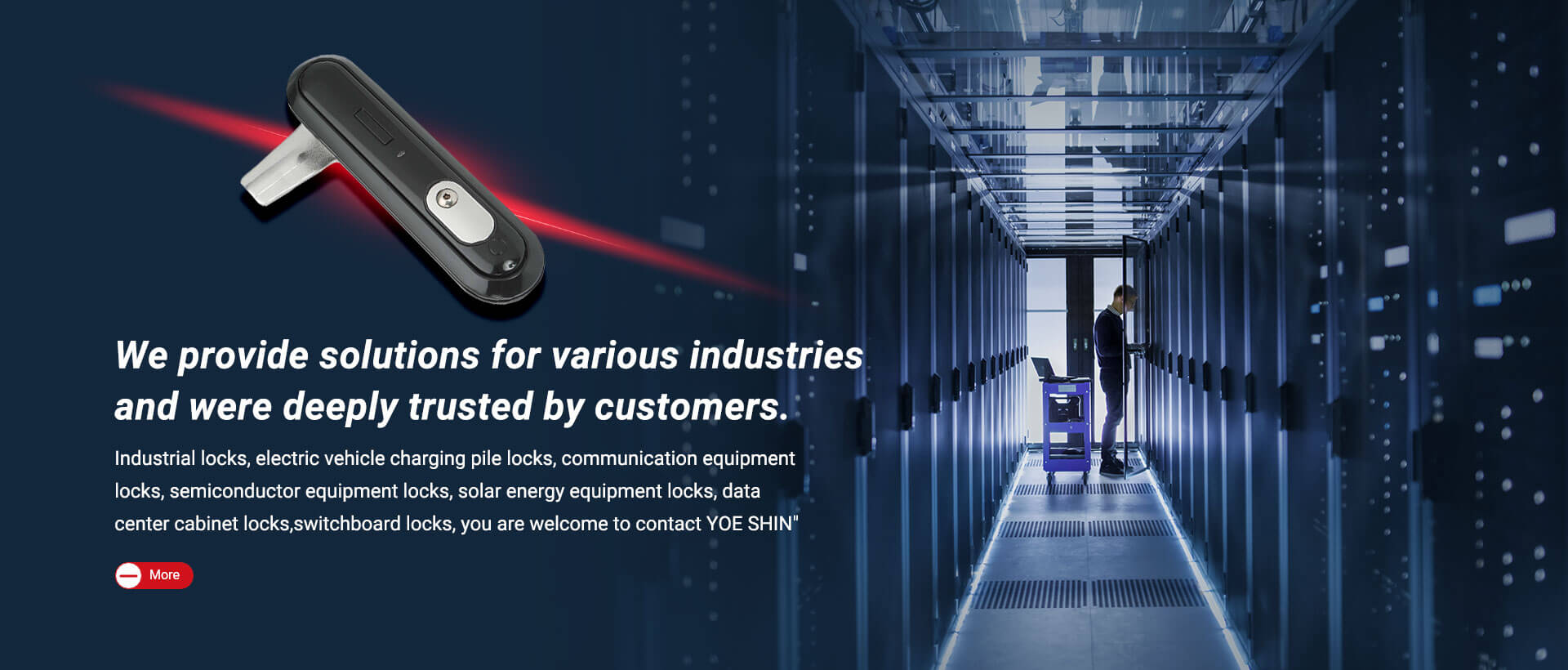
An application-oriented partner, such as YOE SHIN, adds measurable business value by providing:
- Seamless Specification Replacement: Helping you quickly match and replace existing third-party hardware dimensions without modifying your CAD models.
- Application-Based Selection Advice: Direct material and load recommendations tailored to your specific operating environment.
- Verifiable Testing Support: Providing material certificates and cycle test data to meet compliance and quality standards.
- Customization for Specialized Layouts: Adjusting hardware configurations when standard catalog dimensions don't fit your layout constraints.
By establishing hardware criteria early and collaborating with an experienced technical partner, industrial equipment builders can mitigate compliance risks, enhance field service efficiency, and effectively eliminate the unexpected costs of enclosure failures.

(4059)(20260924)(原).jpg)
(2367)(20260924)(原).jpg)