Choose automation based on where your line actually loses time, labor, and consistency, not simply on which machine has the most automated features.
When a factory plans a dipping-line automation upgrade, the first question is often: “Should we invest in a Full Automatic Dipping Machine?”
It is a reasonable question, but it is not always the one that leads to the right purchase.
Some production lines lose most of their time at loading and unloading. Operators repeatedly place carriers, handle cassettes, remove finished parts, and move material to the next operation. Other lines have a larger problem: products still depend on manual handoffs between loading, dipping, vacuum debubbling, drying, transfer, and unloading stations.
Those are different production problems. They require different automation architectures.
A machine described as “full automatic” is not automatically the best answer. The better question is: Where does the current workflow lose the most labor, time, quality consistency, or production control?
According to the International Federation of Robotics’ World Robotics 2025 report, approximately 542,000 industrial robots were installed globally in 2024. The worldwide operational stock reached approximately 4.664 million units, a year-over-year increase of about 9%. Automation is now a core manufacturing strategy, but the return on investment still depends on whether the system addresses the real constraint in the factory.
This article compares a Full Automatic Dipping Machine with an Automatic Loading and Unloading Machine. It focuses on automation scope, manual handling, carrier movement, line integration, and future expansion, so purchasing and production teams can choose an architecture based on the production problem rather than the equipment label.
The Short Answer: Automate the Bottleneck, Not the Nameplate
A Full Automatic Dipping Machine is generally the better fit when a manufacturer needs a connected process route from loading through dipping, debubbling, drying, transfer, and unloading with minimal manual contact.
An Automatic Loading and Unloading Machine is often the better fit when the dipping process itself is stable, but operators create delays at the line entrance, line exit, or a specific handling point.
Neither option is inherently superior. Each solves a different type of production constraint.
Before comparing specifications, map the current material flow. Identify where people touch the product or carrier, where equipment waits, where work accumulates, and where handling affects quality. The most frequent or costly issue should guide the automation decision.
What Is a Full Automatic Dipping Machine?
A Full Automatic Dipping Machine is designed to automate a broader sequence of production activities in one connected system. Depending on the machine design, the process can include chip loading, carrier insertion, preheating, dipping, vacuum debubbling, drying, transfer, unloading, and carrier handling.
The key benefit is process continuity. Instead of treating each step as a separate operator-managed task, the system controls how products and carriers move through the defined process route.
For passive-component terminal dipping, this can be important because quality is influenced by more than dipping precision. Manual movement can introduce inconsistent waiting time, carrier misalignment, contamination, incorrect orientation, or unnecessary product contact. These risks may not always be visible in a single machine’s output, but they can affect total line stability.
When a Full Automatic Dipping Machine Creates More Value
A Full Automatic Dipping Machine should be considered when:
- Operators manually move products or carriers between multiple stations.
- Station-to-station transfer creates queues, interruptions, or inconsistent cycle times.
- Product quality is sensitive to handling, debris, orientation, or transfer timing.
- Production volume and product specifications are stable enough for a defined automated route.
- The factory needs more consistent workflow across shifts.
- Upstream and downstream equipment can be connected as part of a line-level project.
- The long-term goal includes stronger process control and less dependence on repetitive manual work.
A full automatic architecture is most valuable when the workflow itself is the bottleneck. If products must move through several steps in a precise sequence, automated transfer can be as important as the dipping mechanism.
What Is an Automatic Loading and Unloading Machine?
An Automatic Loading and Unloading Machine automates material or carrier handling at the entry and exit points of a dipping process. It can reduce repetitive tasks such as placing carriers, managing cassettes, feeding work into the machine, and removing finished work for the next process.
This approach is particularly relevant for factories with capable existing dipping, drying, or inspection equipment. Rather than replacing the entire workflow, the manufacturer can target the handling steps that consume labor or cause the machine to wait.
For example, a dipping station may have sufficient process performance, but operators may spend substantial time loading TCP carriers, transferring cassettes, and collecting finished parts. Automating those activities can improve line rhythm while preserving productive existing equipment.
Focused loading and unloading automation should not be seen as a lesser solution. If material handling is the measured constraint, it can be the most practical and cost-effective first step.
When an Automatic Loading and Unloading Machine Is the Better Starting Point
An Automatic Loading and Unloading Machine is often appropriate when:
- Loading, unloading, cassette handling, or carrier movement is the main bottleneck.
- The existing dipping process is stable and does not need replacement.
- Upstream and downstream equipment should remain in service.
- Product mix changes often and the factory needs layout flexibility.
- Available floor space, budget, or installation time does not support a full line replacement.
- The manufacturer wants to automate in stages.
- The immediate objective is to reduce repetitive handling work and equipment waiting time.
Full Automatic Dipping Machine vs. Automatic Loading and Unloading Machine
The table below compares both architectures from a production-planning perspective. Actual functions, capacity, footprint, carrier compatibility, and integration requirements should be confirmed for each project.
| Decision Area |
Full Automatic Dipping Machine |
Automatic Loading and Unloading Machine |
| Primary purpose |
Automates a connected route from loading through unloading |
Automates material or carrier entry and exit |
| Automation scope |
Broad, multi-stage process automation |
Focused handling automation |
| Manual handling |
Reduced across more of the production flow |
Reduced mainly at loading and unloading points |
| Carrier movement |
Usually controlled across internal stations by integrated transfer mechanisms |
Focused on moving carriers into, through, or out of a defined process area |
| Integration requirement |
Often requires line-level planning |
Can be easier to add to an existing line |
| Best fit |
Multiple manual transfers and unstable process flow |
A defined loading, unloading, or cassette-handling bottleneck |
| Expansion strategy |
Builds a more complete automated cell from the start |
Supports phased automation upgrades |
| Main selection risk |
Automating beyond the actual need |
Leaving unresolved transfer problems elsewhere in the line |
The most important takeaway is that equipment names alone do not describe the entire production solution. A line can have automatic loading and unloading yet still rely on people to move carriers between drying, inspection, and packaging. A full automatic system can also be underused if upstream material preparation cannot support its required flow.
Start with Material Flow, Not an Equipment Catalog
Before requesting a quotation, follow one product batch through the entire dipping area. Track it from the moment it enters the line until it reaches the next process.
Mark every point where an operator must:
- Load chips, carriers, cassettes, or fixtures.
- Move a carrier between stations.
- Wait for equipment availability.
- Align, turn, clean, or inspect a carrier.
- Remove completed work and prepare the next batch.
- Resolve a handling-related quality issue.
- Restart product flow after a downstream stop.
This exercise often reveals that the line’s real limitation is not the rated capacity of the dipping machine. The usable output of the line is limited by the slowest linked activity, including material handling and carrier transfer.
Five Questions That Clarify the Right Architecture
1. How many manual handling points exist today?
Count every physical handoff between people and equipment.
If manual work is concentrated at one loading point and one unloading point, focused automation may be enough. If products are repeatedly moved between several stations, a broader automatic architecture may be justified.
2. Does the product require station-to-station transfer?
This is one of the most important questions in an automation project.
A process route may include loading, insertion, preheating, dipping, debubbling, drying, transfer, and unloading. If the product must move consistently through several of these stages, transfer is not a secondary detail. It is a central production requirement.
Automating only the first and last handling point will not remove delays in the middle of the process.
3. Is the existing production line standardized?
Automation performs best when rules are clear and repeatable. Carrier type, product orientation, material condition, cycle time, and handoff method should be defined.
If the line uses standardized carriers and stable process parameters, it may be easier to integrate a full automated route. If layouts, products, or work methods continue to change frequently, a modular loading and unloading approach may be a more practical fit.
4. Is the issue labor availability or process continuity?
These are related but different challenges.
If a machine waits because an operator is unavailable to load or unload material, handling automation can directly help. If operators are available but products still wait between process stages, the line has a continuity problem.
The first case points toward automated loading and unloading. The second case requires a closer look at connected transfer and full-process automation.
5. What will the line need in the next three to five years?
Do not evaluate an automation project only against current output.
Consider future product sizes, quality requirements, customer traceability expectations, labor availability, carrier standards, and planned expansion. A Full Automatic Dipping Machine can be the right long-term architecture for a stable, growing process. A modular solution can be the stronger choice when the factory needs to keep existing equipment and expand gradually.
Carrier Movement Is a Core Automation Decision
In a dipping process, the carrier is more than a transport tool. It influences positioning, product protection, process timing, cleanliness, and equipment integration.
When reviewing a proposal, ask:
- Which carrier plates, cassettes, or fixtures can the system accept?
- How are carriers loaded, unloaded, and returned?
- Is movement managed by an operator, robot, magazine, conveyor, or transfer mechanism?
- What happens when a downstream station stops?
- Is there a buffer to protect product condition during an abnormal stop?
- How are carriers cleaned, stacked, or prepared for reuse?
- Can the system maintain product orientation and carrier positioning during transfer?
These questions are often more useful than simply asking whether a machine is “fully automatic.” Reliable carrier flow is a major part of reliable automation.
Three Common Selection Scenarios
Scenario 1: The line waits for loading and unloading
The dipping process is stable, but operators spend much of the shift placing cassettes, handling carriers, and removing finished work. Equipment stops or waits when people are assigned elsewhere.
In this case, an Automatic Loading and Unloading Machine is often the logical first investment. It targets the repeated work that directly limits line availability.
Scenario 2: Manual transfer connects every process station
The factory has separate loading, dipping, debubbling, drying, and unloading stations. Operators move carriers between them, and transfer time varies by shift. Work-in-process accumulates, while quality may be affected by inconsistent handling or waiting time.
This is a strong case for evaluating a Full Automatic Dipping Machine. The problem is not only loading and unloading. It is the complete station-to-station route.
Scenario 3: The factory wants to upgrade in phases
Existing equipment remains productive, but the factory wants to reduce handling risk and prepare for future output growth. Product mix may still change, so management does not want to replace the entire line immediately.
A phased plan may be appropriate. Start with automatic loading and unloading, establish standardized carrier handling, review the production data, and add transfer or additional process modules when the workflow is ready.
Relevant Options from LONG Automatic Machinery
For passive-component terminal dipping applications, LONG Automatic Machinery Co., Ltd provides TCP-based equipment with different automation scopes.
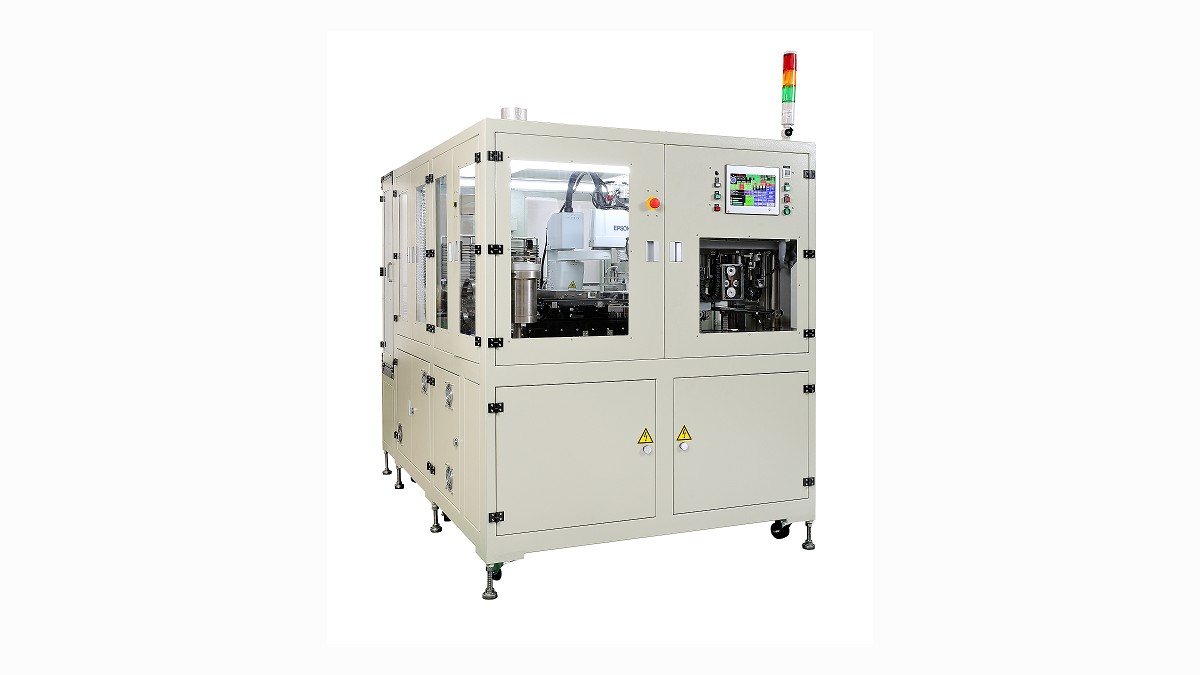
Factories that need a more connected route can review the LGTM-6837 TCP Full Automatic Single Side Dipping Machine. Its published process information includes loading, insertion, dipping, vacuum debubbling, drying, transfer, and unloading functions.
Factories focused on carrier and product handling around an existing production arrangement can review the LGTM-6195 TCP Automatic Double Side Loading and Unloading Dipping Machine. Its published information includes cassette loading, robotic transfer between machine stations, vacuum dipping, and double-side dipping capability.
The appropriate configuration should be determined after reviewing chip dimensions, carrier specifications, process steps, target output, floor space, utilities, and upstream/downstream interfaces.
FAQ
Is a Full Automatic Dipping Machine always faster?
Not necessarily. It can improve total line flow when multiple manual transfers are the bottleneck. If loading and unloading are the only significant constraints, a focused Automatic Loading and Unloading Machine may improve usable output with less integration complexity.
Can an Automatic Loading and Unloading Machine be integrated into an existing line?
Often, yes. Compatibility depends on carrier format, cassette design, product size, cycle time, controls, floor layout, and upstream/downstream equipment interfaces.
What should a factory prepare before requesting a quotation?
Prepare product dimensions, carrier or cassette drawings, the current process flow, target output, manual handling points, floor layout, utility conditions, quality concerns, and future expansion plans.
Should we automate loading and unloading first?
It is a sensible first step when loading and unloading are confirmed bottlenecks. If the line also has major delays between stations, however, handling automation alone may not solve the entire problem.
Choose the Architecture That Fits the Workflow
The best automation project does not begin with the largest equipment scope. It begins with an accurate view of the production constraint.
Choose a Full Automatic Dipping Machine when the factory needs to connect multiple process stages and reduce manual handling across the process route. Choose an Automatic Loading and Unloading Machine when the central issue is material entry, material exit, or a specific repetitive handling task.
Discuss your production workflow with LONG Automatic Machinery Co., Ltd to determine the automation architecture that fits your line.

(4059)(20260924)(原).jpg)
(2367)(20260924)(原).jpg)