Understanding how bottle alignment, film control, and heat distribution interact to determine bundle stability
Shrink sleeve wrapping is widely used to group bottled beverages, cans, and other containers into transportable multipacks. The process appears simple: products are collated, surrounded by shrink film, sealed, and conveyed through a heated tunnel. Yet one of the most frustrating production problems occurs when a bundle that looks stable at the infeed begins to lean, twist, or collapse as soon as the film shrinks.
The difficulty is that bundle collapse is rarely caused by a single parameter. Pack geometry, film behavior, conveyor movement, and tunnel conditions all influence one another. Raising the tunnel temperature or tightening the film may temporarily change the symptom without addressing the underlying cause.
A more reliable troubleshooting approach starts by understanding how the package behaves before, during, and immediately after shrinking.
Pack Pattern Is the Foundation of Bundle Stability
Before looking at film or tunnel settings, the first question should be whether the bottle group is mechanically stable.
Round bottles make contact with neighboring containers along relatively small areas. Even when a 3×2 or 4×3 bundle looks correct from a distance, small gaps between bottles, an offset row, or one container sitting slightly ahead of the others can make the group vulnerable once lateral forces are applied.
This becomes especially important when bottles are tall relative to their base diameter. Small disturbances during transfer can cause a bottle to lean before the film has developed enough holding force to stabilize the group.
Guide rails and product-collation components therefore play an important role. PMMI recommends structured packaging-line trials in which parameters such as guide rails, film tension, and material-specific operating rules are tuned together rather than independently.
A useful diagnostic step is to observe the product group immediately before film wrapping. Bottles should arrive in a repeatable pattern with consistent spacing and without relying on the film to correct their position.
If the pack is already unstable at this stage, tunnel adjustments are unlikely to solve the problem.
Film Tension Should Control the Pack, Not Distort It
The next variable is film control.
In practice, “film tension” does not refer only to one mechanical adjustment. Effective tension can be influenced by film unwind resistance, roller conditions, feed timing, tracking, sleeve length, and the sealing-and-cutting cycle. PMMI specifically identifies film tension as one of the variables that should be optimized when packaging materials or operating conditions change.
Too little control can leave excessive slack around the bottle group. The products then have more opportunity to shift between wrapping and tunnel entry.
Too much tension can create the opposite problem. If the film is already pulling strongly on one side of the bundle, it may move the outer bottles inward or place the entire group slightly off center before shrinkage begins.
Uneven tension is particularly troublesome. A sleeve that appears acceptable from the front may still have more film on one side than the other, causing asymmetric forces as the film heats.
Film formulation also matters. Polyethylene-based collation shrink films are available with different performance characteristics, and resin structure can influence shrink behavior and package integrity. ExxonMobil, for example, describes several polyethylene formulations and multilayer structures developed specifically for collation-shrink applications.
This is why changing film supplier, thickness, or formulation may require a new machine recipe rather than simply reusing previous settings.
Tunnel Heat Is About Heat Distribution, Not Just Temperature
When a finished bundle looks loose, the intuitive response is often to increase tunnel temperature. However, shrink behavior is more complex than a single temperature setpoint.
ASTM D2732 explains that shrinkage in plastic film results from stresses introduced during film manufacturing being released through heating. Importantly, the magnitude of shrinkage varies with film temperature.
In an operating shrink tunnel, the film temperature reached around a package is influenced by several interacting factors, including tunnel temperature, conveyor speed, exposure time, airflow, and the size and thermal mass of the product.
This means two packages passing through the same nominal tunnel temperature can behave differently if their bundle dimensions or film characteristics differ.
Uneven heating can be particularly damaging to an unstable bottle group. If one side of the sleeve contracts significantly earlier than the other, the shrinking film can pull the bundle sideways. If the upper portion shrinks aggressively while the lower film remains relatively loose, the bottle shoulders may be compressed before the bases are adequately restrained.
The goal is therefore not maximum heat. It is sufficiently even thermal exposure for the sleeve to develop controlled holding force around an already stable pack.
| Observed symptom |
Areas worth checking first |
| Bottles lean before tunnel entry |
Product collation, guide rails, transfer timing |
| Bundle twists during early shrink |
Film centering, uneven tension, tunnel airflow |
| Film remains loose after shrinking |
Heat exposure, conveyor speed, sleeve size, film characteristics |
| One side pulls inward |
Film tracking, sleeve distribution, asymmetric heating |
| Top of bundle compresses excessively |
Heat distribution, film fit, shrink timing |
Why Random Adjustments Often Make the Problem Harder
A common troubleshooting mistake is changing several parameters simultaneously.
For example, increasing tunnel temperature while tightening the film and slowing the conveyor may produce a tighter package, but it becomes difficult to determine which adjustment actually improved the result. The new settings can also create another defect when the bottle size or bundle format changes.
A more systematic sequence is usually more informative.
Start with the physical pack pattern. Confirm that bottles remain square and stable during collation and transfer. Next, examine the unshrunk sleeve for centering, consistent slack, seal position, and tracking. Then check whether heating appears balanced across the pack. Finally, make small adjustments to tunnel temperature or conveyor speed.
Documenting successful settings by bottle format and film type can also reduce troubleshooting time during future changeovers, an approach consistent with PMMI's recommendation to establish operating rules for specific SKU and material combinations.
Frequently Asked Questions
1. Why does the bundle look stable before the tunnel but collapse inside it?
Before significant shrinkage occurs, the film may apply relatively little holding force. Once the film contracts, an uneven pack pattern or asymmetric film position can turn a small alignment error into a visible lean or twist.
2. Should I raise tunnel temperature when the package is loose?
Not immediately. Loose film can be associated with insufficient thermal exposure, but conveyor speed, sleeve dimensions, and film characteristics should also be checked. ASTM notes that shrink magnitude varies with film temperature, so temperature changes can substantially alter film behavior.
3. Can excessive film tension cause bottles to collapse?
It can contribute to instability. Film should remain controlled and centered without significantly disturbing the collated bottle pattern before the tunnel.
4. Why does only one side of the bundle pull inward?
One-sided distortion often points to an asymmetric condition. Possible causes include off-center film, inconsistent web tracking, unequal film distribution, or uneven heating across the tunnel.
5. Does bottle arrangement matter if all bottles are identical?
Yes. Even identical containers can form an unstable bundle if spacing or row alignment varies. A repeatable pack pattern helps shrink forces distribute more consistently through the group.
6. Should machine settings be reviewed after changing shrink film?
Generally, yes. Film formulations can differ in shrink response and mechanical performance. Industry guidance supports running structured trials and documenting suitable operating conditions when packaging materials change.
Conclusion
Bottle-bundle collapse is best viewed as an interaction between mechanical stability and controlled shrink force. Pack pattern determines whether the containers start in a stable position. Film handling determines how evenly the sleeve surrounds and restrains them. Tunnel conditions determine when and how strongly that restraint develops.
Because these factors are connected, more heat is not automatically better, and tighter film is not automatically more stable. Troubleshooting tends to be more effective when the process is examined in sequence: establish a repeatable bottle pattern, confirm consistent film placement, verify balanced tunnel conditions, and then fine-tune temperature and conveyor speed.
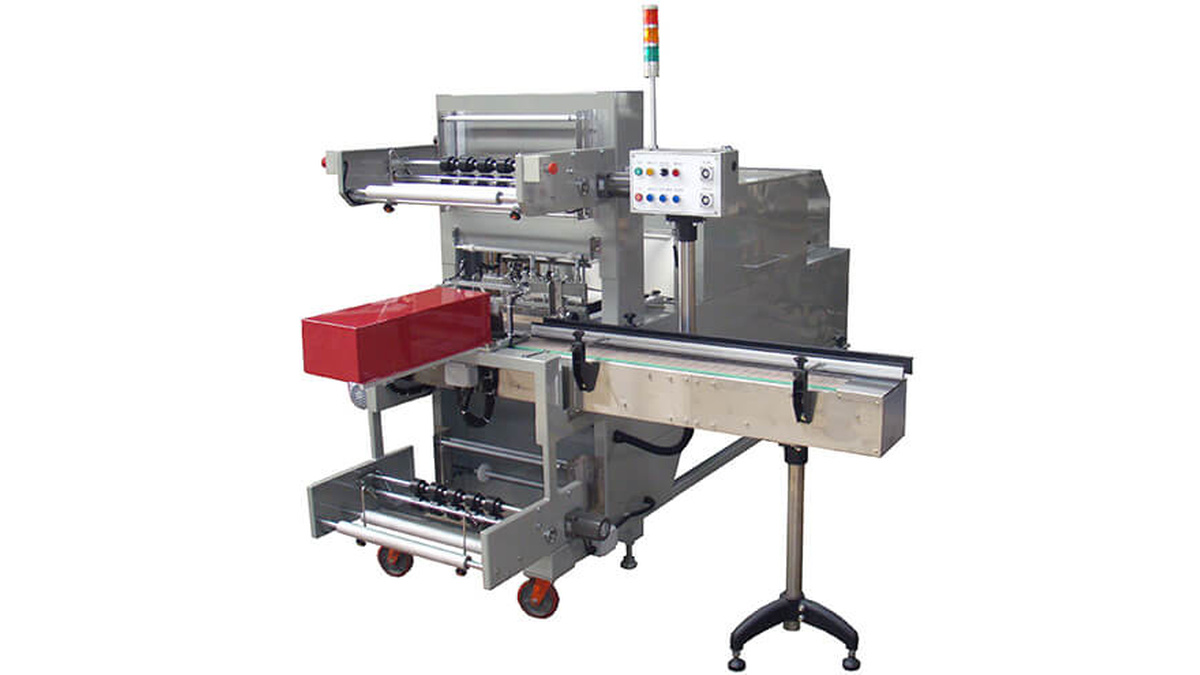
The same considerations can also be seen in the way commercial sleeve-wrapping equipment is designed. One example is the Tayi Yeh SA-116 Automatic Sleeve Wrapper, which combines automatic product alignment, film wrapping, sealing and cutting, and shrink-tunnel processing for bottles, cans, and other grouped products. The system includes side guide plates at the infeed and allows shrink temperature and speed to be adjusted, illustrating how product positioning and thermal control are handled as connected parts of the packaging process rather than isolated operations.

(4059)(20260924)(原).jpg)
(2367)(20260924)(原).jpg)