The right machine is not always the most automated one, but the one that delivers the required part with the greatest speed, flexibility, and confidence.
CNC machines have changed modern manufacturing. They support repeatable production, complex toolpaths, unattended cycles, and digital workflow integration. For many production jobs, a CNC lathe is clearly the right investment.
Yet the rise of CNC has not made the high-precision Manual Lathe obsolete.
In toolrooms, maintenance departments, job shops, vocational schools, and prototype areas, conventional lathes continue to solve work that does not fit neatly into a programmed production cycle. A machinist may need one replacement bushing before a production line restarts. A designer may need to test a diameter change immediately. An instructor may need students to understand how cutting speed, feed, tooling, and material behavior interact.
These are not minor exceptions. They are recurring operational needs.
The U.S. Bureau of Labor Statistics notes that machinists work with both manually controlled and CNC machine tools, and that precision machinists often produce small batches or single items. It also identifies repair work and replacement-part production as part of machinists’ everyday responsibilities. Source: U.S. Bureau of Labor Statistics
For purchasing teams and machine-tool distributors, the key question is therefore not, “Manual or CNC?” It is:
Which machine gives the shop the fastest, lowest-risk path to a usable part for this specific type of work?
A high-precision Manual Lathe often provides the answer when speed of judgment, flexibility, and hands-on control matter more than automated repetition.
Manual Lathe vs. CNC Lathe: Choose by the Job, Not by the Trend
A CNC lathe excels when a shop must produce repeatable parts in volume, manage complex geometry, or run a proven program with controlled consistency. Its value becomes stronger as production quantity rises and the setup is spread across more parts.
A Manual Lathe becomes more compelling when the job changes often, the quantity is very low, or the operator must respond quickly to the actual condition of a workpiece. It does not eliminate the need for CNC. Instead, it fills the gaps where programming, digital setup, and production scheduling may add more time than value.
The following comparison helps purchasing teams place each machine in the right role.
| Shop Requirement |
High-Precision Manual Lathe |
CNC Lathe |
| One-off repair component |
Strong fit; immediate setup and adjustment |
May be excessive if programming time is greater than cutting time |
| Prototype with changing dimensions |
Strong fit; dimensions can be adjusted during machining |
Useful after the design is stable or geometry is complex |
| Repeated production batch |
Limited when volume is high |
Strong fit for repeatability and cycle-time control |
| Urgent maintenance work |
Strong fit; no program must be created before the first cut |
Useful when an existing, validated program is available |
| Training in machining fundamentals |
Strong fit; makes cutting forces and setup decisions visible |
Important for digital manufacturing skills, but less direct for basic process learning |
| Complex profiles or many repeated features |
Possible but slower and operator-dependent |
Strong fit |
| Uncertain material condition or damaged part |
Strong fit; operator can respond in real time |
Can require extra proving-out and fixture planning |
This is not a claim that manual machining is inherently more accurate than CNC machining. Properly selected and maintained CNC equipment can achieve exceptional repeatability. The advantage of a high-precision Manual Lathe is different: it gives a skilled operator direct control over the process while the work is happening.
That direct control is particularly valuable when the first part is also the only part.
Why One-Off Prototypes Still Need a Manual Lathe
Prototype work is rarely as clean as a finished CAD model. Dimensions change after the first test. A shoulder may need to move. A diameter may need a small adjustment to achieve the desired fit. A material may cut differently than expected. The shop may also receive an incomplete drawing or a worn sample part rather than a fully defined engineering file.
On a Manual Lathe, an experienced machinist can mount the stock, face it, turn a test diameter, measure it, and decide the next move without first preparing a CNC program. This short feedback loop is useful when learning is the real purpose of the first part.
A practical prototype workflow may look like this:
- Review the drawing, sample, or mating component.
- Select workholding, cutting tools, speed, and feed based on material and geometry.
- Machine a test feature.
- Measure the result and check the actual fit.
- Adjust dimensions, tool position, or cutting conditions immediately.
- Create the final prototype or refine the design for later CNC production.
This workflow helps shops avoid a common problem: investing time in a program before the part design, process plan, or material behavior is fully understood.
For example, a custom shaft may look simple on a drawing but require several fit checks against an existing assembly. A Manual Lathe lets the machinist turn, measure, and refine that shaft in a continuous process. Once the dimensions are proven and order quantities increase, the shop can transfer the knowledge into a CNC program.
In this sense, manual machining can reduce risk before automation begins.
Repair Parts and Maintenance: When Downtime Changes the Equation
Maintenance teams do not always have the luxury of waiting for an original replacement part. Older equipment may use discontinued components. Imported parts may have long lead times. A damaged bushing, pin, sleeve, shaft, pulley, or threaded adapter can stop a larger process even when the replacement part itself is relatively simple.
In these cases, the true cost is not only the price of the part. It is the cost of downtime, delayed delivery, idle labor, and lost production capacity.
A high-precision Manual Lathe supports repair work because it is well suited to inspection-led machining. A machinist can measure the existing component, identify the critical fits, machine a replacement, and adjust based on the actual mating condition. This is especially useful when repairing a part that has wear, corrosion, deformation, or undocumented modifications.
The BLS specifically notes that machinists may repair broken parts or make replacements after a maintenance issue is found. It also notes that precision machining can involve single items and small batches, not only mass production. Machinists and Tool and Die Makers, U.S. BLS
For maintenance managers, the Manual Lathe should be evaluated as a response-capability asset. It can help the team handle urgent, low-volume machining tasks in-house when outsourcing would create unacceptable delay.
The Value of Immediate Feedback in Precision Work
The strongest case for a Manual Lathe is often not “manual control” by itself. It is the quality and speed of feedback available to the operator.
During manual turning, the machinist directly observes chip formation, cutting sound, surface finish, tool pressure, vibration, and dimensional change. These signals help the operator decide whether to change speed, feed, depth of cut, tool geometry, support, or measurement frequency.
That process matters because real workpieces are not always predictable.
Material hardness can vary. A long workpiece may deflect. A repaired component may not run true. A cutting tool may reveal chatter before a final pass. A skilled machinist can respond before the issue becomes scrap.
This does not mean CNC operators lack process feedback. Modern CNC machining also requires strong process knowledge. The difference is that a Manual Lathe makes the cause-and-effect relationship between the operator’s input and the cut highly visible. It gives the machinist a direct way to make small, informed changes while creating the part.
For a shop with limited engineering support or frequent custom work, that responsiveness can be more valuable than a highly automated cycle.
No Programming Does Not Mean No Skill
A common mistake is to describe manual equipment as simpler because it does not need CNC programming. The setup may be faster for a one-off part, but the machining still demands real skill.
A competent Manual Lathe operator must understand:
- Blueprint reading and critical dimensions
- Workholding and alignment
- Cutting-tool selection and geometry
- Material behavior
- Feed, speed, and depth-of-cut choices
- Threading, taper turning, boring, drilling, and facing
- Measurement methods and tolerance control
- Safe operation around rotating workpieces
The BLS identifies manual dexterity, analytical ability, mechanical knowledge, and technical skills as important qualities for machinists. It notes that some precision work may require accuracy to within 0.0001 inch. U.S. Bureau of Labor Statistics
For shop owners, this reinforces an important procurement principle: machine capability and operator capability must be evaluated together. A high-quality Manual Lathe can provide a stable, accurate platform, but the final result depends on correct setup, sound process decisions, proper tooling, and disciplined inspection.
Why Manual Lathes Remain Essential in Technical Education
Technical education is another long-term market for manual machine tools. Students who learn only through screens and programmed cycles may understand machine operation without fully understanding the physical mechanics of cutting metal.
A Manual Lathe exposes the fundamentals directly. Students see how spindle speed affects the cut. They learn why workholding matters. They hear chatter, inspect surface finish, measure a turned diameter, and correct an error. These are practical lessons that transfer to CNC setup, tooling decisions, quality control, and troubleshooting.
Manual training also builds confidence in work that cannot be solved by selecting a stored program. That matters because manufacturing careers often require workers to diagnose problems, interpret drawings, inspect parts, and adapt to unusual conditions.
The workforce need remains relevant. Although BLS projects overall employment for machinists and tool and die makers to decline 2% from 2024 to 2034, it still expects about 34,200 openings per year on average during that period, primarily because workers leave or transfer to other occupations. Employment Outlook, U.S. BLS
For schools and training centers, a Manual Lathe is not a step backward from CNC. It is a foundation for understanding machining before students move into digitally controlled production.
How to Evaluate a Manual Lathe Investment
Purchasing decisions should begin with the work the shop must complete, not with the machine’s headline specifications alone. A buyer should consider the parts, materials, operator environment, and support requirements that define day-to-day value.
Before comparing suppliers, ask the following questions:
- What are the largest swing-over-bed and distance-between-centers requirements?
- Which materials and typical diameters will the shop machine?
- Will the machine mainly handle repair work, prototypes, education, or small-batch production?
- Are threading, taper turning, boring, drilling, and other operations required?
- Does the shop need gear-head, variable-speed, or clutch-type operation?
- What accuracy, bed rigidity, spindle performance, and workholding options are needed?
- What tooling, measuring equipment, safety equipment, and operator training must be included in the total investment?
- Can local service, spare parts, and technical documentation support the expected lifecycle?
The last point is especially important. A lower purchase price can lose its advantage if the machine cannot be maintained, tooled, or supported over time.
Buyers should also avoid measuring value only by machine utilization. A Manual Lathe may spend part of the week idle, then prevent a costly production delay when a repair part is needed. In that context, readiness can be more important than constant spindle hours.
A Durable Opportunity for Machine-Tool Distributors
For distributors, the Manual Lathe market should not be positioned as an alternative to CNC automation. It should be positioned as a complementary solution for shops that need flexibility.
The strongest opportunities often come from customers with mixed production needs:
- Job shops handling short-run and custom components
- Maintenance departments supporting aging equipment
- Toolrooms serving internal production lines
- Technical schools and vocational training centers
- Manufacturers producing prototypes before production release
- Regional repair businesses that need fast turnaround
The distributor’s role is to help the buyer define the application clearly. A credible recommendation discusses capacity, rigidity, safety, operator skill, tooling, installation, and after-sales support. It does not overpromise that a Manual Lathe will replace CNC on high-volume work.
This consultative approach protects customer trust and helps distributors build recurring relationships around training, accessories, tooling, maintenance, and future CNC upgrades.
A Relevant Supplier Option: Shun Chuan Precision Machinery
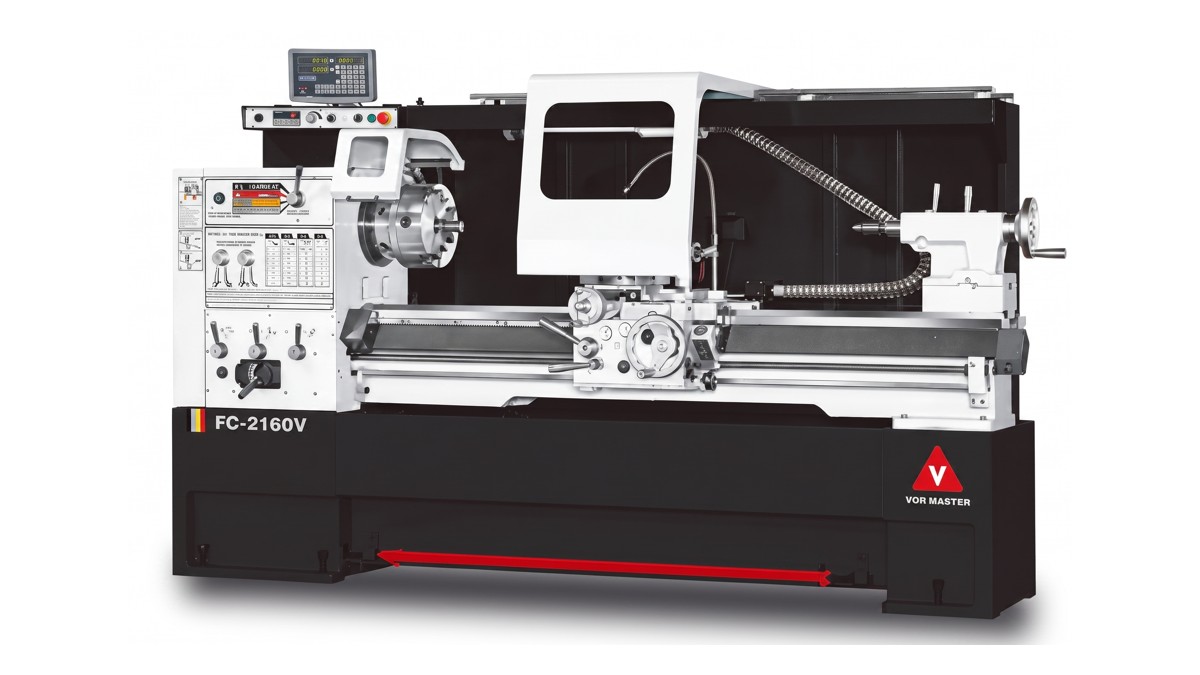
For buyers looking at conventional metalworking equipment, Shun Chuan Precision Machinery Co., Ltd., marketed under the SUN MASTER brand, offers a range of Manual Lathe solutions for educational, toolroom, and general-production applications.
Its product range includes all gear-head, variable-speed, and mechanical clutch-type manual lathes. According to the company’s product information, available sizes extend from smaller machines with a 13-inch swing over bed and 30-inch distance between centers to larger configurations with a 30-inch swing and 200-inch distance between centers.
That range makes application matching important. A school may prioritize safe operation, visibility, and fundamentals training. A repair department may prioritize swing, spindle capacity, and practical workholding. A toolroom may prioritize precision, rigidity, and versatility across changing jobs.
FAQ: Manual Lathe Buying and Application Questions
Is a Manual Lathe still worth buying if the shop already has CNC machines?
Yes, if the shop handles prototypes, repair work, irregular one-off jobs, or low-volume components that do not justify programming and production setup. CNC and manual equipment often serve different stages of the same workflow.
Can a Manual Lathe produce precision parts?
Yes. A properly maintained high-precision Manual Lathe, operated by a skilled machinist using suitable tooling and measurement practices, can produce accurate parts. However, buyers should match expected tolerances, geometry, repeatability needs, and production quantity to the machine and process.
When should a shop choose CNC instead?
Choose CNC when the part requires complex repeated geometry, consistent multi-part production, high quantity, automated cycles, or digital traceability. The return on CNC investment improves as programming and setup costs are distributed across more parts.
What industries still use Manual Lathes?
Manual lathes remain useful in general machining, industrial maintenance, tooling, repair services, machinery manufacturing, education, prototype development, transportation equipment support, and fabrication environments.
What should be included in a customized investment evaluation?
A useful evaluation should cover part dimensions, material types, production quantity, tolerance targets, required operations, tooling, power requirements, installation conditions, operator experience, training, maintenance support, and expected payback from reduced outsourcing or downtime.
Build Flexibility Into the Machine Shop
The modern machine shop is not defined by automation alone. It is defined by the ability to deliver the right part, at the right time, with the right level of control.
A high-precision Manual Lathe remains valuable because it gives shops a practical response to uncertain, urgent, low-volume, and learning-intensive work. It helps bridge the gap between an idea and a proven process, between a damaged part and restored production, and between machining theory and real operator skill.
For a machine selection based on your parts, capacity needs, and expected return, contact Shun Chuan for a customized investment evaluation.

(4059)(20260924)(原).jpg)
(2367)(20260924)(原).jpg)