How Magnetic Drive Pumps Enhance Chemical Reliability in the Evolving Printed Circuit Board (PCB) Industry
Knowledge

How Magnetic Drive Pumps Enhance Chemical Reliability in the Evolving Printed Circuit Board (PCB) Industry

The global Printed Circuit Board (PCB) industry is undergoing rapid transformation, fueled by technological upgrades, supply chain restructuring, and rising demand from high-performance electronics. With the market expected to grow from USD 80.3 billion in 2024 to USD 96.5 billion by 2029, manufacturers must focus on improving production stability, chemical reliability, and environmental compliance to stay competitive.
Published: Dec 02, 2025
How Magnetic Drive Pumps Enhance Chemical Reliability in the Evolving Printed Circuit Board (PCB) Industry

Among the many innovations supporting these advancements, magnetic drive pumps play a critical and often underestimated role in ensuring chemical purity, precision flow control, and long-term reliability across PCB wet-process operations.

Industry Drivers: Why PCB Manufacturing Requires Higher Chemical Precision Than Ever

1. High-Speed Computing and AI Infrastructure

The rise of 800G switches, AI servers, and high-density cloud hardware drives strong demand for:

  • High-layer-count PCBs
  • High-frequency boards
  • Multilayer substrates with extremely fine circuitry

These applications require precise chemical etching and plating conditions, where even small variations can lead to defects.

2. EV Expansion and Advanced Consumer Electronics

Electric vehicles, wearables, and IoT devices accelerate adoption of:

  • Rigid-flex PCBs
  • HDI (High-Density Interconnection) designs
  • Thermally stable copper-clad laminates (CCL)

Each manufacturing step relies heavily on the stability of the wet process environment.

3. Semiconductor Packaging Evolution

Technologies like CoWoS, advanced ASIC packaging, and IC substrates create demand for ultra-fine line production—driving the need for contamination-free chemical circulation.

These trends highlight a common requirement: reliable, stable, and clean chemical handling, which is where magnetic drive pumps play an essential role.

How Magnetic Drive Pumps Support Critical PCB Manufacturing Processes

Modern PCB production involves extensive use of chemicals—etchants, acids, alkaline solutions, cleaners, plating baths, and more. Any leakage, contamination, or flow instability can lead to production failures, costly downtime, and lower yields.

Magnetic drive pumps solve many of these challenges across multiple wet processes.

1. Leak-Free Chemical Circulation for Cleanroom and Wet-Process Lines

In etching, stripping, developing, and plating processes, contamination control is vital. Magnetic drive pumps operate without mechanical seals, eliminating the primary point of leakage found in traditional pumps.

Key benefits include:

  • Zero risk of chemical leakage
  • No mechanical seal wear or failure
  • Cleaner working environment and higher yield rates

This makes them ideal for cleanrooms and precision PCB manufacturing lines.

2. Precise Flow Control for High-Density and High-Frequency PCB Applications

Modern PCBs require consistent chemical flow and stable pressure to ensure uniform line width, controlled micro-etching, and predictable plating thickness.

Magnetic drive pumps provide:

  • Smooth, pulsation-free circulation
  • Precise flow control when integrated with VFD systems
  • Stable pressure for consistent etching and plating results

This is especially critical for:

  • Multilayer boards
  • HDI designs
  • High-frequency RF/microwave PCBs
3. Superior Chemical Resistance for Harsh PCB Manufacturing Environments

PCB chemicals are typically corrosive, including sulfuric acid, hydrochloric acid, ammonia-based etchants, and copper plating solutions.

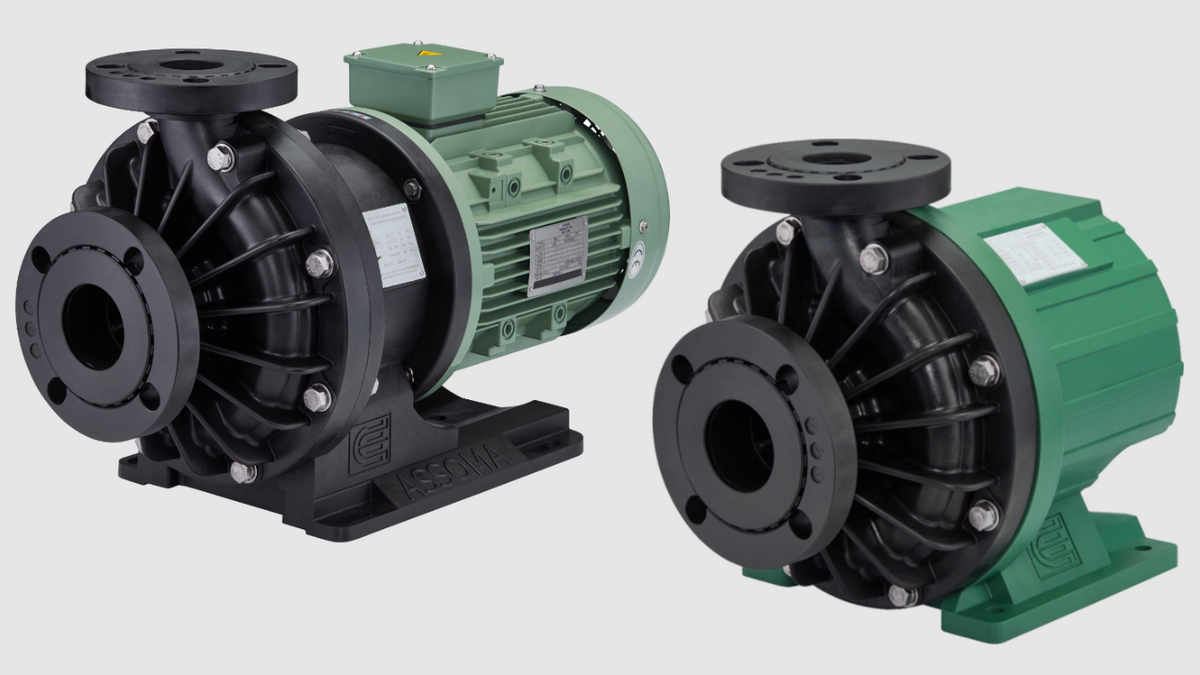
Magnetic drive pumps—especially those designed by ASSOMA INC.—use materials like PP, PVDF, or ETFE, ensuring:

  • High resistance to acids and alkalis
  • Long-term durability
  • Reduced maintenance frequency

This results in lower total cost of ownership for PCB manufacturers.

4. Smart Monitoring for Preventive Maintenance and Production Stability

With Industry 4.0 and smart manufacturing on the rise, many PCB factories now require predictive monitoring to reduce unplanned downtime. Magnetic drive pump systems can be paired with sensors and intelligent controllers to provide:

  • Real-time flow and temperature monitoring
  • Early warnings for abnormal conditions
  • Reduced risk of chemical loss and equipment failure

These capabilities support stable, continuous production in high-volume PCB lines.

Global Supply Chain Shifts and the Importance of Reliable Equipment

Geopolitical tensions and rising regionalization are pushing PCB manufacturers toward new production bases in:

  • Thailand
  • Vietnam
  • Malaysia
  • Mexico
  • India

Despite having only 27 major PCB producers, Taiwan still controls 32.8% of the global market, emphasizing the region’s strength in technology and quality.

As production relocates, manufacturers seek equipment that is:

  • Easy to deploy across multiple regions
  • Compliant with environmental regulations
  • Consistent and low-maintenance

Magnetic drive pumps meet these needs with their sealed construction and high reliability, supporting global factory expansion plans.

Environmental Compliance and Sustainable Manufacturing

As environmental standards tighten globally, PCB manufacturers face pressure to reduce emissions and chemical waste.

Challenges include:

  • Handling hazardous substances like heavy metals
  • Suppressing harmful gas emissions
  • Reducing energy consumption in circulation systems

Magnetic drive pumps support sustainability in PCB manufacturing through:

  • Fully enclosed designs for zero emission leakage
  • Compatibility with closed-loop chemical recycling systems
  • High energy efficiency and low operating cost

These advantages align with global trends toward greener electronics manufacturing.

Conclusion: Magnetic Drive Pumps Will Play a Key Role in the Future of PCB Manufacturing

The PCB industry is evolving rapidly, driven by AI, electric vehicles, advanced packaging, and next-generation communication systems. As manufacturing processes become increasingly complex, the reliability and precision of chemical handling will define competitive advantage.

Magnetic drive pumps, especially high-performance models engineered by ASSOMA INC. provides the leak-free, stable, and efficient chemical circulation solutions required for modern PCB Industry.

With their combination of precision, durability, and environmental safety, magnetic drive pumps are set to remain a foundational technology supporting the next generation of PCB manufacturing worldwide.

Published by Dec 02, 2025 Source: ASSOMA INC.

Further reading

You might also be interested in ...

Headline
Knowledge
Stop the Stress: 5 Non-Negotiable Questions to Ask Your Bubble Tea Ingredient Supplier Today
Opening a bubble tea shop is exciting, but the reality is built on a complex, global supply chain.
Headline
Knowledge
H-Beams and I-Beams: Modern Cutting Methods for Structural Steel
In structural engineering projects such as bridges, high-rise buildings, and industrial facilities, the accurate cutting of H-beams and I-beams is vital for ensuring safety and structural integrity. Fabricators utilize a variety of cutting methods to meet project demands, including laser cutting, plasma cutting, water jet cutting, and large band saws.
Headline
Knowledge
Essential for Precision Machining: A Complete Guide to Tungsten Carbide Center Drills
In modern manufacturing, precision is the core standard by which product quality and performance are measured. From aerospace components to medical devices, even a minor deviation can lead to serious consequences. When it comes to precision drilling, a critical challenge is ensuring that a drill bit can be accurately positioned at the start of a cut while maintaining stability during high-intensity operations. The tungsten carbide center drill is the professional tool engineered specifically to solve this problem.
Headline
Knowledge
The “Spark Magician” of Metalworking
Electrical Discharge Machining (EDM) is a non-traditional machining process that removes metal through electrical sparks. Unlike conventional methods, it is not limited by material hardness and can precisely create deep cavities, micro-holes, and complex structures in hardened steel, tungsten carbide, or superalloys. The three main types of EDM include wire cutting, die-sinking, and hole drilling, which are widely applied in mold making, aerospace, automotive, and medical industries. Although EDM has a slower processing speed, works only with conductive materials, and requires consideration of electrode wear and surface treatment, its advantages in high precision, zero cutting force, and superior surface finish make it an indispensable technology in precision manufacturing. Moreover, it continues to evolve in line with the trend toward smart manufacturing.
Headline
Knowledge
Press Brake vs Shearing Machine: Functional and Technical Comparison of Industrial Processing Equipment
Press Brake and Shearing Machine are two essential types of equipment in the field of machine tools, widely used in the processing of metal, wood, and other materials. They play critical roles in manufacturing, enabling efficient and precise material forming and cutting. This article introduces the definitions, functions, technical features, and applications of folding and cutting machines, offering neutral and practical knowledge sharing.
Headline
Knowledge
Master Chuck Types & Selection: The Essential Guide for Machinists
In the world of precision manufacturing, every minute detail can determine the quality of the final product. The chuck is a critical yet often overlooked component—it's not just a tool for holding a workpiece, but the very heart of ensuring machining accuracy, efficiency, and safety. This article will take you on a deep dive into the diverse universe of chucks, covering their operating principles, design philosophies, common types, and how to select the right jaws and chucks for different needs. Whether you're new to the industry or a seasoned engineer, this guide will unlock the intricate secrets of chucks, helping you master every detail on your path to manufacturing success.
Headline
Knowledge
An Overview of Electrical Discharge Machining (EDM)
Electrical Discharge Machining (EDM) is a non-traditional manufacturing process that utilizes electrical sparks to remove material from a workpiece. Unlike conventional machining methods such as milling or turning, which rely on physical contact between a tool and the material, EDM operates without direct contact, making it ideal for processing hard or brittle materials that are difficult to machine otherwise. The process involves generating a series of rapid electrical discharges between an electrode and the workpiece, submerged in a dielectric fluid, which erodes the material through thermal energy. This technique has revolutionized precision manufacturing by enabling the creation of complex geometries with high accuracy.
Headline
Knowledge
Applications of Machine Tools in the Aerospace Industry
The aerospace industry is a highly specialized and technology-driven sector, encompassing the design, manufacturing, and maintenance of aircraft, spacecraft, satellites, and related equipment. Machine tools play a critical role in this field, enabling the precision machining of complex metal and composite material components. These tools enhance production efficiency while ensuring the accuracy and reliability required to meet the stringent safety and performance standards of aerospace. This document outlines the key applications, technologies, benefits, and future trends of machine tools in the aerospace industry.
Headline
Knowledge
Smart Healthcare Uncovered:How AI Is Transforming Clinical Practice?
With the rapid rise of artificial intelligence (AI), the healthcare industry is undergoing a disruptive transformation. AI is significantly improving diagnostic accuracy and treatment efficiency while profoundly redefining healthcare professionals’ roles and patient experiences. A comprehensive understanding of the core technologies and clinical applications behind this transformation is essential for grasping the future trends and strategic directions of smart healthcare.
Headline
Knowledge
Principle and Applications of Laser Cutting Machines
As the global manufacturing industry advances toward higher precision and efficiency, laser cutting technology has become a key enabler of industrial upgrading. Compared with traditional shearing, stamping, and mechanical cutting, laser cutting offers non-contact processing, higher accuracy, and greater flexibility. It significantly improves productivity while reducing secondary finishing. Today, it is widely adopted in metalworking and increasingly applied in electronics, aerospace, medical, and architectural design industries.
Headline
Knowledge
Why Are High-Quality Cutting Fluids Critical for Machining Quality?
In CNC and metalworking, cutting fluid is no longer just a coolant—it plays a critical role by providing lubrication, chip removal, and corrosion protection. With the right formulation and concentration, it can reduce cutting heat, minimize friction, extend tool life, and maintain workpiece accuracy. High-pressure cooling further enhances efficiency in deep-hole and high-speed machining. The pairing of tool material with the proper cutting fluid is equally crucial; correct selection and maintenance ensure process stability, prolong equipment life, and improve the overall work environment. Cutting fluid has become an indispensable investment in modern precision manufacturing.
Headline
Knowledge
Introduction to Emerging Printing Technologies: Opening New Horizons for the Future of Printing
With rapid technological progress and increasingly diverse market demands, traditional printing techniques are no longer sufficient to meet modern industry’s requirements for precision, efficiency, and sustainability. As a result, emerging technologies such as UV printing, 3D printing, and Nanoimprint Lithography (NIL) have risen to prominence, offering solutions with higher precision, broader applications, and lower production costs. These innovations have already demonstrated value across packaging, advertising, healthcare, semiconductors, and construction. In the following sections, we will explore their technical features and real-world applications, highlighting the advantages and future potential of these cutting-edge printing technologies.
Agree