Plastic molding processing technology has been widely used in the production of many high-tech products, such as auto parts, 3C electronic products, connectors, displays, mobile phones, plastic optical lenses, biomedical application products, and general daily necessities, etc. With the trend of diversification of product usage and variability in functional requirements, plastic molding processing technology is booming day by day.
What Is Plastic Machinery?
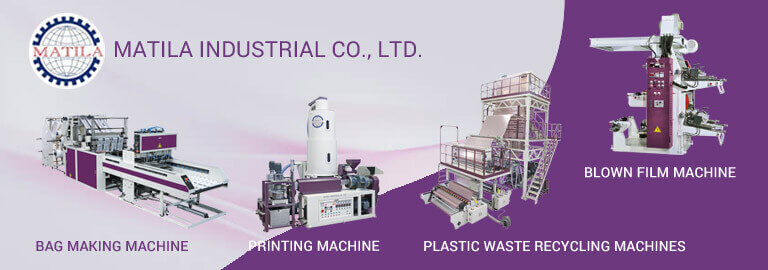
The general term for various machinery and devices used in the plastics processing industry. Certain general-purpose machinery and equipment such as fluid and solid conveying, separation, crushing, grinding, and drying also occupy an important position in the plastics processing industry, so they are often listed as plastic machinery. Common types are plastic machinery, extruder machine, injection molding machine, film blowing machine, blow molding machine, etc.
According to the production process of plastic products, plastic machinery can be divided into four categories: plastic compounding machinery, plastic molding machinery, plastic secondary processing machinery, and plastic processing auxiliary machinery or devices. Plastic compounding machinery is used in the manufacture of various forms of plastic compounding materials, including kneaders, plastic mixing machines (open mills and internal mixers), pelletizers, screening machines, crushers, and grinders. Plastic molding machinery, also known as plastic primary processing machinery, is used for the molding of plastic semi-products or products, including compression molding machines, injection molding machines, extruders, blow molding machines, calenders, rotational molding machines, foaming machines, etc. Plastic secondary processing machinery is used for reprocessing and post-processing of plastic semi-products or products, including thermoforming machines, welding machines, heat sealing machines, hot stamping machines, vacuum evaporation machines, flocking machines, printing machines, etc. Metal processing machine tools are also commonly used for secondary processing of plastics. Plastic processing auxiliary machinery or devices are used to rationalize the plastic processing process, including automatic metering and feeding device, automatic scrap recycling device, automatic injection molding product removal device, injection mold quick replacement device, injection mold cooling machine, automatic thickness measurement device, and raw materials transportation and storage equipment, etc. Such auxiliary machinery or devices have become an indispensable part of modern plastic processing automation.
The perfection of plastic machinery directly affects the quality, output, and cost of plastic semi-products or products, so it must be able to adapt to changes in temperature and stress during plastic compounding and processing, as well as the resulting changes in the properties of molten materials, and to adapt to chemical corrosion and special conditions such as mechanical wear. The specialization of plastic grades, the development of engineering plastics, the emergence of composite materials, the development of large-scale, lightweight, and thin-walled plastic product structures require plastic machinery to achieve: complete sets for product production purposes; high-speed, labor-saving, Automation to improve the production efficiency of products; to ensure the precision of product specifications and quality with the smallest error; low energy consumption, less space, easy and safe operation, and maintenance.
Development of Plastic Industry
Compared with metal, stone, wood, plastic has the advantages of low cost and strong plasticity. It is widely used in the economy and daily life. The plastic industry occupies an extremely important position in the world today. The production of plastic products has developed rapidly all over the world for many years. China's production of plastic products has always been at the forefront of the world rankings. Among them, the production of many plastic products has ranked first in the world, and China has become the world's largest producer of plastic products. From 2001 to 2010, the average annual growth rate of China's plastic product output remained above 15%. In 2010, China's total output of plastic products reached 58.3 million tons.
What Are the Common Types of Plastic Machinery?
There are many types of plastic machinery. According to the processing technology, it is divided into three categories: extruder, injection molding machine, and blow molding machine.
-
Extruder Machines
The extruder machine extrudes the molten plastic through a fixed-shaped extrusion port under the action of a screw and cuts it after being shaped by water cooling under the action of a tractor. It is mainly used for the continuous production of various products with the same cross-section, such as pipes, rods, and profiled materials. It can also be used for plastic modification and granulation.
-
Injection Molding Machines
The injection molding machine injects molten plastic into the mold, and the product becomes the product after cooling. It has a wide range of uses. Depending on the plastic, the place of use is also different. The injection molding machine is the most used processing machine in the plastic processing industry. Not only a large number of products can be directly produced by the injection molding machine, but it is also a piece of key equipment for the injection stretch blowing process.
-
Blow Molding Machines
Blow molding is a common method for manufacturing hollow thermoplastic products. The main products are tube films and hollow containers. The blow molding machine can plasticize the preformed product by heating, and then enter the mold to blow molding. This method is mainly used for high-speed and high-yield PET bottles and BOPP bottle production is a two-step process; blow molding can also be combined with the injection molding process to become an injection stretch blow integrated machine, which is also a common method for producing PET containers; blow molding process can also be combined with the extrusion process, extrusion Blow molding equipment has a wider range of applications and can produce more products. Products include multilayer composite films and various polyolefin hollow containers, which are widely used in the food, medicine, and cosmetics industries.
-
Film Blowing Machines
The film blowing machine heats and melts the plastic particles and then blows them into a film. There are many types of film blowing machines, including PE, POF, and so on. The new material is blown out with brand-new particles, the color is uniform, clean, and the bag stretches well. Some people use recycled plastic bags to make particles. These kinds of particles are usually called old materials. When they are made into particles, they are usually gray. When making bags, pigments are usually added to make the bags unevenly colored, brittle, and easy to break. The price is lower. Although it is a recycled plastic bag, there is still a big difference between the waste bag in the bag making process and the garbage plastic in the usual sense. The most important factors in the work of the film blowing machine are three factors: temperature (machine temperature, indoor temperature), two spirals, and three cooling systems.
Trends of Plastic Industry
- Starting from the development of plastic products, provide users of plastic machinery with a full range of services from products, process formulas, equipment, and after-sales services.
- Following the requirements of users, design and manufacture applicable equipment specifically for users to solve their technological difficulties.
- Timely learn from the technological development of related industries and apply the latest scientific and technological achievements to the industry. Such as the scientific and technological achievements of electronics, communication industry, automobile industry, and aerospace industry.
- Keep up with the progress of materials science and adapt new equipment to the processing of new raw materials.
- Establish the concept of equipment that is the key factor for users to succeed or fail in market competition, and strive for high-speed, high-efficiency, and energy-saving equipment operation.
- There are cases of optimization and reorganization among companies, but there is no large-scale alliance of large chemical companies. Since foreign professional collaboration is very mature, the scale of plastic machinery manufacturing enterprises will not be too large.
Referral Link



(4059)(20260924)(原).jpg)
(2367)(20260924)(原).jpg)