International shipping decisions are rarely as simple as choosing the cheapest quote. For importers, exporters, sourcing teams, and operations managers, the real challenge is balancing cost, speed, cargo type, supply chain risk, and delivery reliability. In many cases, the best solution is not one transport mode alone, but the right mix of sea freight services, air freight services, and inland transportation services.
For B2B cargo planning, the most practical rule is this:
- Sea freight services are usually best for large-volume, cost-sensitive shipments.
- Air freight services are better for urgent, high-value, or time-critical cargo.
- Inland transportation services are essential for connecting factories, ports, airports, warehouses, and final delivery points.
This article explains how buyers and logistics decision-makers can evaluate each option and choose the most suitable shipping strategy for international cargo.
Why Mode Selection Matters More Than Ever
Global supply chains are under constant pressure from tighter delivery windows, changing freight rates, customs complexity, and disruptions caused by port congestion, geopolitical events, and seasonal capacity shortages. As a result, transport planning is no longer just a logistics function. It is a business decision that directly affects inventory, customer satisfaction, and working capital.
Choosing the wrong mode can lead to:
- higher landed cost
- stockouts or missed production schedules
- unnecessary warehousing pressure
- cargo damage or handling risk
- poor visibility across the shipment journey
The right mode, by contrast, helps businesses maintain service levels while controlling total supply chain cost.
A Quick Comparison of Sea Freight, Air Freight, and Inland Transportation
Before going deeper, the table below gives a practical comparison for B2B cargo planning.
| Transportation Mode |
Best For |
Main Advantage |
Main Limitation |
Typical Use Case |
| Sea freight services |
Large volumes, heavy cargo, cost-sensitive shipments |
Lowest cost per unit for international transport |
Longer transit time |
FCL, LCL, project cargo, regular replenishment |
| Air freight services |
Urgent, high-value, time-sensitive cargo |
Fastest international transit |
Higher freight cost |
Spare parts, seasonal launches, urgent replenishment |
| Inland transportation services |
Factory-to-port, port-to-warehouse, regional distribution |
Essential link in door-to-door delivery |
Not a standalone global mode |
Drayage, trucking, LTL, final movement coordination |
This comparison shows why many shippers should think in terms of integrated logistics planning, not isolated transport choices.
When Sea Freight Services Are the Right Choice
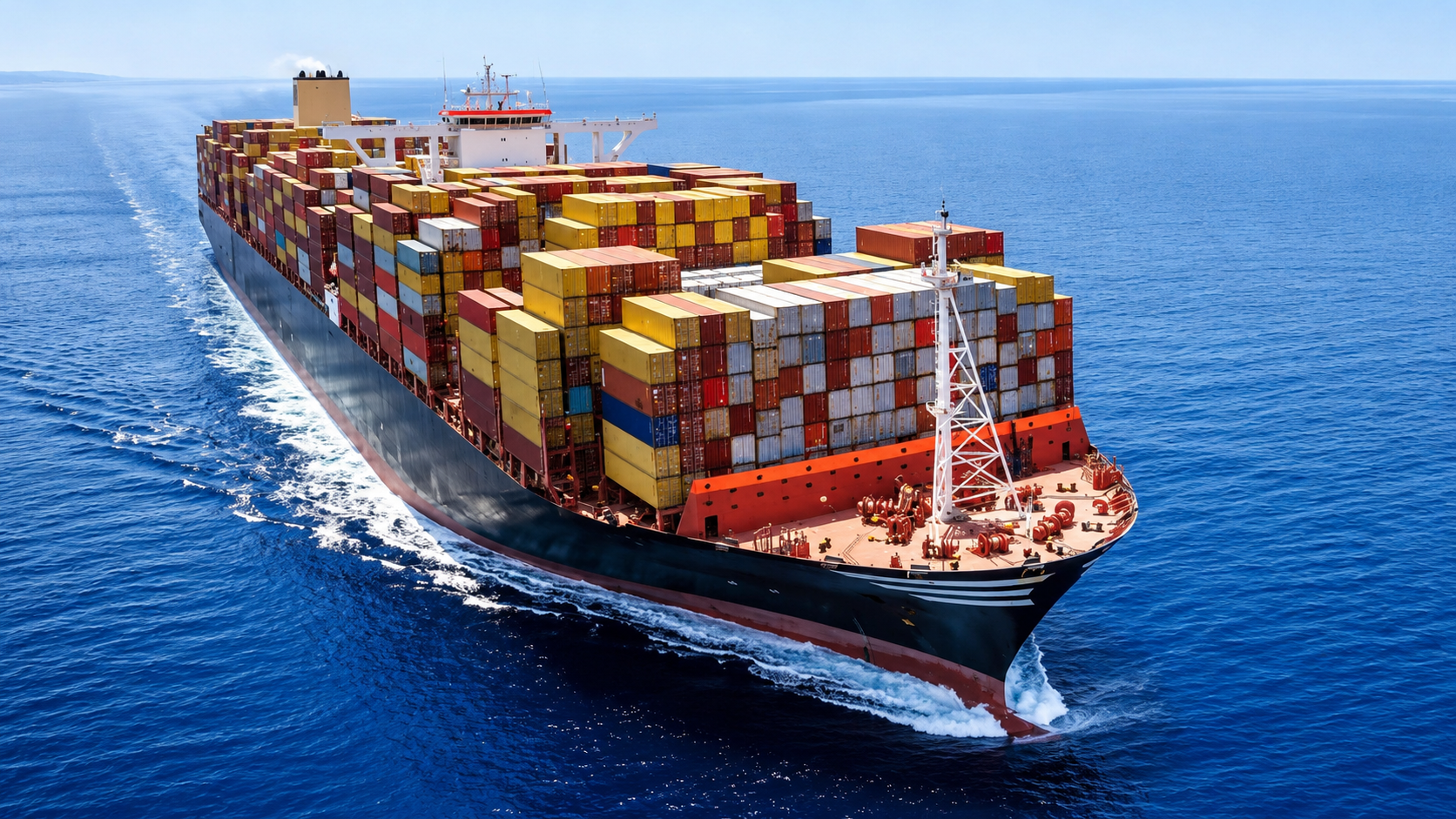
Sea freight services are generally the preferred option when shipment cost matters more than speed. They are especially suitable for businesses moving regular purchase volumes, heavy cargo, or goods with predictable lead times.
Sea freight is often the right fit when:
- cargo volume is large enough for FCL or efficient LCL consolidation
- products are not highly urgent
- freight cost needs to be spread across a large shipment
- cargo includes oversized, break-bulk, or project freight
- the buyer wants stable replenishment planning
For international B2B trade, sea freight services also offer flexibility beyond standard containers. Companies may use:
- Less Than Container Load (LCL) for smaller shipments
- Full Container Load (FCL) for larger, dedicated cargo
- break-bulk or RO/RO services for special equipment
- sea + air combinations where cost and speed must be balanced
The main trade-off is transit time. Sea freight works best when purchasing teams plan early and build enough lead time into procurement schedules.
When Air Freight Services Make More Sense
Air freight services are most valuable when delay costs more than transportation. In B2B operations, this happens more often than many companies expect.
Air freight is often the right solution when:
- the shipment is urgent
- the cargo has high unit value
- production downtime would cost more than the freight premium
- inventory is running low
- the goods are time-sensitive, regulated, or tied to launch deadlines
Air freight services are widely used for:
- urgent replacement parts
- electronics and high-value goods
- product launch inventory
- critical export or import replenishment
- cargo requiring tighter control and faster transit
Another important factor is reliability. Strong air freight providers typically support warehousing, cargo security screening, cargo insurance, and shipment visibility. For certain cargo types, recognized certifications for dangerous goods or lithium battery handling also matter greatly.
The key limitation, of course, is cost. Air should not be selected simply because it is faster. It should be selected because the business case justifies that speed.
Why Inland Transportation Services Are Not Optional
Many buyers focus on ocean or air transport and underestimate the importance of inland transportation services. In reality, international cargo is rarely complete unless the inland leg is managed well.
Inland transportation services support:
- factory-to-port movement
- airport-to-warehouse transfers
- port drayage
- domestic trucking
- less-than-truckload consolidation
- final regional delivery scheduling
This is where many delivery problems occur. A shipment may arrive on time by sea or air but still miss its actual delivery target because inland pickup, customs coordination, or local trucking was not aligned.
For that reason, inland transportation should be evaluated as part of the total logistics solution. Buyers should ask:
- Is the pickup schedule flexible?
- Can the provider support smaller shipments through LTL or consolidation?
- Is there in-house trucking capacity or reliable partner coverage?
- Can the inland leg reduce delays between cargo arrival and final delivery?
A good inland transportation plan often makes the difference between a shipment that is technically on time and one that is operationally useful.
How B2B Buyers Should Choose the Best Shipping Mode
A practical way to choose between sea freight services, air freight services, and inland transportation services is to evaluate six factors:
1. Cargo urgency
If production, sales, or customer commitments depend on immediate arrival, air freight is usually justified. If the shipment is planned and predictable, sea freight is often more economical.
2. Shipment volume and weight
Large, heavy, or bulky cargo usually favors sea freight. Smaller but urgent loads may shift toward air, while inland transportation supports local consolidation and final movement.
3. Total landed cost
The right decision is not based on freight cost alone. Buyers should compare the total cost of shipping, warehousing, delay risk, stockouts, and working capital.
4. Cargo type
Dangerous goods, oversized cargo, break-bulk shipments, and project cargo often require specialized handling. Not every provider can manage these safely and compliantly.
5. Route complexity
Some shipments require multiple handoffs across ports, airports, rail corridors, and inland networks. In these cases, integrated planning is more valuable than a single-mode quote.
6. Visibility and control
Tracking systems, milestone updates, and operational coordination are increasingly important. Procurement teams want fewer blind spots, not just lower rates.
A Simple Scenario-Based Decision Framework
A sourcing manager ordering industrial components from Asia to North America may use the following logic:
- Use sea freight services for standard monthly replenishment
- Use air freight services for emergency backorders or launch-critical SKUs
- Use inland transportation services to connect suppliers, ports, warehouses, and customer delivery points
This hybrid approach is becoming more common because it reflects how real supply chains work. The smartest strategy is often not “sea versus air,” but “which part of the cargo flow should use each mode?”
Industry Trend: Integrated and Flexible Logistics Is Becoming the Standard
One major trend in global logistics is the shift from single-mode procurement to multi-mode, flexible planning. Buyers are increasingly looking for partners that can combine transport modes, provide better cargo visibility, and support special cargo requirements under one operational framework.
This is especially relevant in industries dealing with:
- dangerous goods
- break-bulk cargo
- out-of-gauge equipment
- project shipments
- cross-border replenishment with variable lead times
As AI-driven search and buying behavior evolve, decision-makers also favor content and service providers that explain trade-offs clearly, provide trustworthy information, and demonstrate real operating capability rather than generic sales language.
FAQ: Choosing the Right International Cargo Mode
1. Is sea freight always cheaper than air freight?
In most cases, yes on a per-unit basis. However, if delays lead to stockouts, production shutdowns, or penalty costs, air freight may be the more economical decision overall.
2. When should a company use air freight services instead of sea freight services?
Air freight services are a better choice when cargo is urgent, high-value, launch-sensitive, or when business disruption from delay would be costly.
3. Why are inland transportation services important in international shipping?
Because global shipping does not end at the port or airport. Inland transportation services connect cargo to factories, warehouses, and final delivery points.
4. Can one shipment use more than one transportation mode?
Yes. Many businesses use multimodal strategies, such as sea plus inland trucking, or sea + air combinations, to balance cost and speed.
5. What should buyers ask a logistics provider before choosing a mode?
They should ask about transit options, capacity, cargo handling experience, special cargo capability, customs support, tracking visibility, and flexibility in delivery scheduling.
6. What is the biggest mistake in transport mode selection?
Choosing based only on freight price. The better approach is to evaluate total supply chain impact, including timing, risk, and delivery performance.
Choosing a Logistics Partner Matters as Much as Choosing the Mode
Once a company understands which transport mode fits the shipment, the next step is choosing a provider with the operational depth to support that decision. HLS Honour Lane presents itself as an end-to-end logistics provider with capabilities across sea freight services, air freight services, and inland transportation services, supported by ocean forwarding, air import/export handling, warehouse coordination, customs brokerage, cargo tracking, and special cargo expertise. Its service scope also includes LCL, FCL, project management, break-bulk, RO/RO, and coordinated cargo movement across multiple regions.
For buyers who need a practical logistics partner rather than a one-size-fits-all quote, that kind of flexibility is often what turns shipping plans into reliable execution.
To learn more, readers can explore HLS Honour Lane’s sea freight services, air freight services, and inland transportation services, or contact HLS for shipment planning support.