What does AI-enabled production really mean for hand tool manufacturers, buyers and industrial partners?
![Proxene and Taiwan’s AI Manufacturing Upgrade: Why Smart Production Investment Matters in the Hand Tools Industry]()
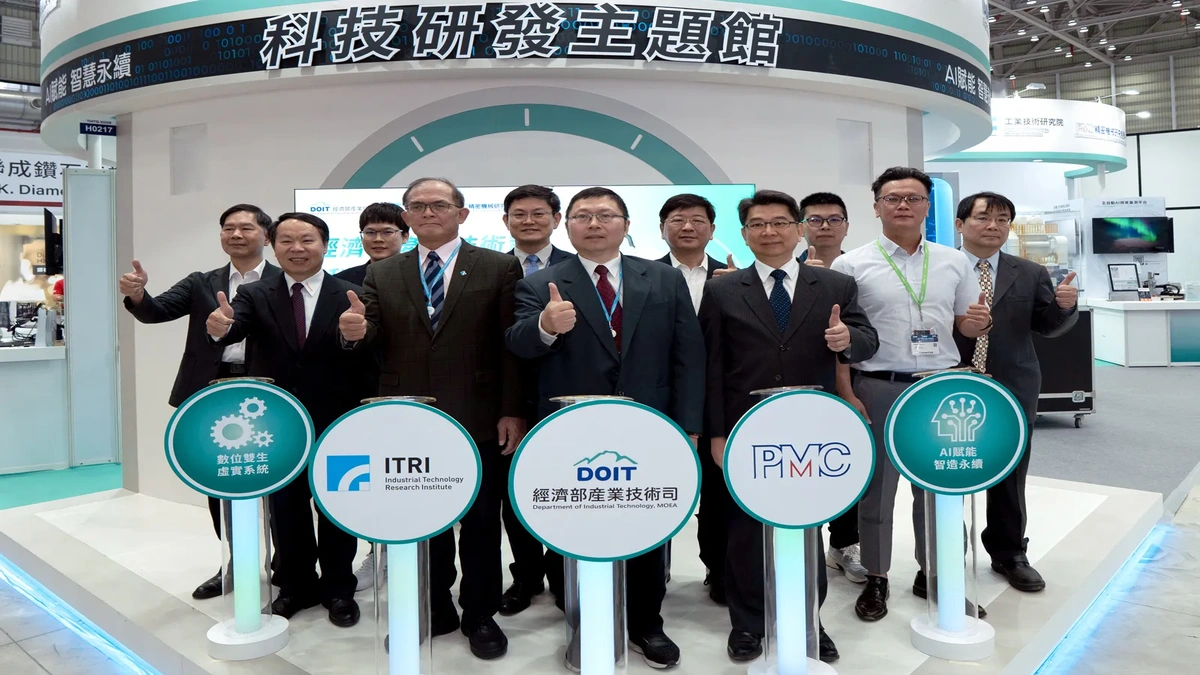
Photo by Proxene and Taiwan’s AI-Driven Manufacturing Upgrade: Why Investment in Smart Production Matters in the Hand Tools Industry / Courtesy of ITRI
For manufacturers in the global hand tools market, competition is no longer based only on product durability or price. Buyers are also paying close attention to consistency, lead time, production flexibility, traceability and the supplier’s ability to scale without compromising quality. As labor shortages, shorter delivery cycles and higher customization demands continue to reshape industrial sourcing, smart manufacturing is becoming a more important part of the value equation.
Against this backdrop, Proxene, a Taiwanese hand tools manufacturer known for adjustable wrenches and related professional tools, has emerged as one of the companies highlighted in Taiwan’s broader push toward AI-enabled manufacturing upgrades. According to public reporting, Proxene is expanding investment in an AI smart production line as part of an industrial upgrade effort supported by Taiwan’s manufacturing innovation ecosystem. Rather than being just a factory expansion story, this development points to a larger market trend. Hand tool makers are increasingly expected to combine product innovation with production intelligence.
Why is AI-driven manufacturing gaining attention in the hand tools industry?
In the hand tools business, performance at the product level remains essential, but production capability is becoming just as strategic. Industrial buyers want dependable quality across batches, faster response to market demand and fewer disruptions caused by operator dependency or unstable processes. These pressures are pushing manufacturers to digitize experience-based know-how and turn it into scalable systems.
Converting shop-floor experience into repeatable production logic
One of the biggest manufacturing challenges today is the loss of experienced labor and the difficulty of transferring tacit know-how. In the Taiwan case highlighted by the report, AI-based production support tools are designed to learn from skilled workers’ machining logic and experience, helping manufacturers reduce sampling costs and lower downtime risk. That matters not only to machine tool companies, but also to downstream manufacturers that depend on reliable metalworking processes.
Supporting more stable and scalable output
For hand tool suppliers, growth often creates a difficult tradeoff: scaling output while maintaining the precision and consistency that customers expect. Smart production systems can help manufacturers standardize workflows, improve process visibility and reduce avoidable production variation. From a market perspective, this is especially relevant for companies serving professional and industrial users, where reliability directly affects brand reputation and customer retention.
Strengthening competitiveness beyond product design alone
Taiwanese manufacturers have long been recognized for engineering capability and flexible production. But as international competition intensifies, future differentiation may depend on how effectively companies integrate AI, automation and digital manufacturing management into their operations. In that sense, smart production is becoming a competitive asset, not simply an internal efficiency project.
What does Proxene’s latest move suggest to the market?
Based on Proxene’s public company information and the March 2026 report, the company represents more than a traditional tool maker upgrading equipment. It reflects how established manufacturers are repositioning themselves for a market that values innovation in both product and process. Proxene states that it was founded in 1984 and manufactures adjustable wrenches and specific pliers, while also emphasizing R&D, in-house manufacturing and quality control as core strengths.
A signal of confidence in AI-enabled production
The report says Proxene is expanding investment by NT$100 million to build an AI smart production line, with an estimated NT$260 million in additional output value. For industry observers, that scale of investment suggests confidence that manufacturing intelligence can generate measurable business returns rather than simply operational improvements. It also signals that AI adoption is becoming practical enough to justify capital commitment in traditional yet technology-sensitive sectors such as hand tools.
A stronger foundation for quality-focused industrial supply
Proxene’s official materials emphasize in-house manufacturing, product development and quality-driven production. When those existing strengths are combined with AI-assisted production systems, the result may be a stronger operational foundation for global buyers seeking dependable partners in industrial hand tools. The strategic value here is not only faster manufacturing, but potentially better process control, improved responsiveness and greater production resilience.
From product innovation to manufacturing innovation
The company’s public milestones show a long history of product and design innovation, including international design recognition, the development of a digital torque adjustable wrench and later moves into smart automation lines and a new plant. Seen in that context, the latest AI production investment appears less like a one-off initiative and more like a continuation of Proxene’s broader evolution, from tool innovation to system-level manufacturing capability.
Conclusion: In industrial tools, manufacturing intelligence is becoming part of product value
For global buyers, distributors and industrial sourcing teams, evaluating a hand tool supplier increasingly requires looking beyond the tool itself. Product design, patents and quality certifications still matter, but so do production visibility, scalability, process consistency and the ability to adapt manufacturing knowledge into repeatable systems. These are the capabilities that help suppliers remain competitive in a higher-value industrial market.
Proxene’s role in Taiwan’s AI manufacturing upgrade offers a useful case for the industry. It shows how a company with an established product base can strengthen its market position by investing not only in what it makes, but in how it makes it. For the hand tools sector, that may be one of the clearest signals of where long-term competitiveness is heading.