In rubber parts manufacturing, production problems are often easier to see than to trace. Many of the factors that shape consistency, fit, and long-term performance are determined much earlier in the engineering and tooling stage.
![From CATIA Design to In-House Tooling: How Sanhao Strengthens Rubber Parts Manufacturing]()
Photo by https://www.sanhao.biz/capabilities
Rubber parts manufacturing quality is often shaped before mass production begins. Dimensional stability, assembly fit, and long-run consistency depend heavily on early engineering decisions, especially in 3D design review, DFM analysis, mold development, and multi-material process planning. When these stages are managed well, production becomes more stable and quality risks are easier to control.
Why Early Engineering Has a Direct Impact on Rubber Parts Manufacturing
Many rubber part issues do not start on the production line. They often begin with decisions made during product development, when structure, manufacturability, and tooling logic are still being defined. If these early conditions are not carefully reviewed, the result may be unstable molding performance, repeated mold adjustments, or inconsistent finished dimensions.
This is especially true for rubber parts that must meet tighter fitting requirements, maintain repeatable geometry, or work reliably as part of a larger assembly. In these cases, engineering is not only a preparation step. It directly affects how smoothly a part can move into stable production.
Improving Manufacturability Through CATIA Design and DFM Review
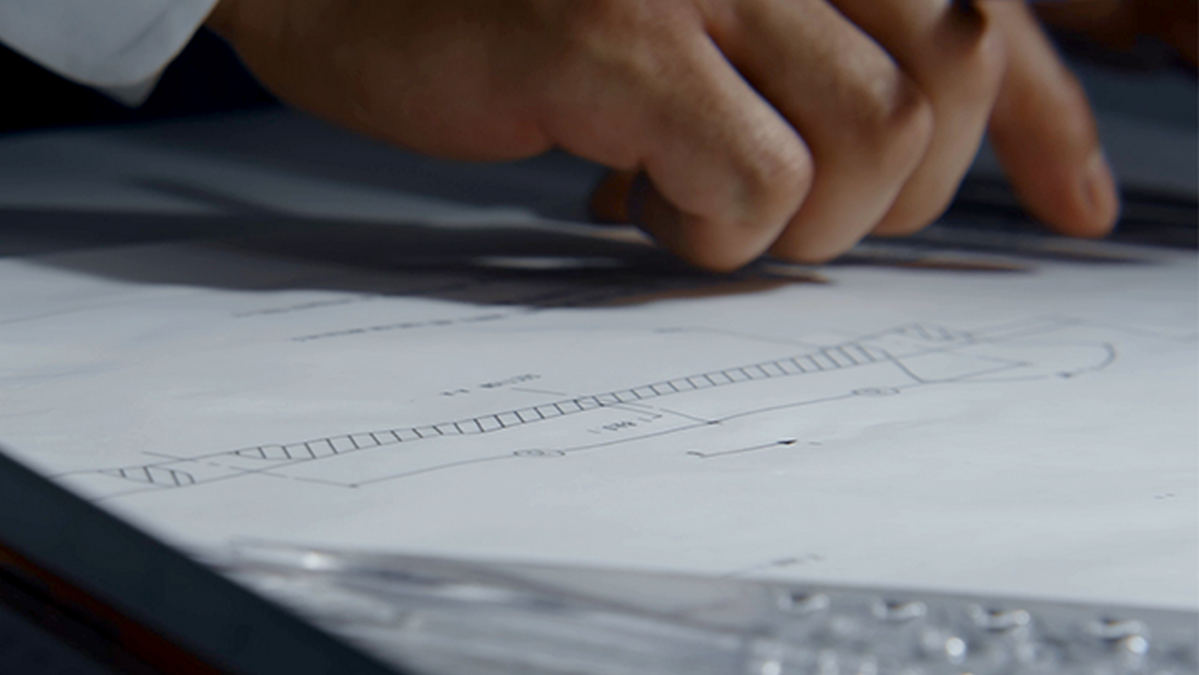
Sanhao strengthens this early-stage process through CATIA-based 3D modeling and DFM analysis. This approach makes it possible to evaluate whether a part is not only functional in design, but also practical for molding and mass production.
At this stage, engineers can review details such as part geometry, flow path layout, parting line position, and tooling feasibility before machining begins. That reduces the chance of carrying design risk into later production stages.
In rubber manufacturing, this kind of design review is valuable because even small structural decisions can influence filling balance, demolding behavior, and dimensional control. A stronger design process improves manufacturability before production pressure increases.
How In-House Tooling Supports Better Dimensional Stability
Tooling quality plays a central role in whether a rubber part can hold its shape and dimensions consistently over repeated cycles. For precision parts, mold accuracy and adjustment speed can have a direct effect on production stability.
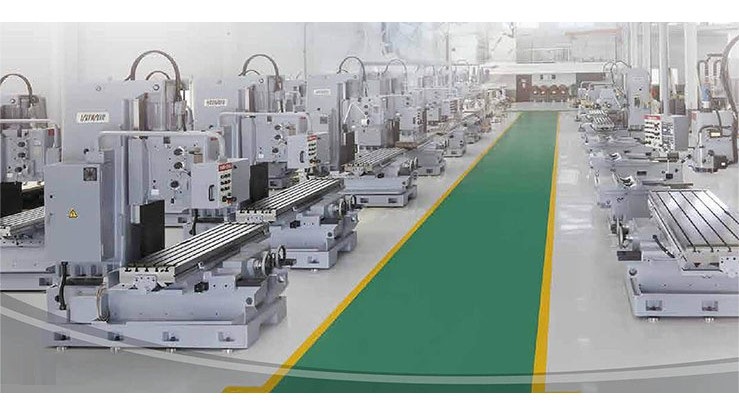
Sanhao’s in-house tooling capability provides tighter control over this part of the process. Because mold development is handled internally, tooling adjustments can stay closer to the original engineering intent, and dimensional issues can be corrected more efficiently during development.
This becomes particularly important for precision components such as linear guide wipers, where dimensional variation can affect fit, motion, or sealing performance. In these applications, in-house tooling is not simply a manufacturing resource. It is an important method of controlling consistency.
Before moving to bonded parts, the table below shows how specific engineering and tooling decisions influence manufacturing results.
| Engineering or Tooling Factor |
Manufacturing Impact |
| CATIA 3D modeling |
Improves design accuracy before tooling starts |
| DFM analysis |
Identifies manufacturability risks earlier |
| Flow path and parting line design |
Supports more stable molding behavior |
| In-house mold machining |
Improves tooling control and revision efficiency |
| Bonding process integration |
Reduces adhesion and tolerance-related issues |
These factors matter because stronger front-end control usually leads to fewer downstream production problems.
Rubber-to-Metal Bonding and the Challenge of Stability
Rubber-to-metal parts require more than combining two materials in one product. They must maintain reliable adhesion while also meeting dimensional requirements on both the rubber and metal sides. That makes bonded parts one of the more demanding areas in rubber manufacturing.
Common problems in this category include delamination, unstable bonding strength, and tolerance mismatch during assembly. These issues are often linked to how the product is engineered and processed, rather than to material selection alone.
Sanhao’s heterogeneous material bonding capability is relevant here because it addresses both adhesion stability and dimensional control. By treating bonding as part of the engineering and tooling process, it becomes easier to reduce the risk of peeling, interface failure, and inconsistency in finished bonded parts.
A More Controlled Path to Rubber Parts Manufacturing
The strongest rubber parts manufacturing results usually come from better control at the beginning of development. When design review, tooling execution, and bonding considerations are aligned early, production becomes easier to stabilize and precision becomes easier to maintain.
Sanhao’s approach reflects this structure clearly. CATIA-based design, in-house tooling, and stable rubber-to-metal bonding are not isolated capabilities. Together, they create a more controlled manufacturing path, where quality is supported from the source rather than corrected later.